

What's on this page
- The problem pet insurance actually solves
- How the product actually works
- The exclusion that rules everything: pre-existing conditions
- What premiums cost, and what moves them
- Annual vs monthly pet insurance payments
- The age curve: why the math must run lifetime
- What is covered, what is not, and the wellness add-on question
- The alternative: self-insuring with a dedicated fund
- The hybrid path most owners never consider
- Accident-only and other budget tiers
- Claims, waiting periods, and the paperwork reality
- Cats, exotics, and the species gap
- Who comes out ahead: the honest profiles
- How to read a policy in fifteen minutes
- The senior-pet decision nobody prepares for
- A lifetime worked example: two owners, one bill
- Reading the reimbursement model, not just the percentage
- Multi-pet households and the budget math
- Where the premium sits in the whole pet budget
- Common pet insurance mistakes
- The bottom line
Short answer: Pet insurance is worth it if a four-figure surprise vet bill would break your budget and your pet is still young and healthy, because it is catastrophic-bill protection rather than a discount plan, and conditions that appear before enrollment are typically excluded for life. Disciplined owners with an existing cushion can self-insure instead. Premiums rise with age, so run the math over the pet's lifetime, and always have either a policy or a dedicated fund.
Every pet owner eventually meets the moment this entire product exists for: the emergency clinic at midnight, a frightened animal, and an estimate with a comma in it. What happens next depends on a decision made years earlier, when the pet was young and healthy and insurance looked like just another optional expense. That is the honest frame for the whole question. Pet insurance is not really about vet bills; it is about whether the worst bill of your pet’s life becomes a financial event or just a medical one. For a grounding in what those bills actually run, from the routine checkup to the midnight estimate, our read on how much a vet visit costs prices the whole spectrum.
This article runs the decision the way our first-year cost breakdown runs everything: with honest numbers and both sides of the argument. How policies actually pay, what the exclusions genuinely mean, what premiums cost across a pet’s whole life, whether paying annually or monthly changes the real cost, the self-insurance alternative that sometimes wins, and the specific owners for whom each answer is right. For the premium itself priced species by species, our dog insurance price read and our cat health insurance cost read put full numbers on the monthly line this decision turns on. Budget the whole picture with our first-year cost calculator as you go.
Key takeaways
- Pet insurance is catastrophic-bill protection: it exists for the four-figure surprise, not the routine checkup, and judging it as a discount plan misreads the product.
- Most policies reimburse after you pay, through three dials: deductible, reimbursement percentage, and annual cap. The dials, not the brand, set what a claim returns.
- Pre-existing exclusions make timing everything: enroll young and healthy, because conditions that appear first are typically excluded for life.
- Premiums rise with age, often steeply in the senior years, so run the math over the pet's lifetime, not the first quote.
- Self-insuring works for disciplined owners with an existing cushion; insurance wins when the emergency arrives before the fund has grown. Have one or the other, always.
The problem pet insurance actually solves
Veterinary medicine has quietly become capable of remarkable things, surgery, chemotherapy, MRI diagnostics, intensive care, and capability carries cost. Routine care stays affordable and plannable, our flagship read’s territory, but the serious events sit in a different bracket entirely: an emergency surgery, a swallowed object, a cruciate ligament repair, a cancer diagnosis can each run into the thousands, arriving with no warning and demanding decisions within hours.
That combination, rare, unschedulable, and large, is the textbook profile of an insurable risk, the same shape as house fires and car crashes. It is also the profile that breaks household budgets, because the moment forces a choice between money and a family member under the worst possible conditions. The grim industry term is economic euthanasia: treatable animals lost because the bill was unpayable. Everything else in this article is arithmetic, but this is the stake underneath it: the entire purpose of either path, insurance or a real emergency fund, is to make sure that decision never has to be made about money. Judged against that purpose, the worst plan is the one most owners actually have, which is no plan at all.
How the product actually works
Pet insurance runs on a reimbursement model that surprises first-time claimants: with most policies, you pay the vet in full, submit the invoice, and the insurer pays you back according to your plan’s terms. Some insurers and clinics now support direct payment, worth seeking out if cash flow at the moment of crisis worries you, but the default remains claim-and-reimburse, which means the product solves the affordability of the year rather than the liquidity of the night. A credit card or small buffer still plays a role even for insured owners.
What the reimbursement returns is set by three dials chosen at purchase. The deductible is what you cover first, annually on most modern policies. The reimbursement percentage, commonly 70, 80, or 90 percent, is the insurer’s share of costs beyond the deductible. The annual cap is the ceiling on what the policy pays per year, ranging from a few thousand dollars to unlimited. Worked example, illustrative: a $5,000 emergency on a policy with a $500 deductible, 80 percent reimbursement, and a $10,000 cap returns $3,600, leaving you $1,400 out of pocket. Not free, but the difference between a bad month and a crisis. The dials trade against the premium, and choosing them deliberately is half of buying well; our cost read on pet insurance deductibles explains each dial in full, from annual versus per-incident structures to how the deductible choice moves the monthly premium.
How a $5,000 emergency claim splits
Policy with $500 deductible, 80 percent reimbursement, cap not reached. Illustrative.
The dials decide the split: raise the deductible or lower the percentage and the premium falls while your slice of every claim grows. Choose them for the emergency, not the checkup.
The exclusion that rules everything: pre-existing conditions
One clause shapes pet insurance more than every feature combined: pre-existing conditions are excluded, and with most insurers, excluded permanently. Anything diagnosed, treated, or even showing symptoms before your coverage starts, or during the waiting periods that follow enrollment, typically never gets covered. The limp noted at a checkup, the digestive issue in the vet notes, the skin condition treated once: each can wall off entire categories of future claims.

The strategic consequences are stark. Insurance bought young, before anything appears in the record, covers the most and costs the least, which is why the enroll-early advice is structural rather than sales talk. Insurance shopped after a scare largely fails, because the scare is now the exclusion. Switching insurers late in life quietly resets the clause: conditions covered under the old policy become pre-existing to the new one, a trap that makes the first choice of insurer stickier than it looks.
The vet record becomes a document worth understanding too, since claims adjusters read it precisely. None of this makes the product dishonest, without the clause, everyone would insure on the way to the emergency clinic, but it concentrates the entire buying decision into a window early in the pet’s life, and owners who miss the window face a genuinely different, worse product.
What premiums cost, and what moves them
Premiums vary more than almost any household insurance, because the underlying risk does. Illustrative ranges: accident-and-illness coverage commonly runs somewhere around $20 to $60 monthly for cats and $30 to $90 for dogs, but the drivers matter more than the midpoints. Species first, dogs cost more than cats. Breed heavily: large breeds and those prone to hereditary conditions, the same size-and-breed economics our first-year read maps, carry the highest premiums. Location substantially: urban veterinary markets price everything higher, premiums included. Age relentlessly: starting premiums climb with enrollment age, and, covered next, keep climbing after.
Your three dials then scale the number: a higher deductible, lower reimbursement percentage, or lower cap each trims the premium in exchange for more of any claim staying yours. The honest way to shop is therefore not comparing headline prices but comparing configured quotes, same dials, your actual pet, across insurers, and reading each quote alongside its exclusions page. Two policies at the same premium can return wildly different amounts from the same emergency, and the difference lives in the dials and the fine print rather than the brand.
Annual vs monthly pet insurance payments
Most quotes lead with a monthly figure because that is how most owners budget, but nearly every insurer also offers an annual, pay-in-full option for the same coverage, and the two are not simply the same total split into pieces. Paying annually removes the per-installment processing that a monthly plan carries, so insurers commonly price the annual option a little cheaper than twelve times the monthly figure, an administrative discount rather than a different product. The coverage itself, the deductible, reimbursement percentage, and cap, does not change with the payment schedule; only the total cash outlay and its timing do.
The tradeoff is cash flow against savings. A monthly plan spreads the cost evenly and is easier on a tight household budget, while an annual plan asks for the full year up front in exchange for the smaller discount and one less recurring charge to track. It also removes any risk of a missed monthly payment lapsing coverage at the worst possible moment, a real risk worth weighing against the size of the discount. Neither choice changes the pre-existing-conditions clause or the waiting periods discussed above; it only changes how you pay for the same policy, so compare quotes for both schedules before assuming monthly is the default worth keeping.
The age curve: why the math must run lifetime
The premium you are quoted today is the cheapest this pet will ever be to insure, and the curve only bends upward. Premiums rise with the pet’s age at renewal, modestly through the middle years and often steeply into the senior ones, precisely the years when claims become most likely, because that correlation is the actuarial engine of the product. Owners report the structural tension in the same words everywhere: the policy costs the most exactly when it is most likely to pay.
Illustrative premium curve across a dog's life
Monthly premium by age band, same policy dials. Illustrative shape, not a quote.
The shape, not the numbers, is the lesson: total lifetime premiums run well beyond the naive estimate of the first year's quote multiplied by lifespan. Decide on the curve, not the entry price.
The planning consequence: sum the whole curve before deciding. A dog insured from age one to thirteen pays a lifetime premium total that dwarfs the first-year impression, and that total is the honest number to weigh against the protection. It also frames the senior-years dilemma many owners eventually face, premiums that strain the budget on a pet too old to switch insurers, which argues for stress-testing your future budget now, the same worst-plausible-year test our sister site applies to life insurance. Enter the product with the curve in view, and the year-nine renewal letter is a plan working; enter on the teaser quote, and it is an ambush.
What is covered, what is not, and the wellness add-on question
The core product, accident and illness coverage, spans the serious territory: injuries, surgeries, hospitalization, diagnostics, medications, chronic conditions that develop after enrollment, and, on most policies, the hereditary conditions that matter so much for purebreds, provided they had not yet appeared. That is the coverage doing the real financial work, and the exclusions worth hunting in any policy are the ones that hollow it: exam fee exclusions, per-condition caps hiding under the annual cap, and breed-specific carve-outs.
Routine care lives elsewhere. Checkups, vaccines, parasite prevention, dental cleanings, the plannable calendar of the first-year breakdown, sit outside standard coverage, offered instead through wellness add-ons that prepay roughly predictable costs for a monthly fee. Run the arithmetic on any wellness rider before buying: totaling what the covered routine items would cost out of pocket against the rider’s annual price frequently lands near break-even, minus the paperwork. That is not scandal, it is what prepayment of predictable expenses must look like, but it clarifies the buying logic: insure the unpredictable, budget the predictable, and treat wellness riders as a convenience purchase rather than protection. The product earns its premium on the emergency, never on the vaccine.
The alternative: self-insuring with a dedicated fund
The serious alternative to premiums is paying yourself: open a dedicated savings account, deposit the would-be premium every month, and let the fund stand against emergencies. Its virtues are real. Money unspent on claims stays yours, compounding toward the emergency cushion every pet budget needs anyway. Nothing is excluded, no claim is adjudicated, no premium curve climbs through the senior years. Across a lucky pet’s whole life, the disciplined self-insurer often finishes ahead, which insurance critics correctly note.
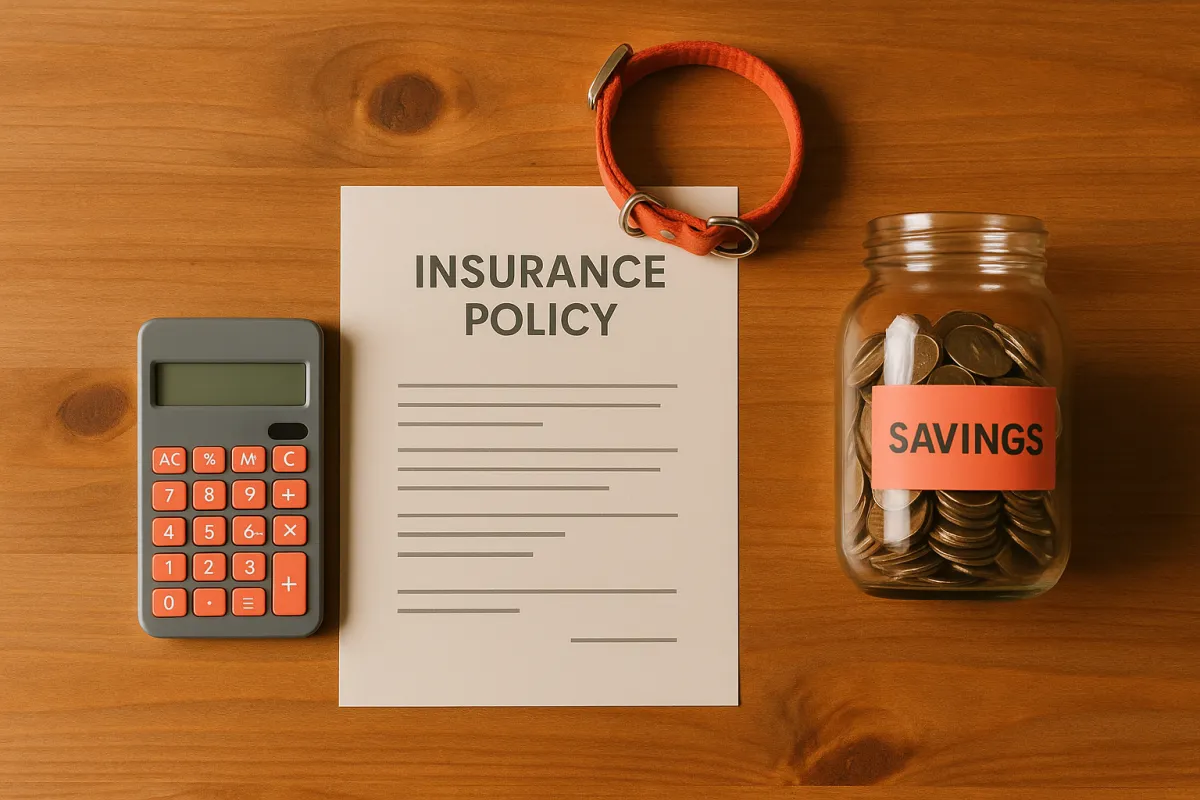
The weaknesses are equally real, and they are two. Timing risk first: the fund protects only what it contains, and a $6,000 emergency in month eight meets a few hundred dollars of deposits, which is precisely the gap insurance exists to bridge. Discipline second: the deposits must actually happen, every month, untouched by vacations and car repairs, and household finance is littered with theoretical funds that never survived contact with life. The honest comparison is therefore not premiums versus deposits on a spreadsheet, but your realistic behavior under each system. Owners with existing savings deep enough to absorb the worst bill today can self-insure rationally from day one. Owners starting from thin cushions are exactly whom the timing risk bites, and exactly whom insurance serves best during the years the fund grows.
The hybrid path most owners never consider
The insurance-versus-fund debate hides a third option that often beats both pure strategies: sequencing them. Insure the pet young, when premiums are lowest, coverage is cleanest, and your savings are thinnest, and simultaneously build the dedicated fund with what a fatter policy would have cost, or alongside it. Then reassess at the middle of the pet’s life: if the fund has grown into a genuine cushion, several thousand dollars standing ready, you can raise deductibles, trim reimbursement, or exit coverage entirely, having used insurance for exactly the years its protection was irreplaceable.
The hybrid respects both truths at once: insurance is most valuable early, when the timing gap is lethal and enrollment locks clean coverage; self-insurance is most valuable late, when the fund is real and premiums steepen. Its main cost is attention, an annual review where the dials get adjusted as the fund grows, and its main risk is the pre-existing trap: conditions that emerged while insured become exclusions if you later want back in, so exiting is close to a one-way door and deserves respect. But for owners who want a plan rather than a side in a debate, the sequence, protect early, accumulate always, self-carry when genuinely able, is the version of this decision that ages best across a whole pet lifetime.
Accident-only and other budget tiers
When full accident-and-illness premiums strain the budget, the tiers below deserve honest evaluation rather than dismissal. Accident-only coverage insures the sudden physical events, hit by car, swallowed sock, broken bone, torn ligament in some policies, at a fraction of full premiums, while excluding the illness category entirely: no cancer, no diabetes, no infections. Its logic is real but partial, because illness grows into the larger share of serious claims as pets age, so accident-only protects best in the young, reckless years and thins precisely as risk shifts.
Where it earns its place: young high-energy dogs whose realistic near-term risks are traumatic, budgets where the alternative is no coverage at all, and, at the other end of life, seniors whose illness premiums have become prohibitive but who can still be shielded from the catastrophic accident cheaply. High-deductible full coverage plays a similar budget role from a different angle, keeping illness protection but moving the first $1,000 or more of every year onto you, pure catastrophe insurance at a leaner premium, and often the smarter lean option than dropping illness entirely. The principle across every tier: partial protection chosen deliberately beats full protection lapsed, and both beat the unexamined no.
Claims, waiting periods, and the paperwork reality
The product’s daily texture lives in its process, worth knowing before signing. Waiting periods start at enrollment: typically days for accidents, a couple of weeks for illnesses, and sometimes months for specific orthopedic conditions, existing so nobody insures a symptom on the way to the clinic. Anything arising during the wait joins the pre-existing pile, one more reason enrollment belongs in the calm early weeks, not after the first scare.

Claims themselves have modernized: photograph the invoice, submit in an app, reimbursement in days for clean claims is now the competitive standard, and processing speed is a legitimate shopping criterion alongside price. The vet record remains the spine of the process, adjusters read it in full, so continuity of records, and a vet who documents clearly, quietly smooths every future claim. Two more process notes earn attention at purchase: whether the insurer requires recent exams to maintain coverage, and how it handles the direct-pay question at emergency hospitals, where the largest invoices of a pet’s life happen to live. Boring diligence, all of it, and boring is what you want from the machinery under a crisis-day product.
Cats, exotics, and the species gap
The question tilts differently across species, and dog-centric advice misleads cat owners in both directions. Cats cost less to insure, and their indoor lives, especially, generate fewer traumatic claims, which makes premiums cheaper but also makes the self-insure case stronger: a modest fund covers a larger share of feline risk. Pushing back the other way, cats are famous concealers of illness, their serious conditions often surface late and expensively, and the same four-figure emergencies, blockages, chronic kidney disease, absolutely exist in feline form. The decision framework holds; only the numbers shift, which is why this article keeps saying quote your actual pet.
Multi-pet households meet their own arithmetic: per-pet premiums multiply faster than multi-pet discounts offset, and insuring three animals at full coverage can rival a car payment, which is where the hybrid and tiered strategies earn their keep, full coverage for the young and the fragile, leaner tiers or the fund for the rest, reviewed annually. And owners of birds, rabbits, and exotics discover a thinner market: fewer insurers, narrower coverage, but often proportionally higher stakes, since exotic-capable vets are scarce and priced accordingly. Wherever the market thins, the fund strategy graduates from alternative to necessity, because protection nobody sells still has to come from somewhere.
Who comes out ahead: the honest profiles
Strip the product to its outcomes and the profiles sort cleanly. Insurance wins for the owner with real exposure and thin cushions: the family whose budget absorbs a $60 premium but not a $6,000 surprise, the new owner of a young purebred with known hereditary risks, the household that would say yes to any treatment and needs the finances to survive that yes. For them the premium buys the thing insurance genuinely sells, the guarantee that money never makes the decision.
Self-insurance wins for the owner with genuine depth: savings that could absorb the worst realistic bill tomorrow without hardship, the discipline to fund the account monthly, and the temperament to watch a fund sit untouched for years. Their premium savings compound into a cushion that covers everything policies exclude. And the middle, most owners, is hybrid territory: insure early, build always, reassess honestly as the fund grows and the premiums climb. The only universally wrong answer is the accidental one, no policy, no fund, no plan, which converts the most predictable fact of pet ownership, that someday there will be a terrible bill, into a preventable crisis. Run your own numbers in the first-year calculator, pick your lane deliberately, and the midnight estimate becomes a logistics problem instead of a heartbreak.
How to read a policy in fifteen minutes
Policy documents intimidate by length, but the parts that decide your outcomes fit in a focused quarter-hour, read in this order. Start at the exclusions section, not the coverage section, because coverage pages advertise and exclusions govern: scan for exam-fee exclusions, breed-specific carve-outs for your breed, bilateral-condition clauses that treat the second knee as pre-existing after the first, and how the policy defines pre-existing itself, since definitions vary meaningfully between insurers. Next, find the three dials and any caps hiding beneath the headline one: per-condition limits and per-incident limits can hollow an unlimited annual cap without changing its name.
Then the operational clauses: waiting periods by category, especially the long orthopedic ones; whether premiums are adjusted by age at renewal, they almost always are, but the document says how; any requirements to maintain coverage, like annual exams; and the claims process, documentation demanded and typical turnaround. Finish with the renewal and cancellation terms, which reveal how the relationship ends. Fifteen minutes, six checkpoints, and you will know more about a policy than most owners ever learn across five full years of paying for one. Do it for two or three configured quotes side by side, and the winner usually announces itself in the fine print long before the price tag gets a vote.
The senior-pet decision nobody prepares for
Years down the road, the early-enrollment decision matures into a harder one, and preparing for it now is part of buying honestly. The insured owner of a senior pet eventually faces a renewal premium that has climbed for a decade while the pet’s conditions accumulated as covered claims, and the temptation to drop coverage arrives exactly when the actuarial logic says claims are most likely. Dropping means those accumulated conditions become uninsurable anywhere; staying means paying the steepest premiums of the pet’s life. There is no universally right answer, only a prepared one: an owner whose parallel fund grew through the middle years holds real options, while one who paid premiums alone holds a harder choice.
The uninsured owner of a senior pet faces the mirror decision: whether late enrollment, with its pre-existing exclusions fencing off everything already in the record, still buys anything useful. Sometimes it does, accident coverage and any genuinely new illnesses remain insurable, and sometimes the honest answer is that the fund is now the only real plan and deserves every deposit.
Either way, the senior years reward the owner who treated this whole decision as a lifetime plan rather than a one-time purchase: reviewed annually, adjusted as the fund and the premiums moved, and never allowed to lapse into the accidental no-plan that the midnight estimate punishes. The best time to prepare for a pet’s old age was enrollment day; the second best is the next annual review, and the worst is the renewal letter you were not expecting, read in a waiting room.
A lifetime worked example: two owners, one bill
Numbers argue better than adjectives, so follow two owners who adopt identical puppies on the same afternoon and split at the first decision. Owner A insures, paying an illustrative premium that averages roughly $55 a month across the dog’s life once the age curve is summed, close to $8,600 over thirteen years. Owner B self-insures, moving that same $55 into a dedicated account every month and never touching it for anything else.
In the lucky timeline, the dog stays broadly healthy and files only a couple of modest claims. Owner B finishes ahead, because the money that would have become premium instead became a cushion of several thousand dollars that is still theirs at the end. This is the case insurance critics point to, and it is real.
In the unlucky timeline, the dog tears a cruciate ligament at age three and needs cancer care at age ten, two events that can each run several thousand dollars as illustrative figures. Owner A meets both with reimbursement and absorbs the deductibles and coinsurance. Owner B meets the age-three bill with a fund that has only had three years to grow, which is precisely the timing gap that sinks the self-insure plan when trouble comes early.
Neither owner is wrong, and neither knows in advance which timeline they are living in. That uncertainty is the entire product. Run both timelines for your own dog in the first-year calculator, and the honest takeaway is not which path wins but that the owner with no plan at all loses in every timeline.
Reading the reimbursement model, not just the percentage
Most owners compare policies on the reimbursement percentage and stop there, but the model underneath that percentage can change a payout more than the number itself. Three approaches dominate, and the difference shows up at claim time rather than at purchase.
The most common and most owner-friendly is actual-cost reimbursement: the insurer pays its percentage of the real invoice after the deductible, which is the math worked earlier in this article. A second model reimburses against a benefit schedule, a fixed table of maximum payouts per condition, so a covered surgery might return far less than its actual cost if the schedule caps it below your local vet’s price. A third references usual-and-customary limits, paying its percentage only up to what the insurer considers typical for your area, with the overage falling to you.
The practical consequence is that two policies advertising the same 80 percent can return very different amounts from the same bill, because one applies 80 percent to your actual invoice and the other applies it to a capped figure. This is exactly the kind of clause that hides on the fine-print page rather than the marketing page, which our monthly premium read and our note on choosing pet insurance both flag as worth reading before you sign. When you compare quotes, confirm which model each policy uses, because the reimbursement percentage means little until you know what it is a percentage of.
Multi-pet households and the budget math
The arithmetic shifts once a household insures more than one animal, and it rarely shifts in the owner’s favor by default. Per-pet premiums stack, so three insured pets can carry a combined monthly cost that rivals a real household bill, and the multi-pet discounts many insurers offer usually trim only a small slice off each policy rather than halving the total. Budgeting for the household means summing the individual curves, not assuming a bulk rate that mostly does not exist.
Where the multi-pet situation gets interesting is in mixing strategies across the animals. A young dog with known hereditary risks may justify full accident-and-illness coverage, while a healthy older cat in the same home might be better served by a dedicated fund, especially given that feline risk tends to be smaller, a point our cat insurance read develops in full. The household does not have to make one choice for every animal.
The sensible approach is to rank the pets by exposure, insure the ones whose potential bills are largest and least affordable, and self-carry the rest against a shared emergency fund. Review the mix each year as premiums climb and the fund grows, the same lifetime discipline this article keeps returning to. A multi-pet budget that treats each animal as a separate risk decision almost always costs less than one that reflexively insures everyone at the richest tier.
Where the premium sits in the whole pet budget
A premium is not an isolated expense; it is one line inside the larger monthly cost of keeping a pet, and judging it in isolation distorts the decision. Set against the food, the preventatives, and the routine care our monthly cost of a dog read and lifetime cost read break down, an accident-and-illness premium is often a smaller line than owners expect, and it buys the one thing the rest of the budget cannot: protection against the bill that dwarfs every other line combined.
The useful way to place it is to build the whole monthly pet budget first, then decide where the big-bill protection fits. If the premium crowds out the preventive care that keeps small problems small, the configuration is wrong, and trimming the dials, as our monthly premium read explains, usually restores the balance without dropping the protection. If the premium fits comfortably, it belongs in the budget as a fixed line, treated with the same seriousness as the food.
What the whole-budget view prevents is the false economy of skipping either the routine care or the catastrophe plan to save a few dollars a month. Both are load-bearing. The premium or the fund is the line that keeps a four-figure surprise from becoming a crisis, and the routine care is the line that lowers the odds of that surprise in the first place. Budget both on purpose, and the pet’s whole financial life stays under control instead of lurching from bill to bill.
Common pet insurance mistakes
The recurring errors, so yours are not among them.
- Shopping after the scare. The scare becomes the exclusion; the window for clean coverage is the healthy early months.
- Judging by the premium alone. The dials and the exclusions page decide what a claim returns; two same-price policies can pay wildly differently.
- Expecting routine care coverage. The product insures catastrophe; wellness riders mostly prepay predictable costs at break-even.
- Deciding on the first-year quote. The premium curve through the senior years is the real price; sum the lifetime before choosing.
- Switching insurers casually late in life. Covered conditions become pre-existing to the new policy; the first choice is stickier than it looks.
- Letting the fund stay theoretical. Self-insurance is a monthly deposit, not an intention; an unfunded plan is the no-plan default in disguise.
Each mistake shares a root: treating a lifetime product like a monthly purchase. The lifetime view, the whole premium curve, the fund growing beside it, the senior years already imagined, fixes all of them at once, and it costs nothing but the willingness to look a decade ahead on behalf of an animal who trusts you to.
The bottom line
Is pet insurance worth it? For the owner it fits, thin cushion, young pet, would-say-yes-to-anything heart, it is among the most defensible premiums in the household, because it insures the exact moment money should never drive the decision. For the owner with real savings and real discipline, the dedicated fund honestly wins the arithmetic across most pet lifetimes. Most owners live between those poles, where the sequenced hybrid, insure early, accumulate always, reassess as the fund grows, beats both pure strategies.
What no owner should carry is the default plan of hoping: the terrible bill is coming eventually, it is only a question of whether a premium, a fund, or panic answers it. Choose your answer while your pet is young and the choosing is cheap, and the worst day of their life stays only that, instead of becoming the worst day of your finances too.
One honest word before you go, from the whole MuttMark pack: this article is here to help you think the decision through, not to sell you anything, and nothing in it is veterinary, financial, or insurance advice. Every premium, payout, and percentage is an illustrative planning figure rather than a quote, and real policies differ widely by insurer, by pet, and by where you live. Read any policy’s full terms with special attention to the exclusions and waiting periods, get real quotes for the actual animal snoozing beside you, and loop in your own vet on the health risks that genuinely apply to your companion before you sign.
Frequently asked questions
Is pet insurance actually worth it?
It is worth it for owners who could not comfortably absorb a large surprise vet bill, several thousand dollars for an emergency surgery or serious illness, and who enroll a young, healthy pet before conditions become pre-existing. It is least worth it for owners with deep savings who can self-insure, or for older pets whose premiums climb while exclusions multiply. The honest frame: it is financial protection against the bill you cannot schedule, not a discount plan for routine care.
How does pet insurance actually work?
Most policies reimburse rather than pay directly: you pay the vet in full, submit the claim, and the insurer pays you back according to your plan's three dials, the deductible you cover first, the reimbursement percentage (commonly 70 to 90 percent), and the annual cap. Understanding that you front the money matters: insurance solves the affordability of the year, not always the cash-flow of the moment, though some insurers and clinics now support direct payment.
What does pet insurance not cover?
The big one is pre-existing conditions: anything diagnosed or showing symptoms before enrollment or during waiting periods is typically excluded, often permanently. Routine and preventive care, checkups, vaccines, dental cleanings, usually requires an add-on wellness plan that often roughly breaks even at best. Breed-specific exclusions, exam fees, and specific treatments vary by policy, which is why reading the exclusions page beats reading the marketing page.
How much does pet insurance cost?
Typical accident-and-illness premiums commonly run somewhere around $20 to $60 a month for cats and $30 to $90 for dogs, with breed, age, and location moving the number substantially: large breeds, older pets, and expensive urban vet markets all push premiums up, and premiums typically continue rising as your pet ages. Treat all figures as illustrative and get real quotes for your actual pet, because the spread between pets is enormous.
When is the best time to insure a pet?
Young and healthy, ideally soon after adoption, because every condition that appears before enrollment becomes a pre-existing exclusion for life with most insurers. Enrolling a healthy puppy or kitten locks in the cleanest coverage and the lowest starting premiums. Waiting until a health scare to shop for insurance is the classic mistake: the scare itself becomes the exclusion.
Is it better to save money instead of buying pet insurance?
Self-insuring, putting the would-be premium into a dedicated savings account, genuinely works for disciplined owners who start early and have enough existing cushion to survive a big bill landing before the fund has grown. Its weakness is the timing risk: a $6,000 emergency in year one meets a $500 fund. Insurance exists precisely for that gap. Many owners land on a hybrid: insurance during the pet's early years while savings build, then reassessing.
What is accident-only pet insurance?
A cheaper tier covering injuries, hit by car, swallowed toy, broken leg, but not illnesses like cancer, diabetes, or infections. It suits tight budgets and covers the most sudden, dramatic bills, but illness is the more common category of major expense as pets age, so accident-only is partial protection. It can also be a reasonable choice for older pets whose illness premiums have become prohibitive.
Do premiums go up as pets get older?
Almost always, and the increases compound in the senior years exactly when claims become likely, which is the structural tension in pet insurance. Some owners face premiums late in a pet's life that strain the original math. The planning response is to run the decision over the pet's expected lifetime, not the first year's quote, and to build the likelihood of rising premiums into whichever path you choose.