

What's on this page
- The short answer: what a dog costs per month
- Monthly, not one-time: what actually recurs
- Food: the biggest monthly line, and how size moves it
- Routine preventatives: the monthly line you should not skip
- Pet insurance or an emergency fund, as a monthly line
- The monthly slice of annual vet care
- Grooming: the breed-dependent monthly line
- Treats, toys, and the small consumables
- Boarding, daycare, and dog walking
- Illustrative monthly cost by dog size
- Where a dog’s monthly budget goes
- The average versus your dog
- What is not a monthly cost
- How the monthly number scales to a lifetime
- Building the emergency fund into your monthly budget
- Ways to cut the monthly cost without cutting care
- A worked example: one small dog and one large dog
- A monthly budget checklist
- The bottom line
Short answer: After the first year, a typical dog costs roughly $80 to $260 a month, with small breeds toward the bottom and large or giant breeds at the top or beyond. Food and the health bundle of preventatives, insurance or a fund, and vet care make up most of it. The figure is an average to set aside, since some months carry the annual vet visit or a grooming appointment.
The monthly cost of a dog is the number most owners actually feel in their bank account, and it is a different question from what the dog costs to bring home. Ask someone what their dog costs and most will answer with a number that lives in the first year: the adoption fee, the crate, the puppy shots. But those costs land once and then stop. The question a lot of owners really want answered is quieter and more useful: once the setup is done and the puppy chaos has settled, what does this dog cost me every single month? That steady, recurring number is the one your budget actually feels, and for a typical dog it lands somewhere near $80 to $260 a month depending mostly on size.
This cost read is about that recurring monthly budget specifically, the steady-state number after year one, not the front-loaded first year. If you are still in the setup phase, our first-year cost read covers the one-time spending that this article deliberately leaves out. Here the focus is the money that repeats: food, preventatives, the monthly slice of vet care, insurance or a fund, treats, and grooming. You can turn any of it into your own figure in about a minute with the cost calculator.
Key takeaways
- After the first year, a typical dog costs roughly $80 to $260 a month, with size the single biggest driver because almost every line scales with body weight.
- Food and the health bundle, preventatives plus insurance or a fund plus the amortized slice of vet care, make up most of the monthly budget. Treats and toys are a smaller slice than people expect.
- The monthly number is an average, not a fixed bill. Some months carry only food and preventatives; others carry the annual vet visit or a grooming appointment.
- Grooming is the most breed-dependent line. Near zero for short coats, but $40 to $80 a month for a breed that needs regular professional care.
- Multiply the monthly figure across a whole life and it becomes the lifetime total. The two are the same commitment seen at different zoom levels.
The short answer: what a dog costs per month
Once you are past the first-year setup, plan on a recurring cost of roughly $80 to $260 a month for a typical dog, with small breeds toward the bottom of that range and large or giant breeds at the top or beyond. That figure assumes reasonable choices: a complete diet at a fair price, standard parasite prevention, routine annual vet care spread across the year, and either an insurance premium or a monthly contribution to an emergency fund.
Two forces set where you land inside that range. The first is size, which scales food, medication, and gear all at once, and which you decide the day you choose the dog. The second is the choices you make on the optional lines: whether you insure or self-fund, whether you groom at home or professionally, and how much you spend on treats and extras. The core medical lines are close to fixed for a given dog; the rest is where your budget has room to move.
The number that matters is not the average from an article; it is your number, built from your dog’s size and your own choices. The sections below take the monthly budget apart line by line, then hand you a worked example and a calculator to make it yours.
Monthly, not one-time: what actually recurs
The most important distinction in this whole article is between the costs that repeat every month and the costs that land once and stop. Getting that line clear is what separates a budget that holds from one that keeps getting surprised. The first year is dominated by one-time spending: the crate, the bed, the carrier, the spay or neuter surgery, and the full puppy vaccine series, all of which our first-year cost read breaks down in detail. None of those is a monthly cost. Once you have bought them, they leave the budget.
What remains, and repeats, is a short and predictable list. Food, every month. Flea, tick, and heartworm prevention, every month or quarter. Treats and replacement supplies, steadily. Grooming, on a cycle for breeds that need it. And the big-bill plan, an insurance premium or a fund contribution, every month for the life of the dog. On top of that sits the routine vet care, which is technically an annual event but is best thought of as a monthly slice you set aside toward.
That is the whole recurring budget. It is smaller and calmer than the first year, which is exactly why owners who braced for an expensive start are so often relieved by how manageable the steady months become. The rest of this read is a tour through each of those recurring lines.

Food: the biggest monthly line, and how size moves it
For most dogs, food is the single largest recurring cost, and it scales sharply with size. A small dog eating a complete, good-quality diet might cost around $30 a month to feed. A medium dog lands nearer $50 to $60. A large or giant breed can run $80 a month or well beyond, simply because a bigger body needs more calories. As illustrative figures these are planning numbers, not quotes, but the pattern is reliable: feeding cost tracks weight almost directly.
The food line is also where owners most often either overspend or underspend, and both cost money in the end. Overspending usually means paying a premium for marketing, exotic ingredients, and packaging the dog neither needs nor notices. Underspending can mean a poor-quality diet that shows up later as health problems and vet bills. The sensible middle is a complete, balanced food appropriate for the dog’s size and life stage, from a maker you trust, bought in the right size bag to reduce waste, and measured into meals rather than free-fed.
A few things push the food line higher than the size alone would suggest. Wet food and fresh toppers cost more per calorie than dry kibble. Prescription or therapeutic diets, prescribed for specific conditions, can cost several times a standard food. And treats, which many people forget are food, quietly add to the monthly total. Keep the core diet sensible and the food line stays one of the more predictable parts of the budget.
Routine preventatives: the monthly line you should not skip
After food, the most reliable monthly line is parasite prevention: flea and tick control and heartworm prevention. This is not an optional extra or a nice-to-have. It is basic preventative medicine, and skipping it to save a little each month risks a treatment bill many times larger, because heartworm treatment and a flea infestation both cost far more to fix than to prevent.
Preventatives are dosed by weight, so like food they scale with size. A small dog’s monthly prevention might run around $15, a medium dog’s closer to $20 to $25, and a large dog’s toward $30 or more, as illustrative figures. Some products combine flea, tick, and heartworm protection into a single monthly chew; others split them across separate products, and the totals vary with what your vet recommends for your region and your dog’s risk.
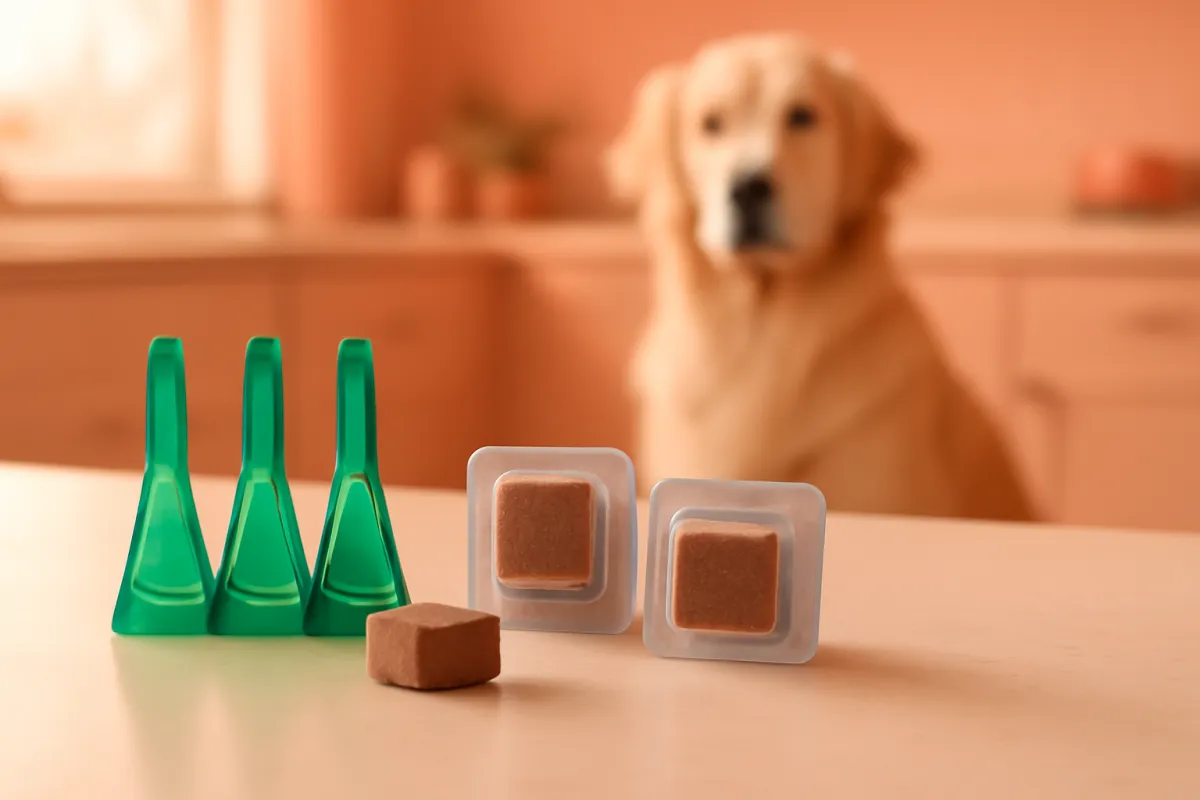
The practical move is to price a full year of the preventatives your vet recommends, then divide by twelve to get the true monthly figure, since many products are sold in six or twelve-dose packs that are cheaper per dose than buying month to month. Buying the right pack size for your dog’s weight is one of the small, safe savings on this line. What you never do is stretch doses or skip months to save money, because the whole value of prevention is that it is uninterrupted.
Pet insurance or an emergency fund, as a monthly line
Every dog budget needs a plan for the big surprise bill, and that plan belongs in the monthly budget whether you insure or self-fund. Pet insurance turns the risk of a large unexpected cost into a fixed monthly premium, commonly in the range of $30 to $60 for a dog depending on age, breed, and the coverage you choose. It is a real monthly line, and it tends to rise as the dog ages, so the premium you start with is usually the cheapest it will ever be.
The alternative is to self-insure: to set aside the same kind of money every month into a dedicated fund you control, and to pay bills yourself. Done with discipline, this can come out ahead if the dog stays healthy, because unspent money stays yours. Done without discipline, it fails at the worst moment, because the fund is not there when the emergency arrives. Which approach wins depends on the plan, the dog, and your own savings habits, and our pet-insurance read runs the full break-even math.
What is not optional is having one or the other as a monthly line. A single serious accident or illness can cost thousands, more than a year of everything else combined, and the owners who struggle most are not the ones who hit a big bill but the ones who hit it with no plan in place. Whether you call it a premium or a fund contribution, budget it every month and treat it as fixed. Run both scenarios in the calculator and pick a lane on purpose rather than by default.
The monthly slice of annual vet care
Routine veterinary care is technically an annual event, not a monthly one, but the smartest way to budget for it is as a monthly slice you set aside toward. A typical adult dog needs one wellness visit a year, with an exam, any due vaccine boosters, and often a round of bloodwork or a parasite screen. Spread across twelve months, that annual routine care usually works out to somewhere near $20 to $35 a month as an amortized figure, higher for larger dogs and in higher-cost areas. Our read on the average cost of a vet visit breaks down what that annual appointment actually includes and why the total moves from year to year.
Thinking about it this way solves a real budgeting problem. If you treat the annual vet visit as a single lump that appears out of nowhere, it feels like a shock every year. If you set aside a small amount each month toward it, the money is already there when the appointment comes, and the visit stops feeling like a surprise. The same logic extends to the vaccine boosters and dental checks that come on a yearly or multi-year cycle rather than monthly.
This amortized vet slice is separate from the emergency plan discussed above. Routine care is the predictable maintenance: the annual exam, the boosters, the wellness bloodwork. The insurance premium or fund is for the unpredictable events. Both belong in the monthly budget, but they cover different risks, and keeping them separate in your head stops you from accidentally spending the emergency reserve on a routine bill.
Grooming: the breed-dependent monthly line
Grooming is the most breed-dependent line in the entire monthly budget, which is why two dogs of the same size can have very different monthly totals. A short-haired dog needs little beyond the occasional bath at home and a nail trim, so the amortized monthly grooming cost is close to zero. A long-coated, curly, or double-coated breed that needs professional grooming every four to eight weeks is a completely different story, and that appointment cycle can add $40 to $80 a month once you spread it across the year.

This is also one of the larger controllable levers in the monthly budget. Learning to do the grooming yourself, with a decent set of clippers, a brush, and some patience, turns that $40 to $80 professional line into the modest cost of supplies amortized over a long time. Not every owner wants to, and some coats genuinely benefit from professional handling, but for owners watching the monthly number, home grooming is one of the safe savings that takes nothing away from the dog’s care.
The key is to know which line your breed falls on before you commit, because grooming is a cost you cannot opt out of for a high-maintenance coat. A matted or neglected coat is a welfare problem, not a saving. Researching a breed’s grooming needs before you fall in love with it turns a recurring surprise into a planned line, and it is one of the highest-return hours in the whole budgeting process.
Treats, toys, and the small consumables
Below the big structural lines sits a layer of smaller recurring spending that feels minor month to month and adds up over a year: treats, chews, replacement toys, poop bags, and the everyday consumables that never quite stop. Individually none of these is large. Together they typically form a modest but steady part of the monthly budget, and they are the line where enthusiasm most often outruns need.
Treats are the sneaky one, because they are both a training tool and an easy way to show affection, so they get bought freely. A generous treat and chew habit can quietly rival a chunk of the food budget, and it is worth remembering that treats are calories: overdoing them affects both the budget and the dog’s waistline. Buying treats in sensible quantities and using a portion of the regular food for training are small habits that keep this line in check.
Toys and replacement supplies follow the same pattern. Some dogs are hard on toys and go through them quickly; others keep the same favorite for years. Poop bags, a replacement leash or collar, a new bed when the old one wears out, all of it belongs in the monthly average even though it arrives unevenly. None of it is a reason to feel guilty, but folding it honestly into the budget is the difference between a plan that holds and one that mysteriously overruns every month. This is the line where a little restraint saves real money without the dog noticing at all.
Boarding, daycare, and dog walking
For some owners, the largest variable in the monthly budget is not food or vet care but the services that cover the hours they cannot. Dog walking, daycare, and boarding are optional for some households and unavoidable for others, and they can dwarf every other line when they are used regularly. A daily dog walker or full-time daycare, in particular, can cost more per month than food, preventatives, and insurance combined.
These costs depend entirely on your life, not your dog. An owner who works from home and rarely travels may spend nothing on this line all year. An owner with long commutes and frequent trips may find daycare and boarding are the single biggest thing they spend on the dog. Occasional boarding for a vacation is a lumpy, once-in-a-while cost best saved for across the year, while regular daycare or walking is a true recurring monthly line that belongs in the core budget.
Because these services vary so widely and are so personal, they sit outside the typical $80 to $260 monthly range quoted earlier, which assumes a dog that does not need paid daily care. If your situation requires walking or daycare, price it locally and add it as its own line rather than folding it into the averages, because it can easily be the largest number on the page. It is also the line most worth planning around before you get the dog, since underestimating it strains both the budget and the relationship.
Illustrative monthly cost by dog size
Pull the recurring lines together and the monthly total sorts cleanly by size, because so many of the lines scale with body weight at once. Food, preventatives, weight-based medication, and gear all rise together as the dog gets bigger, which is why the gap between a small dog and a large one is wide and consistent.
Illustrative monthly cost by dog size
Recurring monthly budget after the first year, by size band. Illustrative, excludes paid daily care.
A large breed can cost roughly double a small one every month, because food, preventatives, and medication all scale with weight. The size you choose is the biggest lever on the monthly number.
These bands assume a dog that does not need paid daily walking or daycare, and they include a modest insurance or fund contribution. Your own number can sit below the band if you self-fund and groom at home, or above it if you insure a large breed with a high-maintenance coat. The point of the chart is the shape, not the exact figures: the monthly cost roughly doubles from a small dog to a large one, and that gap is decided the moment you choose the breed.
Where a dog’s monthly budget goes
Just as revealing as the total is how it splits. When you break a typical month into its parts, two groups dominate: food and the health bundle, which together take the large majority, while grooming and the fun extras make up a smaller share than most owners guess.
Where a dog's monthly budget goes
Approximate split of a typical monthly dog budget. Illustrative.
The health bundle is the largest slice once you fold in preventatives, the insurance premium or fund, and the amortized cost of routine vet care. Food is next, and the extras are smaller than they feel.
The slice worth staring at is the health group. Broken into its own lines, preventatives, the insurance premium or fund, and the amortized vet care look small individually, which is exactly why they get underbudgeted. Added together they are usually the biggest part of the month, larger even than food. Owners who see them as one health bundle, and fund it deliberately, are the ones whose budgets do not buckle when a vet bill lands. The extras, by contrast, are where the budget has the most give without touching the dog’s care.
The average versus your dog
Every figure in this read is an average, and the honest caveat is that your dog may not be average at all. Two things swing the monthly cost hardest away from the typical range, and both are worth naming plainly. The first is size, which we have covered: it scales almost every line and is decided at the point of choosing, and our dog cost by breed read shows how much the breed itself moves both the purchase price and these recurring lines. The second is health, which no chart can predict and which can move the monthly reality dramatically.
A young, healthy dog on no medications sits at or below the averages. A dog with a chronic condition, diabetes, kidney disease, allergies, or arthritis, can carry an ongoing medication and monitoring cost that adds meaningfully to every month, sometimes more than the food line. A prescription diet, a daily pill, and more frequent vet checks turn a calm monthly budget into a higher and less flexible one. This is not common in the average month, which is why it sits outside the headline range, but it is common enough over a dog’s life that a sensible budget leaves room for it.
The practical takeaway is to treat the averages as a starting point, then adjust for your actual dog. Price your dog’s specific food and preventatives, factor in any known breed health tendencies, and if your dog already has a chronic condition, build its ongoing cost in as a fixed monthly line. A budget built from your real dog is far more reliable than one borrowed from a national average, and the calculator is built to take your own figures rather than assume the typical ones.
What is not a monthly cost
It is just as useful to be clear about what does not belong in the monthly budget, because folding one-time costs into a monthly figure is a common way to overestimate and scare yourself. The big one-time costs all live in the first year: the crate, the bed, the carrier, the initial supplies, the spay or neuter surgery, and the full puppy vaccine series. Those are setup costs, and our first-year cost read is the right tool for that phase. They are not part of the steady monthly number.
Some costs are recurring but not monthly, and those need a different treatment. The annual vet visit, vaccine boosters that come every one to three years, and a professional dental cleaning are all real but occasional. The clean way to handle them is to amortize: estimate the annual or multi-year cost, divide it down to a monthly slice, and set that aside so the lumpy bill is already funded when it arrives. That is why the monthly budget in this read includes an amortized vet slice even though no vet bill actually arrives most months.
Then there are the genuinely occasional costs that are neither monthly nor predictable: an emergency vet trip, a boarding stay for a vacation, replacing a bed the dog destroyed. These are what the emergency fund and the annual reconciliation are for. Keeping the truly monthly lines separate from the one-time and the occasional ones is what makes the monthly figure honest, and it is what stops a single big year from making you think the everyday cost is higher than it really is.
How the monthly number scales to a lifetime
The monthly figure and the lifetime total are the same commitment seen at two different zoom levels, and holding both in view prevents opposite mistakes. Multiply a typical monthly cost across a whole life and you arrive at the lifetime total our lifetime cost read tallies in full, roughly $20,000 to $35,000 over 12 to 14 years. The monthly view is the cash-flow lens; the lifetime view is the affordability lens. You need both to make an honest decision.
The catch is that the monthly cost is not flat across a life any more than it is flat across a year. The recurring number in this read describes the calm adult years, the long stretch after the first-year spike settles. In the senior years, the monthly cost drifts back up as veterinary care rises, chronic conditions appear, and medications become a standing line. So the monthly figure you budget in the calm middle is not the whole story: part of what you set aside then is really a reserve for the higher-cost months at the end of the dog’s life.
This is why thinking only in monthly terms can mislead, and why the two reads work best together. The monthly view tells you what to set aside from each paycheck right now. The lifetime view tells you whether you can afford the whole curve, including the expensive first year at the front and the senior climb at the back. A confident yes to both, the monthly cash flow and the lifetime total, is the only honest green light for bringing a dog home.
Building the emergency fund into your monthly budget
The single most important line in a dog’s monthly budget is also the one most owners skip: the deliberate monthly contribution toward the big surprise. Whether you pay it to an insurer as a premium or to yourself as a fund contribution, this line is what turns a frightening emergency bill into a manageable one. A serious accident or illness can cost thousands, and the difference between a crisis and an inconvenience is almost always whether the money was being set aside quietly all along.
Building it in is simple once you decide to. Pick a monthly figure, treat it as fixed as the food bill, and automate it so it happens without a decision every month. If you insure, the premium does this for you. If you self-fund, set up an automatic transfer to a separate savings account on the same day each month, and leave it alone until a real emergency arrives. The discipline of paying yourself first is what makes self-funding actually work, and its absence is why casual self-funding so often fails.
A sensible target for a self-managed fund is enough to cover a serious unexpected visit, which can run well into the thousands. Building toward a cushion of a few thousand dollars, then topping it back up after any draw, gives most owners real peace of mind. The monthly contribution that gets you there is small; the protection it buys is not. This is the line to fund first and cut last, because it is the only one that stands between an ordinary budget and a genuine emergency.
Ways to cut the monthly cost without cutting care
You can bring the monthly number down meaningfully without shortchanging the dog, as long as you cut prices rather than care. These are the levers that genuinely move the recurring total.
- Buy food and preventatives in the right quantities. Larger bags and multi-dose packs are cheaper per unit than small ones. Buying the correct size for your dog reduces both waste and the per-month cost.
- Learn basic grooming at home. For a high-maintenance coat, home grooming turns a $40 to $80 monthly line into the cost of supplies, one of the biggest safe savings available.
- Rein in the treats and extras. This is the line with the most give. Sensible treat quantities and using regular food for training trim the total without the dog noticing.
- Price services and clinics locally. Vet, grooming, and boarding prices vary widely. A quick comparison, and asking about wellness-plan pricing, can lower the fixed lines.
- Use subscriptions only where they truly save. Auto-ship can cut per-unit costs, but only if you would have bought the item anyway. Cancel the ones that just encourage buying more.
The one corner you must never cut is preventative care. Skipping parasite prevention or a wellness visit to save a little each month is how owners end up with a treatment bill that dwarfs a year of prevention. Save on the marketing, the packaging, and the extras; never on the medicine. The calculator lets you test each of these levers and see what it does to your own monthly figure before you change anything.
A worked example: one small dog and one large dog
Numbers land better with examples, so here are two illustrative monthly budgets, built line by line, that show how much size moves the recurring total. Both assume a healthy adult dog past the first year, both insured with a modest premium, and neither needing paid daily care. The figures are planning numbers, not quotes.
A small dog might spend around $30 a month on food, $15 on preventatives, and $20 as the amortized slice of routine vet care. Add a $30 insurance premium or fund contribution, roughly $15 for treats and supplies, and near zero for grooming on a short coat. That comes to about $110 a month, a shade under $1,400 a year, with the biggest lines being food and the health bundle. A short-haired small dog is close to the cheapest a dog gets to keep on a monthly basis.
A large dog reverses almost every line. Food climbs to $85 a month, preventatives to $30, and the amortized vet slice to $35 as the larger body raises weight-based costs. The insurance premium runs higher at $50, treats and supplies nearer $25, and if the breed needs professional grooming, add $40 amortized. That reaches roughly $265 a month, near $3,200 a year, more than double the small dog. Same care, same structure, very different number, and almost all of the difference traces back to one choice made before the dog came home.
Neither budget is right or wrong; they are two honest pictures of what the same commitment costs at different sizes. The point is that your monthly number is yours, largely set by the size you choose and the optional lines you control. Build it from your own dog in the calculator and you get a figure you can actually plan a paycheck around.
A monthly budget checklist
Before you settle on a dog, or to sanity-check the one you have, run your recurring budget past these points so no monthly line catches you out.
- Estimate the monthly total for the size of dog you are choosing, not a generic average, since size moves almost every line at once.
- List the recurring lines separately, food, preventatives, amortized vet, insurance or fund, treats, and grooming, so none is quietly missing.
- Amortize the annual costs into monthly slices, so the yearly vet visit and boosters are funded before they arrive.
- Fund the big-bill line first, insurance or an emergency fund, and automate it so it happens without a monthly decision.
- Add paid care separately if you need it, because walking or daycare can be the largest line of all and sits outside the typical range.
Put your own figures into the cost calculator to turn this into a single monthly number, and an annual one, that you can plan around with confidence.
The bottom line
A dog’s recurring cost, once the expensive first year is behind you, typically runs $80 to $260 a month, with size the biggest driver because food, preventatives, and medication all scale with weight. The monthly budget is dominated by food and the health bundle, preventatives plus insurance or a fund plus the amortized slice of routine vet care, while treats, toys, and grooming take a smaller share than most owners expect.
Treat the monthly figure as an average to set aside, not a fixed bill, let it pool in the quiet months and cover the lumpy ones, and fund the big-bill line first and cut it last. Build the number from your own dog’s size and your own choices rather than a national average, keep the emergency contribution flowing every month, and the money side of living with a dog settles into a calm, predictable rhythm, which is exactly what it should be once the first-year chaos is done. The monthly cost is the everyday reality of dog ownership, and a dog you have budgeted for month to month is a dog you can simply enjoy.
One more note from the MuttMark team before you go and top up the water bowl: this cost read is written to help you plan the everyday budget, and it is not veterinary, financial, or insurance advice of any kind. Every figure in it, from the monthly ranges to the line-by-line examples, is an illustrative planning estimate rather than a quote, and your real monthly cost will move with your dog’s size, breed, and health, your city, your clinic, and the choices only you can make. A monthly budget is a local, personal thing, so price the real lines for your own dog: ask your vet what preventatives and routine care actually cost, get a real insurance quote if you plan to insure, and let the dog in front of you, not an average, set your number.
Frequently asked questions
How much does a dog cost per month?
After the expensive first year is behind you, a typical dog costs roughly $80 to $260 a month, with small breeds toward the bottom and large or giant breeds at the top. That range is illustrative and covers the recurring lines: food, flea, tick, and heartworm prevention, the monthly slice of routine vet care, treats and supplies, grooming for breeds that need it, and either an insurance premium or a monthly emergency-fund contribution. The single biggest driver of where you land is the size of the dog, because almost every line scales with body weight.
What is the biggest monthly cost of owning a dog?
For most dogs, food is the largest single recurring line, and it scales sharply with size. A small dog might eat a modest amount of good food each month, while a large or giant breed can cost several times as much to feed. The other big monthly line is the health bundle: parasite preventatives, the amortized cost of annual vet care, and an insurance premium or fund contribution. Together those two groups, food and health, usually make up the bulk of the monthly budget, and the fun stuff is a smaller slice than people expect.
How much does it cost to feed a dog per month?
Feeding a dog a complete, good-quality diet typically runs somewhere near $30 a month for a small dog, $50 to $60 for a medium one, and $80 or more for a large or giant breed, as illustrative figures. The number moves with the dog's weight, the food you choose, and whether you add wet food or fresh toppers. Prescription or therapeutic diets cost considerably more. The sensible middle is a complete, balanced food at a fair price, measured rather than free-fed, which protects both the dog's health and the budget.
Does pet insurance count as a monthly dog cost?
Yes, and it belongs in the monthly budget whether you buy a policy or self-fund. A pet insurance premium is a fixed monthly cost, commonly in the range of $30 to $60 for a dog depending on age, breed, and coverage. If you choose not to insure, the honest equivalent is setting the same kind of money aside every month into a dedicated emergency fund, so a large surprise bill does not become a crisis. Our pet-insurance read walks through the math of which approach wins for different owners.
How much should I budget monthly for dog grooming?
Grooming is the most breed-dependent monthly line there is. A short-haired dog needs almost nothing beyond the occasional bath at home, so the amortized monthly cost is close to zero. A long-coated or curly breed that needs professional grooming every four to eight weeks can add $40 to $80 a month once you spread the appointments across the year. Doing the grooming yourself with clippers and brushes cuts that to the cost of the supplies, which is one of the larger controllable levers in the monthly budget.
Why does a bigger dog cost more per month?
Almost every monthly line scales with the dog's weight. A larger dog eats more food, needs larger and pricier doses of flea, tick, and heartworm prevention, and generally costs more for medications and vet procedures because dosing and pricing follow body weight. Bigger dogs also tend to need larger beds, crates, and replacement gear. A giant breed can cost roughly double a small one to keep each month, which is why size is the biggest budget decision an owner makes, and it is locked in the day the dog is chosen.
Is the monthly cost the same every month?
No, and treating the monthly average as a fixed monthly bill is the most common budgeting mistake. Some months carry only food and preventatives, while others carry the annual vet visit, a grooming appointment, a vaccine booster, or a surprise. The realistic approach is to budget the monthly average automatically, let it pool in the quiet months, and draw it down when the lumpy annual and one-time costs land. That way the uneven reality of dog spending never catches your bank balance off guard.
How can I lower the monthly cost of a dog without cutting care?
The safe savings come from prices, not from care. Buy food and preventatives in the right quantities rather than in small expensive packs, learn to do basic grooming at home, use subscriptions or bulk pricing where they genuinely cut the per-unit cost, and price local services rather than defaulting to the first quote. The corner you must never cut is preventative care: skipping parasite prevention or a wellness visit to save a little each month risks a treatment bill many times larger than the saving, so trim the marketing and the extras, never the medicine.