

What's on this page
- What a bland diet for puppies is
- When a bland diet helps for diarrhea
- See a vet immediately if you notice these signs
- Why puppies need extra caution
- What goes in a puppy bland diet
- Foods and add-ins to avoid
- How to cook plain chicken and rice for a puppy
- How much to feed: portions by weight
- The chicken to rice ratio
- How often to feed and how to start
- Hydration: keeping a puppy drinking
- How long to keep a puppy on a bland diet
- How to transition back to normal food
- Pumpkin, probiotics, and other gentle add-ins
- Common causes of a puppy upset stomach
- Symptom guide: home care versus calling the vet
- What not to do for a puppy’s upset stomach
- A worked example: a bland diet day
- Common mistakes with a puppy bland diet
- A quick bland-diet checklist
- How this fits your puppy budget
- The bottom line
Short answer: A bland diet for a puppy with a mild upset stomach is plain boiled skinless chicken or turkey with plain white rice, with no salt, oil, butter, onion, garlic or seasoning, fed in small frequent meals at roughly one part protein to two parts rice. Keep it to a day or two, then blend regular food back in. Call your vet for blood, repeated vomiting, lethargy, dehydration or diarrhea beyond about 24 to 48 hours.
A puppy bland diet for diarrhea is one of the gentlest things you can do for a mild, short-lived upset stomach, but it comes with an important condition that this field guide will repeat more than once: it is home comfort care for a puppy who is otherwise bright and well, not a substitute for a vet when something more serious is going on. Plain boiled chicken or turkey with plain white rice, or a little plain pumpkin, is easy on an irritated gut and gives a settled stomach a chance to recover. Used sensibly, for a day or two, it is a reasonable first response to the occasional soft stool that most puppies have at some point.
This field guide explains what a bland diet is, exactly what goes in it and what must stay out, when it helps and when it will not, how much to feed and how often, how to keep a puppy hydrated, how long to continue, and how to transition back to normal food. Most importantly, it lays out the red-flag signs that mean you should stop managing things at home and call your vet right away, because puppies dehydrate fast and have far less reserve than adult dogs. Everything here is general information, not veterinary advice for your individual puppy, and for a young, small, or unwell puppy the safest move is always to call your vet. You can see how a bland diet sits inside broader puppy feeding in our field guide on what puppies can eat, and size the wider costs with the calculator.
Key takeaways
- A bland diet is plain, easily digested food (boiled skinless chicken or turkey plus plain white rice, or a little plain pumpkin) with no salt, oil, butter, onion, garlic, or seasoning, used short-term for a mild upset stomach.
- Feed small, frequent meals of roughly one part lean protein to two parts plain carbohydrate, keep fresh water available, and do not fast a young puppy without your vet's say-so.
- Keep it short: usually a day or two, then blend regular puppy food back in over a few days once stools start to firm up. It is comfort food, not complete nutrition.
- Call your vet right away for blood in stool or vomit, repeated vomiting, lethargy, a painful belly, signs of dehydration, a suspected toxin or swallowed object, or diarrhea lasting beyond about 24 to 48 hours.
- Puppies dehydrate fast and can crash quickly, so keep your vet threshold low. This is general information, not veterinary advice, and never give human anti-diarrhea or other medicine on your own.
What a bland diet for puppies is
A bland diet is a short-term meal plan of plain, easily digested food that gives an upset stomach a rest. The idea is simple: strip a meal back to one gentle protein and one gentle carbohydrate, remove everything that irritates or is hard to digest, and feed it in small amounts so the gut has less work to do. For a puppy, the classic version is plain boiled or poached skinless, boneless chicken or turkey combined with plain white rice, and sometimes a spoon of plain pumpkin. It is deliberately boring food, and that is the point.
What makes it bland is as much about what is left out as what goes in. There is no salt, no oil or butter, no broth, no onion or garlic, no gravy, and no seasoning of any kind, because fat and spices and many common flavorings are exactly what an irritated puppy gut struggles with. White rice is used rather than brown because it is lower in fiber and easier to digest, and lean chicken or turkey is used because it is a mild, low-fat protein. The result is food that is easy to break down and gentle on the way through.
It helps to be honest about what a bland diet is not. It is not complete, balanced nutrition, so it is a short bridge rather than a lasting diet for a growing puppy. It is also not a treatment for a serious illness, a poisoning, or a blockage, and it will not fix a problem that needs a vet. Think of it as supportive home comfort care for a mild, passing upset in a puppy who is otherwise bright, and read the rest of this field guide, especially the section on when to call your vet, before you rely on it.
When a bland diet helps for diarrhea
A bland diet is most useful for the everyday, mild digestive upsets that puppies are prone to: a single episode of soft stool or loose diarrhea, a bit of a gurgly stomach, or the aftermath of a small, sudden diet change when your puppy is otherwise acting normal. In those situations, resting the gut with plain food for a day or two often gives things time to settle. The typical candidate is a puppy who is still bright, alert, drinking, and interested in life, with a mild, short-lived tummy problem rather than a sick, flat, or painful one.
It is just as important to know when a bland diet is the wrong tool. It is not the answer for a puppy who is vomiting repeatedly, passing blood, refusing to drink, becoming lethargic, or showing a painful or swollen belly, and it is not a way to manage a suspected toxin or a swallowed object. In those cases, plain chicken and rice does nothing to address the real problem, and the time spent trying it at home is time your puppy may not have to spare. The bland diet is for the mild end of the spectrum only.
Because puppies can move from mild to serious faster than adult dogs, the safe posture is to start a bland diet only when your puppy still seems well in themselves, and to keep watching closely. If anything worsens, or the upset does not begin to ease within about a day, the plan changes from home care to a phone call. This is general information rather than advice about your specific puppy, so if you are unsure whether your puppy’s case is mild enough for home care, that uncertainty is itself a good reason to call your vet.
See a vet immediately if you notice these signs
This is the most important section in this field guide, so read it first if you read nothing else. A bland diet is only ever appropriate for a mild upset in a puppy who is otherwise well. Some signs mean you should stop thinking about home care entirely and contact your vet or an emergency clinic right away, because they can point to something serious that needs professional treatment fast. With a puppy, acting early is almost always the right call, since a young puppy has very little margin.
Call your vet without delay if you notice any of these: blood in the stool or vomit, whether bright red or dark and tarry; repeated vomiting, or an inability to keep down even water; diarrhea that is severe, watery, or keeps coming for more than about 24 to 48 hours; a swollen, hard, or painful belly; unusual lethargy, weakness, collapse, or a puppy who is hard to rouse; pale, white, or bluish gums; signs of dehydration such as sticky or dry gums, sunken eyes, or skin that is slow to spring back; a suspected toxin, poison, or medication; or any sign your puppy swallowed a foreign object such as a toy, sock, bone, or corn cob. Very young or very small puppies, and puppies with an existing health condition, warrant a call even sooner.
The reason the threshold is so low for puppies is worth stating plainly: puppies dehydrate quickly, have small energy reserves, and can develop dangerously low blood sugar, so a problem that an adult dog might shrug off can become an emergency in a puppy in a matter of hours. When you are weighing whether to call, remember that a phone conversation costs little and buys peace of mind, while waiting can cost time you cannot get back. Our field guide on preparing for a pet emergency is worth reading before you ever need it, so the vet and poison-control numbers are already in your phone.
Why puppies need extra caution
A puppy is not a small adult dog when it comes to an upset stomach, and that difference is the reason this field guide keeps pointing back to your vet. Puppies have a much smaller body mass and far less fluid reserve, so the fluid lost through diarrhea and vomiting represents a bigger share of them and adds up faster. Dehydration that would take a while to become dangerous in a grown dog can set in quickly in a young puppy, which is why keeping water available and watching closely matters so much, and why a puppy who will not drink is a genuine worry rather than a wait-and-see.
Puppies are also still growing at a remarkable pace, and that growth depends on steady, complete nutrition and stable blood sugar. Very young and toy or small-breed puppies in particular can develop low blood sugar (hypoglycemia) if they go too long without eating, which is one reason the common adult advice to briefly withhold food does not translate safely to puppies. It is also why a bland diet for a puppy leans on small, frequent meals rather than fasting, and why any plan to hold food should be a vet’s decision, not a home guess.
On top of that, puppies simply meet more of the things that cause an upset stomach: they are exploring the world with their mouths, sampling things they should not, going through diet changes and vaccinations, and are more exposed to intestinal parasites than a settled adult. All of this means a puppy’s diarrhea deserves closer attention and a lower threshold for professional help. None of this is meant to frighten you, only to set the right posture: home comfort care for the clearly mild cases, and a prompt call to your vet for anything else or anything you are unsure about.
What goes in a puppy bland diet
The core of a puppy bland diet is two ingredients: one lean, gentle protein and one plain, easily digested carbohydrate. For the protein, plain skinless, boneless chicken breast is the standard choice, and plain skinless turkey works just as well. For the carbohydrate, plain white rice, cooked soft, is the usual partner because it is low in fiber and easy to digest. That simple pairing, plain chicken or turkey with plain white rice, is what most people mean when they talk about a bland diet, and for many mild upsets it is all you need.
There are a few acceptable variations, all of which keep to the same plain principle. Plain cooked or canned pumpkin, with absolutely nothing added, can replace some of the rice or be stirred in as a small spoonful, since it is soft, mild, and a source of gentle fiber. Plain, well-cooked white potato without skin is sometimes used as an alternative carbohydrate. A little plain, low-fat cooked egg is another mild protein some owners use. The theme across all of them is unwavering: plain preparation, low fat, no additions, and small portions.
| Bland diet component | Good plain options | Keep it simple |
|---|---|---|
| Lean protein | Boiled skinless chicken breast, plain skinless turkey, plain cooked egg | Boneless, skinless, fully cooked, drained of fat, no seasoning |
| Gentle carbohydrate | Plain white rice, plain pumpkin, plain white potato (no skin) | Cooked soft, plain, no butter or oil, more rice than meat |
| Liquid | Fresh plain water, always available | No broth, no milk, no added salt or flavor |
Keep in mind that these are gentle foods chosen for digestibility, not a complete diet, and the plainness is what makes them work. The moment you add fat, salt, or flavor, you undo the point of the exercise. If your puppy has a known health condition or is on a prescription food, do not improvise even a bland diet without checking first, because the right approach for your puppy may be different, and your vet is the person to ask.
Foods and add-ins to avoid
The mistakes that undo a bland diet almost always come from what gets added, so this list matters as much as the ingredient list. Keep all fat out: no oil, no butter, no chicken skin, no pan drippings, and no fatty cuts of meat, because fat is hard on an irritated gut and, in larger amounts, can contribute to painful pancreas inflammation. Keep salt and seasoning out entirely, including bouillon, stock cubes, and broth, which are usually salty and often contain onion or garlic. Keep dairy out, since many puppies do not digest milk well and it can worsen diarrhea.
Two additions deserve a specific warning because they are genuinely toxic to dogs, not merely unhelpful: onion and garlic, in every form, including powder, and anything they are cooked into. This is why you must never poach the chicken in broth or season the rice, and why table scraps and leftovers are a poor choice for a bland meal, since so many human dishes start with onion and garlic. Our field guide on what puppies can eat covers the wider list of foods that are dangerous to dogs, and it is worth knowing before you cook anything for a puppy.
Also skip cooked bones, which splinter and can choke a puppy or perforate the gut, so plain chicken always means boneless chicken. Skip brown rice for a bland diet, since its higher fiber is harder to digest than plain white rice when the stomach is upset, and skip spiced pumpkin pie filling, which is loaded with sugar and spices. Above all, do not reach for the human medicine cabinet: this field guide gives no medication names or doses, because anti-diarrhea drugs, pain relievers, and other over-the-counter medicines can be dangerous or toxic to puppies, and dosing is a decision only your vet can make safely.
How to cook plain chicken and rice for a puppy
Making a bland meal is straightforward, and the goal at every step is to keep it plain. Start with skinless, boneless chicken breast, and remove any visible fat. Poach or boil it in plain water, with nothing added, until it is fully cooked all the way through, then drain it, discard the cooking water, and let it cool. Do not fry it, do not add oil or butter, and do not season it in any way. Once cooled, shred or finely chop it into pieces small enough for your puppy to swallow safely, since a gulping puppy can choke on chunks that are too large.
Cook the white rice separately in plain water until it is soft, a little more cooked than you might make it for yourself, because softer rice is gentler and easier to digest. Again, add nothing: no salt, no butter, no stock. When both are ready and cooled to lukewarm, combine them in roughly one part chicken to two parts rice, so the meal is mostly the gentle carbohydrate with enough plain protein to make it appealing. Turkey can replace the chicken with the same method, and a small spoon of plain pumpkin can stand in for some of the rice.
Serve the meal lukewarm rather than hot or fridge-cold, since a comfortable temperature is easier on the stomach and more tempting to a queasy puppy. Make only what you will use within a day or two, refrigerate any extra promptly, and throw away anything that has been sitting out. If your puppy turns their nose up at the first small offering, do not force it, and if they refuse food repeatedly or seem to be getting worse, that is a sign to stop and call your vet rather than to keep coaxing.
How much to feed: portions by weight
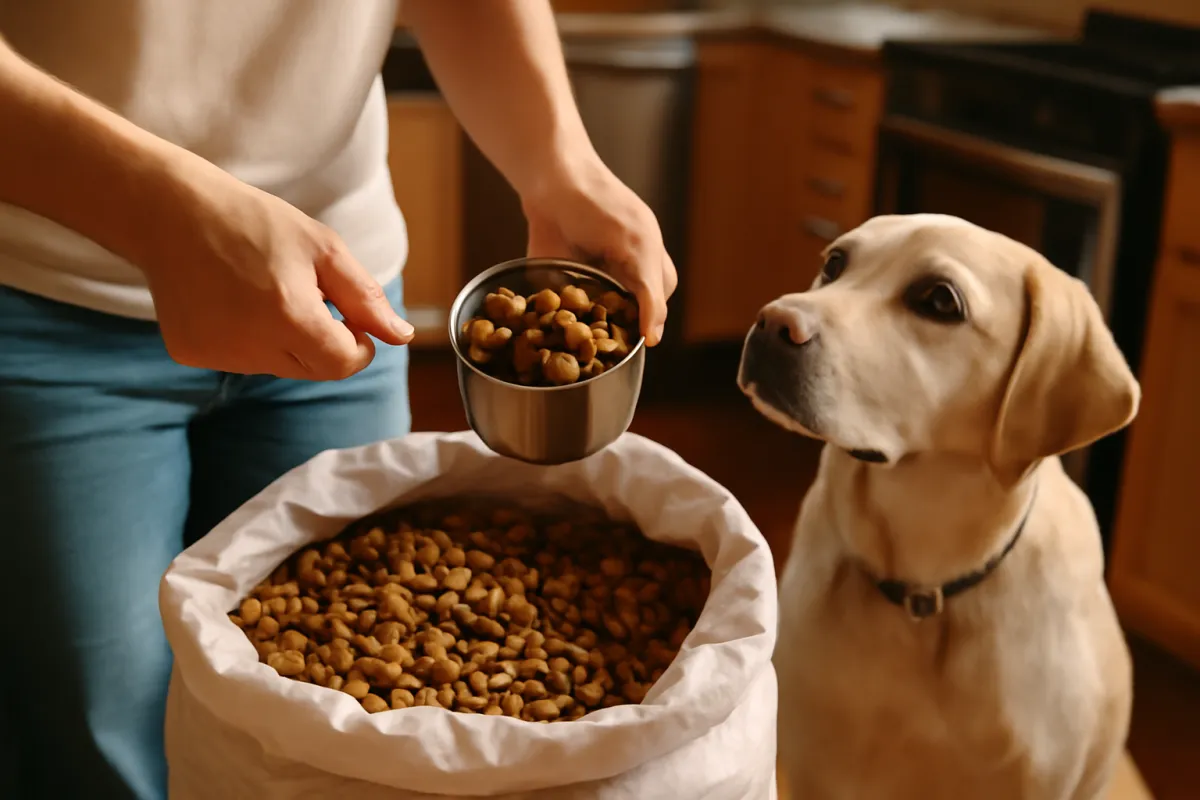
The simplest rule for amounts is to feed roughly the same total each day that your puppy normally eats, but to split it into more, smaller meals, because small portions are easier on an irritated gut than one or two large ones. Many owners begin a little lighter, offering a small first meal to see how it settles, then building back toward the normal daily amount over the day if things are going well. The exact quantity depends heavily on your puppy’s size and age, so the figures below are illustrative planning numbers to reason from, not a feeding prescription.
Illustrative daily calories to aim for by puppy weight
A rough sense of a day's food, split into about four small bland meals. Illustrative figures based on an estimate of a growing puppy's needs, not a prescription.
Illustrative only, and a sick puppy often eats less than this. Feed a little lighter at first, split into small meals, and let your vet set the right amount for your puppy.
The chart shows how different the same rule looks across sizes, which is exactly why a single spoon count would be misleading. A small-breed puppy needs only a small amount split across the day, while a large-breed puppy needs considerably more, and a sick puppy of any size often wants less than usual, which is fine for a short stretch as long as they are drinking and not getting worse. Do not try to make a poorly puppy eat a full portion; small and frequent beats large and forced. You can turn your own puppy’s weight into an illustrative per-meal figure with the companion below.
Treat these numbers as a shape rather than a target. A puppy’s real needs shift quickly with growth and vary by breed and activity, and appetite naturally dips during an upset. The reliable signals are behavior and stool, not hitting a calorie figure: a puppy who is keeping small bland meals down, drinking, and gradually firming up is on track, while one who will not eat at all, cannot keep water down, or is fading needs a vet rather than more food.
The chicken to rice ratio
Getting the ratio right is a small detail that makes a real difference, because the carbohydrate is the gentler part of the meal and the protein is the richer part. The widely used starting point is about one part lean protein to two parts plain carbohydrate, so the meal is mostly rice or pumpkin with enough plain chicken or turkey to make it palatable. That balance keeps the fat and protein load modest while still giving your puppy something appealing to eat.
A starting bland-meal mix, by volume
A common one-to-two ratio of lean protein to plain carbohydrate. Illustrative shares, adjustable on your vet's advice.
A rough starting ratio, not a rule. Some puppies do better with even more carbohydrate at first. Your vet can fine-tune it for your puppy.
If your puppy’s stomach is especially unsettled, leaning even further toward the carbohydrate, with a little less chicken, can be gentler still for the first meal or two. The point is that the rice or pumpkin should clearly dominate the bowl, not the meat. Whatever the ratio, keep the total amount modest and split across small meals, and keep every component plain, because the ratio only helps if nothing fatty or seasoned sneaks in.
As things improve, you do not need to obsess over the exact proportions; the ratio is a sensible starting shape rather than a rule to measure to the gram. What matters more is that the food stays plain, the portions stay small and frequent, and you are watching how your puppy responds. If the mix that seems to sit best still is not settling the diarrhea within a day or so, the ratio is not the issue, and it is time to call your vet.
How often to feed and how to start
Frequency is where a puppy bland diet differs most from the adult version. Rather than one or two big meals, offer small amounts more often, commonly around four small meals spread across the day, because little and often is easier on a recovering gut and steadier for a puppy’s blood sugar. Start with a small first portion once your puppy seems ready to eat, watch how it settles over the next hour or two, and if it stays down and your puppy seems comfortable, continue with the next small meal on schedule.
A word on fasting, because the advice differs for puppies. For adult dogs, some guidance suggests briefly withholding food to rest the stomach, but this does not translate safely to young puppies, who have little energy reserve and can develop low blood sugar if they go without food for too long. For that reason, a puppy bland diet generally means small, frequent meals rather than a fast, and any decision to hold food from a puppy should come from your vet, not from something you read online, including here. Water, by contrast, should never be withheld.
Let your puppy’s response guide the pace. If small meals are staying down and your puppy is bright and drinking, you are on a reasonable track and can keep the small-and-frequent rhythm going for the day. If a meal comes straight back up, if your puppy refuses food repeatedly, or if they seem to be sliding rather than steadying, stop and call your vet rather than pushing more food. The feeding schedule is a comfort measure for a mild case, and it is never a reason to delay a call when the picture is worsening.
Hydration: keeping a puppy drinking
Hydration matters more than food during an upset stomach, because diarrhea and any vomiting pull fluid out of a small body quickly. Always keep fresh, clean water available and easy to reach, and never restrict a puppy’s water when they are losing fluid. Notice how much your puppy is drinking, and take a puppy who will not drink at all, or who cannot keep water down, seriously, because that combination moves a case out of home-care territory and toward a vet visit.
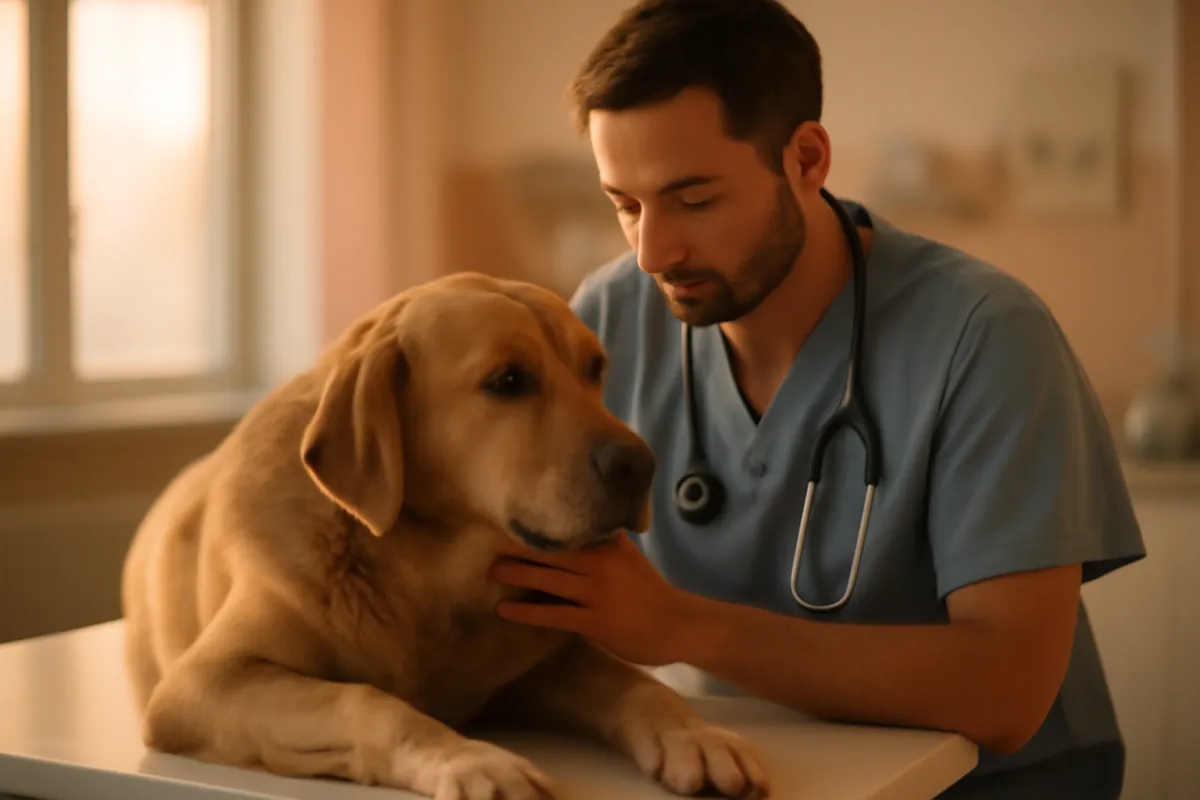
It helps to know what dehydration can look like so you can catch it early. Common signs include gums that feel tacky or dry rather than slick, a loss of the usual skin springiness (skin that is slow to settle back when gently lifted), sunken-looking eyes, low energy, and reduced urination. These signs mean call your vet promptly, and with a young puppy do not wait to see how far it goes. A vet may need to give fluids, and that is not something to attempt at home.
There are gentle ways to encourage drinking within a home-care plan: offering water in small, frequent amounts, keeping bowls clean and accessible, and, for some puppies, adding a little water to the bland food to increase fluid intake. What you should not do is offer sports drinks, flavored waters, milk, or homemade electrolyte mixes to a puppy without veterinary direction, since the wrong balance can do harm. If you feel your puppy needs more than plain water to stay hydrated, that is a signal to call your vet rather than to experiment, because a dehydrating puppy is a time-sensitive situation.
How long to keep a puppy on a bland diet
A bland diet is meant to be brief. Because plain chicken and rice is comfort food rather than complete, balanced nutrition, a growing puppy should not stay on it for long, and a good rule of thumb is a day or two while the upset settles, followed by a gradual return to normal food. If the diarrhea is easing, your puppy is bright and drinking, and food is staying down, you are on the right side of the line and can start thinking about transitioning back once stools begin to firm up.
The more important number is the point at which home care should stop. If there is no clear improvement within about 24 to 48 hours, or the diarrhea worsens, recurs, or is joined by any of the red-flag signs covered earlier, that is your cue to stop managing at home and call your vet. Waiting longer than that, hoping a bland diet will eventually work, is a common and understandable mistake, but for a puppy it can let a treatable problem become a serious one. When in doubt, the timeline favors calling sooner.
Two extra cautions fit here. First, a bland diet that seems to help but that you feel the need to keep repeating, because the upset keeps coming back, points to an underlying issue that deserves a proper look rather than another round of chicken and rice. Second, because this is general information and not advice about your individual puppy, a very young, very small, or otherwise vulnerable puppy warrants an earlier call than these general windows suggest. Your vet knows your puppy in a way a timeline cannot.
How to transition back to normal food
Coming off a bland diet should be gradual, not a sudden switch, because an abrupt change back to regular food can restart the upset you just settled. Once your puppy has had firmer, more normal stools for a day or so and is otherwise bright and eating well, begin blending their usual complete puppy food back in over several days. A gentle approach is to start with mostly bland food and a little regular food, then shift the balance a bit more toward the regular food each day until you are back to their normal diet.
A simple few-day pattern works well: on the first day, mix roughly three parts bland food to one part regular puppy food; on the next, move to about half and half; then to mostly regular food with a little bland; and finally back to the full regular diet. Watch the stools at each step, and if things loosen again, drop back to the previous, more bland ratio for another day before trying to advance. This slow taper gives the gut time to readjust and makes any hiccup easy to spot and step back from.
Return to your puppy’s normal meal schedule and portions as you go, since the complete puppy food is what actually supports growth, and the bland diet was only ever a short bridge. If your puppy will not tolerate the transition, keeps relapsing each time you reintroduce regular food, or is not fully back to themselves, that is worth a conversation with your vet rather than repeated attempts at home. You can use the companion to keep the per-meal amounts sensible as you blend back toward normal food.
Pumpkin, probiotics, and other gentle add-ins
Beyond plain chicken and rice, a few gentle add-ins come up often, and they are fine in moderation as long as expectations stay realistic. Plain pumpkin is the most popular: a small spoon of pure cooked or canned pumpkin, never spiced pie filling, adds soft, mild fiber that some puppies tolerate well. The catch is that fiber cuts both ways, so a small amount can help firm things up while too much can loosen stools further, which is why the guidance is a small spoon, not a scoop. It is a supportive extra, not a fix.
Probiotics made for dogs are another commonly mentioned option, intended to support the gut’s normal balance, and some owners use a vet-recommended pet probiotic during and after an upset. The honest position is that these are supportive rather than curative, and that a probiotic marketed for humans is not automatically appropriate for a puppy, so this is a good thing to ask your vet about rather than to pick off a shelf. It is not a substitute for veterinary care when the signs are anything more than mild.
What ties these together is that they are gentle helpers within a short-term plan, not treatments. None of them addresses a poisoning, a blockage, a parasite, or an infection, and none replaces a vet call when your puppy shows red-flag signs or is not improving. If you want to add pumpkin or a probiotic, keep the amounts small, keep everything else plain, and treat any add-in as a minor supporting player behind the two things that matter most: careful watching and a low threshold for professional help.
Common causes of a puppy upset stomach
Understanding why puppies get upset stomachs helps you judge whether a bland diet is even the right response. The most common cause is dietary: a sudden change of food, a new treat, or scavenging something they should not have, all of which can loosen a young gut. Puppies explore with their mouths and eat things they find, so garbage, table scraps, rich foods, and non-food objects are frequent culprits, and these range from a passing upset to a genuine emergency depending on what was eaten.
Other common causes are less about diet. Stress and excitement, such as a move, travel, new surroundings, or a change in routine, can trigger loose stools in a sensitive puppy. Intestinal parasites, which puppies are especially prone to, are a frequent cause of diarrhea and are a reason not to simply manage recurring upsets at home, since they need diagnosis and treatment. Viral and bacterial infections, some of them serious in unvaccinated or partly vaccinated puppies, are another reason a poorly puppy with diarrhea deserves veterinary attention rather than home care alone.
The practical takeaway is that a bland diet fits the mild, dietary, self-limiting end of this list, where a puppy is otherwise well and simply needs a gentle rest for the gut. It does not fit, and can waste precious time against, the causes that need a vet: a suspected toxin or swallowed object, parasites, or an infection. If you cannot confidently place your puppy’s upset in the mild, dietary category, or if it keeps returning, treat that as a reason to call your vet, who can work out the cause rather than just soothe the symptom.
Symptom guide: home care versus calling the vet
Because the single most important skill here is knowing which side of the line your puppy is on, the table below pairs common situations with a reasonable response. It is a general guide, not a diagnosis, and it is deliberately cautious, because with a puppy the cost of an unnecessary phone call is small and the cost of waiting can be high. When two situations apply at once, or you are unsure, always follow the more cautious row and call.
| What you are seeing | Reasonable home care | Call the vet |
|---|---|---|
| One or two soft stools, puppy bright, eating, drinking | A short bland diet and close watching may be reasonable | If it is not improving within about 24 to 48 hours |
| Mild diarrhea, no other signs, puppy otherwise well | Small frequent bland meals, fresh water, monitor closely | If it worsens, recurs, or your puppy is very young or small |
| Blood in stool or vomit (red or dark) | Not a home-care situation | Right away, treat as urgent |
| Repeated vomiting, or cannot keep water down | Not a home-care situation | Right away, treat as urgent |
| Lethargy, weakness, collapse, pale gums | Not a home-care situation | Right away, treat as urgent |
| Swollen, hard, or painful belly | Not a home-care situation | Right away, treat as urgent |
| Signs of dehydration (dry gums, sunken eyes, skin slow to settle) | Not a home-care situation | Promptly, especially in a young puppy |
| Suspected toxin, poison, medication, or swallowed object | Not a home-care situation | Immediately, and mention what you suspect |
Use the table as a triage aid, not a substitute for judgment or a vet’s assessment. The left column exists for the genuinely mild cases; every serious sign belongs on the right. If your instinct is telling you something is wrong even when the signs seem minor, trust it and call, because you know your puppy. Our field guide on how to choose a vet can help you line up a practice before you are in the middle of a worry.
What not to do for a puppy’s upset stomach
A few well-meant mistakes cause real harm, so they are worth stating as plainly as the do-list. First and most important: do not give your puppy any human anti-diarrhea medicine, pain reliever, or other over-the-counter drug on your own. Several common human medications are dangerous or toxic to dogs, and young puppies and certain breeds are especially sensitive. This field guide gives no medicine names or doses on purpose, because safely medicating a puppy depends on exact weight, age, and health, and that is a decision only your vet can make.
Do not fast a young puppy to rest the stomach without your vet’s say-so, because puppies can develop low blood sugar without food, and do not withhold water at any point. Do not feed a bland diet that is anything other than plain: no broth, no salt, no butter or oil, no onion or garlic, no dairy, and no seasoning, since these can worsen the upset or, in the case of onion and garlic, be genuinely toxic. Do not keep a puppy on a bland diet for a long stretch, because it is not complete nutrition for a growing animal.
Finally, do not use a bland diet as a way to avoid or delay a vet visit when the signs call for one. It is comfort care for a mild, passing upset, and nothing more. Treating a serious problem at home, or repeating chicken and rice for an upset that keeps returning, can turn a manageable situation into a costly or dangerous one. The cheapest and safest move is almost always an early phone call, a point our field guide on lowering your vet bills makes about problems across the board: catching them early usually beats waiting.
A worked example: a bland diet day
Numbers are easier to picture carried through, so here is one illustrative day for a medium puppy of about twenty pounds who has had a single bout of mild diarrhea but is otherwise bright, drinking, and interested in food. Treated as a shape to reason from rather than a prescription, a puppy this size might aim for somewhere around 700 calories on a normal day, and the owner splits that into about four small bland meals instead of the usual one or two larger ones, feeding a little lighter at the first meal to see how it settles.
Each small meal is the same simple thing: plain boiled chicken shredded small, mixed with a larger amount of soft plain white rice at roughly a one-to-two ratio, served lukewarm, with a small spoon of plain pumpkin stirred into one of the meals. Fresh water stays available all day, and the owner keeps an eye on how much the puppy drinks. Between meals, the puppy rests, and the owner watches for anything that would move the day from home care to a phone call: repeated vomiting, blood, lethargy, or a belly that seems sore.
By evening the puppy has kept the small meals down and seems comfortable, so the plan holds for one more day before a slow transition back to regular puppy food. Had any red-flag sign appeared, or had there been no improvement by the next day, the plan would have changed to a vet call instead. The point of the example is the shape, small plain meals, steady water, and close watching, not the exact figures. Run your own puppy’s weight and current signs through the companion to see an illustrative per-meal amount and a plain reminder of when to call your vet.
Common mistakes with a puppy bland diet
Most of the trouble owners run into comes from a short list of avoidable mistakes, and naming them is half the fix. The most serious is using a bland diet to ride out signs that needed a vet, which for a puppy can lose valuable time. The most common is making the food not actually bland, by poaching the chicken in broth, seasoning the rice, or adding a little butter or oil, any of which undoes the point. And a frequent one is keeping a puppy on chicken and rice for far too long, or repeating it for an upset that keeps returning instead of getting it looked at.
- Treating serious signs at home. Blood, repeated vomiting, lethargy, a painful belly, dehydration, or a suspected toxin are vet situations, not bland-diet situations. Call first.
- Adding flavor. Broth, salt, butter, oil, onion, or garlic all undo a bland diet, and onion and garlic are toxic to dogs. Keep every component genuinely plain.
- Fasting a young puppy. Puppies can develop low blood sugar without food, so small frequent meals are safer than a fast, and any decision to hold food belongs with your vet.
- Withholding water. Puppies dehydrate quickly, so fresh water should always be available, and a puppy who will not drink needs a vet.
- Staying on it too long. A bland diet is comfort food, not complete nutrition, so keep it to a day or two and transition back, rather than making it the ongoing diet.
Avoiding these is mostly about habit and honesty: keep the food plain, keep meals small and water available, keep the diet short, and be honest with yourself about whether your puppy’s signs are truly mild. When any answer is uncertain, the safe default with a growing puppy is to call your vet rather than to guess.
A quick bland-diet checklist
Before and during a bland diet, run through these points so the plan stays safe and sensible. It is deliberately conservative, because with a puppy the cost of caution is low.
- Confirm the case is mild. A bland diet is for a bright, drinking puppy with a mild, short-lived upset. Any red-flag sign means call your vet instead.
- Keep it plain. Boiled skinless chicken or turkey and soft plain white rice or plain pumpkin, cooked in water, with no salt, oil, butter, broth, onion, garlic, or seasoning.
- Feed small and often. Roughly four small meals across the day at about one part protein to two parts carbohydrate, a little lighter at first, never forced.
- Keep water available. Never withhold water, watch how much your puppy drinks, and treat a puppy who will not drink as a vet call.
- Do not medicate at home. No human anti-diarrhea drugs, pain relievers, or other medicines on your own; let your vet decide if anything is needed.
- Keep it short and watch the clock. A day or two, then transition back. No clear improvement within about 24 to 48 hours, or any worsening, means call your vet.
- Lower the threshold for young puppies. Very young, very small, or unwell puppies warrant an earlier call, because they dehydrate and fade fast.
Work through it top to bottom and a bland diet becomes a calm, sensible response to a minor upset rather than a source of worry, with a clear line marking when home care ends and a vet call begins.
How this fits your puppy budget
A mild upset stomach handled well at home is one of the cheaper moments in puppy ownership, and a bland diet costs little more than some chicken and rice you may already have. The financial point that matters is the same one that runs through pet care generally: catching a real problem early is almost always cheaper than waiting, and a bland diet should never be used as a way to put off a vet visit that a puppy needs. An unaddressed cause, a dehydrating puppy, or a swallowed object left too long can turn a small worry into an urgent, costly one.
That is why the readiness pieces are worth having in place before you need them. Knowing what a routine visit runs, from our look at what a vet visit costs, and having an emergency plan ready, as our field guide on preparing for a pet emergency lays out, means an unexpected tummy problem is a manageable moment rather than a scramble. The steadier, predictable lines of puppy care are easy to plan; it is the sudden ones that are worth preventing and preparing for.
The practical way to fold all this into the wider picture is to treat food and minor care as a small, planned monthly line, and to keep a modest cushion for the occasional vet visit an upset stomach might turn into. Drop your own numbers into the calculator to see where food and vet care sit inside the whole first-year cost, and use the companion below to keep a bland diet sensibly portioned, with a plain reminder of when the right move is to pick up the phone.
The bottom line
A puppy bland diet for diarrhea is a simple, gentle response to a mild, short-lived upset stomach: plain boiled chicken or turkey with plain white rice, or a little plain pumpkin, fed as small frequent meals with fresh water always available, for a day or two before transitioning back to normal food. It works because it is boring and plain, and it works only for the genuinely mild cases in a puppy who is otherwise bright and well. Keep everything plain, keep portions small, keep water flowing, and keep the whole thing short.
The part to hold onto above all is when not to rely on it. Blood in the stool or vomit, repeated vomiting, lethargy, a painful belly, signs of dehydration, a suspected toxin or swallowed object, a very young or small puppy, or diarrhea that lasts beyond about 24 to 48 hours all mean stop and call your vet, because puppies dehydrate fast and have little in reserve. Never give human medicines on your own. This field guide is general information, not veterinary advice for your individual puppy, so when you are unsure, and always for a young puppy, the safest and often cheapest move is a phone call to your vet.
A quick and honest note from the MuttMark team: this field guide is here to help you care sensibly for a puppy with a mild, passing upset stomach, and it is not veterinary or medical advice for your individual pet. Every amount here, including calorie and portion estimates, is an illustrative planning figure rather than a precise prescription, and a puppy’s real needs change quickly with age, breed, and health. A bland diet is short-term comfort care for a mild case only, not a treatment for a sick puppy, and it deliberately contains no medication names or doses, because dosing a puppy is a decision only your vet can make. Puppies dehydrate and decline faster than adult dogs, so please keep your threshold for calling low: if you see blood, repeated vomiting, lethargy, a painful belly, dehydration, a suspected toxin or swallowed object, or an upset that lasts or worsens, contact your veterinarian or an emergency clinic right away rather than waiting, and always call sooner for a young or small puppy.
Frequently asked questions
What is a puppy bland diet for diarrhea?
A bland diet is a short-term, gentle meal of plain, easily digested food used to rest a puppy's stomach through a mild, brief bout of diarrhea or soft stool. The classic version is plain boiled or poached skinless, boneless chicken or turkey mixed with plain white rice, with no salt, oil, butter, onion, garlic, or any seasoning. Some owners use a spoon of plain cooked or canned pumpkin, again with nothing added, in place of or alongside the rice. It is comfort food that is easy on the gut, not complete nutrition, so it is meant for a day or two and not as a lasting diet. This is general information, not veterinary advice, so check with your vet before starting, especially for a young puppy.
How do I make chicken and rice for a puppy with an upset stomach?
Boil or poach skinless, boneless chicken breast in plain water until it is fully cooked through, then drain it and let it cool, and never add salt, oil, butter, broth, onion, or garlic. Cook plain white rice separately in water until soft, and combine roughly one part shredded or finely chopped chicken to two parts rice so the meal is mostly the gentle carbohydrate. Serve it lukewarm, not hot, and cut or shred everything small enough for your puppy to swallow safely. Plain turkey can stand in for chicken, and a spoon of plain pumpkin can replace some of the rice. Because a young puppy can go downhill quickly, treat this as a short bridge and call your vet if you are unsure it is the right move.
How much bland food should I feed a puppy with diarrhea?
Feed roughly the same total daily amount your puppy normally eats, but split it into about four smaller meals through the day rather than one or two large ones, since small amounts are easier on an irritated gut. Many owners start a little lighter for the first meal or two to see how it settles, then build back toward the normal daily portion if things are improving. The exact amount depends heavily on your puppy's size and age, so the figures in this field guide are illustrative planning numbers rather than a feeding prescription. A small-breed puppy needs far less than a large-breed one, and growing puppies have different needs than adult dogs. Ask your vet for an amount suited to your specific puppy, especially if the upset lasts or your puppy is very young or small.
How long should a puppy stay on a bland diet?
A bland diet is meant to be short, usually only a day or two, because plain chicken and rice is comfort food rather than the complete, balanced nutrition a growing puppy needs. If the diarrhea is easing and your puppy is bright, drinking, and holding food down, you can begin blending regular puppy food back in over a few days once stools start to firm up. If there is no clear improvement within about 24 to 48 hours, or things get worse at any point, that is a reason to stop guessing at home and call your vet. Puppies have far less reserve than adult dogs, so the threshold for picking up the phone should be low. This is general guidance, not a diagnosis for your individual puppy.
When should I take my puppy to the vet for diarrhea?
Call your vet right away, and treat it as urgent, if you see blood in the stool or vomit, repeated vomiting, a swollen or painful belly, weakness or unusual lethargy, pale gums, signs of dehydration, or if you suspect your puppy swallowed a toxin or a foreign object. Also call if the diarrhea lasts longer than about 24 to 48 hours, keeps coming back, or your puppy is very young, very small, or has another health condition. Puppies dehydrate quickly and have little reserve, so what would be a minor upset in an adult dog can become serious in a puppy much faster. When in doubt, phone your vet or an emergency clinic and describe what you are seeing rather than waiting to see whether it passes. Nothing in this field guide replaces that call.
Can I give my puppy pumpkin for diarrhea?
Plain pumpkin is a common gentle addition to a puppy's bland diet, and many owners offer a small spoon of plain cooked or canned pumpkin mixed into the meal because it is soft, mild, and a source of fiber. The critical word is plain: it must be pure pumpkin with nothing added, never spiced pumpkin pie filling, which contains sugar and spices such as nutmeg that are not appropriate for a puppy. Keep the amount small, since too much fiber can loosen stools rather than settle them, and treat it as one part of a short-term plan rather than a cure. If the diarrhea is not improving, pumpkin is not the answer, a vet call is. As always, confirm anything new with your vet, especially for a young puppy.
Should I withhold food or water from a puppy with diarrhea?
Do not withhold water from a puppy, because puppies dehydrate quickly and access to fresh water matters more, not less, when they are losing fluid through diarrhea. Withholding food, sometimes suggested for adult dogs, is generally not appropriate for young puppies, who have little energy reserve and can develop dangerously low blood sugar if they go without food, so this is exactly the kind of decision to confirm with your vet rather than assume. In most mild cases the better approach is small, frequent bland meals rather than a fast. If your puppy will not drink, is vomiting up water, or seems weak, that is a red flag to call your vet promptly. Treat any fasting question for a puppy as a vet conversation, not a home judgment call.
Can I give my puppy anti-diarrhea medicine like Imodium?
Do not give your puppy any human anti-diarrhea medicine, pain reliever, or other over-the-counter drug on your own, because several common human medications are dangerous or toxic to dogs, and some breeds and young puppies are especially sensitive. This field guide deliberately gives no medication names or doses, because dosing a puppy is a decision only your vet can make safely based on your puppy's exact weight, age, and health. If you feel your puppy needs medication, the right step is to call your vet and let them decide what, if anything, is appropriate. Reaching for the human medicine cabinet is one of the more common ways a manageable upset stomach turns into an emergency. When in doubt, phone your vet before giving anything.