

What's on this page
- The short answer: what a vet visit costs
- What is the average cost of a vet visit?
- Average vet prices at a glance
- Average Cost of a Vet Visit for a Cat
- Average Cost of a Vet Visit for a Dog
- A Veterinary Price List: Typical Charges by Service
- Cat and Dog Price Tables, Side by Side
- Build Your Own Vet Price List in One Phone Call
- The routine wellness visit
- What a routine visit includes
- Vaccination costs at the vet clinic
- The sick or problem visit
- Emergency and after-hours visits, briefly
- Why the Same Visit Costs More in Some Cities
- What makes vet care so costly
- Why vet prices keep moving
- The cost of veterinary services, layer by layer
- Common procedure costs, illustratively
- Spay, neuter, and other planned surgeries
- What drives the price of a vet visit
- How high can a vet bill go? The expensive end
- Wellness plans versus pay as you go
- How to lower your vet costs
- Who decides whether a visit can wait
- The annual vet budget
- A worked example: one healthy year plus one emergency
- Puppy and kitten vet costs in the first year
- Senior pet vet costs
- How this fits your first-year and monthly budget
- The bottom line
Short answer: Vet costs split by visit type and by species. A routine wellness visit runs an illustrative $50 to $200 for a cat and $60 to $250 for a dog, a sick visit roughly $150 to $500 once diagnostics are added, and an emergency or after-hours visit anywhere from a few hundred to several thousand dollars. The general practice exam fee underneath all three is about $50 to $80.
The honest answer to vet visit cost is another question: which kind of visit, for which animal, and at what hour. A routine wellness checkup, a sick-pet appointment, and a midnight trip to the emergency hospital are three very different bills, and lumping them together is how owners end up either overworried about the checkup or blindsided by the emergency. The exam that lasts fifteen minutes and the overnight stay that needs surgery live at opposite ends of the same category, and the gap between them can be a factor of fifty.
This cost read pulls those apart into numbers you can plan around. It prices the cat visit and the dog visit separately, sets the two species price tables side by side, lays out an illustrative veterinary price list by service, walks through the routine wellness visit, the sick visit, and the common procedures, explains why the same appointment costs more in some cities, and sets emergency pricing against routine pricing. It sits alongside our first-year dog read, which folds the yearly vet line into the whole cost of a new pet, and our pet-insurance read, which is where the emergency-bill math lives. You can also drop your own pet into the cost calculator to see where vet care sits inside the bigger budget.
Key takeaways
- A routine wellness visit runs an illustrative $50 to $200 for a cat and $60 to $250 for a dog, most of it the exam fee plus whatever vaccines and tests are due that year.
- Cats sit below dogs on the same visit because medication and anesthesia are dosed by weight, and because the annual heartworm test and year-round prevention are standard on the canine side.
- A sick or problem visit adds diagnostics on top of the exam, so it lands higher, an illustrative $150 to $500, and swings widely with what tests the veterinarian needs to run.
- Emergency and after-hours care is the big one, an illustrative few hundred to several thousand dollars, with the emergency exam fee alone often two to five times a general practice's.
- There is no national veterinary price list. Your own clinic's figures are the only ones that count, and asking for an exam fee or an itemized estimate is normal and expected.
The short answer: what a vet visit costs
The cost of veterinary services in one line: an illustrative $50 to $250 for a routine visit, $150 to $500 for a sick visit, and a few hundred to several thousand dollars for an emergency, with a general-practice exam fee of $50 to $80 sitting underneath all three.
For a healthy pet seen at a general practice, plan on an illustrative $50 to $200 for a cat’s routine wellness visit and $60 to $250 for a dog’s, most of which is the exam fee plus the vaccines and tests due that year. A sick visit for a specific problem typically runs higher, often $150 to $500 or more, because it layers diagnostics on top of the exam. And an emergency or after-hours visit is a different animal entirely, commonly cited from a few hundred dollars for a minor after-hours issue to several thousand for something serious that needs imaging, surgery, or hospitalization.
The reason no single figure works is that a vet visit is not one product but a spectrum, priced by how much care the pet actually needs and where and when it gets that care. The exam itself is the small, stable part. Everything stacked around it, the vaccines, the tests, the imaging, the overnight stay, is what moves the total, and the emergency setting multiplies all of it.
The rest of this cost read builds each of those numbers up piece by piece, first by species and then by service, then hands you a worked example and a calculator so you can turn the ranges into a figure for your own pet. Treat every dollar amount here as an illustrative planning range rather than a quote, because real prices move with your city, your clinic, and your specific animal.
What is the average cost of a vet visit?
The average cost of a vet visit is the number owners search for most, and the honest answer is that a single average hides more than it reveals. Still, it helps to have illustrative anchors. For a routine wellness visit at a general practice, a typical mid-range figure lands near $130 for a cat and near $175 for a dog, with the exam fee itself, the charge just for the veterinarian’s time, sitting around an illustrative $50 to $80 and the rest made up of whatever vaccines and tests are due that year. That is the average most people picture when they think of a normal vet cost.
The trouble is that this routine average sits far below the sick and emergency ends of the same category, so one blended average vet cost describes no real visit. A sick or problem visit typically runs an illustrative $150 to $500 once diagnostics are layered on, and an emergency or after-hours visit can reach several thousand dollars. The more useful move is to hold three separate averages in mind, one for the routine visit you can plan, one for the sick visit you cannot, and one for the emergency you prepare for.
Where your own vet visit cost falls inside these ranges depends on your species, your area, your clinic type, your pet’s size, and how many tests are needed, all of which the rest of this cost read pulls apart. Because those swings are so large, treat any average as a starting point for a budget rather than a quote to hold your clinic to, and call ahead for the actual exam fee in your area. Choosing the clinic matters here too, and our guide to choosing a vet walks through how price fits alongside quality of care. You can also set your pet and place in the calculator to turn these averages into your own low, high, and yearly figures.
Average vet prices at a glance
Average vet prices are easiest to hold as a one-screen menu of illustrative planning figures, the kind you can sanity-check any bill against before the detailed sections below build each number up. At a general practice, the exam fee itself commonly sits around $50 to $80, and it is the most stable line in veterinary pricing. Individual vaccines run roughly $15 to $40 each. A fecal test lands near $25 to $50, a urinalysis near $25 to $60, and a canine heartworm test near $30 to $60. Bloodwork runs an illustrative $80 to $200 depending on the panel, an X-ray around $150 to $400, and an ultrasound higher at $300 to $600 because of the equipment and expertise involved. A dental cleaning under anesthesia commonly lands at $300 to $800 or more, and a spay or neuter runs from under $100 at a low-cost clinic to $500 or more for a large dog at a full-service hospital.
Assembled into whole visits, those lines produce the figures this cost read keeps returning to: a cat’s routine wellness visit near an illustrative $130 all in, a dog’s near $175, a sick visit near $275 once basic diagnostics join the exam, a dental cleaning near $500, and an emergency visit from a few hundred dollars to several thousand, with the emergency exam fee alone often two to five times a regular clinic’s. That last multiplier is the single most useful thing to remember about average vet prices, because it explains how the same problem can cost so differently at 2 p.m. and 2 a.m.
Illustrative cost by visit type
Typical all-in total for each kind of visit at a general practice, before complications. Illustrative.
The routine visits are the small, stable end, and the cat sits below the dog mostly because of the heartworm test and weight-based dosing. The emergency visit sits many times higher because it stacks an elevated exam fee, diagnostics, treatment, and hospitalization in an around-the-clock setting. The emergency bar is a mid-weight night rather than a ceiling: our emergency vet visit cost read holds an illustrative $200 to $600 for a minor after-hours problem, $1,500 to $3,500 for a night with diagnostics and a stay, and $4,000 to $8,000 or more once surgery is involved.
Two cautions keep the menu honest. First, every figure moves with region, clinic type, and pet size, so your own clinic’s price list is the only one that counts, and calling ahead for it is always fair. Second, averages describe visits, not pets: a year of vet care is several of these lines combined, which is what the annual vet budget section later in this cost read and the calculator help you assemble into a plan.
Average Cost of a Vet Visit for a Cat
For a healthy adult cat, a routine wellness visit at a general practice commonly runs an illustrative $50 to $200, with a typical mid-range visit landing near $130. Built up line by line, that is an exam fee of roughly $65, one vaccine due that year at about $30, and a fecal test at about $35. In a year when two vaccines are due and the veterinarian recommends senior bloodwork, the same cat sits at the top of the range or above it; in a year when nothing but the exam is due, it sits near the bottom.
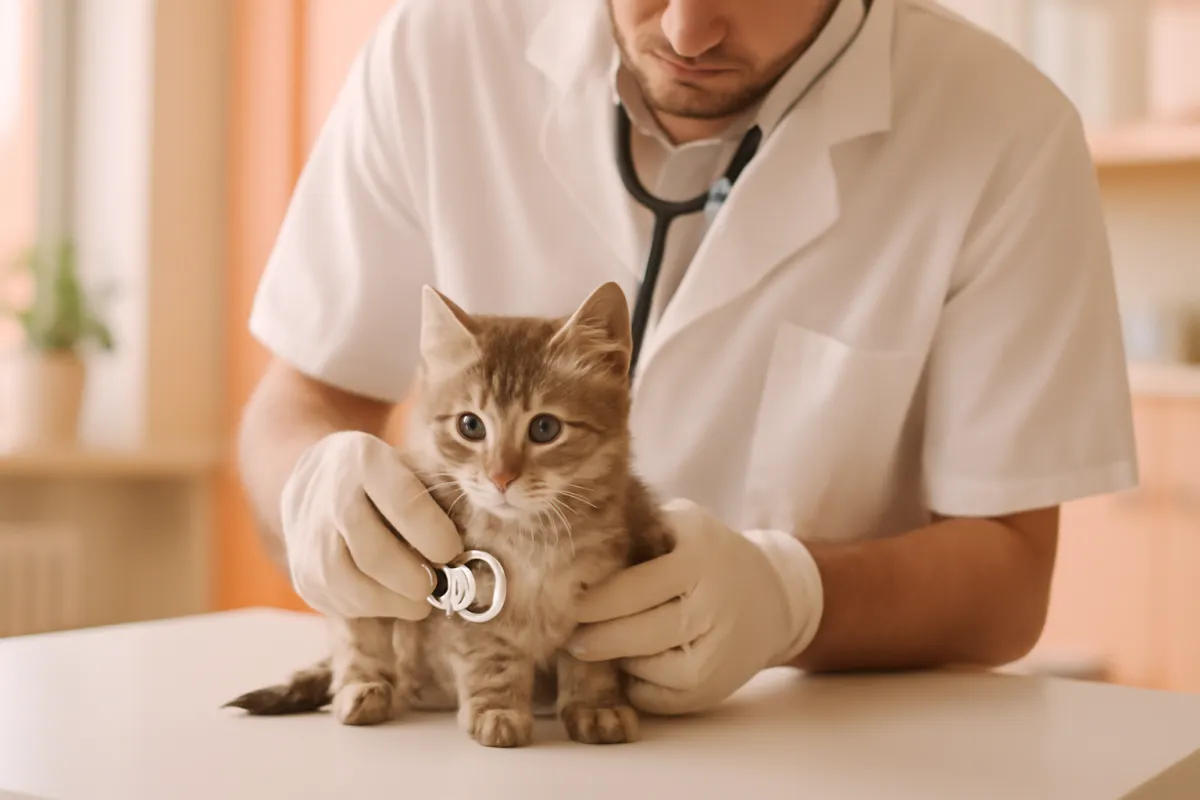
Cats sit below dogs on the same visit for reasons that are structural rather than a discount. Medications, sedatives, and anesthetic agents are dosed by body weight, so a small patient needs less of each. Procedures on a small animal are often shorter, which matters when anesthesia and monitoring time are billed. And the annual heartworm blood test that most dogs have is not part of the standard feline wellness visit in the same way, though whether your cat needs parasite testing or prevention at all is a question for your veterinarian rather than a budget line you set yourself.
Kittens are the exception to the calm feline number, and the reason is scheduling rather than pricing. A kitten works through a vaccine series across several visits in its first months, each with its own exam fee, plus deworming and the early parasite tests, and for most owners a spay or neuter before the year is out. That front-loads the first year well above a settled adult year. Our cat vaccination cost read prices the kitten series and the adult booster schedule on their own, and our yearly cat read folds the whole vet line into the larger feline budget.
One practical note specific to cats: the hardest part of a feline vet visit is often getting the cat there. Carrier stress is real, and some clinics are cat-only or use low-stress handling protocols, which occasionally carries a modest premium and often makes the appointment go faster. Whether that tradeoff is worth it is a household decision. Set the size selector to a cat in the calculator to see the feline figure against the rest of your budget, and our monthly cat read shows how the vet line lands month to month.
Average Cost of a Vet Visit for a Dog
For a healthy adult dog, a routine wellness visit commonly runs an illustrative $60 to $250, with a typical mid-range visit near $175. Line by line, that is an exam fee around $65, a vaccine due that year at about $30, a fecal test at about $35, and the annual heartworm test at about $45. A year with three vaccines due, or a large dog needing a bigger dose of anything, pushes toward the top of the range. A quiet year with one booster sits near the bottom.
The canine number runs above the feline one for three compounding reasons. The heartworm test and year-round heartworm prevention are standard parts of canine care in most areas, which adds a test to the visit and a recurring product to the year. Weight drives everything dosed by the kilogram, so a large dog costs more for the same medication, the same sedation, and the same anesthetic procedure than a small one does. And dogs more often need lifestyle vaccines tied to boarding, grooming, daycare, hiking, or dog parks, which are additional shots rather than more expensive ones.
Size is the biggest single lever inside the canine range, and it keeps working for the pet’s whole life. A giant-breed dog does not simply eat more; it needs more of every drug, longer surgical time, and larger doses of the preventives that arrive every month. Our monthly dog read shows how quietly size scales almost every line of dog ownership, and our dog vaccination cost read prices the puppy series and adult boosters separately.
Puppies follow the same front-loaded shape as kittens: a vaccine series across several visits, initial deworming and testing, and a spay or neuter within the first year, which together put year one well above a steady adult year. Our first-year dog read folds that spike into the whole startup budget, and the calculator lets you set your dog’s size and see the yearly vet line in context.
A Veterinary Price List: Typical Charges by Service
There is no national veterinary price list. Pricing is set practice by practice, which is why two clinics a few miles apart can quote noticeably different figures for the same service, and why no article, including this one, can publish a schedule you could hold a clinic to. What follows is an illustrative planning grid: typical ranges at a general practice, useful for sanity-checking a bill or building a budget, and not a quote from any specific hospital.
| Service | Illustrative range | What moves it |
|---|---|---|
| Exam or consultation fee | $50 to $80 | Clinic type, area, whether it is a recheck |
| Vaccine, each | $15 to $40 | Which vaccine, combination versus single |
| Fecal test | $25 to $50 | Test method, whether it is sent to an outside lab |
| Urinalysis | $25 to $60 | Whether a culture is added |
| Heartworm test, dogs | $30 to $60 | Whether it is bundled with other screening |
| Bloodwork panel | $80 to $200 | How comprehensive the panel is, in-house or outside lab |
| X-ray | $150 to $400 | Number of views, whether sedation is needed |
| Ultrasound | $300 to $600 | Whether a specialist performs or reads it |
| Dental cleaning under anesthesia | $300 to $800 or more | Extractions, dental X-rays, pet size |
| Spay or neuter | under $100 to $500 or more | Low-cost clinic versus full-service hospital, size, sex |
| Emergency exam or triage fee | 2 to 5 times a general practice exam fee | Hour, day, and the hospital’s standing capacity |
Read the right-hand column as carefully as the middle one, because it explains why a range exists at all. A dental cleaning is the clearest case: the scale and polish is the predictable part, and what the veterinarian finds once the pet is under anesthesia, whether teeth need extraction and whether dental X-rays are needed, is what decides where the total lands. Our dog teeth cleaning read and cat teeth cleaning read work through that spread in full.
Getting your own clinic’s version of this table is straightforward and entirely normal. Most practices will quote an exam fee and common vaccine prices over the phone, and for anything larger, a written itemized estimate before treatment begins is standard practice rather than an awkward request. Our read on lowering vet bills covers how to ask for one and what to do with it. If a bill has already landed and the number is out of reach, our read on getting help with vet bills covers the assistance routes that exist.
Cat and Dog Price Tables, Side by Side
Blending the two species into one average vet price is what makes the number useless, so here are the two price lists next to each other. Both are illustrative planning grids at a general practice, assembled from the same service prices in the table above, and neither is a quote from any clinic.
Cat
| Kind of visit | Illustrative range | Typical | How it adds up |
|---|---|---|---|
| Routine wellness visit | $50 to $200 | about $130 | Exam $65, one due vaccine $30, fecal test $35 |
| Sick or problem visit | $150 to $500 | about $205 | Exam $65, a narrower blood panel $95, urinalysis $30, take-home medication $15 |
| First kitten visit | $90 to $175 | about $130 | Exam $65, first combination vaccine $30, fecal test $35, deworming often added |
| Kitten’s whole first year | $150 to $350 | about $250 | The three or four visits of the series, before spay or neuter |
| Emergency or after-hours | a few hundred to several thousand | about $1,500 | Elevated triage fee, diagnostics, treatment, a night’s stay |
Dog
| Kind of visit | Illustrative range | Typical | How it adds up |
|---|---|---|---|
| Routine wellness visit | $60 to $250 | about $175 | Exam $65, one due vaccine $30, fecal test $35, heartworm test $45 |
| Sick or problem visit | $150 to $500 | about $275 | Exam $65, a broader blood panel $140, urinalysis $40, take-home medication $30 |
| First puppy visit | $90 to $175 | about $130 | Exam $65, first combination vaccine $30, fecal test $35, deworming often added |
| Puppy’s whole first year | $200 to $400 | about $300 | The three or so visits of the series, before spay or neuter |
| Emergency or after-hours | a few hundred to several thousand | about $1,500 | Elevated triage fee, diagnostics, treatment, a night’s stay |
Read the two tables against each other and the species gap turns out to sit in only two rows. On the routine visit it is about $45, and it is almost entirely the annual heartworm test that sits on the canine side of standard care. On the first year it is the puppy series carrying a little more than the kitten series, which is why our dog vaccination cost read holds $200 to $400 for the puppy year while our cat vaccination cost read holds $150 to $350 for the kitten year.
The sick row is the interesting one, because the range is identical on both sides. Where a dog’s bill lands higher it is usually not a feline discount but what was actually run: a broader blood panel, a larger volume of any medication dispensed, and more anesthetic time if sedation is needed, all of which are decisions your veterinarian makes about the animal in front of them rather than prices set by species. The emergency row is identical for the same reason at a larger scale, because an emergency hospital prices the case and the hours, not the species, which is the structure our emergency vet visit cost read works through line by line. Set the pet selector in the calculator to see which of these rows applies to your own animal.
Build Your Own Vet Price List in One Phone Call
Every figure above is a planning grid, and the version that actually governs your budget is your own clinic’s. The useful thing is that most of it is obtainable in a single phone call, because the front desk quotes these numbers routinely and none of them requires the veterinarian to have seen your pet. Ask for the six below and you have replaced this whole article with local figures.
| What to ask for | Why it matters | Illustrative benchmark |
|---|---|---|
| The exam or office fee | The stable base of every visit, and the one number that sets the floor | $50 to $80 |
| The price of each vaccine your pet is due | The count of shots, not the price of one, is the biggest swing in a wellness bill | $15 to $40 each, combinations $30 to $45 |
| The fecal test and, for dogs, the heartworm test | The two routine add-ons that decide where a wellness visit lands in its range | $25 to $50 and $30 to $60 |
| The price of a basic blood panel | What turns a sick visit into a diagnosis, and the largest line on most problem visits | $80 to $200 |
| A written estimate range for any planned procedure | Dentals and surgeries are quoted as ranges because of what is found once the pet is under | Dental $300 to $800 or more |
| The emergency hospital’s triage fee | The only part of an emergency bill anyone can honestly quote before your pet is seen | Two to five times a general practice exam fee |
Two habits make those answers more useful. First, write down what the quote includes, because an exam fee that bundles a nail trim and one that does not are different products at the same price, and a vaccine price that includes the visit is not comparable to one from a shots-only clinic. Second, ask for a written itemized estimate before any treatment plan begins rather than after, which is standard practice everywhere and is the document our read on lowering vet bills shows you how to use.
What this exercise is not is a way to shop for the cheapest medicine. Price is one input among several, and how a practice communicates, what equipment it keeps in house, and whether it can see you when something is wrong all matter more than a $15 difference in an exam fee, which is the balance our read on choosing a vet works through. Once you have your six local numbers, drop them into the calculator and the ranges in this cost read become an estimate built from your own town rather than a national average.
The routine wellness visit
The routine wellness visit is the backbone of pet healthcare and the one you can plan for most confidently, because it happens on a schedule rather than by surprise. It is the annual or twice-yearly checkup where a healthy pet is looked over, kept current on vaccines, and screened for the problems that are cheaper to catch early than to treat late. The exam fee itself, the charge just for the veterinarian’s time and examination, commonly sits around an illustrative $50 to $80, and the rest of the bill is whatever is due that year.

That is why a wellness visit does not have one price. A young pet in its first year, working through a vaccine series and initial tests, sits at the higher end of the range. A settled adult due for little more than the exam and a booster sits near the bottom. Our first-year dog read covers why those early visits cluster the cost up front, and the calculator lets you see the yearly vet line in the context of everything else a pet costs. The wellness visit is the least expensive kind of vet care there is, and it is where a veterinarian catches the things that are cheaper to handle early.
What a routine visit includes
Understanding what sits inside a wellness bill is the key to reading it, because the line items, not the exam alone, are what add up. Most routine visits are built from the same handful of components, and not every one is due every year, which is why two checkups for the same pet can total quite differently.
- The physical exam. The veterinarian checks the pet nose to tail, listens to the heart and lungs, feels the abdomen, checks the teeth, eyes, ears, and coat, and flags anything unusual. This is the core of the visit, and the exam fee of roughly $50 to $80 pays for it.
- Vaccines. The year’s due shots at an illustrative $15 to $40 each, which vary by the pet’s age, lifestyle, and local requirements. Some years bring several, some bring one, and the count is the biggest single swing in a wellness bill.
- A fecal test. A check for intestinal parasites at an illustrative $25 to $50, more often recommended for young pets and those with outdoor exposure.
- A heartworm test. For dogs, a blood test at an illustrative $30 to $60 before continuing or restarting heartworm prevention, typically done annually.
- Preventive refills. Heartworm, flea, and tick preventives are often started or refilled at the same visit, and while they are ongoing medication rather than part of the exam, they frequently land on the same receipt.
The practical takeaway is to ask your clinic which items are due before the visit, so the total is not a surprise. A wellness visit is one of the few vet bills you can preview almost entirely in advance, which makes it the easiest line in the whole monthly dog budget to plan.
Vaccination costs at the vet clinic
Vaccines are the line item owners ask about most after the exam fee, partly because they come up every year and partly because the count changes so much from visit to visit. Individually, most core and non-core vaccines run an illustrative $15 to $40 each at a general practice, though a few of the less common ones sit higher. The rabies shot tends to be among the cheaper ones and is often legally required (the Texas Department of State Health Services rabies page is one state example, and the CDC’s rabies prevention page covers why pets are kept current), at an illustrative $15 to $30, while combination vaccines that bundle several protections into one injection sit toward the top of that range and a little above it, an illustrative $30 to $45, which is the figure our dog vaccination cost read and cat vaccination cost read both use.
What actually moves the vaccine part of a bill is how many are due, not the price of any single shot. A puppy or kitten working through its initial series receives several vaccines across a few visits in the first year, which is why those early bills run high. A settled adult may be due for only one or two boosters in a given year, and some vaccines are given on a multi-year interval rather than annually, so the count naturally falls once a pet is grown. Which vaccines a particular animal needs, and how often, is a clinical decision your veterinarian makes with you, not a menu you assemble on price.
Low-cost vaccine clinics, shot fairs, and some shelters offer vaccines at reduced prices, which can be a genuine saving for a healthy pet whose shots are being updated. Our dog vaccination cost read and cat vaccination cost read walk through those options and the full schedules on each side. The tradeoff is that a wellness visit bundles the vaccines with a physical exam, which is where a veterinarian catches early problems. For the first-year rush of shots specifically, our first-year dog read folds the whole series into the larger startup budget, and the calculator lets you set your own yearly vet figure.
The sick or problem visit
The sick visit is where a pet is brought in for a specific problem: limping, vomiting, an ear that will not stop bothering them, a lump that appeared overnight. It starts like a wellness visit, with an exam fee, but it rarely ends there, because diagnosing a problem usually means running tests to find out what is wrong. That is the difference that pushes a sick visit above a routine one, to an illustrative $150 to $500 or more, with a typical mid-range visit near $275.
How far above depends entirely on what the veterinarian needs to investigate. A straightforward ear problem might need only the exam and a simple swab, landing not far above a wellness visit. A vague symptom that could be several things may need bloodwork at $80 to $200, a urinalysis at $25 to $60, or an X-ray at $150 to $400 to narrow down, each of which adds to the bill. This is why a sick visit is quoted as a range rather than a fixed price: the exam reveals what to test for, and the testing is where the cost lives.
The honest planning posture is to expect a sick visit to run meaningfully higher than a wellness one and to understand that the number is not padding. Diagnostics are how a veterinarian avoids guessing, and which tests a pet needs is a clinical call rather than a budget one. When your veterinarian recommends a test, asking what it will rule in or out, and what it costs, is a fair and useful question, and it is the conversation an itemized estimate is built for.
Emergency and after-hours visits, briefly
Emergency and after-hours care is priced as a different product rather than a surcharge on the same one. The triage or exam fee alone commonly runs an illustrative two to five times a general practice exam fee, and the diagnostics, treatment, and any hospitalization stack on top of that higher base, which is why a routine appointment lands in the low hundreds while a bad night reaches four figures. Our dedicated read on emergency vet visit cost prices that bill line by line, from the triage fee to the overnight stay and the deposit, and our read on preparing for a pet emergency covers the insurance and emergency-fund side of getting ready for it.

The one thing worth adding is that the price gap should never decide a clinical question. Whether a pet needs to be seen tonight or can wait for the regular clinic is a judgment for a veterinarian, and both general practices and emergency hospitals will take a phone call describing what you are seeing and tell you what they recommend. If cost is the pressure, our read on getting help with vet bills is the right next stop.
Why the Same Visit Costs More in Some Cities
Two clinics can charge noticeably different amounts for an identical wellness visit, and the reason is mostly the cost of standing where they stand. A veterinary practice is a physical business with a lease, a payroll, and a stock of medications, and every one of those inputs is priced locally. Rent per square foot in a dense metropolitan area is a different number from rent in a small town, and a clinic needs a lot of square feet: exam rooms, a treatment area, a surgical suite, kennels, a laboratory bench, and storage.
Wages follow the same pattern. Licensed veterinarians and credentialed technicians are paid competitively against the local market for skilled work, and in areas where staffing is tight a practice pays more to keep a full team. Those are the two largest line items in most clinics, so where they are high the exam fee is high, and the whole price list moves with it. The same effect runs in the other direction in lower-cost areas, which is why a rural practice can quote a figure that sounds impossible to someone in a large city.
A few smaller forces sit on top. The density of practices in an area changes how much price competition there is. Access to specialty and emergency hospitals varies, and where a referral hospital is far away, more work stays with the general practice. Local licensing, disposal, and regulatory requirements differ. And the mix of services a clinic offers, from in-house imaging to an overnight ward, changes the overhead spread across every visit.
None of this is a reason to shop on price alone, since the relationship with a veterinarian who knows your animal has its own value, and our guide to choosing a vet weighs those together. It is a reason to expect local variation, to ask a nearby clinic for its exam fee rather than assuming a figure from an article applies to your street, and to set the area selector in the calculator rather than reading a national average as your number.
What makes vet care so costly
It is worth stepping back from any single bill to ask why veterinary care costs what it does at all, because the reasons are structural and they explain the whole category. The first is that a veterinary clinic is a small hospital, a pharmacy, and a diagnostic lab under one roof. The equipment that makes modern care possible, digital X-ray, ultrasound, in-house blood analyzers, and anesthesia and surgical suites, is expensive to buy, maintain, and staff, and those costs are spread across every visit whether or not your pet uses that particular machine that day.
The second reason is the one owners feel most sharply: there is no insurance system quietly paying most of the bill behind the scenes. In human healthcare, a negotiated price and a third-party payer absorb much of what a procedure actually costs, so patients rarely see the full number. In veterinary medicine, the great majority of owners pay out of pocket at the counter, which means you see the true, unsubsidized price of care every time. The care is often less expensive than the human equivalent, but it feels more expensive because nothing is hidden.
The third driver is skilled labor. A visit pays for a licensed veterinarian’s training and judgment plus a team of technicians, and those are specialized wages. Add the overhead of running a clinic, rent, utilities, medications, and supplies, and the exam fee starts to make sense as the price of keeping that whole operation available and ready. None of this means every bill is beyond question, and asking for an itemized estimate is always fair. It simply means the cost reflects real standing capacity rather than a markup, which is the same lens our pet-insurance read applies to the bigger bills.
Why vet prices keep moving
Owners who have had pets for a couple of decades tend to notice that vet prices have climbed, and it is worth being honest about what can and cannot be said about that. No single reliable figure for veterinary inflation belongs in a cost read like this one, so what follows is the mechanism rather than a statistic.
Start with the inputs. Clinics buy the same things every other business buys, and they buy some things almost nobody else does: pharmaceuticals, laboratory reagents, sterile consumables, and imaging and anesthesia equipment that carries a service contract. When those costs rise, they rise inside a business whose largest expense is already a payroll of licensed professionals, and a practice cannot absorb them by cutting the staffing a hospital needs to operate safely.
Then consider what has changed about the care itself. Far more is diagnosable and treatable in veterinary medicine than a generation ago. In-house bloodwork, digital imaging, ultrasound, advanced surgery, and referral-level specialty medicine are all normal options now. That raises the average bill even when individual line items move slowly, because the average visit now contains more that can usefully be done in it, and because owners can say yes to a workup that once did not exist.
Two further forces get discussed a great deal without producing numbers worth quoting. Ownership models across the profession have been shifting, which changes how prices are set in some markets. And the supply of veterinarians and credentialed technicians relative to demand affects wages and appointment availability at the same time. If your own clinic’s prices have moved, the practice can tell you what changed and why, and that conversation is more useful than any national figure. If the direction of travel is what worries you, our read on lowering vet bills covers the levers that are actually in your hands.
The cost of veterinary services, layer by layer
The cost of veterinary services makes the most sense read as layers, because every bill, from the least expensive checkup to the worst night at the ER, is built from the same four. The first layer is the exam or consultation fee, the charge for the veterinarian’s time, training, and judgment, commonly an illustrative $50 to $80 at a general practice. Every visit pays it, and for a simple wellness check it can be most of the bill. The second layer is diagnostics: the bloodwork, imaging, and lab tests that turn a symptom into a diagnosis. A routine visit uses little of this layer; a sick visit is defined by it, which is why the sick-visit range starts where the wellness range ends.
The third layer is treatment, everything from a course of antibiotics to a surgical repair, and it is the widest layer of all, spanning a few dollars of medication to thousands in surgery. The fourth is the facility layer: anesthesia, hospitalization, and the around-the-clock standing capacity of an emergency hospital. This is the quietest layer on an itemized bill and the one that moves totals the most, because it multiplies everything beneath it, the same two-to-five-times effect this cost read keeps flagging on the ER exam fee.
Reading the cost of veterinary services this way turns a frightening total into an auditable one. A routine visit is layer one plus a little of two. A dental cleaning is layers one, three, and four without an emergency in sight. A bad night at the ER is all four at once, stacked at their most expensive. It also makes the itemized estimate, which any clinic will provide on request, genuinely useful: you can see which layers a treatment plan draws on, understand what you are buying, and ask your veterinarian to walk you through the plan rather than absorbing a number at the counter.
Common procedure costs, illustratively
Beyond the visit itself, certain procedures come up often enough to be worth pricing on their own, because they can appear at either a routine or a sick visit and they move the bill noticeably. The figures here are illustrative planning ranges at a general practice, not quotes, and each moves with pet size and location.
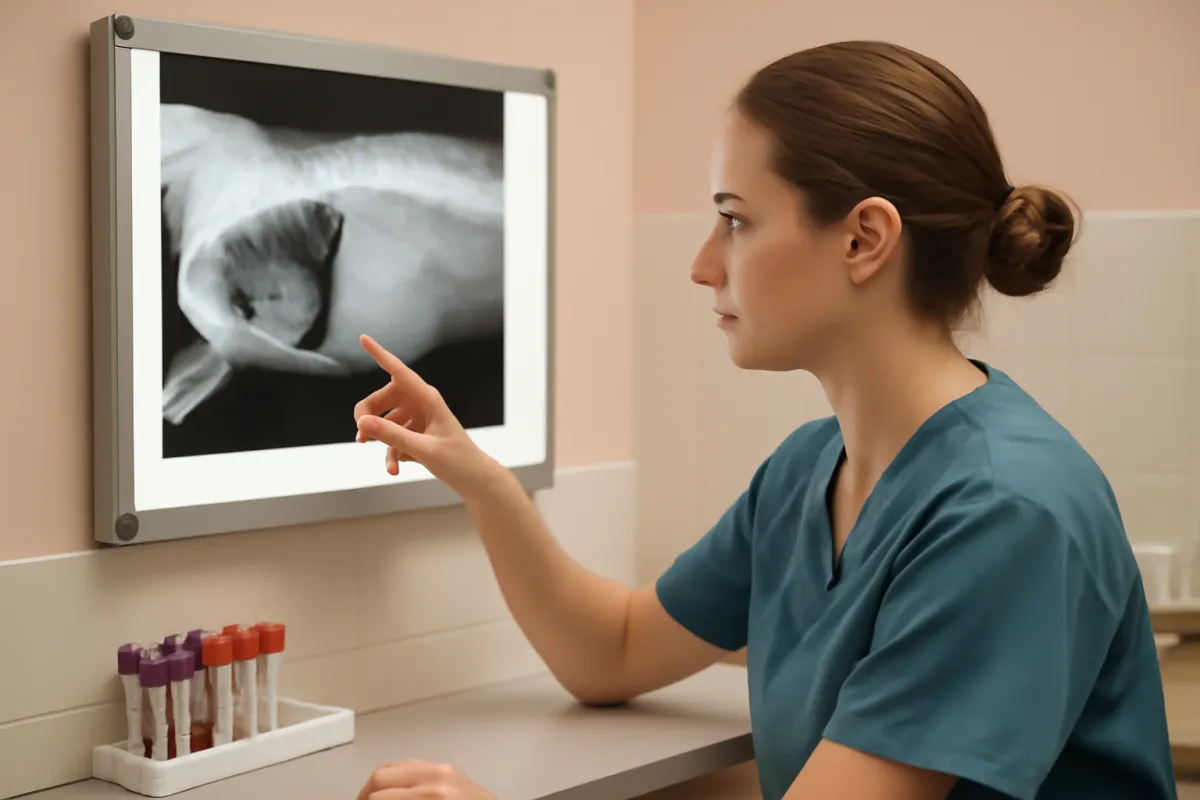
Here is roughly where the common procedures land. A dental cleaning under anesthesia commonly runs $300 to $800 or more, driven by what the veterinarian finds once the pet is under and whether extractions and dental X-rays are needed. Bloodwork typically runs $80 to $200 depending on how comprehensive the panel is. An X-ray often lands around $150 to $400, more for multiple views. An ultrasound is usually pricier, commonly $300 to $600, because it needs specialized equipment and expertise. A urinalysis is modest at $25 to $60 unless a culture is added. A mass removal varies widely with size and location but frequently runs several hundred dollars once surgery, anesthesia, and pathology are included. The pattern is that anything involving anesthesia or advanced imaging sits at the higher end, and pet size nudges each of them up.
Spay, neuter, and other planned surgeries
Some of the larger vet bills are not emergencies at all but planned surgeries, and spaying or neutering is the one nearly every owner faces early. Because it is scheduled rather than urgent, it behaves very differently from an emergency on the budget: you can compare clinics and plan the timing, which makes it one of the more predictable vet costs there is.
The price is driven mostly by the pet’s size and by where the surgery is done, running an illustrative range from under $100 for a small pet at a low-cost clinic to $500 or more for a large dog at a full-service hospital. Our dedicated spay and neuter read breaks that down in full, including why a spay costs more than a neuter and how much a low-cost clinic can save. The key point here is that planned surgeries and emergencies are opposite kinds of cost: one you can budget for calmly, the other arrives without warning.
That distinction matters for how you prepare. Planned surgeries belong in your yearly or first-year budget as known line items, folded in the way our first-year dog read does. Emergencies belong in a separate cushion, because you cannot schedule them. Keeping the two mentally separate is what stops a planned cost from feeling like a crisis and a real crisis from wiping out the routine budget.
What drives the price of a vet visit
Several factors move a vet bill up or down, and knowing them turns a mysterious number into something you can more or less predict. None of them is the pet’s breed, despite the assumption: breed matters far less than these structural drivers.
The big drivers are these. Location: veterinary prices track local rent and wages, so a visit in an expensive metropolitan area can cost noticeably more than the same visit in a smaller town. Clinic type: a general practice, a low-cost clinic, a specialty hospital, and an emergency center price the same service very differently, with the ER at the top. Species and size: larger pets cost more because medication and anesthesia are dosed by weight and procedures take longer, so a large dog sits above a small one or a cat. Diagnostics: the number and complexity of tests is often the largest single swing in a sick or emergency bill. Hour and day: the same problem costs far more after hours than during the business day. If you want to picture how these compound, our monthly dog read shows how size quietly scales almost every line of pet care, vet visits included.
How high can a vet bill go? The expensive end
Most of this cost read lives in the everyday ranges, but an honest map of vet costs has to include the far end of the ladder, because that is the territory the emergency cushion ultimately exists for. Above the general-practice emergency sits specialty and referral medicine: board-certified surgeons, internal medicine specialists, oncologists, and intensive care units, the veterinary equivalent of being referred from a family doctor to a hospital specialist. The care is excellent and the pricing reflects it. As illustrative planning figures, a major orthopedic repair such as a cruciate ligament surgery is commonly cited in the low-to-mid four figures per knee, surgery to remove a swallowed object with imaging and hospitalization commonly runs an illustrative $4,000 to $8,000 or more once the after-hours setting is included, the band our emergency vet visit cost read sets out, and a complex case that needs a specialist surgeon, several days of intensive care, or an ongoing course of treatment can accumulate to five figures over its full arc. Our dog ACL surgery read prices one of those in detail.
Two things keep that ceiling in perspective. First, these bills are uncommon: many pets go a lifetime without a referral-level event, and the everyday reality of vet costs remains the modest wellness visit this cost read opened with. Second, the expensive end is precisely the zone where preparation changes everything, because no monthly budget absorbs a five-figure surprise, but a long-held insurance policy or a well-fed emergency fund can. This is also where owners meet the hardest conversations about care and cost, conversations a veterinarian will walk through with you, including every option available. Knowing the ladder runs this high is not a reason for dread; it is the strongest argument for deciding in advance, calmly, how your household would meet it, which is exactly the arithmetic our pet-insurance read and our read on getting help with vet bills exist to support.
Wellness plans versus pay as you go
Some clinics and companies offer wellness plans, monthly-payment packages that bundle a year of routine care, the exams, vaccines, and sometimes a dental cleaning or basic tests, into a fixed monthly fee. They are worth understanding, because they are easy to confuse with pet insurance and they solve a different problem.
A wellness plan spreads the predictable, routine cost of care across the year and often bundles services at a slight discount, which can be convenient and can make it easier to keep up with preventive visits. What it is not is insurance: it covers the expected, routine care, not the emergency. Whether a plan saves money depends on whether you would use all the bundled services anyway, since paying monthly for services that go unused is not a saving. Add up what the included services would cost individually at the prices in the table above and compare that to the plan’s annual total.
Pay as you go, the alternative, simply means paying for each visit as it comes. For an owner who budgets well and sets aside a little each month, it can be just as economical and more flexible. Neither approach is universally better. The one rule that holds either way is that a wellness plan is not a substitute for emergency preparedness, because it does not cover the big unpredictable bill that insurance or a fund is meant to catch.
How to lower your vet costs
You can bring vet costs down meaningfully without shortchanging your pet, as long as you pull the right levers. Our full read on lowering vet bills works through eight of them; these are the ones that matter most alongside the pricing in this cost read.
- Keep up with preventive care. Catching a small problem at a wellness visit is far less expensive than treating a large one later, which is why the routine visit is the best value on the whole price list.
- Ask for prices before you book. Exam and procedure prices vary widely between clinics, and calling around for a planned procedure or a routine service is fair and often eye-opening.
- Ask about veterinary teaching hospitals and low-cost clinics. Veterinary schools and nonprofit or community clinics offer certain services at lower prices, supervised by qualified professionals.
- Request an itemized estimate. Before a treatment plan begins, ask for the breakdown so you can see each line, understand what it is for, and discuss the plan with your veterinarian.
- Ask about payment options. For a large bill, many clinics offer payment plans or accept third-party pet-financing options, which spread the cost rather than reduce it but can make an emergency manageable.
- Compare medication sourcing with your vet. Some prescriptions can be filled more cheaply elsewhere with a written script, a conversation our read on saving on pet medications covers.
If the pressure is a bill that has already landed rather than one you are planning for, the levers are different, and our read on getting help with vet bills covers the assistance funds, negotiation, and financing routes that exist for exactly that situation.
Who decides whether a visit can wait
Because emergency pricing sits so far above routine pricing, owners often want a rule of thumb for which appointment they need. There is no such rule that this or any other cost read can responsibly supply, because the question is clinical, not financial: whether a symptom needs to be seen now, today, or at the next available appointment depends on the animal in front of you, and only a veterinarian can make that call.
What you can do, at no cost, is ask. Describing what you are seeing over the phone to your regular clinic or to an emergency hospital is free, both will take that call, and the answer you get is worth more than any list of symptoms in an article. Poison control lines exist for suspected toxin exposure. Many practices also offer telehealth check-ins for established clients. Using the phone early is the single most practical habit in this whole area, because it puts the judgment where it belongs and it often saves an unnecessary trip in either direction.
The one thing this cost read will say plainly is that cost should not be the thing that decides. If money is the barrier, say so to the clinic: practices deal with that conversation constantly, and options from payment plans to assistance funds exist, which our read on getting help with vet bills sets out. The financial planning belongs in advance, in the budget and the cushion below, and the care decision belongs with your veterinarian.
The annual vet budget
Putting it all together, a sensible annual vet budget has two parts that behave very differently: the predictable routine care you can plan almost to the dollar, and the emergency cushion you hope never to touch. Treating them as one number is what makes vet care feel unmanageable; separating them is what makes it plannable.
An annual vet budget
Illustrative split of a medium dog's yearly vet budget: a $175 wellness visit, $220 of preventives, and a $320 cushion. Shares, not dollars.
The first two buckets are predictable and easy to plan and total about $395 of routine care. The third, the largest here, is the cushion for the unpredictable bill, whether you hold it as an insurance premium or a savings contribution.
For a healthy adult dog, the routine part, the wellness visit, vaccines, and preventives, commonly lands somewhere around an illustrative $300 to $700 a year, with cats usually a little lower at roughly $250 to $600. On top of that sits whatever you allocate to the emergency side, either an insurance premium or a monthly contribution to a fund. The chart above splits a representative budget across those buckets to show that the emergency cushion deserves the largest share, precisely because it covers the cost you cannot predict. Our first-year dog read and monthly dog read both fold this yearly vet line into the fuller budget, and the calculator lets you set your own vet figure and see it in context.
A worked example: one healthy year plus one emergency
Numbers land better carried all the way through, so here is one illustrative year for a healthy medium dog, first the routine part and then a single emergency, to show how differently the two behave. The figures are planning numbers, not quotes.
The routine year. The dog has one wellness visit: an exam at $65, one due vaccine at $30, a fecal test at $35, and the annual heartworm test at $45, which is $175 for the visit itself and matches the dog figure this cost read has used throughout. Add a year of heartworm, flea, and tick preventives at roughly $220, and the routine year totals about $395. Every dollar of it was predictable and plannable in advance. A cat on the same footing sits lower, near $130 for the visit and around $300 for the routine year, because it skips the heartworm test and takes smaller doses of everything.
The emergency. Now suppose that same dog swallows something it should not and needs an after-hours visit: an elevated emergency exam fee, X-rays and bloodwork to work out what is going on, treatment, and a night of hospitalization while the team watches it. That single event lands near $3,000 as an illustrative figure, inside the $1,500 to $3,500 band our emergency vet visit cost read uses for a night with diagnostics and a stay. That is more than seven times the entire routine year, and it arrives in one night without warning. Had the object needed surgery to come out, the same night would sit higher again, in that read’s illustrative $4,000 to $8,000 surgical band. This is the bill insurance or a fund exists to absorb, and the reason the pet-insurance read is the essential companion to this one. Put side by side, the two halves of the example show the whole point: budget the routine care confidently, and prepare separately for the emergency you cannot schedule. Run your own pet through the calculator to see where both sit in your budget.
Puppy and kitten vet costs in the first year
The first year of a pet’s life is the most vet-intensive by a wide margin, and it catches many new owners off guard because the visits cluster so tightly up front. A puppy or kitten needs a series of visits in its first months, each with a physical exam and the next round of the vaccine series, spaced a few weeks apart until the course is complete. On top of that sit the initial deworming, a fecal test, the start of parasite prevention, and, for most owners, the spay or neuter surgery before the year is out.
Stacked together, that first year commonly runs well above a settled adult year, often an illustrative several hundred dollars in routine vet care before the spay or neuter is added, and more once it is. The spike is normal and temporary: it reflects building the pet’s lifelong immunity and getting the one-time procedures done, not an ongoing rate. Our puppy cost read and first-year dog read both break this front-loaded year down in detail, and the spay and neuter read prices the surgery on its own.
The planning lesson is to expect the first year to cost more at the vet than the years that follow, and to budget for it as a known, one-time bump rather than a surprise. It is also the year when a decision about pet insurance matters most, because enrolling a young, healthy pet locks in coverage before any condition can be labeled pre-existing, a pattern the Washington State Office of the Insurance Commissioner’s pet insurance page describes and a point our read on pre-existing conditions returns to. Fold the first-year vet spike into your startup budget with the calculator so it does not land as a shock.
Senior pet vet costs
At the other end of a pet’s life, vet costs tend to climb again, and for a different reason than the puppy year. Older pets are more likely to develop chronic conditions and to need more frequent monitoring to manage them. Many practices recommend twice-yearly checkups for senior pets rather than annual ones, and those visits often include more bloodwork and screening, which nudges the yearly total up. Whether that schedule is right for a particular animal is a conversation with your veterinarian.
The costs here are a mix of the predictable and the unpredictable. The extra checkups and routine senior bloodwork are plannable, and folding them into the budget the way our senior dog care read does keeps them from surprising you. The harder part is that senior pets are also where the larger illness bills tend to appear, the ongoing medication for a chronic condition or the workup for a new symptom, which is exactly the kind of expense a long-held insurance policy or a well-fed emergency fund is meant to carry.
This is why the decision made in the puppy year echoes here. A pet insured young and kept covered arrives at its senior years with the expensive conditions eligible for coverage, whereas a policy bought late finds many age-related problems already excluded as pre-existing. Whichever path you choose, the senior years reward the owner who planned ahead, and they are the clearest argument in this whole cost read for treating the emergency and chronic-illness cushion as seriously as the routine budget. Weigh that math in our pet-insurance read, and set your pet’s details in the calculator to see the later years in context.
How this fits your first-year and monthly budget
Vet care is one line in a much larger budget, and seeing it in context keeps it in proportion. On its own, an emergency figure can feel overwhelming; against the full commitment of owning a pet, and with a plan in place for the unpredictable part, it becomes one manageable component rather than a looming threat.
In the first year, vet care sits alongside the adoption fee, the initial vaccine series, the spay or neuter, the startup gear, and the first months of food, which is the full stack our first-year dog read breaks down. Those early vet visits cluster the cost up front, which is normal and temporary. Across the steady adult years, routine vet care settles into a predictable monthly rhythm, the shape our monthly dog read and monthly cat read lay out, with the emergency cushion growing quietly beside it. Over a whole life, the pattern is a long calm middle punctuated by the occasional big bill, which is exactly what our lifetime dog read tallies.
The reason to fold vet costs into the bigger budget rather than treat each visit as a standalone shock is that it makes the whole thing calmer. A wellness visit you have planned for is just a line item. An emergency you have prepared for, through insurance or a fund, is a stressful night rather than a financial catastrophe. The calculator is built to show vet care in that fuller frame.
The bottom line
Vet visit cost is not one number. A routine wellness visit runs an illustrative $50 to $200 for a cat and $60 to $250 for a dog, a sick visit $150 to $500 once diagnostics join the exam, and an emergency a few hundred to several thousand dollars because it stacks an elevated exam fee, a full workup, treatment, and hospitalization at once. The exam fee of $50 to $80 is the small, stable core of every one of them, and everything built around it is what moves the total.
The practical approach is to treat vet care as two separate problems. Budget the routine part confidently, at roughly $300 to $700 a year for a dog and a little less for a cat, using your own clinic’s price list rather than a national average. Then prepare separately and in advance for the emergency, through pet insurance, a dedicated fund, or a blend of both, because that is the bill that turns into a crisis when there is no plan. Build your estimate from local prices, run the calculator to see it in context, weigh the emergency math in our pet-insurance read, and leave every decision about what your animal actually needs to your veterinarian.
One last note from the MuttMark team: this cost read exists to help you plan and compare prices, and it is not veterinary, medical, or financial advice. Every figure here, from the cat and dog wellness ranges to the price-list table and the worked example, is an illustrative planning number rather than a quote, and your real bill will move with your city, your clinic, the hour of day, and your pet’s size, age, and health. Nothing written here can tell you whether a symptom needs attention, which test your pet needs, or how soon an appointment should happen. Those are judgments only a qualified veterinarian can make, and calling your clinic or a local emergency line to describe what you are seeing costs nothing. Use these figures to build a budget and ask better questions, and let the professionals who know your pet decide the care.
Frequently asked questions
How much is a vet visit for a cat?
A routine wellness visit for a healthy cat commonly runs an illustrative $50 to $200, with a typical mid-range visit landing near $130: an exam fee of roughly $65, one vaccine due that year at about $30, and a fecal test at about $35. Cats sit toward the lower end of most veterinary ranges because medications and anesthesia are dosed by weight and a small patient needs less of everything. A kitten working through its first vaccine series costs more across that year because the visits come closer together, not because the price per visit is higher. A sick or problem visit for a cat runs higher once diagnostics are added, and your own clinic's exam fee and vaccine prices are the only figures that count, so it is always fair to ask for them before you book.
How much is a vet visit for a dog?
A routine wellness visit for a healthy dog commonly runs an illustrative $60 to $250, with a typical mid-range visit near $175: an exam fee around $65, a due vaccine at about $30, a fecal test at about $35, and an annual heartworm test at about $45. Dogs sit a little above cats on the same visit for two reasons: the heartworm test and year-round prevention are standard on the canine side, and larger dogs need more of every medication and more anesthetic time for any procedure. A first-year puppy costs more across the year because the vaccine series stacks several visits into a few months. Ask your clinic which items are due before the appointment, since the count of vaccines and tests moves the total far more than the exam fee does.
What is the average cost of a vet visit?
There is no single average cost of a vet visit, because a vet visit is not one product: a routine wellness checkup, a sick visit, and an emergency all sit in the same category at very different prices. As illustrative planning figures, a routine wellness visit runs about $50 to $200 for a cat and $60 to $250 for a dog, a sick or problem visit roughly $150 to $500 once diagnostics are added, and an emergency or after-hours visit anywhere from a few hundred dollars to several thousand. The exam fee itself is the small, stable part, often around $50 to $80, and everything stacked around it, the vaccines, tests, imaging, and any hospital stay, is what moves the total. Treat any average as a starting point rather than a quote, and ask your own clinic for its current prices.
Why are vet prices going up?
The honest answer is a set of mechanisms rather than a headline number, and no reliable single figure for veterinary inflation belongs in a cost read like this one. Veterinary clinics carry the same cost pressures as any other business that employs skilled people and runs medical equipment: wages for licensed veterinarians and credentialed technicians, rent and utilities, medications, laboratory supplies, and the purchase and servicing of imaging and anesthesia equipment. A second driver is that far more is diagnosable and treatable than a generation ago, so the average visit now has more that can be done in it, which raises the average bill even where individual line items move slowly. A third is that ownership models across the profession have been shifting, which changes how prices are set in some areas. Your own clinic can tell you what changed on its price list and why.
Do vets charge just to look at your pet?
Yes, and the charge has a name: the exam, consultation, or office fee, commonly an illustrative $50 to $80 at a general practice. It is not a fee for opening the door. It pays for a licensed veterinarian's time and clinical judgment, a physical examination from nose to tail, the technician team assisting, the medical record, and the overhead of the building, equipment, and lab that stand ready behind that appointment. On a wellness visit the exam fee is often most of the bill, which is why a routine visit stays modest. On a sick visit it is the smallest part, because the diagnostics that follow are where the cost lives. Some clinics waive or reduce the exam fee for a recheck of the same problem within a set window, which is a reasonable thing to ask about when you book.
How much does an emergency vet visit cost?
An emergency or after-hours visit is the expensive end of the category, commonly an illustrative few hundred dollars for a minor after-hours problem to several thousand for something serious that needs imaging, surgery, or an overnight stay. The emergency hospital starts with a triage or exam fee well above a general practice's, often an illustrative two to five times higher, before any treatment is added, because it staffs veterinarians and technicians around the clock and keeps a surgical suite and full laboratory standing ready. Diagnostics, hospitalization, and surgery stack on top quickly, which is how one night reaches four figures. Whether a pet needs emergency care is a clinical judgment for a veterinarian, not a budget decision, and calling the clinic or an emergency line to describe what you are seeing costs nothing.
Is there a standard veterinary price list?
No. Veterinary pricing is set clinic by clinic, so there is no national or regional price list you can hold a practice to, and any menu of figures you read online, including the illustrative one in this cost read, is a planning grid rather than a schedule. What does exist is your own clinic's price list, and most practices will quote an exam fee, common vaccine prices, and a range for a planned procedure over the phone. For anything larger, ask for a written itemized estimate before treatment begins, which is standard practice and lets you see each line and ask what it is for. Prices move with your area, the clinic type, your pet's size, and what the veterinarian finds, so the same service genuinely costs different amounts across town.
What does the cost of veterinary services include?
The cost of veterinary services is the sum of a few distinct layers on every bill: the exam or consultation fee that pays for the veterinarian's time and judgment, the diagnostics such as bloodwork and imaging that investigate a problem, the treatments from medications to surgery, and the facility layer of anesthesia, hospitalization, or around-the-clock emergency capacity when a case needs them. A routine visit uses mostly the first layer, which is why it stays modest; a sick visit adds the second; an emergency stacks all four at once, which is how a single night reaches four figures. Reading a bill layer by layer, and asking for an itemized estimate before agreeing to a plan, is the most practical way to understand what any given visit is buying.