
What's on this page
- The short answer: cat dental cleaning cost and extraction prices
- Why a cat dental costs what it does
- Line items you may see on a feline dental estimate
- Cat dental cost by scenario, cleaning to extractions
- Cat tooth extraction cost per tooth
- Simple versus surgical extractions
- Why the extraction count cannot be quoted upfront
- Anesthesia and monitoring: the block owners ask about
- The pre-anesthetic workup and what it buys
- Dental X-rays and why cats need imaging
- Tooth resorption and other feline-specific problems
- Cat tartar removal cost and what it really means
- Where an illustrative extraction bill goes
- An illustrative cat dental bill with extractions
- Signs worth booking a dental exam for
- How often cats need professional dental care
- Age and the dental bill: kitten to senior
- Location, clinic type, and specialist referral
- Anesthesia-free cleaning and what it leaves untouched
- Does pet insurance cover cat teeth cleaning
- At-home dental care between professional cleanings
- What deferring a recommended dental changes
- What actually changes the lifetime dental bill
- Questions to bring to your vet about the estimate
- How dental care fits the bigger cat budget
- The bottom line
Short answer: Cat dental cleaning cost with no extractions commonly runs an illustrative $300 to $800 at a full service practice, covering anesthesia, monitoring, scaling and polishing. Once teeth come out the bill commonly lands around $600 to $1,200, with a simple extraction adding an illustrative $50 to $150 per tooth and a surgical extraction $150 to $300 or more. The exam that produces the estimate is an ordinary vet visit, an illustrative $50 to $80, and the extraction count usually cannot be known until the cat is under.
Cat dental cleaning cost is really two questions, and owners usually get quoted the second one: what a cat teeth cleaning costs on its own, and what a cat tooth extraction adds to it. A professional feline dental with no teeth removed commonly runs an illustrative $300 to $800. Once extractions join the plan, and in cats they frequently do, the same visit commonly lands at an illustrative $600 to $1,200, with advanced mouths running higher. The gap is not a markup. It is surgical time, imaging, and the fact that the real state of a cat’s mouth only becomes visible after the cat is anesthetized.
This cost read separates the two so you can read an estimate instead of reacting to it: what drives the cleaning price, what a cat tooth extraction costs per tooth, why simple and surgical extractions are different products, what the anesthesia and imaging blocks are actually buying, and which questions belong with your own veterinarian rather than with any article. It is the feline counterpart to our dog teeth cleaning cost read, and it plugs into the wider picture our annual cat cost read maps. Put your own numbers around it with the cost calculator as you read.
Key takeaways
- Illustrative bands: around $300 to $800 for a cleaning with no extractions, around $600 to $1,200 once teeth come out, higher for advanced mouths.
- Per tooth, a simple extraction commonly adds an illustrative $50 to $150; a surgical extraction commonly runs an illustrative $150 to $300 or more.
- The extraction count usually cannot be known before the cat is under, because most of each tooth and most feline dental disease sits below the gumline.
- Anesthesia, monitoring, imaging, and workup are what turn a scrape into dentistry, and they are the reason the total looks nothing like a human cleaning.
- Whether your cat needs a dental, when, and what any specific estimate covers are questions only the veterinarian examining that cat can answer.
The short answer: cat dental cleaning cost and extraction prices
If the question is simply how much is cat teeth cleaning, the answer for an adult cat at a full service practice is an illustrative planning band of $300 to $800 for a dental with no extractions. That figure carries the anesthesia event, monitoring, scaling above and below the gumline, and polishing. Where a workup and full mouth radiographs are part of the plan, an ordinary bill tends to sit in the middle or upper part of that band rather than at the floor. The one figure that is knowable before the cat is under is the exam that produces the estimate, which is an ordinary vet visit at an illustrative $50 to $80, the same band our vet visit cost read uses.
Extractions are the second number, and they are priced per tooth on top of the dental underneath them. As illustrative figures, a simple extraction commonly adds $50 to $150 per tooth and a surgical extraction commonly runs $150 to $300 or more per tooth. A mouth needing two or three surgical teeth is how a cleaning that felt like a $600 appointment turns into an illustrative $1,100 one, and a mouth needing many teeth removed can run past $1,800, with referral level oral surgery higher again.
Two framings matter before the line items. First, the total is not set by the price list alone; it is set by what the mouth turns out to need, which is why estimates arrive as ranges. Second, this is a recurring cost rather than a one time one, arriving on an interval your vet judges from the mouth in front of them. Budgeting a small monthly amount toward the next one, the way our annual cat cost read suggests, converts a shocking bill into a planned one.
Why a cat dental costs what it does
The number makes sense the moment the procedure does. A feline dental is a day surgery event. The cat is admitted and examined, anesthetized with an intravenous catheter placed and a breathing tube protecting the airway, and monitored continuously by a trained person watching heart rate, blood pressure, oxygenation, and temperature. Every tooth is probed and charted so the next visit has something to compare against. The surfaces above and below the gumline are scaled, the crowns are polished, imaging looks at the roots, and the cat recovers under observation before going home the same day.
That is several hours of skilled labor from more than one professional, plus anesthetic drugs, fluids, monitoring equipment, imaging equipment, sterile instruments, and consumables. Set beside a human cleaning, which involves none of that, the price difference stops being mysterious.
Cats then add a second driver that dogs mostly do not. They conceal oral discomfort well enough that a cat can eat normally with several genuinely painful teeth. So feline mouths frequently turn out, on examination under anesthesia, to need treatment rather than only cleaning. The procedure is priced for a mouth that may become a surgical case partway through, which is exactly why the estimate you are handed is written as a range with a phone call attached. Our read on what a vet visit costs makes the same structural point about veterinary pricing generally: the itemization, not the headline, is where the meaning lives.
Line items you may see on a feline dental estimate
Estimates are easier to read when you recognize the components, so here is the vocabulary rather than a claim about any particular practice. Estimates commonly reference some combination of the following: a pre-anesthetic examination; pre-anesthetic bloodwork; the anesthesia event itself, covering induction agents, maintenance gas, the intravenous catheter, fluids, and monitoring; a tooth by tooth oral examination with periodontal probing and charting; dental radiographs; ultrasonic scaling above and below the gumline; polishing; extractions billed separately by tooth and by difficulty; and pain control plus take home medication.
What matters for reading a quote is that practices bundle these differently and there is no standard format. One estimate may fold imaging and workup into a single headline figure while another itemizes every line, and neither approach tells you anything about quality on its own. This cost read cannot tell you what any clinic’s number includes, and neither can a price comparison thread. The only reliable way to know is to ask the practice issuing the estimate to walk you through what is inside it and what would be added if extractions become necessary.
That question also does the comparison work for you. When two estimates differ substantially, the difference is usually scope rather than margin, and a scope difference is only visible when someone tells you the scope. Our lowering vet bills read covers how to have that conversation without turning it into a negotiation about care.
Cat dental cost by scenario, cleaning to extractions
Because the total depends so heavily on what the mouth needs, scenario bands communicate more honestly than a single average. The chart below shows illustrative all in totals across the common situations, from the examination that starts the process to the advanced dental that a long deferred mouth eventually requires.
Illustrative cat dental totals, cleaning to extractions
Representative all in figures for common feline dental situations. Illustrative bands, not quotes; real estimates vary by practice, region, and what the mouth turns out to need.
The distance between the bars is almost entirely surgical time. Each tooth that has to come out adds extraction work, imaging to confirm the roots are clear, and closure, and each of those extends the anesthesia line underneath.
The bars are not five separate products. They are one procedure with a variable surgical component, which is why your estimate is a range and why the number is finalized during the appointment rather than before it. It also explains a pattern owners find frustrating: two cats of the same age at the same practice can leave with very different bills, because one mouth needed cleaning and the other needed surgery. Where your cat sits is a clinical finding, not a purchasing decision, and only your vet can make it.
Cat tooth extraction cost per tooth
The cost of cat tooth extraction is the line most owners search for separately, and it deserves its own pricing logic. Extractions are billed on top of the dental, per tooth, and graded by difficulty rather than by size. As illustrative figures:
- Simple extraction, an illustrative $50 to $150 per tooth. A small single rooted tooth whose attachment has already been lost to disease can often be elevated out through its socket without cutting tissue. Incisors and some small premolars fall here.
- Surgical extraction, an illustrative $150 to $300 or more per tooth. A canine, a multi rooted premolar or molar, or any tooth affected by resorption commonly needs a gum flap raised, the tooth sectioned so each root comes out on its own path, a small amount of bone removed, sutured closure, and imaging to confirm nothing remains.
- Near full mouth extraction, an illustrative $1,500 to $3,000 or more all in. When a condition such as stomatitis leads to removal of most or all teeth, the procedure becomes long oral surgery, often over more than one appointment and sometimes with a specialist.
Two things about these figures are commonly misread. The first is that the per tooth number is only the surgical line; extraction time also lengthens anesthesia, adds post extraction imaging, and usually adds pain control and take home medication, so three surgical teeth cost more than three times the per tooth figure once the whole visit is counted. The second is that difficulty, not count, is the main driver. One badly resorbing canine can cost more than three loose incisors. Ask your vet how they grade the teeth they are seeing, because that grading is what the estimate is built on.
Simple versus surgical extractions
The difference between the two categories is worth understanding, because it is the difference between the two ends of the price band and it is decided by anatomy rather than by preference. A simple extraction applies when a tooth has a single small root and the periodontal attachment holding it in place has already broken down. The tooth can be loosened and lifted out through the existing socket, the site is checked, and the work is measured in minutes.
A surgical extraction applies when the tooth is still firmly anchored, has more than one root, or has roots altered by resorption. The gum is opened to expose the tooth and bone, a multi rooted tooth is divided with a bur so each root can be elevated along its own axis, a rim of bone is sometimes removed to allow access, the flap is closed with sutures, and imaging confirms the whole root came out. Retained root fragments are a recognized source of ongoing pain and infection, which is why the confirmation step exists.
Feline teeth push more cases toward the surgical column than owners expect. They are small, the roots of a resorbing tooth can be brittle or partly fused to surrounding bone, and a tooth that looks straightforward from above can turn out on imaging not to be. That is why estimates present extraction as a range rather than a fixed line, and why the final figure often reflects a category shift discovered during the procedure rather than a price change.

Why the extraction count cannot be quoted upfront
Owners often ask why a practice cannot simply say how many teeth are coming out. The honest answer is that the information does not exist yet. Most of each tooth sits below the gum line, resorptive lesions frequently begin at or under the gum margin, and periodontal attachment loss is measured by probing every surface of every tooth, which no conscious cat permits. The mouth is genuinely assessed once, after induction, with probe and radiographs, and that assessment is what produces the final plan.
This is why feline dental estimates are commonly written as a base figure plus a per tooth extraction range, with a consent conversation attached. Many practices telephone partway through to describe what they have found and what they recommend. The useful preparation is to agree in advance how you want that call handled, including who can authorize what and up to what figure, so the decision is made with a clear head rather than in ninety seconds with a phone against your ear.
For budgeting, the practical move is to plan around the middle of the quoted range rather than the bottom. If the mouth turns out to be simpler than expected, you have a pleasant surprise; if it turns out to be a surgical case, you are not scrambling. If the funding side is the constraint, raise it before the appointment rather than during it, because payment options and scheduling flexibility are much easier to arrange in advance. Our read on getting help with vet bills covers those routes, and the cost calculator will size the set aside.
Anesthesia and monitoring: the block owners ask about
Anesthesia and its monitoring are commonly the single largest block of a feline dental bill in illustrative breakdowns, and understanding what sits inside removes most of the confusion. The block covers induction and maintenance agents, the intravenous catheter that provides fluid support and emergency access, the endotracheal tube that keeps water and debris from scaling out of the airway, warming support for a small anesthetized body, and the person whose job for the whole procedure is watching the monitors and the cat.
That last item is the one owners rarely picture and the one doing the most work. Monitoring is labor, and labor is the reason the block is priced the way it is. It is also the reason estimates vary: practices differ in staffing models, equipment, and how they bill this component, and none of that is visible from a headline number.
Anesthetic risk is real, it is individual, and it is not something an article can grade. It depends on the specific cat, the history, the physical examination, any concurrent disease, and the judgment of the veterinarian planning the protocol. This cost read will not tell you that the risk is high or low for your cat, because that assessment belongs to the person who can examine the animal in front of them. What it will say is that age alone is a number rather than a diagnosis, that the risk conversation is one you are entitled to have in detail before consenting, and that the honest comparison your vet can help you make is between a planned procedure and an untreated mouth, weighed for your cat specifically.
The pre-anesthetic workup and what it buys
Pre-anesthetic bloodwork appears on many feline dental estimates, commonly an illustrative $80 to $200 when billed separately and sometimes folded into a bundled price. Whether it is recommended, advised, required by practice policy, or offered as optional varies by practice and by patient, so treat it as a conversation rather than a rule. What is useful to understand is the mechanism: a pre-anesthetic panel gives the veterinarian a picture of organ function, particularly the organs involved in processing and clearing anesthetic drugs, before they choose a protocol, plan fluid support, or decide whether to proceed at all today.
That information can change the plan in ways that never become visible to the owner. A drug choice shifts, a fluid rate changes, a procedure is rescheduled pending further investigation. Occasionally the panel does something entirely unrelated to teeth and flags a systemic condition at a stage where it is easier to manage, which is one reason vets value the pre-dental panel beyond the dental itself.
The budgeting point is narrow and worth stating plainly: the workup is a small share of the total and it is not the line to argue about, but the decision about whether your cat has it is a clinical one for your vet, not a cost optimization for you to make alone. If the cost concerns you, say so directly to the practice. There is a real conversation available about what is advised for your cat and why, and it is a far better use of the appointment than quietly declining something on the strength of an internet article.
Dental X-rays and why cats need imaging
Full mouth dental radiographs commonly appear at an illustrative $100 to $250 on feline estimates, and the reason is anatomical rather than commercial. The crown you can see is the minority of the tooth. The roots, the bone that holds them, and the area just under the gum margin are where periodontal attachment loss and resorptive lesions do their work, and none of that is visible to any eye, however experienced, without imaging.
For cats specifically, imaging is the tool that finds tooth resorption, a condition covered in its own section below that frequently begins at or below the gum line and can look like nothing at all from above. A dental performed without imaging can scale and polish a mouth beautifully and leave a diseased, painful tooth exactly where it was. Imaging also changes extraction quality, since it shows root anatomy before the vet starts and confirms afterwards that nothing was left behind.
Whether full mouth radiographs are advised for your cat, and at what point in the visit, is your veterinarian’s call. What this cost read will say is that when you are comparing two estimates and one includes imaging, you are not comparing the same procedure at two prices; you are comparing two different procedures. Ask what each one covers before drawing a conclusion about value, and let the clinical recommendation come from the person who examined the mouth.
Tooth resorption and other feline-specific problems
Feline dentistry is its own field partly because cats develop conditions dogs largely do not, and the most consequential is tooth resorption. It is a common finding in adult cats in which the tooth structure is broken down by the body’s own cells, at the gum line or within the tooth, and it is understood to be painful. The cause is not fully established, the process cannot be reversed or filled the way a cavity can, and the usual treatment is removal of the affected tooth. Because it frequently starts below the gum line, it is largely invisible without imaging, which is the practical reason the radiograph line and the extraction line on feline estimates are so closely linked.
The second condition worth knowing by name is stomatitis, a severe inflammation of the mouth’s soft tissues seen in some cats and thought to involve an immune overreaction to plaque. Management can involve repeated treatment and, in significant cases, removal of most or all teeth, which sounds drastic and yet frequently produces marked relief for affected cats. Cases like these are how feline dental spending reaches its upper extremes.
Alongside those sit the conditions cats share with other species: gingivitis, periodontal disease, and fractured teeth from trauma. The takeaway for a budget is not to learn pathology. It is to understand that feline mouths generate genuine surgical work often enough that the extraction sections of this cost read describe the mainstream case rather than an edge case, and that the routine examination is where any of this gets noticed early.
Cat tartar removal cost and what it really means
“Cat tartar removal cost” is a common search and it deserves a direct answer: tartar removal is not a separately priced service in veterinary dentistry. It is one step inside the dental, and it is not the expensive step. Scaling hardened deposit off the visible crowns is quick work. What surrounds it is what the money buys.
The reason the surrounding work exists is that tartar above the gum line is the cosmetic half of the problem. The half that damages the mouth is what accumulates below the gum margin, in the space between tooth and gum, where it drives inflammation, attachment loss, and eventually the loss of the tooth itself. Removing only the visible deposit produces a mouth that looks better and is no healthier, which is the difference between polishing a symptom and treating a condition.
So the honest price for cat tartar removal is the price of the dental it belongs to, an illustrative $300 to $800 with no extractions, more if teeth need to come out. If you have seen a much smaller figure advertised for tartar removal, it is worth finding out precisely what that service does, who performs it, whether anything below the gum line is addressed, and what happens if disease is found. Comparing that number to a veterinary dental is comparing two different things, and the comparison only becomes meaningful once someone has described both.

Where an illustrative extraction bill goes
Proportions make an estimate easier to read than totals do. The split below breaks down the same illustrative bill used in the worked example further down: a middle aged cat’s dental where imaging found two teeth needing surgical removal, coming to an illustrative $1,060 all in.
Where an illustrative $1,060 cat dental with two extractions goes
Illustrative shares of one example bill with two surgical extractions. Proportions are the point; every practice itemizes and bundles differently.
The cleaning most owners came in for is roughly an eighth of this example. Strip the two extractions out and the same visit would have been an illustrative $740, which sits inside the no extractions band.
Two comparisons fall out of the shape. First, an awake tartar scrape addresses only a fraction of the cleaning slice and none of the rest, which is why its low price buys so little of what the mouth needs. Second, when two estimates for a full dental differ substantially, the difference usually lives in which of these slices are present and how the extraction range is written, not in one practice charging more for identical work. That is a question to put to each practice directly, since only they can describe their own estimate.
An illustrative cat dental bill with extractions
Numbers land better itemized, so here is one illustrative bill for a middle aged cat’s first professional dental at a general practice in an average cost area, a mouth with real tartar where imaging revealed two resorbing premolars. Pre-anesthetic exam and bloodwork: $140. Anesthesia, intravenous catheter, fluids, and monitoring: $260. Full mouth and post extraction imaging: $150. Ultrasonic scaling and polishing: $130. Two surgical extractions with sectioning, closure, and confirmation imaging: $320, or $160 per tooth. Pain control and take home medication: $60. Total: an illustrative $1,060.

Walk the example and the structure of this cost read reappears. Anesthesia and monitoring form a large block because they are staff time and equipment. Imaging, about a seventh of the bill, is what identified the two teeth that were the actual problem; without it the same visit would have been a cleaning that left the mouth as it was. The extractions, at $160 per tooth, sit at the low middle of the illustrative surgical band, and they are the line that turned a cleaning into a treatment.
Change one variable and watch the total move. No extractions and the visit is an illustrative $740. Four surgical teeth instead of two, at the same per tooth figure, and it is an illustrative $1,380 before the extra anesthesia time that four teeth would require. That sensitivity is exactly why estimates are ranges. Run the version that matches what your vet has told you through the cost calculator to see what the monthly set aside looks like at your local prices.
Signs worth booking a dental exam for
Cats advertise oral disease late, so the useful signals are small ones. Persistent bad mouth odor is the one owners notice most often. Others include redness or bleeding along the gum line, visible brown or yellow deposit on the teeth, drooling, pawing at the mouth, chattering the jaw while eating, chewing on one side, dropping kibble, a sudden preference for soft food, or approaching the bowl and backing away. Some cats groom less because grooming hurts, so a coat that has gone unkempt can be an oral sign wearing a disguise.
Just as important is what the absence of signs does not mean. A cat eating enthusiastically can still have resorptive lesions and periodontal disease, because a hungry animal that conceals pain will eat through a great deal of discomfort. This is the reason the routine veterinary examination carries the early warning load: the vet lifts the lip, looks at the gum margin, and grades what is there long before anything changes at the food bowl.
None of these signs is diagnostic on its own, and none of them tells you what your cat needs. They are reasons to book an examination, not conclusions. If you are seeing any of them, particularly the ones involving eating, that is a call to your veterinary practice rather than a decision to make from a cost read. Sudden refusal to eat is an urgent problem in cats for reasons that extend well beyond teeth, and our emergency vet cost read covers what that route looks like.
How often cats need professional dental care
The honest answer is an interval set by the individual mouth. Some cats accumulate deposit quickly, run inflamed gum lines, or develop resorptive lesions repeatedly, and their vets recommend a shorter cycle. Others have resilient mouths, respond well to home care, and go considerably longer with unremarkable examinations in between. The scheduling signal worth following is your vet’s read at the routine exam, ideally recorded as a dental grade you can watch move over time.
Some patterns push toward the more frequent end without predicting any individual cat. Crowded mouths tend to trap more deposit. Cats with a history of resorption often develop further lesions, which is why imaging is sometimes repeated on a schedule for them. Cats managing other chronic conditions may have their dentals planned around their overall care. And a mouth receiving no home care at all reaches a cleaning worthy state sooner than a brushed one.
For budgeting, frequency is the multiplier on everything else in this cost read. A cat needing a dental roughly every two years at an illustrative $550 works out near $23 a month; a cat whose dentals include extractions runs higher. That arithmetic is the argument for the set aside approach rather than for any particular schedule: the interval is uncertain, the eventual arrival is close to certain, and pre-funding removes the part that hurts. Our monthly cat cost read shows where that line sits next to the others.
Age and the dental bill: kitten to senior
Dental spending has a life stage shape worth planning around. Kittens rarely need cleanings, though they are not dentally free: baby teeth that fail to fall out are commonly addressed during the spay or neuter appointment, and a bite check rides along with the kitten examinations our cat budgeting read accounts for. Kittenhood is also the cheapest and easiest window to establish a tooth brushing habit, while the mouth is healthy and the cat is still forming opinions.
Adult cats are the core dental years. Deposit accumulates through the young adult stretch, and a first professional dental commonly lands somewhere in early middle age, sooner for cats whose mouths run to tartar. This is the era where a cadence gets established and where a mouth is most likely to be a cleaning case rather than a surgical one, which is a clinical observation rather than a promise about any individual cat.
Older cats tend to concentrate the spending. Years of accumulation, a higher likelihood of resorptive lesions, and the broader senior shift toward managed conditions mean extractions feature more often, and dentals in this stage frequently carry more pre-anesthetic assessment. Owners often hesitate about anesthesia for an older cat, and that hesitation deserves a real conversation with the veterinarian who knows the animal, covering the individual assessment, the alternatives, and what is being weighed on both sides. Age by itself is not the deciding factor, and it is also not something an article should decide for you.
Location, clinic type, and specialist referral
Identical procedures price very differently by geography and venue, which is why searches for cat dental cost in a particular state, Arizona or anywhere else, run into the same honest limit: no article can quote a state, because the spread between two practices in the same city is often wider than the spread between two states. Region sets the baseline: dense urban markets with high rents and wages commonly price a feline dental well above rural and small town practices for comparable work. Within a region, general practices vary by cost structure and by how much dental equipment they carry, and a practice with modern dental imaging and dedicated dental facilities may price differently from one without.
Veterinary dental specialists sit at the top of the range and exist for the cases that need them: complicated extractions, stomatitis management, jaw problems, and situations where saving a strategically important tooth is on the table. Most routine feline dentals do not involve a specialist. When your general vet refers, it is because something about the mouth calls for it, and the referral itself is clinical information worth taking seriously.
Low cost dental programs and nonprofit clinics exist at the other end and can be genuine access for households that would otherwise go without care entirely. The same principle applies as everywhere else: ask what the program covers, what happens if extractions are needed, and how follow up works, because those answers determine whether a number is comparable rather than merely smaller. Comparing practices on scope, equipment, and communication is legitimate and worth doing. Comparing on headline price alone tells you very little, and our lowering vet bills read walks through the better version of that exercise.
Anesthesia-free cleaning and what it leaves untouched
Anesthesia free or “non anesthetic” dental cleaning is offered in some settings, and it comes up in every conversation about feline dental cost because it is far cheaper. The mechanical reality is worth understanding before comparing prices. A restrained conscious cat can have visible deposit scraped from the outer surfaces of the crowns. What cannot happen without anesthesia is probing every surface of every tooth, cleaning below the gum margin, taking radiographs, or removing a diseased tooth.
Since the disease that costs cats their teeth operates below the gum line and inside the roots, the service addresses the part you can see and leaves the part that matters. The specific hazard is not that it does nothing; it is that a mouth which looks cleaner afterwards can read as reassurance, delaying an examination that would have found something. There are also handling considerations for a conscious animal having instruments used in its mouth.
This cost read is not the place to get a recommendation either way. Veterinary dental bodies and individual veterinarians hold positions on this, and the right source is your own vet, who can tell you what they advise, why, and what they would look for in your cat’s mouth. What belongs here is only the pricing logic: the low price reflects a smaller scope of work, so treating it as a cheaper version of a veterinary dental is a category error rather than a bargain.
Does pet insurance cover cat teeth cleaning
The insurance answer is genuinely policy specific, so the useful thing is the pattern rather than a promise. As a general structure, standard accident and illness policies treat routine cleaning as preventive care and exclude it, in the same category as vaccines, a pattern the Maryland Insurance Administration’s pet insurance page lists among common exclusions. Dental treatment arising from an accident, such as a tooth fractured in a fall, is more commonly covered. Coverage for dental illness, meaning treatment and extractions arising from disease, exists on some policies and often carries conditions, which is exactly the sort of clause that needs reading rather than assuming.
Some insurers sell wellness add ons that reimburse a fixed annual amount toward routine care including dental, which functions more like a savings plan wrapped in a policy than like insurance; whether the premium beats simply setting the money aside is arithmetic our pet insurance selection read walks through. Deductible structure changes the answer too, and our deductible read explains why an annual and a per condition deductible behave very differently on a dental claim. For the premium side of the equation, our monthly premium read sets out what cat cover typically costs, and our cat insurance cost read breaks it down by age.
One structural point matters more than any of the others. Dental disease already noted in the medical record before enrollment is the textbook example of a pre-existing condition, the exclusion the Texas Department of Insurance’s pet insurance page warns about, as our pre-existing conditions read sets out in detail, and the broader worth it question for cats is covered in our cat insurance read. Verify any dental wording with the insurer directly before relying on it.
At-home dental care between professional cleanings
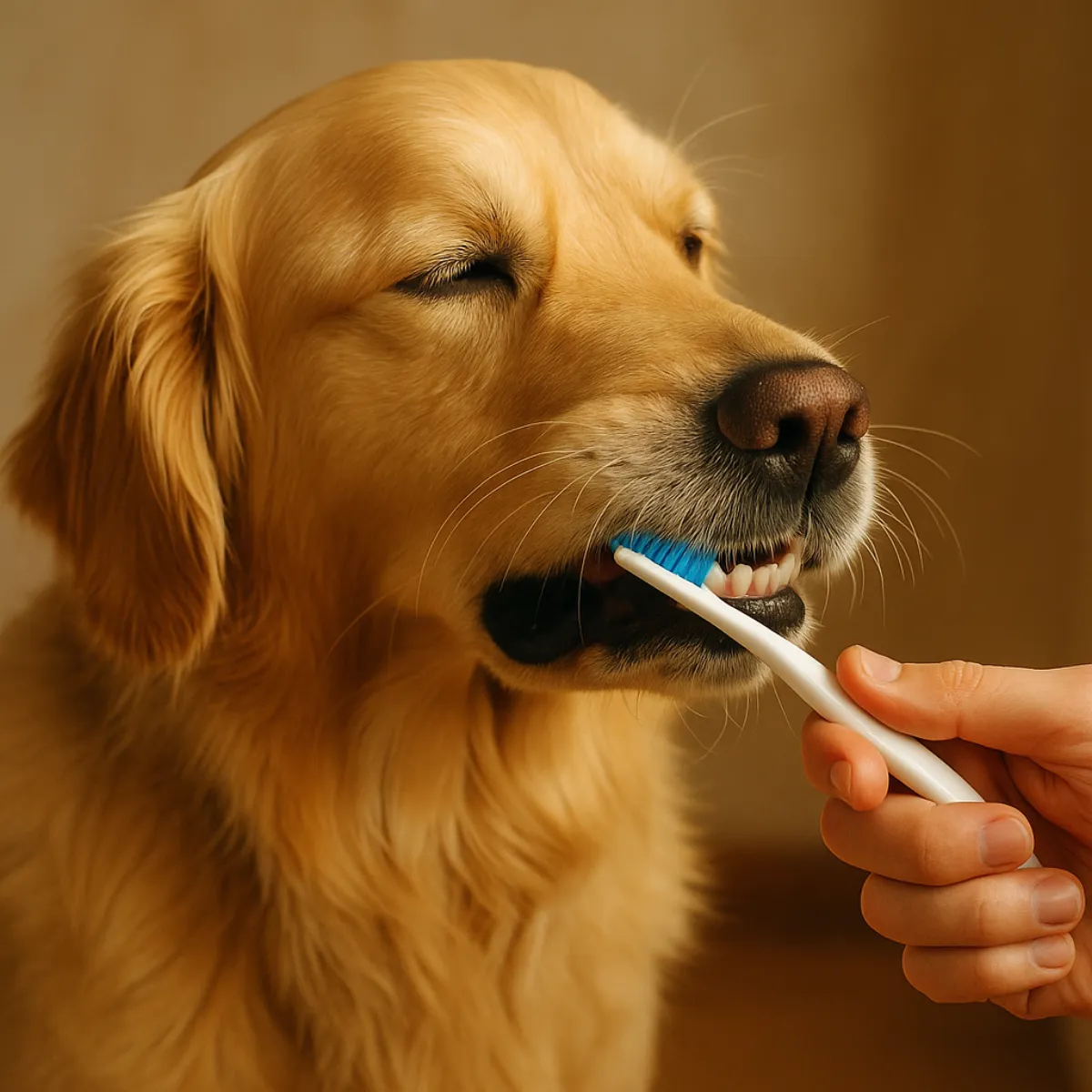
Home care is the part of feline dental cost that an owner genuinely controls, and the ranking of what helps is reasonably settled. Tooth brushing sits first by a wide margin. Regular brushing with a soft brush or finger brush sized for a cat, using a toothpaste formulated for cats rather than a human product, mechanically disrupts plaque before it hardens into tartar. Introduced gradually and paired with rewards, a fair number of cats accept it, and kittenhood is much the easiest starting point.
Veterinary approved dental diets, treats, and water additives form the second tier. Some are designed to work mechanically as the animal chews, others target plaque chemically. Products carrying recognized veterinary dental acceptance are the ones with evidence behind them, and your vet can point at what they trust for cats specifically. These help in households where brushing loses the negotiation, which is a large share of households.
The limits deserve equal billing. Home care does not remove tartar that has already hardened, does not treat disease that is already present, and does not prevent tooth resorption, which arises regardless of hygiene. It is prevention and maintenance, not treatment, and it is not a substitute for the examination that decides whether a dental is needed. The combination that works is unglamorous: brush what you can, use approved products for the rest, keep the routine exams, and follow the recommendation that comes out of them.
What deferring a recommended dental changes
If your vet has recommended a dental and the cost is the obstacle, the important thing to understand is what deferral actually does, because it is not a saving. Periodontal disease and resorptive lesions are progressive processes. They do not pause while a budget recovers. A mouth treated later is therefore usually a different clinical problem from the same mouth treated when it was first flagged, and the procedure it needs shifts from the cleaning end of this cost read toward the surgical end. The money is not avoided; the thing being bought changes, and so does what the cat experiences in the meantime.
That is a mechanism, not a prediction about your cat. How quickly any individual mouth changes, and how urgent a particular recommendation is, are things only your veterinarian can judge. The right move when cost is the barrier is to say so out loud to the practice. Timing, payment arrangements, staged treatment plans, and assistance routes all exist, and every one of them requires the conversation to happen. Our read on getting help with vet bills covers the routes worth knowing about.
What does not belong on the list is quietly declining a component of the procedure to bring the number down, because that decision is clinical and the person best placed to make it is not the one reading the invoice. If a recommendation feels disproportionate, a second veterinary opinion is a legitimate and cheap step. Silence is the option with no upside.
What actually changes the lifetime dental bill
There are real levers on feline dental spending. They operate on how often the procedure is needed and how it is funded, rather than on removing pieces of it.
- Home care, started early. Brushing and veterinary approved dental products act on plaque before it becomes the problem, which is the only lever that touches the interval between professional dentals.
- Keeping the routine examination. The exam is where a mouth gets graded and where a developing problem is noticed. Skipping it does not slow anything down; it only delays the information.
- Acting on the recommendation when it is made. A mouth addressed at the point your vet flags it is more often a cleaning case than a surgical one, which is a difference in what the procedure is rather than a discount on the same procedure.
- Asking about scheduling. Some practices run dental focused months or scheduling windows. If a recommendation is not urgent, asking whether timing options exist is a fair question, and your vet will tell you if waiting is not appropriate.
- Pre-funding it. A monthly set aside, an illustrative $15 to $25, or a wellness plan with a dental component turns a lumpy bill into a flat line so that cost is not the thing deciding the timing.
- Comparing on scope, not on headline. When you gather estimates, ask each practice what its number covers and how extractions are billed. The comparison only means something once both scopes are described.
What stays off this list is anything that removes clinical components from the procedure. That is not a saving; it is a change to the medicine, and it is not the owner’s call to make alone. The same rule runs through our medication savings read: change the price, never the care.
Questions to bring to your vet about the estimate
Owners often want to know whether an estimate is reasonable, and the only person who can answer that is the veterinarian who examined the cat and wrote it. What this cost read can offer is the list of questions that make that conversation productive.
Start with scope. What does this figure cover, and what is not in it? How are extractions billed, per tooth or by time, and what does the range assume? What happens to the total if the mouth turns out to be worse than expected? Then move to the plan. What did you see on examination that led to this recommendation? What grade would you give this mouth? What would you expect to change if we waited, and how long is reasonable?
Then handle the day itself. Who monitors the anesthesia and with what? What screening do you advise before the procedure for this particular cat, and why? Will you call during the procedure, and what decisions will you want from me? Finally, cover afterwards. What does recovery look like, what medication goes home, and when is the recheck?
None of these questions is confrontational and all of them are routine. A practice that answers them clearly is giving you the information the estimate cannot carry on its own. Our read on what a vet visit costs and our choosing a vet read both make the same argument: the quality of the conversation is the most reliable signal you get.
How dental care fits the bigger cat budget
Zoom out and the dental line takes its proper place: not the largest item in a cat budget, but the one most reliably left out of it. A typical cat year, as our annual cat cost read maps, is built from food, litter, routine veterinary care, and prevention, with dental arriving every few years as a lump that beginner budgets omit entirely. Fold an illustrative $15 to $25 a month into the plan and the lump stops being an event.
Dental also interacts with the rest of the medical budget more than its cosmetic reputation suggests. The routine exam is where dental grades come from, which is one more reason it is not the appointment to drop. The pre-anesthetic workup occasionally surfaces something unrelated to teeth. The insurance decision should be made with the dental wording read and understood rather than assumed. And the older years, the second expensive era of a cat’s life, frequently carry a dental or two inside them.
The mindset shift worth making is small. Move the dental from the surprise column to the schedule column. Cats will need dental care on a fuzzy but near certain interval, at a knowable range of prices, on a timetable their veterinarian sets. Owners who plan that way meet each recommendation with a funded plan and a shrug, which leaves the actual decision, whether and when, where it belongs: with the person who can see the gum line.
The bottom line
Cat dental cleaning cost and cat tooth extraction cost sit on the same invoice and behave differently. A cleaning with no extractions commonly runs an illustrative $300 to $800. Extractions are added per tooth, an illustrative $50 to $150 for a simple one and $150 to $300 or more for a surgical one, which is how the same appointment reaches an illustrative $600 to $1,200 and beyond. The anesthesia, monitoring, workup, and imaging blocks are not padding around the cleaning; they are the reason a veterinary dental is dentistry, and they are also why the extraction count cannot be quoted before the cat is under.
What that means practically is straightforward. Keep the routine exams so the mouth is graded by someone who can see it. Do the home care that acts on plaque before it hardens. Read the dental wording on any policy you carry. Pre-fund the procedure with a small monthly amount through the cost calculator so money is never the thing making the clinical decision. Then take the estimate, the questions above, and your cat to the practice, because every judgment about whether, when, and how much is theirs to make and not this cost read’s. If your household runs both species, the dog dental version covers the same ground on the canine side.
A closing note from MuttMark: everything above is budgeting context, not veterinary advice, and no part of it can assess the animal on your lap. Every dollar figure here is an illustrative band chosen to explain what moves a feline dental bill, never a quote, and never a statement about what any particular practice charges or includes. Whether your cat needs a dental, what screening should come first, whether anesthesia is appropriate for that individual, which teeth should come out, and whether any estimate in front of you is reasonable are all clinical judgments belonging to a veterinarian who has examined the cat. Take the questions this cost read raises into that room, ask for the estimate in writing, and say so plainly if cost is a constraint, because the conversation is where the options are.
Frequently asked questions
How much does a cat teeth cleaning cost?
As an illustrative range, a professional cat dental cleaning with no extractions commonly falls somewhere around $300 to $800 once the anesthesia block, monitoring, scaling above and below the gumline, and polishing are counted. Adding a pre-anesthetic workup and full-mouth dental radiographs tends to move an ordinary bill toward the middle or upper part of that band. When teeth need to come out, and in cats they often do, totals commonly run an illustrative $600 to $1,200, and mouths needing many extractions or referral-level oral surgery can pass $1,800. Treat all of those as illustrative bands rather than quotes. Only the practice examining your cat can tell you what its own estimate covers and what that particular mouth is likely to need.
How much does a cat tooth extraction cost per tooth?
As illustrative per-tooth figures, a simple extraction of a small single-rooted tooth that is already mobile commonly adds around $50 to $150 on top of the cleaning. A surgical extraction, meaning a canine, a multi-rooted premolar or molar, or a tooth affected by resorption, commonly runs an illustrative $150 to $300 or more each, because it involves sectioning the tooth, raising a gum flap, elevating each root separately, suturing the site closed, and confirming with imaging. Several surgical teeth are how a routine cleaning becomes a four-figure dental. The per-tooth figure is also not the whole story, since extraction time lengthens the anesthesia and imaging lines underneath it. The written estimate from your own vet is the only number that applies to your cat.
What is the difference between a simple and a surgical cat tooth extraction?
A simple extraction removes a tooth through its socket without cutting gum tissue or bone, which is possible when the tooth has one small root and the attachment has already been lost to disease. A surgical extraction is genuine oral surgery: the gum is opened, the tooth is often divided so each root comes out on its own path, a little bone may be removed, the site is closed with sutures, and imaging confirms nothing was left behind. Feline teeth are small and resorbing roots can be fragile or fused to surrounding bone, so cats need the surgical version more often than owners expect. That difficulty gap, not the number of teeth alone, is what separates a modest extraction line from a large one.
Why is cat teeth cleaning so expensive?
Because a veterinary dental is a day surgery procedure rather than a brushing. The cat is anesthetized with the airway protected, a person monitors vital signs from induction to recovery, every tooth is probed and charted, the surfaces above and below the gumline are scaled, imaging looks at the roots, and recovery is supervised before the cat goes home. That is hours of skilled work from more than one professional, plus drugs, equipment, and consumables. Cats add a second reason: they conceal oral pain, so mouths often turn out to need treatment rather than only cleaning once they are examined under anesthesia. If one estimate is far below another, the gap is usually scope, so ask each practice what its number covers instead of assuming the two are the same procedure.
How much does cat tartar removal cost?
Tartar removal is not a standalone service with its own price tag; it is one component inside a dental. Scaling visible tartar off the crowns is the quick part, and if that were all a dental involved it would be cheap. The bill is built around everything that makes scaling safe and clinically useful: anesthesia with the airway secured, continuous monitoring, tooth by tooth probing and charting, cleaning below the gumline where a crown scrape cannot reach, polishing, and recovery. So the honest answer is that cat tartar removal costs whatever the dental it sits inside costs, an illustrative $300 to $800 with no extractions. If you have been quoted a far smaller figure for tartar removal on its own, ask exactly what that service does and does not do before comparing it.
Why does a cat dental need general anesthesia?
Because the clinically meaningful work happens where an awake cat will not allow access. Scaling below the gumline, probing every tooth surface, taking full-mouth radiographs, and removing a diseased tooth are not procedures any conscious cat tolerates, and an anesthetized cat has a protected airway so water and debris from scaling do not reach the lungs. Anesthesia is also the main reason a dental costs what it does, because it brings drugs, an IV catheter, fluids, monitoring equipment, and a person whose entire job during the procedure is watching the cat. Whether anesthesia is appropriate for your particular cat, and what screening should come first, is a judgment for the veterinarian who has examined that cat, and it is not something a cost read can decide.
How often do cats need professional dental care?
There is no universal interval, because the answer comes from the individual mouth rather than the calendar. Some cats build tartar quickly, run inflamed gum lines, or develop resorptive lesions repeatedly, and their vets recommend dentals on a short cycle. Others have resilient mouths, respond well to home care, and go much longer between procedures with unremarkable exams in between. Your veterinarian judges this at the routine exam, ideally recording a dental grade you can watch over time. For budgeting, the useful framing is that professional dental care is a recurring cost that arrives on a fuzzy but near certain interval rather than a one time event, so it belongs in the plan whether or not it is due this year.
Does pet insurance cover cat teeth cleaning and extractions?
It varies enough between policies that the dental wording is worth reading before you buy rather than after an estimate arrives. As a general pattern, standard accident and illness policies treat routine cleaning as preventive care and exclude it, while dental treatment arising from an accident is more often covered, and coverage for dental illness such as extractions exists on some policies with conditions attached. Optional wellness add ons at some insurers reimburse a set amount toward routine dental care each year. Dental disease already noted in the medical record before enrollment is the classic pre-existing exclusion, which is why the wording, not the marketing page, is the thing to check with your insurer directly.
Why can my vet not quote the extraction cost in advance?
Because the information that decides the extraction count does not exist until the cat is anesthetized. Most of a tooth sits below the gumline, resorptive lesions can hide at or under the gum margin, and a tooth that looks acceptable from above can be diseased at the root. The full picture appears when every tooth is probed and radiographs are taken, which happens after induction. That is why estimates for feline dentals are usually issued as ranges with a consent conversation attached, and why practices commonly telephone partway through. The practical preparation is to agree with your vet beforehand how you want that call handled, so the decision is quick rather than made under pressure.