

What's on this page
- What getting help with vet bills really looks like
- Before you start
- Step 1: Tell your vet you are struggling with the bill
- Step 2: Get an itemized estimate and triage what is essential
- Step 3: Ask about a payment plan or staged treatment
- Step 4: Weigh veterinary financing and credit lines carefully
- Step 5: Call low-cost clinics, vet schools, and shelters
- Step 6: Search for charitable funds that fit your situation
- Step 7: Ask your own community for help, honestly
- Step 8: Protect yourself against the next bill
- If you feel you can’t afford your dog anymore
- A worked example: one illustrative emergency bill, pieced together
- Common mistakes when asking for help with a vet bill
- Troubleshooting: emergencies, denials, and thin local options
- The ask-for-help checklist
- The bottom line
Short answer: Help with a vet bill you cannot afford is usually pieced together from several sources rather than one rescue: an honest conversation with your vet first, for triage, an itemized estimate and a payment plan, then assistance programs, low-cost clinics, financing and your community. Start early and do not delay care, because silence makes both the problem and the bill worse. Charitable funds are small, and insurance cannot help with a bill that already exists.
A vet bill you cannot pay is one of the loneliest problems a pet owner faces. The animal you love needs care, the number on the estimate does not fit anywhere in your budget, and shame has a way of keeping people quiet at exactly the moment when speaking up helps most. So before a single step, one thing needs saying plainly: needing help with vet bills does not make you a bad owner. Bills in the hundreds or thousands land on careful, loving households every day, and asking for help is an act of responsibility, not a confession.
This field guide walks through getting that help step by step: the conversation to have with your vet first, payment plans and staged treatment, financing and its fine print, low-cost clinics and vet school programs, charitable funds and how to actually find them, asking your own community, and what to do, and try first, if you have started thinking you cannot afford your dog at all. It is honest about the limits too, because false hope wastes time you may not have. For context on what the bills themselves look like, our look at what vet visits cost sits alongside this one, and the companion below turns your own bill, savings, and monthly budget into a rough plan as you read.
Key takeaways
- The outcome: a realistic plan for a bill you cannot pay in full, usually pieced together from several sources, the clinic, a payment plan, assistance programs, and your community, rather than one rescue.
- The order matters: an honest conversation with your vet comes first, because triage, itemized estimates, and payment plans all start there, and every later step works better with an estimate in hand.
- The costliest mistake is silence: delaying care while you worry alone usually makes both the medical problem and the bill worse.
- Be honest about the limits: charitable funds are small and stretched, financing carries real interest risk, and pet insurance cannot help with a bill or condition that already exists.
- Every figure in this field guide is illustrative and varies widely by region, clinic, and situation; your own veterinary team is the best guide to what exists near you.
What getting help with vet bills really looks like
It helps to start with an honest picture, because the internet is full of lists that imply a charity is waiting to pay your bill if you just find the right link. The reality is more modest and more workable. Help with vet costs is a patchwork: a clinic that trims and stages the treatment plan, a payment arrangement that spreads the cost, a small grant from an assistance fund, a low-cost clinic for part of the care, some savings, and some help from people who love you. Families who get through a large bill usually stack three or four of these. Almost no one finds a single source that covers everything, and expecting one leads to paralysis while the pet waits.
That picture shapes the strategy. Because help comes in pieces, the goal of each step below is to secure a piece: knock a few deferrable items off the estimate here, spread a chunk over some months there, bring in a modest grant or a family contribution on top. Because most sources require an estimate and a diagnosis, the vet conversation comes first, not last. And because applications, callbacks, and approvals take time, starting early matters; a stable, non-urgent case has far more options than a crisis at midnight. The size of the bill matters too, since a routine problem and an emergency surgery live in different worlds. The chart below shows the illustrative shape of that range, and our vet visit cost explainer breaks down where those numbers come from.
Illustrative vet bill sizes, by scenario
Typical planning ranges for a dog or cat, shown at an illustrative midpoint. Real bills vary widely by region, clinic, and case.
Every figure is an illustrative midpoint, not a quote. The point of the shape: the bigger the bill, the more pieces a plan needs, and the more valuable the early, honest conversation with the clinic becomes.
Before you start
The steps below assume a real bill or estimate is either in your hands or coming, and that your pet’s situation allows at least a little time to work the problem. In a true emergency, skip straight to the troubleshooting section, then come back. For everyone else, gather a few things first, because every call and application goes faster with them ready:
- The itemized estimate or bill. Nearly every payment plan, fund, and program asks for it. If you only have a lump-sum number, ask the clinic to itemize it; reputable practices do this routinely.
- The diagnosis, in plain words. Assistance funds and rescues often target specific conditions, so knowing exactly what your pet needs treated lets you search and apply precisely.
- Your honest numbers. What you can pay today, what you could pay monthly without missing rent or food, and what savings you can commit. The companion below will turn these into a rough gap and timeline.
- Your pet's records. Vaccine history and prior records speed up intake at low-cost clinics, teaching hospitals, and rescue programs.
- A willingness to say the quiet part. Every step here starts with some version of the sentence I cannot afford this, and I want to take care of my pet. Practice it once; it gets easier.
Time and difficulty: expect an afternoon of phone calls and forms for a planned bill, spread over a few days if fund applications are involved. None of it is technically hard; the hard part is emotional, and that is normal. One caution before you begin: nothing in this field guide overrides veterinary judgment. Which care is essential and which can wait is a medical call, so every trimming and staging decision below happens with your vet, never against them.
Step 1: Tell your vet you are struggling with the bill
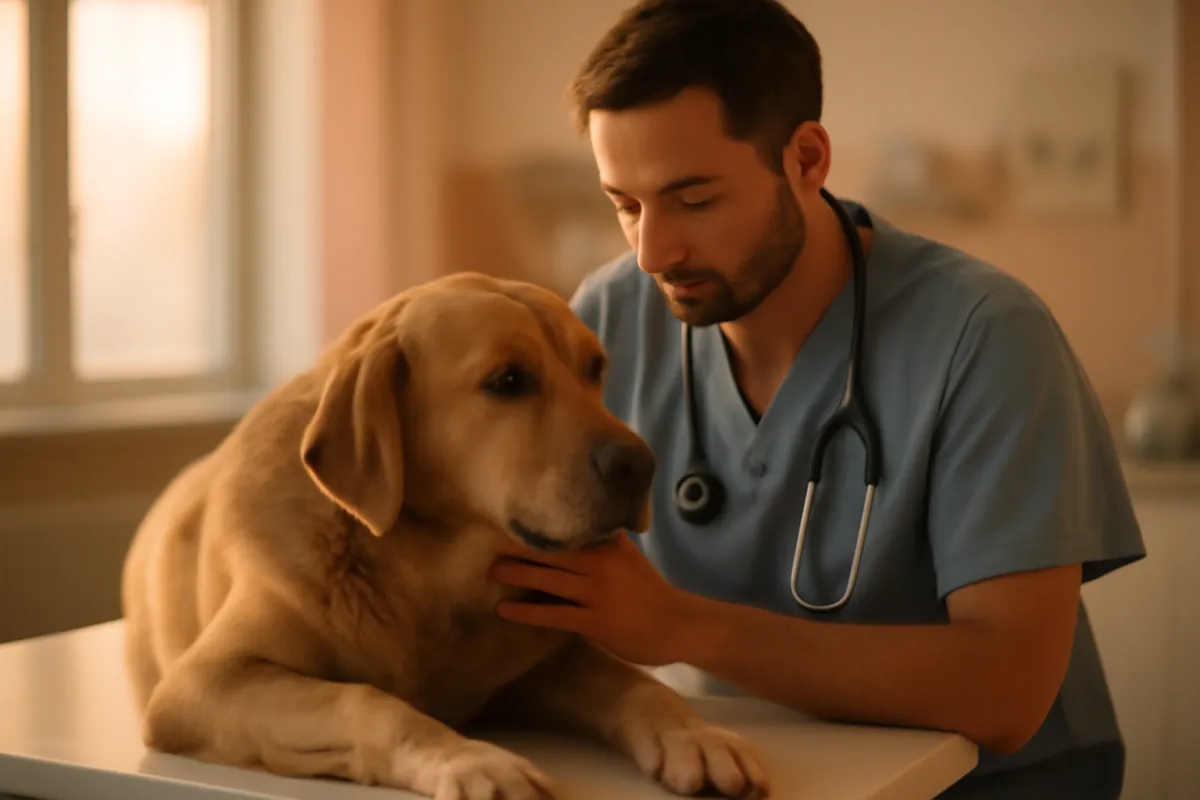
Start where the bill starts. Before you research a single fund or financing offer, tell your vet’s office, plainly and without apology, that the estimate is beyond what you can pay and that you want to find a way to get your pet treated. This is the step people skip out of embarrassment, and it is the single highest-value call in this entire field guide, because almost every other option flows through the clinic: they write the itemized estimate, they decide what staging is medically safe, they know which local programs actually answer the phone, and they are the ones who can offer a payment arrangement.
How to do it: ask for a few minutes with the practice manager or your vet, in person or by phone, and say three things. What you can realistically pay now, that you want your pet treated, and that you would like to know every option they can offer or point you toward. Veterinary teams have this conversation constantly; you will not be the first this week, and a good practice treats it as problem-solving, not judgment. Take notes, because front-desk staff often know the local mix of shelters, funds, and low-cost options better than any website.
The watch-out is waiting. Every week of silence tends to make a medical problem bigger and a bill larger, and it shrinks the options that need time, like fund applications. If shame is what is stopping you, remember what the clinic sees: an owner who calls about money is an owner trying to get their animal cared for. The owners who worry clinics are the ones who disappear. Make the call today, even if all you can say is that you need a few days and want to know what the choices are.
Step 2: Get an itemized estimate and triage what is essential
With the conversation open, get the estimate itemized and ask the question that shrinks more bills than any discount: which of these items does my pet need right now, and which could safely wait or be skipped? A veterinary estimate for a non-trivial problem often contains layers, the core treatment, diagnostics that confirm or refine the picture, supportive extras, and follow-up. Some layers are non-negotiable. Others are genuinely optional or deferrable, and the only person who can sort them is your vet, which is why this step is a conversation, not a red pen you wield alone.
How to do it: go line by line and ask what each item is for, what happens if it waits two weeks, and whether a cheaper route exists for any of it, a generic medication, a recheck by phone, a test now and a test later instead of both today. Ask the direct version too: if money decides, doctor, what does my pet truly need today? As an illustrative shape, it is not unusual for this conversation to move a bill by a meaningful fraction, in our worked example later, about $300 of an illustrative $1,800 estimate turns out to be safely deferrable. Your result may be more, less, or nothing; the point is to ask.
The watch-out is triaging on your own. Skipping an item because it sounds optional is how a treatable problem becomes an emergency, and it is the false economy our read on lowering vet bills warns about from the other direction. Never cut an item your vet says is essential; the goal is to spend less on the same outcome for your pet, not to buy a worse outcome. Everything trimmed here is trimmed with a professional saying it is safe.
Step 3: Ask about a payment plan or staged treatment
Now ask the money question directly: can this clinic take payment over time, or stage the treatment so the costs arrive in steps? Payment plans are the most direct form of help that exists, because they need no application to a stranger and no luck, just an agreement between you and a practice that already knows you. The honest caveat is that availability varies completely by clinic. Some offer in-house plans to established clients, some only through third-party services, and some not at all. You cannot know which yours is without asking, and the ask costs nothing.
How to do it: propose something concrete rather than asking abstractly. An illustrative version: I can pay $400 today; could we put the remaining amount on a plan at around $150 a month? Concrete numbers show good faith and give the clinic something to say yes to. If a formal plan is off the table, ask about staging: doing the essential care now and scheduling the rest across weeks as you can pay, where medically safe. Ask too whether paying by a certain date, or a deposit today, changes anything. Get whatever you agree in writing, and then honor it scrupulously, because that arrangement is the clinic trusting you.
The watch-out is overpromising. A payment plan you miss payments on damages the relationship you will need for your pet’s entire life, and clinics remember. Commit to a monthly figure you can genuinely sustain, even if it stretches the timeline, and if your situation changes, call before the missed payment, not after. The companion below shows how long a given monthly amount takes to clear your gap, which makes the realistic number easier to name.
Step 4: Weigh veterinary financing and credit lines carefully
If the clinic cannot spread the cost, financing can, and it deserves both a fair hearing and clear eyes. Many practices work with third-party financing companies and veterinary-specific medical credit lines, which pay the clinic now while you repay over months. For a family with decent credit and a stable income, this can honestly be the bridge that gets a pet treated. This field guide neither pushes nor condemns these products; it asks you to read them, because the difference between the good outcome and the bad one is almost always in the terms.
How to do it: before signing anything, find three numbers in the paperwork. The interest rate after any promotional period, the length of that promotional period, and what happens to interest if a balance remains when it ends. Many offers advertise an interest-free window, and some of them charge deferred interest, meaning that if any balance survives the window, interest is applied backward across the whole original amount at a high rate. Divide your total by the number of promotional months and ask whether you can truly pay that much monthly; if yes, the product may serve you well, and if no, the cheap bridge can become the most expensive part of the bill.
The watch-out is desperation signing. A stressful moment at a reception desk is the worst place to absorb credit terms, so take the paperwork to a chair, read it, and run the monthly math before you commit. Consider alternatives in the same breath, a family loan on written friendly terms is often cheaper than any card, and weigh financing as one piece alongside the other steps rather than the whole plan. For what it does to your budget over the following year, be honest: a financed bill is not help arriving, it is your own future money arriving early.
Step 5: Call low-cost clinics, vet schools, and shelters
While the money conversation runs, work the cost side too, because part of your pet’s care may be available at a lower price in a different setting. Three categories are worth calls. Low-cost and nonprofit clinics, often run by humane societies or community organizations, offer some services at reduced prices. Veterinary colleges run teaching hospitals where supervised students take part in care, and some offer lower costs on certain services or run clinical trials that reduce the price of qualifying treatment. And shelters themselves often know, or run, programs for exactly the situation you are in.
How to do it: search your area for low-cost veterinary clinic and your nearest veterinary college, then call with your diagnosis and estimate in hand and ask three questions: do you treat this, what would it roughly cost here, and if you cannot help, who locally might? Ask your own vet the same referral question, since practices usually know which local options are legitimate and which services each one actually offers. Scope is the thing to confirm: many low-cost clinics focus on preventive care, spay and neuter, vaccines, and dental work rather than complex treatment, so match the setting to the service. A hybrid approach is common, the complex piece at your regular vet, the routine pieces at the low-cost clinic.
The watch-out is assuming availability. These options are unevenly spread; some regions have several, others none within reasonable driving distance, and teaching hospitals are not automatically cheap for every service. Making the calls costs an hour and settles the question for your area, which is better than either false hope or unexplored options. Keep records consistent across any providers you use, so the vets treating your pet all see the same history.
Step 6: Search for charitable funds that fit your situation
Charitable help for vet bills exists, and finding it works best when you know what shape it takes. Rather than one large national safety net, there is a patchwork of mostly small funds, and they cluster into categories: general hardship funds that consider any pet owner in financial crisis, condition-specific funds tied to a particular diagnosis, breed-specific rescue organizations that sometimes help owners of that breed, and local funds run through shelters, humane societies, and veterinary schools. Most make modest grants toward a bill rather than paying it in full, most require an application, a diagnosis, and a written estimate, and their funding runs out and replenishes unpredictably.
How to do it: ask the two teams who see this weekly, your vet’s front desk and your local shelter, what funds they know of, since local knowledge beats any list. Then search deliberately: your pet’s condition plus veterinary assistance fund, your breed plus rescue assistance, your city or state plus help with vet bills. Apply to several at once rather than one at a time, because timelines vary and answers can be slow. Before applying anywhere, sanity-check legitimacy: a real fund explains its criteria and process, does not ask you to pay to apply, and typically pays the clinic directly rather than sending you cash.
The watch-out is treating this step as the plan. A realistic outcome is a few hundred illustrative dollars toward a larger bill, sometimes nothing, occasionally more, and applications take days you should spend working the other steps in parallel. This field guide deliberately names categories rather than organizations, because funds change, close, and exhaust their budgets; the search patterns above will find you the current, live options for your region and situation rather than a stale list.
Step 7: Ask your own community for help, honestly
For many families, the most real help does not come from a stranger’s fund at all; it comes from the people who already love them and their pet. Family, close friends, coworkers who ask about your dog by name, the wider circle online: these are people who often genuinely want to help and simply have no idea help is needed. Asking them is not begging. It is giving people who care about you the chance to act like it, and most owners who finally ask are surprised by who steps up.
How to do it: be specific and honest, because those two qualities are what make an ask fair. Share the real diagnosis, the real estimate, what you have covered yourself, and the specific gap: an illustrative version reads, the surgery is $1,800, we have $700 covered between savings and a payment plan, and we are trying to close the rest. For a wider circle, a crowdfunding campaign can organize the same honest ask; expect fees, expect the money to arrive slower than a clinic may need it, and expect most campaigns to raise a fraction of their goal, which is fine when it is one segment of your plan. A direct family loan, on written friendly terms with a real repayment schedule, is often the cheapest financing that exists.
The watch-out is letting the ask curdle. Never inflate the story or the numbers, update people on what happened and where the money went, and repay any loan as agreed even when the lender waves it off. Money strains relationships when it is vague, and strengthens them when it is handled cleanly. And if someone helps, tell them how the dog is doing afterward; it is the only repayment some of them want.

Step 8: Protect yourself against the next bill
Once the immediate crisis has a plan, spend one more evening on the future, because the household that just survived a bill unprotected is exactly the household the next bill will find. Two tools change how the next one feels. A pet emergency fund, built by small automatic transfers, turns a future surprise into a withdrawal instead of a debt. And pet insurance, enrolled while your pet is healthy, can cover a share of future accidents and illnesses, which is precisely the protection you wished you had this week.
How to do it: for the fund, pick a monthly amount you will not miss, automate it, and let it grow without a target date; even a partial fund shrinks whatever you would need to finance next time. For insurance, be clear-eyed about what it is: it cannot help with the current bill, and the condition your pet was just treated for will be excluded as pre-existing on any new policy, so the decision is purely about future, new problems. Whether that trade makes sense for your pet and budget is a personal calculation; our worth-it read walks the honest math, dog insurance cost and cat insurance cost show illustrative premiums, and our deductibles read explains how a claim actually pays out.
The watch-out is doing neither out of exhaustion. The weeks after a financial scare are, ironically, when families most often decide to think about it later, and later usually arrives as another crisis. Trimming routine costs frees up the monthly amounts these tools need; our reads on lowering vet bills and saving on pet medications cover that side, and preparing for a pet emergency turns this whole experience into a plan you will be glad exists.
If you feel you can’t afford your dog anymore
Some readers are not holding one bill; they are holding a heavier thought, that they cannot afford their dog at all anymore. If that is you, this section is written without a gram of judgment, because thinking about it seriously means you are putting the dog’s welfare above your own comfort. Before any decision, make one distinction: is this a temporary crisis, a job loss, one huge bill, a bad season, or a permanent gap between what the dog needs and what your life can now provide? The two feel identical at 2 a.m. and have very different answers.
For a temporary crisis, the steps above exist for exactly this, and one more category matters: many shelters and humane societies run safety-net or surrender-prevention programs, pet food banks, low-cost care days, temporary assistance, occasionally short-term fostering during a hardship like hospitalization or housing loss. These programs exist because shelters would rather help you keep your dog than take your dog in, so call and ask what keep-together help they offer before assuming surrender is the only path. Availability varies by area, and asking costs one phone call.
If the gap is truly permanent, no program will close it, and pretending otherwise would be the false hope this field guide promised to avoid, then rehoming, done carefully, is a loving act and not a failure. Done carefully means: contact breed-specific rescues first if your dog has a breed, since they screen adopters and often have waiting lists of them; if you place the dog yourself, screen homes personally, visit if you can, and charge a modest rehoming fee, because free to good home listings attract the wrong people; and if neither works, surrender to a reputable shelter or rescue rather than anything less. Take your time where the dog’s situation allows it, send records and quirks along, and let yourself grieve. A dog rehomed thoughtfully into a household that can meet its needs is a dog you did right by, all the way to the end of your part of its story.
A worked example: one illustrative emergency bill, pieced together
Numbers make the method concrete, so walk one illustrative family through it. Their dog needs treatment estimated at $1,800, they have $400 in savings they can commit, and the number knocks the air out of them. Instead of freezing, they run the steps. The Step 1 conversation happens the same afternoon: they tell their clinic what they can pay and ask for every option. In Step 2, the itemized estimate and triage talk identifies about $300 of the plan, a repeatable test and a deferrable extra, that the vet agrees can safely wait, bringing today’s essential care to $1,500.
Their $400 savings goes down as a deposit. In Step 3, the clinic agrees to put $600 on an in-house plan at $150 a month for four months, which the family knows they can sustain. That leaves a $500 gap, and they split the remaining steps: an application to two assistance funds surfaced by the shelter, and an honest ask to family with the real numbers attached. A sibling contributes $300; one fund approves a $200 grant paid directly to the clinic, and the other never replies. The dog is treated on time, the plan is paid off on schedule, and afterward the family starts a $50 monthly transfer into a new emergency fund. No single source saved them, and nothing here required luck beyond one modest grant; the plan was five ordinary pieces, assembled in the right order.
How the illustrative $1,800 bill gets covered
The worked example's five pieces as shares of the total estimate. Illustrative only; your mix will differ.
The five segments sum to 100 percent of the illustrative $1,800 estimate. Notice what is absent: no single rescuer, no high-interest financing, and no luck beyond one small grant out of two applications.
Run your own version in the companion below: enter your bill, your savings, and a monthly amount you could sustain, and it shows the gap you are actually solving for and how long a plan would take to clear it. Most people find the gap, once savings and a plan are subtracted, is smaller and less impossible than the headline number that scared them.
Common mistakes when asking for help with a vet bill
The families who struggle most with a big bill tend to make the same handful of missteps, and every one of them is avoidable once named:
- Staying silent and stalling. Waiting weeks while worrying alone is the most expensive mistake on this list: conditions progress, bills grow, and time-dependent options like fund applications slip away. The vet conversation on day one changes the whole trajectory.
- Signing financing unread. Deferred-interest terms turn a helpful bridge into the costliest part of the bill when the promotional window closes with a balance left. Read the rate, the window, and the after-window rule before signing anything.
- Treating charity or crowdfunding as the plan. Both are real and both are modest and slow for most people. Run them alongside the clinic conversation, never instead of it.
- Triaging the estimate yourself. Skipping items that sound optional without asking is how treatable problems become emergencies. Every trim happens with your vet's sign-off.
- Expecting insurance to cover the existing problem. A new policy excludes pre-existing conditions and has waiting periods, so it belongs in your plan for the next bill, not this one.
- Rehoming in panic. Surrendering a dog over a one-time bill, before asking about safety-net programs, payment plans, and funds, trades a solvable money problem for a permanent loss. Slow the decision down to the speed of the options.
Troubleshooting: emergencies, denials, and thin local options
What if it is an emergency happening right now? Go, and be honest at the desk immediately, because a clinic can only work with a constraint it knows about. Ask what stabilizing your pet costs before committing to the full plan, ask for essentials separated from optionals on the estimate, and ask what financing or local assistance the clinic knows. Some regions have nonprofit emergency clinics; many do not. If the gap truly cannot be closed, ask the veterinarian to walk through every remaining option honestly, including partial treatment and, in the hardest cases, the humane conversations no one wants. Veterinary teams have these talks with kindness, and having them openly is better for the animal than silence.
What if financing turns you down? A denial closes one door, not the building. Return to the clinic with the news and re-ask about staging and in-house arrangements, push further on funds and community, and ask whether a smaller treatment scope exists that your cash can cover. What if there is simply nothing near you, no low-cost clinic, no shelter program? Widen the radius for planned care, since a two-hour drive can be worth a meaningful difference on a large procedure, ask your vet about the nearest teaching hospital, and remember that fund applications and community asks are location-independent. What if the bills are chronic, a condition with ongoing costs? Ask your vet about the lowest-cost sustainable management plan, generics filled at cheaper pharmacies, and which monitoring is essential versus ideal; our medication savings read covers that lane in detail.
The ask-for-help checklist
The whole field guide, compressed into the list you can work through with a phone and a notepad:
- Tell your vet's office plainly that you cannot cover the bill and want options.
- Get the estimate itemized; ask what is essential now and what can safely wait.
- Ask for a payment plan or staged treatment, proposing concrete numbers.
- Read any financing offer's rate, promotional window, and deferred-interest rule before signing.
- Call low-cost clinics, the nearest veterinary teaching hospital, and your local shelter.
- Ask the vet team and shelter about assistance funds; search condition, breed, and region plus veterinary assistance fund; apply to several.
- Ask family and friends with the real diagnosis, the real estimate, and the specific gap.
- If you are considering giving up your dog, ask shelters about safety-net and surrender-prevention programs first.
- Once stable: start a small automatic emergency-fund transfer, and decide on insurance for future bills with clear eyes.
- Keep every promise you make along the way, to the clinic, to lenders, and to the people who helped.
The bottom line
Getting help with vet bills is not about finding the one charity with your name on it; it is about assembling ordinary pieces in the right order, starting with the sentence most owners are afraid to say out loud. Tell your vet you are struggling, triage the estimate together, ask for a plan, read any financing before signing, work the low-cost and charitable patchwork for what it honestly offers, and let the people who love you and your pet help. If the thought in your head is bigger than one bill, separate the temporary crisis from the permanent gap, ask about the programs built to keep pets home, and know that even the last resorts, done carefully, are acts of care. Then protect your future self: a small automatic fund, a clear-eyed look at insurance, and the cost habits in our vet bill read. The typical vet bill read shows what you are budgeting against, and the companion below turns your own numbers into the gap and the timeline. The bill is a problem with steps; you now have them.
A quiet word from MuttMark before you make your calls: this field guide is educational company for a hard week, not veterinary, financial, legal, or credit advice, and it was written for a general reader rather than for your specific animal or bank account. Every dollar amount, percentage, and timeline above is an illustrative planning shape; real bills, plans, grants, and program availability vary enormously by region, clinic, and circumstance, and some of the options described will not exist where you live. Decisions about what care your pet needs belong with a veterinarian who can examine them, and decisions about financing, credit, or rehoming deserve the counsel of qualified professionals and your own careful reading of any terms. If any figure here matters to your choice, confirm the current, local number before you rely on it.
Frequently asked questions
How can I get help with vet bills?
Start with the person holding the bill: tell your vet's office honestly that you are struggling, ask for an itemized estimate, and ask which parts of the care are essential right now versus safely deferrable. From there, the realistic sources of help are a payment plan or staged treatment through the clinic, veterinary financing or a medical credit line if you qualify and understand the terms, low-cost clinics, veterinary teaching hospitals, and shelter programs for the services they offer, charitable assistance funds that make small grants for specific situations, and your own community of family and friends. Most families who get through a big bill piece together several of these rather than finding one complete rescue. Every option here varies by region and situation, so treat this field guide as a map of categories to ask about, not a promise of what exists near you.
Do vets offer payment plans?
Some do and some do not, and the only way to know is to ask, calmly and before treatment rather than after. Some practices offer in-house arrangements for established clients, others work with third-party financing companies, and others expect payment at the time of service because they have been burned before. What almost every practice can do is give you an itemized estimate, tell you which items are essential now, and talk through what a staged approach would look like. Asking is not rude and it is not begging; clinics have this conversation constantly, and a good practice would rather build a plan than see a pet go untreated. If your clinic cannot offer a plan, ask whether they know local programs or funds that help, because front-desk teams often know the local options best.
Are there charities that help with vet bills?
Yes, charitable veterinary assistance funds exist, but the honest picture is that they are a patchwork of mostly small organizations rather than one big safety net. They tend to fall into categories: general hardship funds, funds tied to a specific condition or diagnosis, breed-specific rescue funds, and local funds run through shelters, humane societies, or veterinary schools. Most make modest grants rather than paying an entire bill, most require an application with a diagnosis and a written estimate from a vet, and many have waiting periods or limited funding at any given moment. The practical way in is to ask your vet team and local shelter what they know, and to search for your pet's specific condition or breed together with terms like veterinary assistance fund. Apply to several, expect partial help at best, and treat anything you receive as one piece of the plan rather than the plan.
Will pet insurance help with a vet bill I already have?
No, and it is kinder to say that plainly than to let you spend hours hoping otherwise. Pet insurance only covers conditions that appear after the policy starts and after its waiting periods pass, so a bill you are holding now, or a condition your pet already has, will be excluded as pre-existing on any new policy. Where insurance genuinely helps is with the next bill: enrolling a pet while it is healthy means future accidents and illnesses can be covered, which is exactly the protection the current crisis shows the value of. If you are considering it once things stabilize, our reads on dog and cat insurance costs and on how deductibles work walk through the honest math. For the bill in front of you, focus on payment plans, assistance programs, and the other steps in this field guide instead.
What should I do if I can't afford my dog anymore?
First, separate a one-time crisis from a permanent gap, because they have different answers. If a single bill is the problem, the steps in this field guide, a vet conversation, staged treatment, assistance funds, community help, are built for exactly that, and many shelters and humane societies also run safety-net programs, things like pet food banks, low-cost care days, or temporary help, designed to keep pets in their homes; ask before assuming surrender is the only path. If the gap is truly ongoing and no program closes it, rehoming can be the loving choice, done carefully: reach out to breed-specific rescues, screen adopters personally and charge a modest rehoming fee if you place the dog yourself, and never hand a pet to a stranger unscreened. Surrendering to a reputable shelter or rescue is a responsible last resort, not a failure. There is no shame anywhere in this paragraph; asking these questions means you are taking your dog's welfare seriously.
Are vet schools cheaper for treatment?
Sometimes, for some services, and it depends on the school and the case, so treat them as an option to call rather than a guaranteed discount. Veterinary colleges run teaching hospitals where students treat animals under the supervision of experienced clinicians, and some offer certain services at lower cost, run clinical trials that reduce the price of qualifying care, or operate community clinics with reduced fees. The trade-offs are real: appointments can take longer, availability may be limited, you may travel further, and not every service is discounted at all. For a complex or expensive condition, a teaching hospital is still worth a call, both to ask about cost and to ask whether any trial or program fits your pet's diagnosis. Your own vet can often tell you whether the nearest school is a realistic option for your situation.
What if it's an emergency and I have no money right now?
Go anyway, and be honest at the desk from the first minute, because an emergency clinic can only work with you if it knows your constraint. Ask what stabilizing your pet costs before committing to a full treatment plan, ask for an itemized estimate with essential items separated from optional ones, and ask directly what payment options, financing, or local assistance the clinic knows about. Some areas have nonprofit or reduced-cost emergency clinics; many do not, and it would be false comfort to pretend otherwise. If the gap truly cannot be closed, ask the veterinarian to talk through every remaining option openly, including what happens with partial treatment. It is a hard conversation, but veterinary teams have it often and will not judge you for asking. Preparing before an emergency, even a small fund, is the single change that most softens this moment, which is why it gets its own step in this field guide.
Is crowdfunding for vet bills a good idea?
It can genuinely help, and it fails often enough that it should never be the whole plan. Asking family, friends, and your wider circle for help with a vet bill is a legitimate thing to do; people who love you and your pet frequently want to help and simply do not know it is needed. Honesty is what separates a fair ask from a regrettable one: share the real diagnosis, the real estimate, and what you can cover yourself, and update people on how the money is used. The practical cautions are that most campaigns raise far less than their goal, money often arrives slower than a clinic needs it, and platforms take fees, so run it alongside a payment-plan conversation rather than instead of one. Treat whatever it raises as one segment of the bill, the way the worked example in this field guide does.