
What's on this page
- What preparing for a pet emergency actually means
- Before you start
- Step 1: Set up a way to pay for a pet emergency
- Step 2: Find your nearest 24-hour vet and save the poison hotline
- Step 3: Build a pet first-aid kit
- Step 4: Keep ID tags and microchip details current
- Step 5: Keep your pet’s medical records within reach
- Step 6: Learn to recognize a true emergency
- Step 7: Make a transport and evacuation plan
- A worked example: one household gets emergency-ready
- Common mistakes when preparing for a pet emergency
- Troubleshooting: tight budgets, multiple pets, travel, and disasters
- Your pet emergency preparedness checklist
- The bottom line
Short answer: Prepare for a pet emergency in seven steps built around three kinds of readiness. Money: a fund, insurance, a financing backstop or a blend, because a serious emergency can run an illustrative few hundred to several thousand dollars. Information: your nearest 24-hour vet, the poison hotline, a current microchip and your pet's records. Supplies: a first-aid kit and a way to move the pet. It takes an afternoon to set up and minutes to maintain.
A pet emergency is the one part of pet ownership you cannot schedule, and it is also the part that punishes the unprepared hardest. A dog that was fine at dinner can be in surgery by midnight, and the owner who has a plan handles that night as a stressful few hours rather than a financial and logistical crisis. The difference is not luck. It is a short list of things put in place quietly, long before the emergency, so that when the moment comes you are acting instead of scrambling.
By the end of this field guide you will have a working plan: a way to pay for a big bill, the phone numbers you will need saved before you need them, a first-aid kit by the door, and a clear sense of when a problem means go now. Preparing is mostly a paperwork-and-logistics task, not a medical one, and it takes an afternoon to set up and a few minutes now and then to keep current. For the bills this plan is built to absorb, see our read on what a vet visit costs; for the money side, our pet-insurance worth-it read and how to file a claim sit alongside this one. You can size your own reserve in the companion below as you read.
Key takeaways
- The outcome: a written, funded plan so a pet emergency is a hard night, not a catastrophe, with the money, numbers, kit, and know-how already in place.
- The time and cost: an afternoon to set up and minutes to maintain, plus whatever you steadily set aside or pay in premiums for the money side.
- The one mistake to avoid: having no way to pay before the emergency, which is what turns a survivable bill into an impossible choice at 2 a.m.
- The money in place matters most: a fund, insurance, a financing backstop, or a blend, because a serious emergency can run an illustrative few hundred to several thousand dollars.
- The information is nearly free: your nearest 24-hour vet, the poison hotline, a current microchip, and your pet's records cost almost nothing to prepare and save the most time when it counts.
What preparing for a pet emergency actually means
Hold one frame in mind before the steps, because it shapes everything else: preparing for a pet emergency is about removing decisions from the worst possible moment. During a real emergency you will be frightened, rushed, and thinking poorly about money and logistics. Every choice you can make now, calmly and in advance, is a choice you will not have to make badly later. That is the whole point of a plan. It does not prevent the emergency; it makes sure the emergency is the only thing you have to deal with.
Preparation splits neatly into three kinds of readiness, and a good plan covers all three. The first is money: a fund, insurance, a financing backstop, or a blend, so the bill is payable. The second is information: the nearest emergency clinic, the poison line, a current microchip, and your pet’s records, so you are not searching for numbers while a pet struggles. The third is supplies and logistics: a first-aid kit and a way to move and, if needed, evacuate the pet. The seven steps below build each of these in turn, then run a worked example, list the common mistakes, and cover the edge cases. This field guide is not veterinary or financial advice, and every dollar figure in it is illustrative, so treat it as a planning framework and confirm the specifics with your own vet and providers. For the emergency bills that make this plan worth building, our vet visit cost read shows what the numbers actually look like.
What a pet emergency can cost (illustrative)
A rough severity ladder for an after-hours or emergency visit, before your insurance or fund is applied. Bars are scaled to the top of the range. Illustrative planning figures, not quotes.
The range is enormous because an emergency stacks an elevated exam fee, diagnostics, treatment or surgery, and hospitalization at once. This spread is exactly why the money step comes first. Figures are illustrative and vary by region, clinic, and the specific problem.
Before you start
This walkthrough assumes you have a pet at home and want a plan in place before anything goes wrong, which is the right time to build one. Nothing here is urgent in the way an actual emergency is, and that calm is the advantage: you can shop, compare, and think clearly. Have a rough idea of these before you begin, because they shape the plan you build:
- Your pet's basics. Species, breed or mix, rough weight, age, and any known health conditions or regular medications, since larger and older pets tend toward larger and more frequent bills.
- Your monthly budget headroom. A realistic figure you can set aside each month or pay toward an insurance premium, because a sustainable small amount beats an ambitious one you abandon.
- Your local options. Whether there is a 24-hour emergency vet near you and how far it is, which affects your transport plan and how much cushion you want on hand.
- Your microchip and ID status. Whether your pet is chipped and whether that chip's registration is current, since this is the single cheapest thing to fix and the one that reunites lost pets.
- Where your pet's records live. Whether you could produce a vaccination and medical history quickly if an emergency clinic asked, or whether you would be guessing.
Time and difficulty: the whole plan takes an afternoon to set up and a few minutes to maintain when something changes. The money side then runs quietly in the background as a monthly habit. The mistakes happen when owners mean to prepare and never quite get to it, so the honest advice is to do the free, fast parts today, the numbers and the microchip check, and start the money side this month even if the amount is small. For a new pet, our first-year cost read folds emergency readiness into the wider setup budget.
Step 1: Set up a way to pay for a pet emergency
Start with money, because it is the step that fails owners hardest and the one everything else depends on. A serious emergency can land at an illustrative few hundred to several thousand dollars in a single night, and the worst version of that night is being unable to say yes to care your pet needs. You have three main tools, and they are not mutually exclusive. A dedicated emergency fund is money you set aside and control, with no exclusions and no claims process. Pet insurance is a predictable premium that reimburses most of a large bill after your deductible. A financing backstop, such as a health-and-veterinary credit card like CareCredit, bridges a bill you cannot cover from cash today.
Most owners do best with a blend: insurance for the truly catastrophic bill, a modest fund for the smaller surprises and the deductible, and a financing card approved in advance as a last-resort bridge. An illustrative worked target is a reserve of a few thousand dollars if you are self-funding entirely, or a smaller cushion of roughly a deductible plus your coinsurance share if insurance is carrying the big bills. What matters far more than the exact number is that some money or some insurance is in place before the emergency, not after.
The watch-out is relying on a single tool that has a gap. Insurance usually reimburses you after you pay the vet in full, so an insurance-only plan with no cash on hand still leaves you scrambling at checkout, which our claim-filing guide explains. A fund alone can be outpaced by a bad early emergency. Credit alone can turn a one-time bill into a lasting debt if a balance lingers past any promotional window. Weigh the insurance-versus-fund math in our worth-it read, and size your own reserve in the companion below.

Step 2: Find your nearest 24-hour vet and save the poison hotline
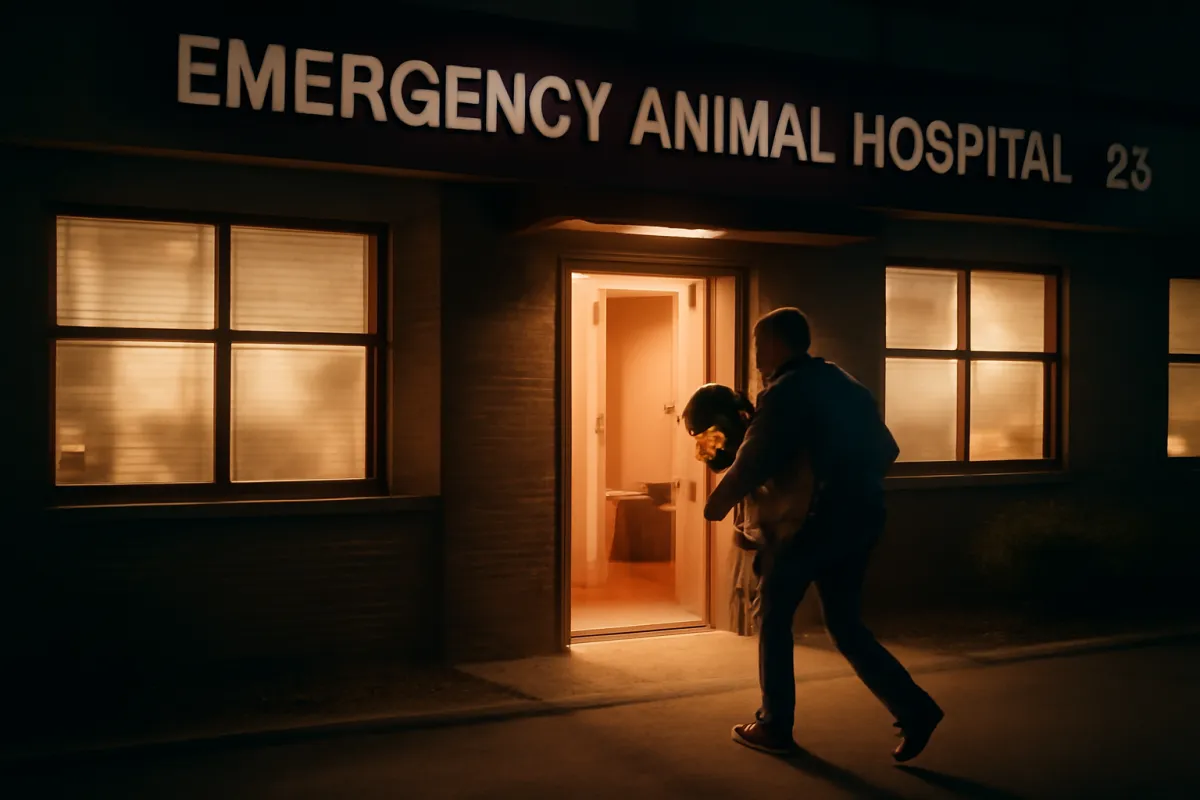
Once the money is handled, spend fifteen minutes on the numbers you will need in a panic, because searching for an emergency clinic while a pet struggles is the last thing you want to do. Most regular veterinary practices are closed nights, weekends, and holidays, which is exactly when emergencies love to happen, so find your nearest 24-hour emergency or specialty animal hospital now. Note its address, its phone number, and how long it takes to drive there, and if you have more than one option, note the closest and a backup. Save all of it in your phone and, ideally, write it somewhere physical too, because phones die and get left behind.
Add the animal poison control number to that list. There are well-known services staffed around the clock that advise you when a pet eats something it should not have, and they typically charge a per-incident consultation fee, commonly cited at roughly seventy-five to ninety-five dollars as an illustrative figure, so confirm the current fee when you call. That guidance can tell you whether a substance is dangerous, whether you need the emergency room, and what the clinic will need to know, which often saves both an unnecessary trip and a dangerous delay. Program your regular vet’s number and your pet’s basics into the same place.
The watch-out is assuming your daytime vet is an option at 2 a.m. Confirm their after-hours instructions now, since many simply refer you to the nearest emergency hospital when closed. Knowing where you are going before you need to go there can be the difference between minutes that matter, and our guide to choosing a vet covers how the regular and emergency clinics fit together.

Step 3: Build a pet first-aid kit
With the money and the numbers set, assemble a small first-aid kit and keep it somewhere you can grab in seconds. The kit’s real job is not to treat a serious problem at home, which is rarely wise, but to help you stabilize a pet and get it to care safely. A workable kit holds gauze pads and a roll, self-adhering bandage wrap that clings to itself rather than to fur, adhesive tape, blunt-tipped scissors, tweezers, a digital thermometer, disposable gloves, saline eye rinse, and an antiseptic your veterinarian approves. Add a spare leash and a muzzle, or a soft cloth you can fashion into one, because even the gentlest pet may bite when it is frightened and in pain.
Round the kit out with the things that make a bad moment smoother: a copy of your pet’s records, a card with your vet and emergency numbers, a few days of any regular medication, and a sturdy towel or blanket that doubles as a stretcher for a small pet or a way to lift a large one. Keep a carrier nearby for cats and small dogs. Check the kit a couple of times a year and replace anything expired or used.
The watch-out that matters most is the temptation to treat at home instead of transporting. Never give a pet any human medication or over-the-counter remedy without professional guidance, because many are toxic to animals at doses that seem harmless, and delaying real care to try a home fix can cost far more later. Ask your veterinarian which specific items suit your pet, since a kit for a giant-breed dog and one for a small cat differ, and treat the kit as a bridge to care, not a substitute for it.

Step 4: Keep ID tags and microchip details current
This step is nearly free and it solves a different kind of emergency: the lost pet. In a car accident, a house fire, a natural disaster, or simply a bolt through an open door during a stressful moment, pets and owners get separated, and the thing that reunites them is identification. A collar with a visible ID tag showing your current phone number is the fastest route home, because anyone who finds the pet can call you directly. A tag costs very little and takes minutes to order, so if your pet’s tag is missing, faded, or shows an old number, fix that today.
The microchip is the permanent backstop the tag cannot replace, since collars slip off and tags wear away. A microchip is a tiny implant that a shelter or clinic can scan to retrieve a registration number, but here is the part owners miss constantly: the chip only works if its registration is current in the database. A chip registered to a phone number you changed three years ago, or never registered at all after the implant, leads a shelter to a dead end. Confirm your pet is chipped, then log in to the chip registry and check that your name, phone, and address are right.
The watch-out is assuming the microchip alone is enough or that it was registered for you automatically. A chip with stale or missing registration is a common and heartbreaking failure, and it is entirely preventable with a five-minute check. Use both layers: a visible tag for the fast reunion and a current microchip for the permanent one. Add a recent photo of you together with the pet to your records too, since it proves ownership if you ever need to claim a found animal.
Step 5: Keep your pet’s medical records within reach
An emergency clinic that has never seen your pet starts from zero, and the faster you can fill in the picture, the faster and often the cheaper the care goes. Keep your pet’s key records somewhere you can produce them in a hurry: the vaccination history, any chronic conditions, current medications and doses, known allergies or past reactions, and recent test results or a summary from your regular vet. A photo of each document on your phone works, a shared cloud folder works, and a printed copy in the first-aid kit works as a backup for when phones fail.
Why this matters in an emergency is practical. Knowing your pet’s medications and doses prevents dangerous interactions and lets the emergency team act without guessing. A vaccination history answers questions quickly. A record of a chronic condition helps the clinic read new symptoms correctly rather than chasing the wrong problem. And if you carry insurance, having records ready also smooths the claim afterward, since most insurers want the visit records to process a payout, a point our claim-filing guide covers in detail.
The watch-out is letting records live only in your memory or scattered across old emails and paper you cannot find at midnight. Gather them once into a single place now, and update that place after each vet visit so it stays current. If you have more than one pet, keep a separate file for each, clearly labeled, because the emergency team needs the right history for the right animal. This small habit costs nothing and repays itself the first time a clinic asks a question you can answer in seconds.

Step 6: Learn to recognize a true emergency
The most valuable skill an owner can build costs nothing: a rough sense of when a problem truly needs the emergency room now and when it can safely wait for the regular vet in the morning. This matters both ways. Waiting on a real emergency is dangerous, and rushing every minor issue to an after-hours clinic is expensive and stressful. This field guide cannot diagnose your pet and does not try to, but the general shape is worth knowing so you can act with more confidence and call for help sooner.
Some situations are widely understood as go-now emergencies where waiting risks the pet: difficulty breathing, severe or non-stop bleeding, suspected poisoning, a swollen or bloated abdomen especially in a large dog, an inability to urinate, repeated vomiting or diarrhea, seizures, major trauma such as a car accident or a fall, signs of heatstroke, extreme pain, or collapse. In these, the cost of the emergency room is not the question; getting care fast is. Other problems, a mild limp that appeared this afternoon, a single episode of vomiting in a pet that is otherwise bright and eating, or a minor scrape, can often wait for a regular appointment where they cost far less.
The watch-out is talking yourself out of care to save money when a pet is genuinely unwell, or into a panic trip for something minor. The honest rule is to err toward caution and use the phone freely. Calling an emergency clinic or a poison line to describe symptoms usually costs little or nothing and frequently saves both an unnecessary trip and a needless delay. When there is any real doubt, call, because a trained voice on the line can help you decide far better than any article. Our emergency vet cost read explains why the same problem seen after hours costs so much more than during the day.
Step 7: Make a transport and evacuation plan
The last step covers getting your pet from home to help, and getting it out safely if home itself is the emergency. For everyday emergencies, the plan is simple but worth thinking through before you need it: how will you move this specific animal quickly and safely? A cat or small dog needs a carrier you can reach without a struggle, kept accessible rather than buried in a closet. A large dog in pain may need a second person and a blanket used as a stretcher, and even a beloved pet may snap when hurt, so keep a leash and a way to muzzle in the kit. Know who you can call for a ride if you cannot drive.
For the larger disaster, a fire, a flood, a storm, or an evacuation order, treat your pet as part of the household plan rather than an afterthought. Keep a pet go-bag with several days of food and water, medications, a copy of records, a recent photo of you with the pet to prove ownership, a spare leash, and a carrier per animal. Identify pet-friendly places to stay in advance, since many emergency shelters cannot accept animals, and remember that a current microchip and ID tag matter most precisely when pets and owners are separated in chaos.
The watch-out is a plan that only exists in your head or a carrier a nervous cat has never seen until the worst possible moment. Practice getting each pet into its carrier calmly once or twice so it is routine, not a battle. Keep the go-bag and carriers where you can grab them on the way out. Review the plan whenever your household, your pet, or your local risks change, and check your area’s official guidance, since local recommendations for pets in disasters vary.
A worked example: one household gets emergency-ready
Numbers land better carried all the way through, so here is one illustrative household putting the plan in place and then meeting a real emergency. Maya has a healthy medium-sized dog, Cooper, and starts from nothing. Over one afternoon she sets up the money side, enrolls in an accident-and-illness policy at an illustrative premium and opens a separate savings account she funds at fifty dollars a month, aiming for a modest cushion of about a thousand dollars alongside the insurance. She saves the nearest 24-hour clinic and the poison line in her phone, assembles a first-aid kit, checks that Cooper’s microchip registration shows her current number, and drops his records into a shared folder.
Eight months later, Cooper swallows a chew toy and needs an after-hours visit, imaging, surgery, and a night of hospitalization. The itemized bill comes to an illustrative three thousand dollars. Because Maya prepared, the night unfolds calmly: she drives straight to the clinic she already knows, hands over Cooper’s records so the team is not guessing, and pays the bill using her fund plus her card as a short bridge. Her policy, with a two hundred fifty dollar deductible and eighty percent reimbursement, later pays back most of it.
The math shows why preparation works. The insurer subtracts the two hundred fifty dollar deductible from the three thousand dollar bill, leaving two thousand seven hundred fifty, then reimburses eighty percent of that, about two thousand two hundred dollars. Maya’s own share is roughly eight hundred dollars, comfortably inside the fund she built. The unprepared version of this night is the same three thousand dollar bill with no fund, no insurance, and no plan, faced at midnight. Run your own pet and reserve through the companion below to see your version of these numbers.
How a prepared household covers a $3,000 emergency
The illustrative $3,000 bill from the worked example, split by who pays what on a policy with a $250 deductible and 80 percent reimbursement, with the fund covering the owner's share. Segments sum to 100 percent.
The deductible and coinsurance share, about $800 together, come straight from the fund, so no part of the bill is an impossible choice. Figures are illustrative and vary by insurer and by the emergency.
Common mistakes when preparing for a pet emergency
Most preparation failures trace to a short list of avoidable errors. Watch for these:
- Having no way to pay in place. The single biggest failure, because it is the one that turns a survivable bill into an impossible choice. Set up a fund, insurance, a financing backstop, or a blend before anything goes wrong, not after.
- Relying on insurance with no cash on hand. Most policies reimburse you after you pay the vet in full, so an insurance-only plan still needs a fund or a card to cover the bill at checkout.
- A microchip with stale or missing registration. The chip only reunites you if its registration shows your current details, and a chip pointing to an old number is a dead end. Check it in five minutes today.
- Not knowing where the emergency clinic is. Searching for a 24-hour vet while a pet struggles wastes the minutes that matter. Save the nearest clinic and a backup now.
- Treating at home instead of transporting. Giving human medications or delaying care to try a home fix can be dangerous and often costs more later. The kit is for stabilizing and getting to care.
- A plan that lives only in your head. Numbers you meant to save, a go-bag you never packed, and a carrier the cat has never entered all fail under pressure. Set it up physically and keep it accessible.
Troubleshooting: tight budgets, multiple pets, travel, and disasters
What if my budget is tight right now? Do the free parts today and start the money side small. Saving the emergency numbers, checking the microchip registration, and gathering records cost nothing, and even a modest monthly amount into a fund beats no fund at all. A financing card approved in advance can serve as a bridge while the fund builds. The point is to start, not to reach a target overnight, and our ways to lower vet bills read covers stretching a tight pet budget without cutting care.
What if I have multiple pets? Scale the plan rather than duplicating the panic. Each pet needs its own current ID and microchip registration, its own labeled records file, and its own carrier for evacuation, and your reserve or insurance should reflect that more animals mean a higher chance of an emergency in any given year. Keep the shared items, the numbers, the first-aid kit, and the disaster go-bag, in one place, but make sure the pet-specific pieces are clearly separated so you grab the right records and the right medications for the right animal.
What if we travel with our pet? Prepare a portable version of the plan. Look up the nearest 24-hour emergency clinic at your destination before you leave, carry the records and first-aid kit with you, and keep the poison line saved, since it works wherever you are. A current microchip matters even more away from home, because a pet lost in an unfamiliar place cannot find its own way back.
What if a natural disaster hits? Fold the pet into the household evacuation plan, keep the go-bag and carriers accessible, and identify pet-friendly lodging in advance, since many shelters cannot take animals. Never leave a pet behind expecting to return, because you may not be allowed back in time. Check your local emergency authority’s specific guidance for pets, as recommendations vary by area and by the type of disaster.
Your pet emergency preparedness checklist
Save this and work it top to bottom, then revisit it whenever your pet or household changes:
- Set up a way to pay: a fund, pet insurance, a financing backstop like CareCredit, or a blend, and confirm you have cash access for a bill at checkout.
- Start a monthly amount into a dedicated emergency fund, however small, and keep it separate and untouched.
- Save your nearest 24-hour emergency vet, a backup clinic, your regular vet, and the animal poison line in your phone and on paper.
- Build a first-aid kit and keep it accessible, with a spare leash, a muzzle or cloth, and a carrier nearby.
- Put a visible ID tag with your current number on your pet's collar.
- Confirm your pet is microchipped and that the chip registration shows your current name, phone, and address.
- Gather your pet's records, vaccinations, conditions, medications, allergies, into one place you can reach fast, and update it after each visit.
- Learn the go-now emergency signs and keep the poison and clinic numbers handy for the judgment calls.
- Plan how you will transport each pet safely, and practice the carrier with nervous animals.
- Pack a disaster go-bag per pet and identify pet-friendly places to stay in advance.
- Add a recent photo of you with each pet to prove ownership if you are ever separated.
The bottom line
Preparing for a pet emergency is not one big project; it is a short list of small things put in place while everything is calm, so that the night nothing is calm has already been handled. Set up a way to pay first, because that is the step that fails owners hardest and the one that turns a survivable bill into an impossible choice. Then spend a free afternoon on the rest: save the emergency and poison numbers, build a first-aid kit, make the microchip and ID current, keep the records within reach, learn the go-now signs, and plan how you will move and, if needed, evacuate the pet. None of it prevents the emergency, and none of it is a substitute for your veterinarian’s judgment, but together it means the emergency is the only thing you have to face. Size your own reserve in the companion below, weigh the insurance-versus-fund math in our worth-it read, see what these bills look like in our rundown of vet visit costs, and then let your vet guide the care itself.
A closing word from the MuttMark pack before you go: this field guide exists to help you put a plan in place, and nothing in it is veterinary, medical, financial, or insurance advice. Every dollar figure here, from the emergency bill ranges to the worked example and the reserve target, is an illustrative planning number rather than a quote or a promise, and your real costs will move with your region, your clinic, the hour, and your pet’s size, age, and health. Nothing in this read can tell you whether a symptom is an emergency or which care your pet needs: those are judgments only a qualified veterinarian can make, and for any genuine worry the right move is always to call your vet, a local emergency hospital, or a poison line, who can help far better than any article. Use this plan to be ready, confirm the specifics with your own providers, and leave the care itself to the professionals who know the animal at your feet.
Frequently asked questions
How do I prepare for a pet emergency?
Preparing for a pet emergency comes down to seven steps you set up once and then keep current. First, put a way to pay in place, whether an emergency fund, pet insurance, a credit line like CareCredit, or a blend. Second, find your nearest 24-hour emergency vet and save the animal poison control number before you need them. Third, build a small pet first-aid kit. Fourth, keep an ID tag and microchip registration current so a lost pet comes home. Fifth, keep your pet's medical records somewhere you can reach in a hurry. Sixth, learn the signs that mean go now versus wait for the regular vet. Seventh, make a plan for transporting the pet and for evacuating with it. None of this is medical advice, and every figure here is illustrative, so confirm details with your own veterinarian and providers.
How much should I set aside for a pet emergency?
There is no single right number, because a serious emergency can range from a few hundred dollars for a minor after-hours issue to several thousand for surgery and a hospital stay, as illustrative figures. A common planning approach is to build toward a dedicated reserve of a few thousand dollars if you are self-funding, or a smaller cushion of around a deductible plus your coinsurance share if you carry insurance to absorb the large bills. What matters more than the exact target is that some money, or some insurance, exists before the emergency rather than after, because the bill arrives without warning. Start with whatever monthly amount you can sustain and let it build, and treat the figure as a planning starting point rather than a rule, since real costs vary widely by region, clinic, and the specific problem.
What should be in a pet first-aid kit?
A basic pet first-aid kit usually holds gauze pads and rolls, self-adhering bandage wrap that does not stick to fur, adhesive tape, blunt-tipped scissors, tweezers, a digital thermometer, disposable gloves, saline eye rinse, and an antiseptic your vet approves, along with a spare leash and a muzzle or a soft cloth to make one, since even a gentle pet may bite when in pain. Include a copy of your pet's records, your vet and emergency numbers, and any regular medications. A sturdy carrier or a way to move a large dog safely belongs with the kit. The kit is for stabilizing and transporting, not for treating a serious problem at home, so its real job is to help you get the pet to care safely. Ask your veterinarian which items suit your specific pet, and never give any human medication without professional guidance.
Is there a pet poison control hotline, and does it cost money?
Yes, there are well-known animal poison control services staffed around the clock that you can call if your pet eats something it should not have. They typically charge a per-incident consultation fee, commonly cited in the range of roughly seventy-five to ninety-five dollars as an illustrative figure, so confirm the current fee when you call. That fee buys expert guidance on whether the substance is dangerous, whether you need the emergency room, and what the vet will need to know, which can save both an unnecessary trip and a dangerous delay. Save the number in your phone now, before an emergency, along with your nearest 24-hour vet. If a pet is in obvious distress, go straight to an emergency clinic rather than waiting on a call, and treat any poison figure or advice as general information rather than a substitute for your own veterinarian.
How do I know if my pet's problem is a real emergency?
Some situations are widely understood as true emergencies where waiting is dangerous: difficulty breathing, severe or non-stop bleeding, suspected poisoning, a swollen or bloated abdomen, an inability to urinate, repeated vomiting, seizures, major trauma such as a car accident, heatstroke, or collapse. In these, getting care fast matters more than the cost. Other problems, like a mild limp that appeared this afternoon or a single episode of vomiting in an otherwise bright and active pet, can often wait for a regular appointment where they cost far less to treat. The honest guidance is to err toward caution when a pet is clearly unwell and to use the phone freely, because calling an emergency clinic or a poison line to describe symptoms usually costs little or nothing and helps you decide. This field guide cannot diagnose your pet, so when there is any real doubt, call a veterinarian.
Is pet insurance or an emergency fund better for a pet emergency?
Both solve the same problem, absorbing a large unexpected bill, and many owners do best with a blend rather than choosing one. Pet insurance shines against the truly catastrophic bill, because you pay a predictable premium and the policy reimburses most of a big claim after your deductible, though standard policies reimburse you rather than paying the clinic, so you still need cash at the counter. A dedicated fund gives you money you control with no exclusions or claims process, but it takes time to build and a bad emergency early on can outpace it. A common approach is insurance for the four-figure catastrophe and a modest fund for the smaller surprises and the deductible. Whichever you choose, the key is that one of them exists before the emergency, and our worth-it read works the arithmetic through in detail.
What is CareCredit and how does it help in a pet emergency?
CareCredit is an example of a third-party health and veterinary financing card that many clinics accept, letting you spread a large bill over time, sometimes with a promotional interest-free window if you pay it off inside the term. It can be a useful backstop when an emergency lands before your fund is built or beyond what insurance reimburses up front, because most insurance pays you back after you have already settled the bill. The caution is that it is credit, not savings: if you carry a balance past any promotional period, interest can make the emergency more expensive, so it works best as a bridge you repay quickly rather than a substitute for a fund or insurance. Apply and be approved before an emergency if you plan to rely on it, confirm your own clinic accepts it, and read the current terms carefully, since promotional details change.
How do I prepare my pet for an evacuation or natural disaster?
Treat your pet as part of the household emergency plan rather than an afterthought. Keep a pet go-bag with several days of food and water, medications, a copy of records and a recent photo of you with the pet to prove ownership, a spare leash, and a carrier for each animal, and know where it is. Identify pet-friendly places to stay ahead of time, since many emergency shelters cannot take animals, and note that a current microchip and ID tag matter most when pets and owners get separated in a disaster. Practice getting a nervous cat into a carrier calmly before you ever need to do it in a hurry. Keep the carrier and go-bag accessible, not buried in a closet, and review the plan when your household or your pet changes. Local emergency guidance varies, so check your area's recommendations.