
What's on this page
- How much is pet anesthesia: the short answer
- Pet anesthesia cost, and the line items behind the number
- Sedation versus general anesthesia: two different bills
- Dog anesthesia cost and cost to sedate a dog, by reason
- Radiographs and imaging: the most common reason to sedate
- Dental procedures and where most anesthesia spending happens
- Repairs, biopsies, and the small procedures
- Grooming and nail trims: sedation for the pet who cannot be handled
- Sedation for travel, and why many vets decline it
- Cat anesthesia cost, and how it differs
- Why weight sets the dose and the dose sets the price
- What sits inside the anesthesia line
- Pre-anesthetic bloodwork: what it adds and why it exists
- Monitoring and IV fluids: the part you cannot see
- Anesthesia time, and why the clock is on the invoice
- Senior pets and the extra screening
- Brachycephalic breeds and the airway premium
- How to read the anesthesia lines on a written estimate
- An illustrative anesthesia estimate, line by line
- Where anesthesia hides inside a bigger quote
- Ways to lower an anesthesia bill without cutting the monitoring
- What pet insurance does with an anesthesia line
- Questions worth asking before the day
- The bottom line
Short answer: Pet anesthesia cost, and dog anesthesia cost specifically, depends on depth, weight and time under. As illustrative planning figures, a light sedation for something quick commonly runs around $100 to $300, deeper sedation for imaging or a minor repair around $250 to $500, and the general anesthesia line inside a dental or routine surgery around $400 to $900. A long, complex, or higher-risk anesthetic can reach an illustrative $700 to $1,200 or more. Pre-anesthetic bloodwork usually adds a separate $70 to $150.
Dog anesthesia cost, and pet anesthesia cost generally, is one of the strangest lines on a veterinary estimate, because it is the one most owners have no reference point for. You can guess roughly what an examination or a bag of food costs. Nobody has an intuition for what it should cost to make an animal safely unconscious for forty minutes. So the number arrives with no context, attached to a procedure you are already worried about, and it reads either as suspiciously large or as an unexplained add-on to something you thought you had already been quoted for.
This cost read takes the anesthesia portion of a veterinary bill apart: what sits inside the line, why sedation and general anesthesia are two different products rather than two price points, why body weight moves the number so much, what senior and flat-faced patients change, and how to read the anesthesia items on a written estimate without guessing. The anesthesia cost estimator turns the ranges into a figure for your own animal. It sits alongside our vet visit cost read, which prices the appointment around the procedure, and our read on lowering vet bills.
Key takeaways
- Anesthesia is priced as a small procedure, not as a drug: the line covers premedication, induction, a maintained airway, an intravenous catheter and fluids, continuous monitoring, a trained person watching it, and a supervised recovery.
- Illustrative bands run roughly $100 to $300 for a light sedation, $250 to $500 for deeper sedation, and $400 to $900 for the general anesthesia line inside a dental or routine surgery, with $700 to $1,200 or more for long or higher-risk cases.
- Body weight is the mechanical driver, because sedatives and anesthetic agents are dosed by weight, and time under is the second, because most of what is being billed is staffed minutes.
- Pre-anesthetic bloodwork, the intravenous catheter, and the monitoring are the lines that exist for the rare bad moment. They are the wrong place to economise.
- Every figure here is an illustrative planning range that varies by area, clinic, species, and patient. Whether your animal needs sedation at all, and which kind, is a decision for your veterinarian.
How much is pet anesthesia: the short answer
How much is pet anesthesia? Held as illustrative planning bands rather than quotes, it falls into three broad shapes. The lightest is a standing or light sedation for something brief: a nail trim on an animal that cannot be handled awake, a quick look at a painful ear, a small wound cleaned. That commonly lands somewhere around $100 to $300, and it is often the whole anesthesia story on that particular bill.
The middle shape is sedation deep enough to hold an animal completely still for a while without full general anesthesia: radiographs, an ultrasound on a wriggling patient, a laceration repair, a skin biopsy. That commonly runs an illustrative $250 to $500, and the spread inside that band is mostly weight and duration.
The largest common shape is the general anesthesia line inside a procedure: a dental, a spay or neuter, a mass removal, an orthopedic repair. That line commonly runs an illustrative $400 to $900 on its own, before the procedure itself is counted, and an illustrative $700 to $1,200 or more where the case is long, the patient is higher-risk, or the procedure demands deeper support. Pre-anesthetic bloodwork sits outside all three at an illustrative $70 to $150.
Pet anesthesia cost, and the line items behind the number
The reason those bands are so wide is that anesthesia is not a product with a price. It is a bundle of drugs, equipment, consumables, and staffed time, assembled for one animal on one day, and the size of the bundle is set by the patient and the procedure. Reading it as a bundle rather than a fee makes the number far less mysterious.
A typical general anesthesia line contains a pre-anesthetic examination and, usually, bloodwork. Then a sedative premedication to reduce stress and lower the dose of everything that follows. Then an induction agent given intravenously, a breathing tube placed once the animal is unconscious, and inhaled anesthetic gas with oxygen to maintain that state. Alongside all of that runs an intravenous catheter with fluids to support blood pressure, and continuous monitoring of heart rhythm, blood pressure, oxygen saturation, exhaled carbon dioxide, and body temperature.
None of that runs itself. A trained team member is assigned to watch those numbers and adjust the depth of anesthesia in real time, and someone supervises the recovery afterwards until the animal is warm, awake, and stable. The chart below places the common reasons for anesthesia on one scale so the shape of the family is visible before the individual drivers are pulled apart.
Illustrative anesthesia and sedation cost by reason
Representative anesthesia line only, before the procedure itself, for a medium dog in an average-cost area. Illustrative planning figures rather than quotes.
The scale is really a scale of depth, equipment, and minutes. A brief sedation borrows a little of the clinic's capacity. A long general anesthetic reserves a room, a machine, and a person for most of a morning.
The pattern is that cost climbs with how unconscious the animal has to be, how long it has to stay that way, and how much apparatus is needed to keep it safe. Knowing where a given procedure sits on that scale explains most of its anesthesia price before any local factor is applied. Put your own animal on the scale with the estimator.
Sedation versus general anesthesia: two different bills
The single most useful distinction in this whole subject is that sedation and general anesthesia are not a cheap version and an expensive version of the same thing. They are different states, produced deliberately, for different jobs, and they price differently because they need different amounts of infrastructure.
Sedation reduces awareness, anxiety, and movement while the animal keeps breathing on its own and maintains its own airway. It is reversible in some protocols, it usually needs less equipment, and the period of close observation afterwards is often shorter. That is why it sits lower on the scale. It is not a lesser standard of care; it is the appropriate tool for procedures that do not require unconsciousness.
General anesthesia produces full unconsciousness with no awareness and no response to pain, almost always with a breathing tube protecting the airway, inhaled agent maintaining the state, and continuous monitoring throughout. The airway management, the anesthetic machine, the monitoring equipment, and the dedicated person are the difference, and they are most of the price difference too. Which one your animal gets is decided by the procedure and the patient, and it is not a budget decision you can make from the waiting room.
Dog anesthesia cost and cost to sedate a dog, by reason
Dog anesthesia cost is easiest to plan by reason, and so is the cost to sedate a dog for something smaller, because the reason sets the depth and the depth sets the price. The sections that follow take the common reasons one at a time, but the summary is worth having in one place first.
Quick handling procedures, such as a nail trim on a dog that genuinely cannot tolerate it awake or a brief look at a painful area, sit at the bottom of the range, commonly an illustrative $100 to $300. Diagnostic imaging is the middle of the range, commonly an illustrative $250 to $500, because the animal has to be motionless and correctly positioned for a series of images rather than for a moment. Minor procedures such as a laceration repair or a skin biopsy sit in the same middle band or slightly above, since the sedation has to cover local work as well as stillness.
Anything that involves the mouth, the abdomen, a joint, or a prolonged surgical field moves up into general anesthesia and the $400 to $900 band or beyond. That is not a pricing choice; it reflects what those procedures actually require. Our dog dental cost read and ACL surgery cost read both show anesthesia sitting inside a larger surgical quote rather than standing alone.
Radiographs and imaging: the most common reason to sedate
Imaging is where most owners meet a sedation charge for the first time, and it surprises them because an X-ray sounds passive. The complication is that a diagnostic radiograph needs the animal in a precise position, completely still, often for several views, and frequently in a posture that is uncomfortable for a painful patient. A hip series, a spinal series, or a chest study on a dog that is already sore is not something willpower solves.
Sedation for imaging commonly runs an illustrative $250 to $500 as its own line, on top of the imaging charges themselves. On an estimate it will often appear separately from the radiographs, which is why the total can look higher than the price you were quoted for the images. If the imaging is happening at an emergency hospital rather than a general practice, expect the whole episode to price differently, as our emergency vet visit cost read explains.
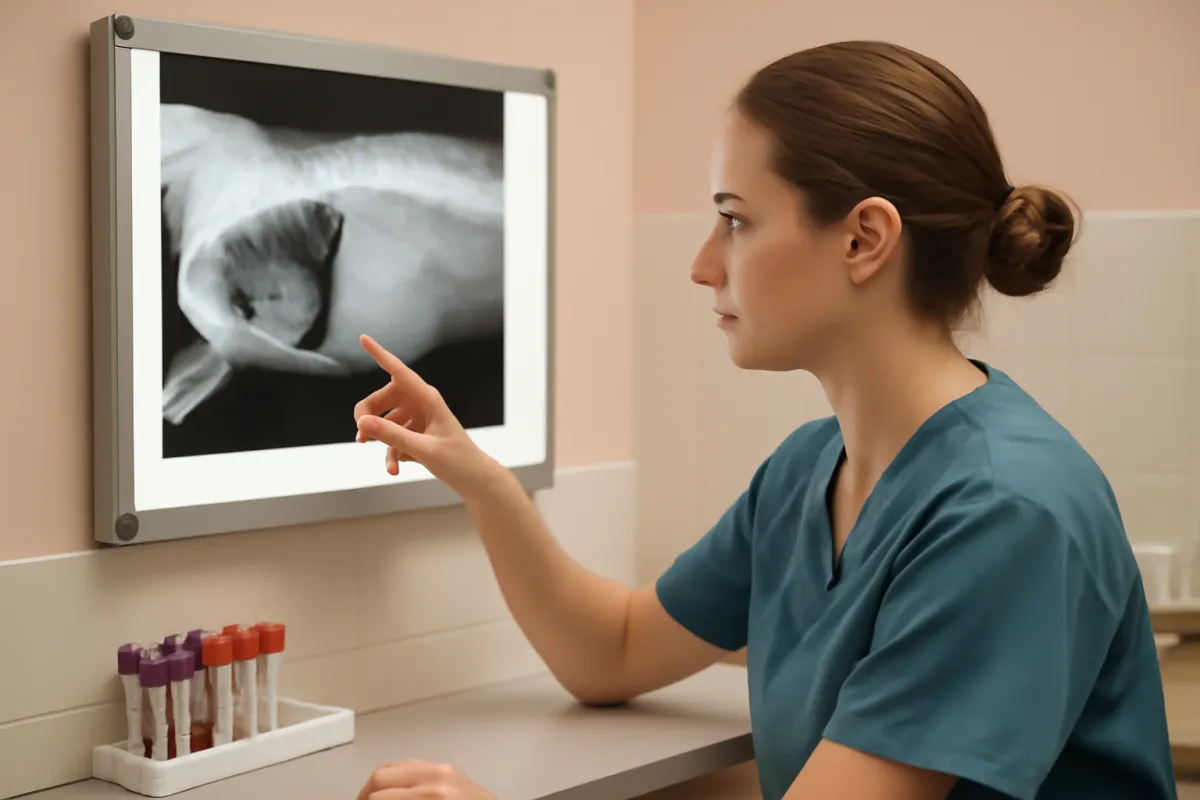
There is a real clinical argument in favour of sedation here beyond convenience. A struggling animal produces blurred and badly positioned images, which sometimes means repeating the study, and repeating a study costs more than sedating for it once. Whether your animal needs sedation for a particular study is a judgment your veterinarian makes on the day, based on the views required and how the patient is coping.
Dental procedures and where most anesthesia spending happens
Across a typical pet’s life, dental work is where the largest share of anesthesia spending accumulates, simply because dentals recur. A proper dental cleaning requires scaling below the gumline, probing every tooth, taking full-mouth radiographs, and sometimes extracting teeth, none of which is possible on a conscious animal. The anesthesia is not an add-on to the cleaning; it is what makes the cleaning a medical procedure rather than a cosmetic one.
On a dental estimate the anesthesia line commonly sits in the illustrative $400 to $900 band, with bloodwork separate, and the dental work itself quoted alongside it. That is why a dental total is so much larger than the word cleaning suggests, and why the number moves so much once extractions enter the picture. Our dog teeth cleaning cost read and cat teeth cleaning cost read both break the full dental bill down.
The planning consequence is worth stating plainly. If dental work is likely to be a recurring line for your animal, the anesthesia component is a recurring line too, and it belongs in a yearly budget rather than being treated as a one-off shock. Our monthly cost of a dog read sets out where that kind of predictable health cost fits.
Repairs, biopsies, and the small procedures
Between the quick sedations and the full surgical anesthetics sits a category that catches people out: the small procedure that still needs the animal completely still and pain-free. A laceration that needs cleaning and suturing, a skin mass that needs sampling, an abscess that needs flushing, a foreign body pulled from an ear. None of these is major surgery, and all of them are impossible on an awake, painful animal.
These commonly sit in the illustrative $250 to $500 sedation band, sometimes higher if the work is extensive enough to warrant general anesthesia instead. On the estimate you will often see the sedation, the procedure, any local anesthetic, and the take-home medication as four separate lines, which is a more honest presentation than a single number even though it reads as more items.
The judgment about whether a given lump or wound needs sedation, and how deep, is genuinely clinical. Two similar-looking skin masses can need very different handling depending on where they are and what the veterinarian suspects. Our dog allergy treatment cost read covers a related family of skin work where sampling decisions drive the cost.
Grooming and nail trims: sedation for the pet who cannot be handled
A small but real slice of sedation demand comes from grooming, and specifically from nail trims. Some animals are so frightened, or so painful, that a trim genuinely cannot be done safely awake, for the animal or for the person holding it. Where that is the case, a light sedation at the veterinary practice is a reasonable route, commonly in the illustrative $100 to $300 band including the handling.
Two honest caveats belong here. The first is that this is a veterinary decision rather than a grooming preference: a clinic will want to examine the animal and satisfy itself that sedation is appropriate, and a groomer cannot provide it. The second is that repeated sedation for routine maintenance is worth discussing as a pattern rather than accepting as a permanent arrangement, because desensitisation training and pain management sometimes change the picture entirely.
For the ordinary cost of grooming without any sedation involved, our dog grooming cost read prices the normal appointment. The sedated version is a veterinary charge rather than a grooming one, and it is priced accordingly, which is the part that surprises owners who compare the two.
Sedation for travel, and why many vets decline it
Sedating a pet for a flight or a long journey comes up often, and the honest answer is that it is not the routine service people expect. Many veterinarians are reluctant to dispense sedatives for air travel in particular, because an animal in a crate, unobserved, in a changing pressure and temperature environment, is a patient nobody can monitor. Where a veterinarian does agree that something is appropriate, it is a prescribing decision made for that individual animal after an examination.
That means the cost question here is usually not an anesthesia line at all. It is an examination charge, an illustrative $50 to $80 as our vet visit cost read prices it, plus a dispensed medication, which prices very differently from the sedation lines elsewhere in this cost read. Anyone budgeting for a journey should plan around the examination, the medication, and the paperwork rather than around a sedation fee.
Our cost to fly with a pet read covers the travel side of that budget. The sedation question specifically belongs in a conversation with your own veterinarian well before the travel date, because the answer may be no, and finding that out at the last minute is the expensive version.
Cat anesthesia cost, and how it differs
Cats are not small dogs, and their anesthesia prices reflect it in two opposite directions. On the one hand, a cat weighs a fraction of a medium dog, and since the drugs are dosed by weight, the drug component of the bill is genuinely smaller. On the other hand, a cat still needs the same anesthetic machine, the same monitoring equipment, the same trained person, and the same recovery supervision, and none of those scales down with body weight.
The practical result is that cat anesthesia is usually cheaper than dog anesthesia for the equivalent procedure, but by less than the weight difference would suggest. The fixed costs of doing anesthesia at all set a floor that a small patient cannot get under. Cat dental work is the clearest illustration, and our cat teeth cleaning cost read works through a full feline dental bill.
Handling is the other difference. Cats are often more difficult to examine and to place a catheter in while awake, which is precisely why sedation is sometimes needed for procedures that a cooperative dog would tolerate. That is a clinical reality rather than a surcharge, and it is worth asking about when a cat estimate includes sedation for something that sounds minor.
Why weight sets the dose and the dose sets the price
Body weight is the most mechanical driver in this entire subject. Sedatives, induction agents, and most supporting drugs are dosed in milligrams per kilogram, so a sixty-pound dog receives roughly twice the drug volume of a thirty-pound one for the same protocol. Drug is a real consumable with a real cost, and clinics that quote weight bands are simply making that arithmetic visible.
Weight brings second-order costs too. Larger patients need larger breathing circuits and consumables, more inhaled gas over the same period, and sometimes more hands to lift and position them safely. A very large dog may need a bigger table, a longer positioning process, and additional support to move in and out of recovery, all of which is staffed time.
The important qualification is that weight sets a floor, not a ceiling. A small cat having a long, complex procedure with intensive monitoring can easily cost more to anesthetize than a large dog having something brief. Weight explains the base; duration and complexity explain the rest. Move the weight selector in the estimator to see how much of your own number is simply mass.
What sits inside the anesthesia line
It helps to see the anesthesia line split into its parts, because the split explains why cutting one item barely moves the total while removing another removes the safety net. The chart below divides an illustrative $550 general anesthesia total, meaning the anesthesia line plus pre-anesthetic bloodwork, into the pieces that make it up.
What an illustrative $550 general anesthesia total is made of
Anesthesia line plus pre-anesthetic bloodwork for a medium dog having a routine procedure in an average-cost area. Illustrative proportions.
More than half of the total is people and machines rather than medicine. That is the single most useful thing to understand about an anesthesia charge, and it is why it prices like a procedure.
Two things follow from that split. First, the drugs are a minority of the bill, so a clinic could not meaningfully reduce the price by using less of them even if that were safe. Second, the largest single share is staffed minutes, which is why time under anesthesia is the second great driver after weight.
Pre-anesthetic bloodwork: what it adds and why it exists
Pre-anesthetic bloodwork commonly adds an illustrative $70 to $150, and it is the line owners most often ask whether they can skip. The reasoning behind it is straightforward: most anesthetic agents are processed by the liver and cleared by the kidneys, and a screen gives the veterinary team a look at how those organs are performing, along with red cell numbers, protein levels, and other values that change how a protocol is chosen.
The breadth of the panel drives the price. A short pre-anesthetic screen costs less than a full panel with electrolytes, and running it in-house on the morning of the procedure prices differently from sending it to an external laboratory in advance. Both are legitimate; they answer slightly different questions and on different timelines.
Whether your individual animal needs it, and which panel, is a veterinary judgment rather than a budgeting one. Most practices either require it or recommend it strongly, and the recommendation gets firmer with age and with any known condition. If cost is a genuine constraint, the productive conversation is about panel breadth rather than about skipping the screen, and it is a conversation worth having before the day.
Monitoring and IV fluids: the part you cannot see
Monitoring is the least visible part of an anesthesia bill and the part that most directly exists for the moment when something goes wrong. During a general anesthetic a team member watches heart rate and rhythm, breathing, blood pressure, oxygen saturation, exhaled carbon dioxide, and temperature, and adjusts the depth of anesthesia in response. The equipment that produces those numbers is expensive to buy, service, and calibrate whether or not it is used on a given day.
The intravenous catheter belongs in the same category. Its everyday purpose is to deliver fluids that support blood pressure while the animal is under, and its emergency purpose is to be a route already in place if a drug has to be given immediately. Placing one takes time and consumables. Not placing one saves a modest amount and removes the fastest route to intervention.
These are the two lines that most reward asking about and least reward cutting. A reasonable question is what each item does for your particular animal and this particular procedure. A less reasonable move is treating them as optional extras because they appear as separate lines. Our read on choosing a vet covers how to ask a practice about its anesthetic protocol before you ever need one.
Anesthesia time, and why the clock is on the invoice
Many practices bill anesthesia partly by time, often as a base charge that covers an initial block of minutes plus an increment for each additional period. That is why an estimate arrives as a range and why the final figure is only settled after the procedure. It is also why a case that runs long costs more without anyone having made a pricing decision mid-procedure.
Time is the honest reason the same named procedure varies so much between two animals. A dental on a healthy mouth with no extractions is a short anesthetic. The same dental on a mouth full of disease, where every tooth has to be radiographed and several removed, can run several times longer. Nothing about the price list changed; the animal was under for longer.
The useful question to ask beforehand is how the practice handles a case that runs beyond the estimate: whether they call you, at what threshold, and how the additional time is charged. That converts a potential surprise into a known process. It is the same conversation our emergency vet visit cost read recommends for a hospital estimate.
Senior pets and the extra screening
Age changes an anesthesia estimate in a predictable direction. Older animals are more likely to have reduced organ function, heart or airway changes, or conditions that alter which drugs are appropriate, so practices commonly recommend broader pre-anesthetic screening, sometimes additional diagnostics such as a cardiac assessment, and often a longer period of close observation afterwards.
On the estimate that shows up as extra lines rather than a higher base: a wider blood panel, perhaps imaging, perhaps a longer monitored recovery. The additional cost is real and it is worth budgeting for, but the framing matters. Those items are the reason a veterinarian is willing to anesthetize an older patient at all, and they are how risk gets assessed rather than assumed.
Age by itself is not a disease, and a healthy older animal is not automatically a high-risk anesthetic patient. What matters is the individual assessment, which is exactly what the extra screening produces. Our senior dog care costs read sets out how this and the other later-life cost changes accumulate.
Brachycephalic breeds and the airway premium
Flat-faced dogs and cats bring a specific set of anesthetic considerations, and some practices price them differently. The airway anatomy that defines these breeds can make the period around induction and, particularly, recovery more demanding to manage, since the airway needs watching closely until the animal is fully awake and breathing comfortably on its own.
In practice that can mean a longer supervised recovery, additional staffing during it, and sometimes extra pre-anesthetic assessment of the airway. Whether a given clinic charges separately for any of that varies, and not every flat-faced patient needs the same handling, so no single figure would be honest here. What is consistent is that the extra care is about the recovery period as much as the procedure.
If you have a brachycephalic pet, the question to ask the practice is how they manage anesthesia for that airway shape and whether the estimate reflects it. The answer tells you a great deal about the standard of care as well as the price. Treat any quote that does not distinguish these patients as worth a follow-up question rather than a bargain.
How to read the anesthesia lines on a written estimate
A written estimate is the single most useful thing to ask for, and anesthesia is the part of it worth reading most carefully, because it is where items that sound similar are genuinely different. The pattern to look for is a group of lines that belong to the anesthetic rather than to the procedure.

Expect to see some combination of the following, though the naming varies enormously between practices: a pre-anesthetic examination, a blood panel, a premedication or sedation charge, an induction agent, anesthesia maintenance or an inhalant charge, an anesthesia monitoring charge, an intravenous catheter, fluid administration, and sometimes a recovery or post-anesthetic care line. Pain medication given during and after the procedure may sit inside the anesthesia group or separately.
Three questions turn that list into something you can act on. Which of these lines is the anesthesia and which is the procedure. Which of them scale with time, so you know what moves if the case runs long. And which of them the practice considers non-negotiable for this patient. Ask those three and the estimate stops being a wall of items.
An illustrative anesthesia estimate, line by line
Take an illustrative fifty-five pound dog booked for a routine procedure at a general practice in an average-cost area, with no complicating conditions. The anesthesia portion of the estimate might be built as follows, as planning figures rather than a quote.
Pre-anesthetic examination and blood panel come to about $90. Premedication, the induction agent, and the inhaled anesthetic together come to about $120. The intravenous catheter, fluids, and the monitoring equipment charge come to about $130. The anesthetist and technician time assigned to the procedure comes to about $165. Supervised recovery and post-anesthetic care come to about $45. That totals an illustrative $550 for the anesthesia side alone, before a single line of the procedure itself.
Change one variable and watch it move. A small dog or a cat at the same practice might land nearer $460 on the same protocol, because the drug volume falls while the equipment and staffing do not. A higher-cost metropolitan practice might place the same case nearer $745. A longer or more complex case, or a patient needing extra screening, moves it upward again. The estimator runs exactly this arithmetic on your own inputs.
Where anesthesia hides inside a bigger quote
One reason anesthesia feels like a surprise is that it frequently is not quoted separately. A spay quote, a dental quote, or a surgical quote often bundles the anesthesia inside a single headline figure, which is convenient right up until you try to compare two practices whose bundles contain different things.
This is the practical argument for asking what a quoted price includes rather than comparing headline numbers. One clinic’s dental price may include bloodwork, radiographs, and the full monitoring package; another’s may quote a lower base and list those separately. Neither is dishonest, but only an itemized comparison tells you which is actually cheaper for the same standard of care. Our spay and neuter cost read shows how much that bundling changes an apparently simple price.
The same applies in reverse at the emergency hospital, where anesthesia for an urgent procedure is folded into a much larger and faster-moving estimate. Knowing roughly what the anesthesia share should look like makes the rest of that estimate easier to read, even when there is no time to study it line by line.
Ways to lower an anesthesia bill without cutting the monitoring
There are genuine savings available here, and they are almost all in scope, timing, and place rather than in the safety lines. The largest is usually timing: a planned daytime procedure at a general practice prices very differently from the same work done urgently at an emergency hospital, so anything that can safely be scheduled rather than rushed should be.
Combining procedures is the second. If your animal needs a dental and also has a small lump that needs removing, and your veterinarian agrees it is appropriate to do both in one session, a single anesthetic covers one induction, one monitoring period, and one recovery instead of two. That avoids paying twice for the same infrastructure and it means one anesthetic event rather than two.
Beyond that: ask for the itemized estimate so you can see what you are buying, ask whether a shorter or in-house blood panel is appropriate rather than skipping the screen, ask about a payment plan or third-party financing before the day rather than at discharge, and keep problems small by catching them early, because short procedures are cheap procedures. Our read on lowering vet bills and our read on getting help with vet bills both go further into the financial routes.
What does not belong on any savings list is the monitoring, the intravenous catheter, or the screening bloodwork. Those are the lines that exist for the rare bad moment, and removing them lowers the number and the margin for error together.
What pet insurance does with an anesthesia line
Insurers do not usually treat anesthesia as its own category. It is generally covered or excluded along with whatever procedure it is part of, which means the useful question is never whether a policy covers anesthesia but whether it covers the underlying reason for it.
Anesthesia for an accident or an illness under an accident-and-illness policy is normally eligible, subject to the deductible, the reimbursement percentage, any annual limit, waiting periods, and pre-existing condition rules. Anesthesia for something the policy classes as routine, preventive, or elective usually is not. Routine dental cleaning is the recurring example, since many standard policies exclude it while covering dental disease and injury on conditions set out in the wording.
The reimbursement model matters here as much as anywhere. You pay the practice at discharge and claim afterwards, so a policy does not remove the need to have the money available on the day. Our read on whether pet insurance is worth it works through that arithmetic, and the honest answer for any individual policy is in its own wording rather than in a general rule.
Questions worth asking before the day
A short list of questions, asked when the procedure is booked rather than at the counter afterwards, changes the experience of an anesthesia bill more than any amount of comparison shopping. They are all reasonable to ask and most practices are used to them.
Ask what the anesthesia charge includes and whether it is billed by time. Ask which blood panel is recommended and why. Ask who monitors the anesthetic and what is monitored. Ask what happens if the case runs longer than estimated, and at what point the practice calls you. Ask what the recovery period involves and whether the animal goes home the same day. Ask for the estimate in writing, itemized, with a low and a high figure.
None of those questions is confrontational and none of them is really about money. They are about understanding what is being done, which is the same thing as understanding the bill. A practice that answers them clearly is telling you something useful about how it works.
The bottom line
Pet anesthesia costs what it does because it is a small procedure in its own right rather than a drug on a shelf: a bundle of screening, drugs, equipment, monitoring, and staffed minutes assembled for one animal. As illustrative planning figures, expect roughly $100 to $300 for a light sedation, $250 to $500 for deeper sedation for imaging or a minor repair, and $400 to $900 for the general anesthesia line inside a dental or routine surgery, with $700 to $1,200 or more for long or higher-risk cases and $70 to $150 for pre-anesthetic bloodwork on top.
Weight sets the floor because the drugs are dosed by body weight. Time under sets most of the rest, because more than half the line is people and machines rather than medicine. Age, airway shape, and complexity add screening and observation, and those additions are how risk is assessed rather than a penalty. The savings that are safe to take are in timing, scheduling, and combining procedures. The monitoring, the catheter, and the screening are not the place to economise.
Run your own numbers through the estimator, ask for a written itemized estimate with a low and a high figure, and route every clinical question, including whether your animal needs sedation at all, to the veterinarian who can examine it.
Every figure in this cost read is an illustrative planning range assembled to show how anesthesia charges are structured, not a quote, a price list, or a statement about any particular clinic. Anesthesia prices vary widely by region, practice, species, and patient, and the drugs, protocols, and monitoring appropriate for an individual animal are medical decisions that only a licensed veterinarian who has examined that animal can make. MuttMark publishes budgeting reads, not veterinary advice. Take any question about whether a procedure, a sedation protocol, or a screening test is right for your pet to your own veterinarian.
Frequently asked questions
How much is pet anesthesia?
As illustrative planning figures, a light sedation for something quick such as a nail trim or a brief examination commonly runs somewhere around $100 to $300, deeper sedation for radiographs or a minor repair around $250 to $500, and the general anesthesia line inside a dental or a routine surgery around $400 to $900. A long, complex, or higher-risk anesthetic can push that line to an illustrative $700 to $1,200 or more. Pre-anesthetic bloodwork is usually a separate charge of roughly $70 to $150 on top. These are planning ranges rather than quotes, because anesthesia is priced by drug volume, staffing, monitoring, and time under, all of which change with the individual animal. Ask your own clinic for a written estimate with the anesthesia lines itemized.
What is the cost to sedate a dog?
The cost to sedate a dog depends almost entirely on how deep the sedation has to be and how long it lasts. A light standing sedation so a frightened dog can have its nails trimmed or a quick look at a sore ear commonly lands in an illustrative $100 to $300 band. Sedation deep enough to hold a dog still for radiographs, a laceration repair, or a skin biopsy is more involved and commonly runs an illustrative $250 to $500. Weight matters a great deal because the drugs are dosed by body weight, so the same procedure on a large dog costs more in drug volume alone. Your veterinarian decides which level of sedation is appropriate, and that clinical judgment is not a choice you can make on price.
Why does anesthesia cost so much at the vet?
The word anesthesia on an estimate is not one drug. It usually covers a pre-anesthetic examination, a sedative premedication, an induction agent, a breathing tube and inhaled anesthetic gas or a maintained injectable protocol, an intravenous catheter and fluids, continuous monitoring of heart rate, breathing, blood pressure, oxygen and temperature, a trained person whose whole job during the procedure is watching those numbers, and a supervised recovery afterwards. The equipment has to be bought, maintained, and calibrated whether or not it is used on a given day. What looks like a single line is a small hospital's worth of people and machines assigned to one animal for a set period of time, which is why it prices closer to a procedure than to a medication.
Is pre-anesthetic bloodwork worth paying for?
Pre-anesthetic bloodwork is a screening step that looks at organ function and blood values before drugs are given, because the liver and kidneys are what process most anesthetic agents. It commonly adds an illustrative $70 to $150 depending on how broad the panel is and whether it is run in-house or sent out. Whether it is necessary for your individual animal is a veterinary judgment rather than a budgeting one, and most clinics either require it or strongly recommend it, particularly for older animals and for any patient with a known health condition. If money is tight, the honest conversation is about which panel rather than whether to screen at all, and that conversation belongs with your veterinarian.
Does anesthesia cost more for a bigger dog?
Yes, and the reason is mechanical rather than arbitrary. Anesthetic and sedative drugs are dosed by body weight, so a large dog simply receives more of the drug than a small one, and the drug volume is a real cost to the clinic. Larger patients also tend to need larger consumables, more inhaled gas over the same period, and often more hands to position and move them safely. Many clinics build this into their estimate directly with weight bands rather than a single price. Size is not the only driver, though: a small animal that needs a long procedure or extra monitoring can easily cost more than a large one having something brief and simple.
What is the difference between sedation and general anesthesia on a bill?
Sedation and general anesthesia sit at different points on the same scale and they price differently because they require different amounts of equipment and staffing. Sedation reduces awareness and movement while the animal keeps its own airway and continues breathing on its own, so it needs less apparatus and often less monitoring time. General anesthesia produces full unconsciousness with a protected airway, usually a breathing tube, and continuous mechanical monitoring throughout, plus a longer supervised recovery. That difference in infrastructure is most of the difference in price. Which one your animal needs is decided by the procedure and the patient, not by the budget, so treat the two as separate services rather than a cheap and expensive version of one thing.
Can I skip the IV catheter and monitoring to save money?
Some clinics do list the intravenous catheter, fluids, or particular monitoring items as optional lines, and it is reasonable to ask what each one is for. It is worth understanding what they actually do first: the catheter is the route through which emergency drugs and fluids can be given instantly if something changes, and the monitoring is how the team notices that something has changed. These are the lines that exist specifically for the rare bad moment, which means cutting them lowers the bill and lowers the margin for error at the same time. Most veterinarians will tell you plainly which items they consider non-negotiable for your animal. Ask what can safely come out rather than assuming any line is padding.
Do brachycephalic breeds cost more to anesthetize?
Flat-faced dogs and cats often need extra care around anesthesia because their airway anatomy makes the induction and, especially, the recovery period more demanding to manage. In practice that can mean a longer period of close observation, extra staffing during recovery, and sometimes additional pre-anesthetic assessment, all of which can appear as extra lines or a higher base on an estimate. Not every clinic prices it separately and not every flat-faced patient needs the same handling, so the honest answer is that it varies. If you have a brachycephalic pet, ask the practice directly how they manage anesthesia for that airway shape and whether their estimate reflects it, because the answer tells you as much about the care as about the cost.
Does pet insurance cover anesthesia?
Anesthesia is not usually treated as a standalone item by an insurer. It is generally covered or excluded along with the procedure it is part of, so anesthesia for an accident or an illness covered by an accident-and-illness policy is normally eligible for reimbursement, while anesthesia for something the policy treats as routine, preventive, or elective usually is not. Routine dental cleaning is the classic example, since many standard policies exclude it while covering dental disease and injury under conditions set out in the fine print. Deductibles, reimbursement percentages, annual limits, waiting periods, and pre-existing condition rules all still apply. Read the wording of your own policy rather than assuming, because the variation between insurers on exactly this point is wide.
How can I lower an anesthesia bill safely?
The safe savings are almost always in scope, timing, and place rather than in the safety lines. Booking a procedure as a planned daytime appointment at a general practice instead of having it done urgently at an emergency hospital is usually the single largest difference. Combining procedures so one anesthetic covers several jobs, for instance a dental and a lump removal at the same session where your veterinarian agrees it is appropriate, avoids paying twice for the same induction, monitoring, and recovery. Asking for an itemized written estimate lets you see which lines are the procedure and which are the anesthesia. Catching problems early keeps procedures short. What does not belong on the savings list is the monitoring, the catheter, or the screening bloodwork.
Why can the vet not quote anesthesia over the phone?
A clinic can usually tell you its base anesthesia charge and its bloodwork price over the phone, and it is reasonable to ask for both. What it cannot tell you is how long your animal will be under, because that depends on what is found during the procedure, how the patient responds, and whether anything unexpected comes up. Anesthesia is priced substantially by time, so the final figure is only settled once the procedure is done. That is why most estimates arrive as a low and a high figure rather than a single number, and why asking how the practice handles it when a case runs long is a more useful question than asking for a fixed price.
Is anesthesia-free dental cleaning a way to avoid the anesthesia cost?
It avoids the charge, but it does not deliver the same service. Cleaning below the gumline, taking dental radiographs, probing for disease, and extracting teeth all require an animal to be completely still and unaware, which is precisely what anesthesia provides. An awake animal cannot reasonably be expected to tolerate any of it, so an anesthesia-free procedure is limited to the visible surfaces of the teeth. That can leave the mouth looking better while the disease that actually threatens the teeth continues underneath. Our dog and cat dental cost reads work through that trade-off in detail. Whether your own pet needs a dental under anesthesia is a question for the veterinarian who can look in its mouth.