

What's on this page
- The short answer: what senior dog care costs a year
- When a dog becomes a senior
- What actually changes when a dog turns senior
- Twice-yearly vet visits and the new routine baseline
- Senior bloodwork and what it adds to the bill
- Dental work in an older dog costs more
- Chronic conditions are managed, not cured
- Arthritis and the cost of keeping a dog moving
- Kidney and heart conditions in the budget
- Prescription diets and what they add
- Mobility aids and home adaptations
- What each senior line costs in a year
- Where a senior year’s money goes
- A worked example: one senior dog, one year
- How size changes the senior bill
- Diagnostics you may be offered and how to decide
- Why senior costs arrive in lumps
- The insurance problem nobody warns you about
- If you did not insure: how to self-fund on purpose
- What already-insured owners should check
- Ways to keep senior costs manageable
- False economies in senior care
- Questions worth asking at the senior check-up
- Quality of life and the costs at the end
- Budgeting for the senior years before they arrive
- The bottom line
Short answer: A senior dog commonly costs an illustrative $1,700 to $4,000 a year, against roughly $1,000 to $2,000 for the same dog in its calm adult years, before any insurance premium or fund contribution. For a medium dog with one managed condition a settled senior year lands near $2,900, versus about $1,420 as an adult. The rise comes from twice-yearly visits with bloodwork, dental work and permanent monthly medication rather than one big event.
Most dog budgets have a beginning and an end. Owners price the puppy, and eventually they price the goodbye, and both of those numbers are easy to find. The stretch in between, the last three or four years when the dog is still very much itself but the veterinary relationship quietly changes, is the part nobody hands you a figure for. It is also the most expensive stretch after the first year, and unlike the first year it arrives gradually enough that most people never notice the budget moving until it has already moved.
This cost read covers exactly that gap. It sits between our lifetime cost read, which tallies the whole arc, and our read on the cost of putting a dog down, which handles the end with the care it deserves. What follows is the middle: what actually changes in the routine, what the new lines cost, why the insurance question is harsher here than anywhere else in dog ownership, and what a realistic senior year looks like against the adult years you have got used to. Every figure is illustrative, and you can shape them to your own dog in the cost calculator.
Key takeaways
- A senior dog commonly runs an illustrative $1,700 to $4,000 a year, against roughly $1,000 to $2,000 for the same dog in its calm adult years, before any insurance premium or fund contribution.
- The routine baseline rises before anything is wrong: visits commonly move from annual to twice yearly and start including bloodwork, so the floor moves up on a healthy dog.
- Chronic conditions in older dogs are usually managed rather than cured, which turns medication from an occasional purchase into a permanent monthly line.
- The insurance decision that mattered was made years earlier. Enrolling a senior dog is expensive or sometimes impossible, and anything already in the record is excluded as pre-existing.
- If you did not insure, self-funding on purpose beats self-funding by accident. A fixed monthly transfer starting today is the honest substitute for a policy you can no longer buy well.
The short answer: what senior dog care costs a year
Plan on an illustrative $1,700 to $4,000 a year for a senior dog, with a small dog carrying no diagnosed condition near the bottom of that range and a large dog managing one or two conditions at the top or beyond it. For a medium dog of roughly fifty-five pounds with one managed condition, a settled senior year lands near an illustrative $2,900. The same dog in its calm adult years, with the same food and the same preventives, runs closer to an illustrative $1,420.
Two things about those numbers are worth stating plainly before anything else. First, they exclude the insurance premium or emergency-fund contribution, because in the senior years that line stops being a simple monthly cost and becomes a decision with its own section below. Second, the gap between the two figures is not one big event. It is four or five ordinary lines each moving up a little at the same time, which is precisely why it is so easy to miss.
The rest of this cost read pulls those lines apart one at a time, prices each one as an illustrative range, and then reassembles them into a worked example you can compare your own dog against.
When a dog becomes a senior
There is no fixed birthday at which a dog becomes senior, and any article that gives you one is inventing precision. The thresholds commonly cited by veterinarians vary with size, and they vary in a direction that surprises people: large and giant breeds are generally considered senior earlier than small ones, sometimes by several years. A small dog may still be treated as a healthy adult at an age when a large dog is already on a senior schedule.
For budgeting purposes, the label matters far less than the recommendation. The moment that actually moves your costs is when your veterinarian suggests changing the schedule: seeing the dog every six months instead of every twelve, adding a blood panel to the routine, or starting to monitor something specific. That conversation is the real start of the senior budget, and it can arrive earlier or later than any chart would predict for your individual dog.
So the practical answer to “when should I start planning for this” is: earlier than the label suggests, and ideally while the dog is still comfortably in its adult years. The money is easiest to find when nothing is wrong.
What actually changes when a dog turns senior
It helps to see the whole shape of the change before pricing any single piece of it, because the individual lines are unremarkable and the combined effect is not. Six things commonly shift, and they tend to shift within a year or two of each other.
- Visit frequency. Annual becomes twice yearly for many dogs, so you pay two examination fees a year instead of one.
- Screening. Bloodwork and often a urine test join the routine visit, which is a new recurring line rather than an occasional one.
- Dental. Disease that has been quietly accumulating for years finally needs addressing, and the workup around anesthesia grows.
- Medication. A managed condition means a daily dose, every day, for the rest of the dog’s life.
- Diet. A prescription or therapeutic diet, if one is recommended, replaces the regular food at a higher price per bag.
- The house. Ramps, runners, and an orthopedic bed appear, which is the cheapest change on this list by a wide margin.
Read as a list, none of these is alarming. Read as a budget, they compound, and they compound in a year when a lot of owners are also absorbing the emotional weight of watching a dog slow down. Knowing the shape in advance is most of the defense.
Twice-yearly vet visits and the new routine baseline
The first and most reliable change is frequency. Many veterinarians recommend seeing older dogs every six months rather than annually, and the reasoning commonly given is straightforward: older dogs change faster, so a twelve-month gap allows more to develop unnoticed. Weight loss, a new heart murmur, a lump, dental disease, or a shift in bloodwork are all easier and cheaper to deal with when they are found early.
The budget consequence is that your routine floor rises on a dog that is still, as far as anyone can tell, perfectly well. Using the figures from our read on what a vet visit costs, an examination fee commonly sits near an illustrative $50 to $80. Two of those instead of one adds roughly $70 a year on its own, and each visit is an opportunity for something else to be recommended.

Set against a single emergency, the extra visit is cheap. That is the argument for it, and it is a reasonable one. It is still a real increase in the predictable part of your budget, and it belongs in the plan rather than arriving as a surprise at the second appointment.
Senior bloodwork and what it adds to the bill
The second change is what happens at those visits. A routine adult check-up is largely an examination plus whatever vaccines and parasite screening are due. A senior check-up commonly adds a blood panel, and often a urine test alongside it, because that combination is how age-related changes in the kidneys, liver, and thyroid are picked up before a dog looks unwell.
Bloodwork commonly runs an illustrative $80 to $200 depending on how comprehensive the panel is, and a urine test typically adds a modest amount on top. A reasonable planning figure for a screening round is therefore an illustrative $150 to $250. Some clinics bundle a senior screen with the examination at a single price, some run it once a year, and some run it at both visits for older patients. Ask yours which it does, because the difference between one screen a year and two is real money.
This is the line that most clearly captures the theme of the senior years: the routine baseline rises before anything is wrong. You are not paying for treatment. You are paying for information, on the reasonable theory that finding a problem early is cheaper than finding it late.
Dental work in an older dog costs more
Dental disease is the classic senior expense, and the reason is unglamorous: it accumulates. A mouth that has gone several years without a professional cleaning has had several years to build tartar below the gumline, and by the senior years the bill for that accumulation finally comes due. Our dog teeth cleaning cost read prices the procedure in detail, and the short version is that a routine cleaning under anesthesia commonly runs an illustrative $300 to $700, climbing past $1,000 once extractions are involved.
Two things push that higher for an older dog. The first is the pre-anesthetic workup. Bloodwork before anesthesia is common at any age and commonly runs an illustrative $40 to $150, but for a senior patient a veterinarian may also recommend additional screening, intravenous fluids during the procedure, or closer monitoring, which together commonly add an illustrative $100 to $350. The second is simply that older mouths are more likely to need extractions, and extractions are the most variable line on any dental bill.
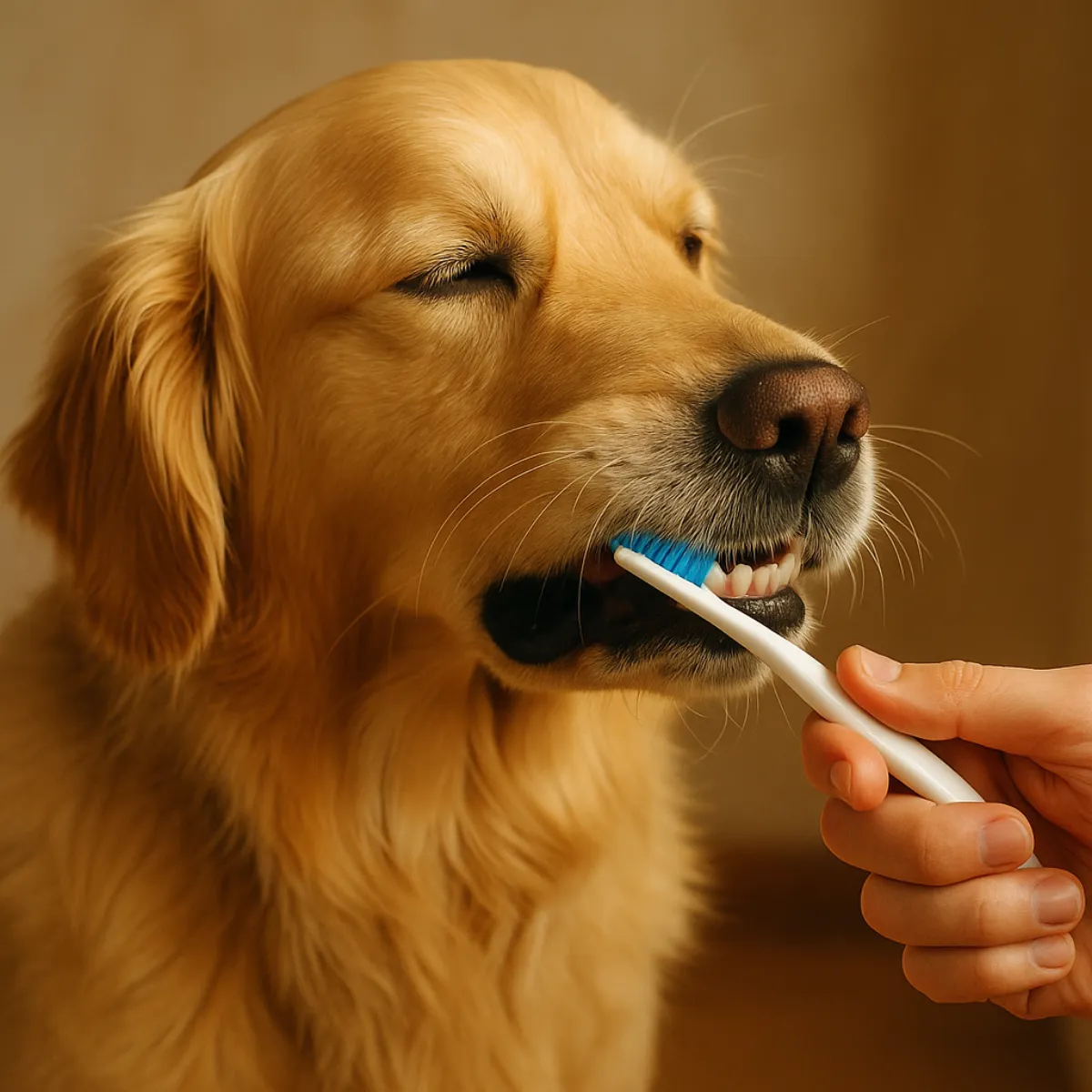
A realistic planning figure for a senior dental is therefore an illustrative $500 to $1,500, with the worked example later in this cost read using $850. Spread across the two years between cleanings, that is a real annual line rather than a one-off.
Chronic conditions are managed, not cured
Here is the structural point that changes a senior budget more than any single price. Most of the conditions that show up in older dogs are managed rather than cured. There is no course of treatment that ends, no final appointment after which the dog is better. There is a diagnosis, a daily medication, a monitoring schedule, and a new permanent line in the monthly budget.
That is a different kind of cost from anything in the adult years. An adult dog’s veterinary spending is mostly a predictable annual event plus the small chance of an expensive surprise. A senior dog with a managed condition has all of that plus a fixed monthly commitment that does not stop. Arthritis, kidney conditions, and heart conditions are the examples veterinarians commonly discuss with owners of older dogs, and each of them follows that same management pattern.
An illustrative planning figure for a single managed condition, counting medication plus a supporting supplement, is somewhere near $40 to $100 a month, which is roughly $480 to $1,200 a year. A second condition roughly doubles it. Our read on saving on pet medications covers the ways to bring that line down without changing what the dog receives.
Arthritis and the cost of keeping a dog moving
Arthritis is the condition owners most often recognize before a veterinarian names it, because they can see it: the dog is slower on the stairs, reluctant to jump into the car, stiff after a long sleep. It is also a good illustration of how senior costs spread across more than one budget line at once.
The medication side is the obvious part, and it is an ongoing monthly cost rather than a course. Alongside it sit joint supplements, which many owners add and which are a modest recurring line of their own. Then there is the part of arthritis care that is not medical at all: the ramp that saves the dog from jumping, the non-slip runners that stop a slide on a hard floor, and the orthopedic bed that makes a night’s sleep more comfortable. Those are cheap and are covered in their own section below.
What makes arthritis worth understanding early is that comfort and cost point the same way. A dog kept at a healthy weight puts less strain on its joints, and weight management costs nothing. Any specific treatment plan, including whether a medication is appropriate for your dog at all, is a decision for your veterinarian, who can examine the actual animal.
Kidney and heart conditions in the budget
Kidney and heart conditions are the other two commonly discussed in older dogs, and they behave differently from arthritis in one budget-relevant way: they are usually found by monitoring rather than by watching the dog. This is exactly what the senior bloodwork is for, and it is why the screening line and the medication line are connected.
The cost pattern for both tends to be a diagnosis, then a medication or a diet or both, then a recheck schedule. The rechecks are the part owners underestimate. A managed condition often means repeat bloodwork at intervals rather than once a year, and each round carries the same illustrative $80 to $200 range as the screening panel. Depending on what is being monitored, imaging may enter the picture too, with an X-ray commonly running an illustrative $150 to $400 and an ultrasound an illustrative $300 to $600.
None of this is a reason to skip the screening that finds these conditions. Found early and managed, they are a monthly line. Found late, they tend to arrive as an emergency, and our emergency vet visit read shows how differently those bills behave.
Prescription diets and what they add
If a veterinarian recommends a therapeutic diet, it becomes one of the more noticeable changes to your monthly spending, because food was already the largest recurring line and this makes it larger. Prescription and therapeutic diets are formulated for a specific condition, they are sold through veterinary channels or with authorization, and they generally cost meaningfully more per pound than an ordinary complete food.
As an illustrative planning figure, expect a therapeutic diet to add somewhere in the region of thirty to a hundred percent to your existing food line. Using the food figures in our monthly cost of a dog read, a medium dog eating an illustrative $55 a month of regular food might move to $75 or $110 a month on a prescription diet, which is an extra $240 to $660 a year. A large dog’s version of the same change is proportionally bigger.
Two honest notes. A therapeutic diet is prescribed for a medical reason, so it is not a line to trim on price alone, and any substitution is a question for your veterinarian rather than a shopping decision. And not every senior dog is prescribed one, so treat this as a conditional line in your budget rather than an automatic one.
Mobility aids and home adaptations
This is the cheapest section in the whole cost read, and arguably the highest-value one. Mobility aids and home adaptations cost very little relative to what they do, and unlike almost everything else in a senior budget they are one-time purchases rather than recurring lines.
The useful items are unremarkable. Non-slip runners or rugs across hard floors stop the slipping that makes an unsteady dog anxious and can cause an injury. A ramp for the car or the sofa removes a jump that a stiff dog should not be making. An orthopedic or memory-foam bed supports sore joints overnight. Raised bowls can make eating more comfortable for a dog that finds bending down hard. A harness with a handle helps with stairs. A night light helps a dog whose eyesight has dimmed.
As an illustrative figure, a sensible set of these lands somewhere near $100 to $350 in total, spent once. Set that against the cost of treating an injury from a fall on a slick floor and the arithmetic is not close. Anything that changes how your dog moves is worth mentioning to your veterinarian, since a new stiffness or hesitation is information as much as it is an inconvenience.
What each senior line costs in a year
Here is what the new and enlarged lines look like when you put them side by side, using the illustrative medium dog this cost read keeps returning to. The point of the chart is the ranking, not the exact amounts: medication for a managed condition is the biggest single addition, and the routine screening that everyone worries about is comparatively modest.
What each senior line costs in a year
Illustrative annual amounts for a medium senior dog. Dental is shown amortized across two years.
Illustrative planning figures for a medium dog, not quotes. The medication line assumes one managed condition; a second condition roughly doubles it. The diet line applies only if a therapeutic diet is prescribed.
Notice how the ranking runs against intuition. Owners worry most about the screening line, because it is the one that appears first and feels like an optional extra. It is the smallest of the five. The line that actually reshapes a budget is the daily medication, precisely because it never stops.
Where a senior year’s money goes
Zoom out from the additions to the whole year and the proportions settle into something a budget can work with. This is the settled senior year for the illustrative medium dog: one managed condition, dental spread across two years, no prescription diet, and no insurance premium or fund contribution in the total.
Where a senior year's money goes
Approximate share of an illustrative $2,900 senior year for a medium dog. Illustrative.
Medication overtakes food as the largest single line once a condition is being managed. In a healthy senior year with no diagnosis, that slice disappears and the year falls back toward an illustrative $2,200.
The comparison worth holding onto is what this chart looks like without the medication slice. Strip it out and the year drops to roughly $2,200 for the same dog, which is a much gentler step up from the adult years. The difference between a healthy senior and a managed one is the single biggest fork in this budget, and it is not one you control.
A worked example: one senior dog, one year
Numbers land better carried through a single case, so here is one illustrative dog followed through one senior year. A fifty-five pound dog, eleven years old, on a twice-yearly schedule, with arthritis being managed and a dental falling in this particular year.
| Line | Illustrative annual cost | Notes |
|---|---|---|
| Food and treats | $660 | Regular complete diet, $55 a month, unchanged from the adult years |
| Parasite prevention | $300 | Flea, tick, and heartworm, dosed by weight |
| Two examinations | $140 | Roughly $70 each on the twice-yearly schedule |
| Vaccine boosters due | $60 | Fewer than a puppy year, but still a line |
| Heartworm and fecal testing | $60 | Part of the routine round |
| Senior blood panel and urine test | $200 | The new screening line |
| Dental with senior workup | $850 | Falls this year; roughly $425 a year spread across two |
| Arthritis medication | $540 | An illustrative $45 a month, every month |
| Joint supplement | $180 | An illustrative $15 a month |
| Supplies, grooming, replacements | $200 | Beds, bowls, collars, the small consumables |
| Mobility kit, bought once | $170 | Ramp, runners, orthopedic bed |
Add it up and the dental year lands near an illustrative $3,360. Take out the one-time mobility kit and spread the dental across the two years it covers, and a settled senior year for this dog runs closer to $2,900. Set that against the same dog’s adult year of roughly $1,420 on the same food and the same preventives, and the senior lift is around $1,500 a year.
That number is the honest headline of this cost read, and it is worth restating: the increase is not one dramatic bill, it is a permanent shift in the baseline. Run your own dog through the cost calculator and the companion above to see where yours lands.
How size changes the senior bill
Size drives the senior years the same way it drives everything else in dog ownership, because almost every line scales with body weight. Food scales directly. Parasite preventives are dosed by weight. Most medications are dosed by weight. Anesthesia is dosed by weight and a bigger dog takes longer to work on, which is why a large dog’s dental costs more than a small dog’s identical procedure.
Running the same structure across the three size bands gives an illustrative picture. A small senior dog managing one condition lands near $2,200 a year, a medium one near $2,900, and a large one near $4,000. Strip out the managed condition and the healthy versions run nearer $1,700, $2,200, and $3,100 respectively. Our lifetime cost read makes the same point across the whole life, and the senior years are where the size gap is widest in absolute dollars.
There is a second effect worth knowing. Large and giant breeds are commonly considered senior earlier than small ones, so a large dog tends to spend a greater proportion of its life in the expensive band. That is a structural feature of large-breed ownership rather than bad luck, and it is worth pricing in before you choose rather than discovering at year seven.
Diagnostics you may be offered and how to decide
The senior years are when owners start being offered diagnostics they have never been offered before, often in an emotionally difficult moment, and it is worth having a framework before you are standing in the consulting room. This is not about refusing tests. It is about understanding what you are being offered so you can say yes with confidence.
The useful question is what a test will change. A diagnostic that will alter the treatment plan is usually worth doing. A diagnostic that confirms something already being treated the same way either result may be worth doing for peace of mind, or may be worth deferring, and your veterinarian is the right person to say which. Asking “what would we do differently depending on the result” is a fair, respectful question that most veterinary teams welcome, and it usually produces a clearer answer than asking about price alone.
Ask for a written estimate before anything scheduled, and ask whether a test can be staged rather than done all at once. Our read on lowering your vet bills covers the practical mechanics of that conversation, including how to raise budget honestly without it feeling like a negotiation.
Why senior costs arrive in lumps
An annual figure is useful for planning and misleading for cash flow, and that mismatch is sharper in the senior years than at any other stage. The medication line is genuinely monthly and genuinely smooth. Almost nothing else is. The dental arrives as one bill of several hundred to well over a thousand dollars in a single week. The screening round arrives twice a year. A diagnostic workup after an unexpected finding arrives whenever it arrives.
The practical consequence is that a senior budget needs a buffer in a way an adult budget does not. Setting aside the monthly average is necessary but not sufficient, because the average assumes the money is already pooled when a lump lands. Owners who start the transfer at the beginning of the senior years, rather than after the first big bill, are the ones for whom the second and third bills are manageable.
This is also why the calculator is more useful than a single number from an article. Seeing your own monthly figure alongside your own annual total is what makes the buffer a specific amount rather than a good intention.
The insurance problem nobody warns you about
This is the most important financial point on this page, and it is the one that arrives too late for a lot of people. Pet insurance for a senior dog is expensive, sometimes unavailable, and frequently far less useful than it looks, and the reasons are structural rather than anything you did wrong.
Three things stack against a late enrollment. Premiums rise with age, because insurers price the rising probability of claims, and by the senior years that pricing is steep. Some insurers set upper age limits for new accident-and-illness enrollment, so a policy may simply not be offered. And most decisively, anything already noted in your dog’s medical record is treated as pre-existing and excluded, which in a senior dog usually means the exact conditions most likely to generate claims are the ones fenced off. Our read on whether pet insurance is worth it for a dog works through that mechanism in detail.
Put those together and the uncomfortable conclusion is that the insurance decision for a senior dog was made years earlier, when the dog was young and healthy and the record was clean. That is not a comfortable thing to read if your dog is already eleven, but pretending otherwise would not help you. What follows is what to do instead.
If you did not insure: how to self-fund on purpose
Most owners of senior dogs are in this position, and the honest advice is not to shrug. It is to self-fund deliberately, which is a genuinely different thing from self-funding by accident. Self-funding by accident means paying bills from whatever is in the account when they land. Self-funding on purpose means a named account, a fixed automatic monthly transfer, and a target you have actually chosen.
A reasonable way to set the target is to take the senior lift this cost read has described, roughly an illustrative $1,500 a year for a medium dog, and treat that as the minimum monthly transfer converted to $125 a month. Then add a buffer for the lumps, because the dental and any workup do not wait for the fund to fill. Owners who can manage more should, because the fund’s weakness is timing: it only protects what it already contains.

The discipline is the whole trick, and it is the same discipline our read on getting help with vet bills exists to back up when the fund is not enough. A fund that lives only as an intention does not survive contact with a car repair.
What already-insured owners should check
If you did insure your dog years ago and the policy is still in force, the senior years are when it earns its keep, and also when it needs attention. Premiums rise at renewal as the dog ages, so the policy you barely noticed at year three may be a visible line by year eleven. That is expected rather than a sign something is wrong.
Two things are worth checking rather than assuming. First, what your policy says about dental, since coverage of dental disease versus routine cleaning varies enormously between policies and is exactly the distinction a senior dog runs into. Second, whether any annual or per-condition limits are close to being reached, because a managed chronic condition can consume a per-condition cap over several years in a way a one-off injury never does.
The one move to be careful with is switching. A new policy restarts the pre-existing clock, so anything diagnosed under the old one becomes an exclusion under the new one. Our read on switching pet insurance explains the mechanism, and for a senior dog the answer is usually to stay put unless you have a specific and well-understood reason not to.
Ways to keep senior costs manageable
There are real savings available in the senior years, and they are mostly the unglamorous ones. These are the changes that reduce spending without reducing care.
- Keep the dog at a healthy weight. It reduces strain on joints, and it is free. This is the highest-return item on the list by a distance.
- Do not skip the dental. A cleaning done on schedule is far cheaper than the extractions that follow years of delay, and our dental read shows the size of that gap.
- Ask about lower-cost medication equivalents. Ask your veterinarian whether an alternative exists for a prescribed medication and where the prescription can be filled, rather than changing anything yourself.
- Ask for written estimates. For anything scheduled, an itemized estimate lets you plan and lets you ask sensible questions.
- Buy the mobility gear early. Runners and a ramp cost an illustrative $100 to $350 once and can prevent an injury that costs many times that.
- Bundle the visit. If a screening round and a booster are both due, ask whether they can be done at the same appointment rather than two.
The common thread is that senior savings come from timing and prevention rather than from declining care. Nothing on this list involves your dog receiving less.
False economies in senior care
The mirror image matters just as much, because the senior years are unusually rich in savings that cost more than they save. Each of these feels responsible in the moment.
- Delaying visits to save the examination fee. In an older dog this is the most expensive corner to cut, because the problems that develop are the ones where early beats late by the widest margin.
- Declining the bloodwork because the dog seems fine. The entire point of the screening is that it runs before symptoms appear. A dog seeming fine is the condition under which it is most useful.
- Putting off the dental for another year. Dental disease does not pause. The postponed cleaning tends to become the cleaning plus extractions.
- Stopping a medication because the dog improved. A managed condition improves because it is being managed. Any change to a prescribed medication is a conversation with your veterinarian, not a budget decision.
- Switching insurance to chase a lower premium. For a senior dog this usually converts covered conditions into excluded ones.
- Buying the cheap ramp twice. The same durable-gear logic that applies to a crate applies here.
The pattern is consistent across every one of these: the cheap choice today raises the odds of a much larger bill tomorrow, in a dog that has less time to recover from a delay than a young one does.
Questions worth asking at the senior check-up
The senior check-up is a different conversation from an adult one, and going in with questions changes what you get out of it. None of these are challenges to your veterinarian, and all of them tend to produce information that makes the budget easier to plan.
Ask what schedule they recommend for your specific dog and why, since not every older dog needs the same interval. Ask what the senior screen at that clinic includes and what it costs, because bundles differ. Ask what they are watching for in this particular animal, which turns abstract worry into a short specific list. Ask when they would expect the next dental and what a rough estimate looks like, so it can be saved for rather than absorbed. And ask what changes at home would help, since the answers are often free or nearly so.

If budget is a genuine constraint, say so plainly. Veterinary teams have this conversation constantly, and knowing your ceiling lets them sequence care sensibly rather than presenting an all-or-nothing plan. Our read on choosing a vet covers what a good clinic relationship looks like from the start.
Quality of life and the costs at the end
The senior years eventually end, and a cost read that skipped that would be dishonest, so here it is briefly and without embellishment. Somewhere in this stretch the conversation shifts from managing a condition to weighing quality of life, and that shift has a financial dimension alongside everything else it has.
There are usually two questions. The first is whether to pursue further treatment or investigation, and that is a decision about the dog rather than about money, made with your veterinarian, though money is allowed to be part of an honest conversation. The second is the cost of the end itself, which we cover separately in our read on the cost of putting a dog down so that it can be handled with the space and care it needs rather than as a line item here.
What belongs in this cost read is only the planning point: the fund you build through the senior years is what allows the eventual decision to be made on the dog’s behalf rather than the budget’s. That is the entire reason for setting the money aside, and it is worth naming plainly.
Budgeting for the senior years before they arrive
If your dog is not yet a senior, this section is the one that will save you the most, because the senior years are far easier to fund from the adult years than from themselves. The adult stretch is the cheapest phase of a dog’s life, and the money that is not being spent then is exactly the money the senior years will need.
The mechanism is simple and unexciting. Take the senior lift, an illustrative $1,500 a year for a medium dog, and start transferring some version of it now, while the dog is five and nothing is wrong. Six calm adult years at $125 a month builds a reserve of roughly $9,000, which comfortably covers the lift and the lumps. Starting at year ten instead builds a fraction of that, and starting after the first big bill builds none of it.
If the dog is young enough that insurance is still cheap and the record is still clean, that is the moment the insurance decision is actually available to you, as our pet insurance read explains. Whichever route you choose, choose it on purpose. The cost calculator turns the adult years and the senior years into figures you can set a transfer against.
The bottom line
Senior dog care costs an illustrative $1,700 to $4,000 a year, against roughly $1,000 to $2,000 for the same dogs in their calm adult years, and the increase is a permanent shift in the baseline rather than a single event. The routine floor rises first, as visits move from annual to twice yearly and bloodwork joins them, on a dog that still looks perfectly well. Then dental disease that has been accumulating for years needs addressing, with more workup around the anesthesia than a younger dog would need. Then, for many dogs, a managed chronic condition turns medication into a permanent monthly line.
The financial decision that matters most was made years earlier. A young, healthy dog is the only dog that can be insured well, and a senior dog’s record has usually already excluded the conditions a policy would need to cover. If that ship has sailed, self-fund on purpose: a named account, a fixed monthly transfer, and a target you have chosen rather than a hope you are carrying. Keep the weight down, keep the dental on schedule, buy the ramp early, and ask your veterinarian what they are watching for. Do that and the senior years stay what they should be, which is the stretch where a dog that has known you for a decade gets to be comfortable.
One closing note from the MuttMark team, written with a hand on an old dog’s back: this cost read is educational and is not veterinary, financial, or insurance advice, and nothing in it should be treated as a diagnosis or a treatment plan for your own animal. Every dollar amount here is an illustrative planning range rather than a quote, and real prices move with your region, your clinic, and your dog’s size. Age thresholds for “senior” are commonly cited rather than fixed, and they differ between a small dog and a large one. Whether your dog needs a particular schedule, screening test, medication, or diet is a question only your own veterinarian can answer, and they are the right person to ask, including about what it will cost.
Frequently asked questions
How much does a senior dog cost per year?
As an illustrative planning range, a senior dog commonly costs somewhere between $1,700 and $4,000 a year once you include food, parasite prevention, twice-yearly veterinary visits with bloodwork, amortized dental work, and any daily medication. A small senior with no diagnosed condition sits near the bottom of that range, and a large dog managing one or two conditions sits at the top or above it. The same dogs in their calm adult years commonly run closer to $1,000 to $2,000. Those figures exclude an insurance premium or emergency-fund contribution, which is a separate decision covered in this cost read, and every one of them varies with your region, your clinic, and your individual dog.
At what age is a dog considered senior?
There is no single fixed age, and the thresholds commonly cited by veterinarians vary with size: large and giant breeds are often considered senior earlier than small ones, sometimes by several years. What matters more for your budget than the label is when your veterinarian starts recommending twice-yearly visits and age-related screening, because that recommendation is what actually moves the routine cost. Some dogs cross that line noticeably earlier or later than a chart would suggest. Ask your own veterinarian when they would like to change your dog's schedule, and treat that conversation, rather than a birthday, as the point the senior budget begins.
Why do vets want to see senior dogs twice a year?
The common reasoning is that older dogs change faster than young ones, so a twelve-month gap between examinations can allow a developing problem to go unnoticed for longer than anyone would like. A six-month interval gives the veterinary team more chances to notice weight change, a heart murmur, a new lump, dental disease, or a shift in bloodwork before it becomes an expensive problem. The financial consequence is that the routine baseline rises before anything is actually wrong, because you are now paying two examination fees a year instead of one plus, in most cases, a blood panel. Whether your own dog needs that schedule is a decision for your veterinarian, who can see the actual animal.
How much does senior dog bloodwork cost?
A senior blood panel commonly runs an illustrative $80 to $200 depending on how comprehensive it is, and a urine test typically adds a modest amount on top, so a screening round of roughly $150 to $250 is a reasonable planning figure. Many clinics bundle a senior wellness screen into a single price that includes the examination, and some run it once a year while others run it at both visits for older dogs. The cost is easier to accept once you see what it is for: bloodwork is how kidney, liver, and thyroid changes are picked up before symptoms appear, which is usually when they are cheapest to manage. Ask your clinic what its senior screen includes and what it charges, because bundles vary widely.
Why does dental work cost more for an older dog?
The dental procedure itself is the same, but an older patient usually carries more workup around it. A senior dog is more likely to need pre-anesthetic bloodwork, and depending on what the examination and history show, a veterinarian may also recommend additional screening or intravenous fluids and closer monitoring during the anesthesia. Those additions commonly add an illustrative $100 to $350 to a dental that would otherwise sit in the $300 to $700 range for a routine cleaning. On top of that, older mouths have simply had more years to accumulate disease, so extractions are more likely, and extractions are the line that pushes a dental past $1,000. Our dental cost read breaks the individual charges down in full.
Can you get pet insurance for a senior dog?
Sometimes, but this is the single most important financial point about senior dogs, and the honest answer is uncomfortable. Premiums rise steeply with age, some insurers set upper age limits for new accident-and-illness enrollment, and anything already in your dog's medical record is treated as pre-existing and excluded. That last part matters most, because the conditions most likely to drive claims in a senior dog are exactly the ones already noted at the vet. A policy bought at this stage can therefore cost a great deal while covering comparatively little. The decision that mattered was made years earlier, when the dog was young and healthy, and there is no way to buy it back.
Is it worth insuring a dog you already own if it is getting older?
It depends entirely on what is already in the record and what the quotes actually exclude, so the only useful move is to get real quotes and read the exclusions rather than reason about it in the abstract. If your dog is approaching the senior years with a genuinely clean history, enrolling now is meaningfully better than enrolling later, because every year of waiting narrows what can still be covered. If the record already notes arthritis, a heart murmur, or a lump, price the policy against what it would actually pay for and be honest about the answer. For many owners in that position, a deliberately funded savings account protects more per dollar than a hollowed-out policy.
How can I keep senior dog costs manageable without cutting corners?
The changes that genuinely help are keeping the dog at a healthy weight, which reduces strain on joints and is free, keeping up with dental and preventive care so problems are caught while they are small, asking for written estimates before procedures, asking your veterinarian whether a prescribed medication has a lower-cost equivalent, and adding cheap home adaptations like non-slip runners and a ramp before a fall causes an injury. Setting aside a fixed monthly amount from the calm adult years is the single most effective preparation. What does not work is delaying visits to save the examination fee, because a problem caught late in an older dog is almost always the more expensive version of the same problem.