

What's on this page
- The short answer: the core puppy vaccination schedule
- Core versus non-core vaccines
- The core dog vaccines explained
- The puppy vaccination schedule by age
- Why puppies need multiple doses
- The DHPP or DAP series in detail
- The leptospirosis schedule
- The rabies vaccine and the law
- The booster schedule after the puppy series
- Non-core vaccines by lifestyle
- Why the schedule varies by region, risk, and law
- What to expect at each puppy visit
- A worked example: one puppy’s first year of shots
- How vaccination schedule and cost fit together
- How to keep the schedule on track
- A puppy vaccination schedule checklist
- The bottom line
Short answer: The core puppy schedule starts the combined DHPP or DAP vaccine at 6 to 8 weeks, repeated every 3 to 4 weeks until a final dose at or after 16 weeks. Leptospirosis is given as two doses starting no earlier than 12 weeks, and rabies as a single dose at 12 to 16 weeks per local law. A booster follows about a year later, then core boosters typically every three years.
The core vaccines for dogs follow a set timeline, and that timeline is one of the first things a new dog owner needs to understand, and also one of the most misunderstood, because the shots cluster tightly in the first months, come with unfamiliar acronyms, and follow a timing that only makes sense once you know why it exists. A puppy does not get one shot and finish; it works through a series across its first sixteen weeks and beyond, with different vaccines starting at different ages and boosters following later. Knowing the age-by-age shape of that schedule turns a confusing stack of appointments into a plan you can follow.
This reference lays out that schedule clearly, drawing on the current professional canine vaccination guidelines, and it is built to be a planning aid rather than a replacement for your veterinarian’s judgment. It covers the core vaccines and what each protects against, the puppy series by age with a clear table, why several doses are needed, the separate timing for leptospirosis and rabies, the booster schedule after the puppy year, and how region, risk, and law shape the plan. It sits alongside our dog vaccination cost read, which prices these same shots, and our first-year dog read, which folds the series into the whole first-year plan. You can also use the companion to estimate where your own puppy sits in the series.
Key takeaways
- The core combination shot (DHPP or DAP) begins at 6 to 8 weeks and repeats every 3 to 4 weeks, with a final dose at or after 16 weeks.
- Leptospirosis, now a core vaccine, is given as 2 doses starting no earlier than 12 weeks; rabies is a single dose at 12 to 16 weeks per local law.
- Puppies need multiple doses because maternal antibodies can block earlier ones, and those antibodies fade at an unpredictable age.
- After the series, a booster follows about 1 year later, then core boosters are typically every 3 years, with rabies on a 1 or 3 year cycle per law.
- This is a general pattern from professional guidelines; the exact schedule for your puppy is your veterinarian's decision based on region, risk, and law.
The short answer: the core puppy vaccination schedule
The core puppy schedule follows a pattern that is easier to hold once stated plainly. The combined distemper, adenovirus, and parvovirus vaccine, usually labeled DHPP or DAP, begins at six to eight weeks of age and is repeated every three to four weeks until a final dose given at or after sixteen weeks. Leptospirosis, now treated as a core vaccine, is given as two doses starting no earlier than twelve weeks, three to four weeks apart. Rabies is a single dose given between twelve and sixteen weeks, with the exact timing set by local law. Then a booster of the core vaccines follows about a year later, and core boosters continue on a roughly three-year cycle after that, with rabies on a one or three year cycle per law.
These patterns are drawn from the 2022 AAHA Canine Vaccination Guidelines, updated in 2024, published by the American Animal Hospital Association (AAHA), which you can look up by name to read in full. They represent widely followed professional recommendations, but they are general guidance, not a fixed prescription for every dog. Real schedules vary by region, by an individual puppy’s risk, and by local law, and the timing that is right for your puppy is a decision your veterinarian makes with those factors in view.
The rest of this reference builds the schedule out age by age and vaccine by vaccine, explains the reasoning behind the timing, and hands you a table and a companion to see where a given puppy sits. Read it to understand the shape and to know what to expect and what to ask, then follow the individualized plan your veterinarian sets, because a vaccination schedule is medical guidance that belongs with the professional who knows your dog.
Core versus non-core vaccines
Vaccines are grouped into two categories, and understanding the split is the foundation of the whole schedule. Core vaccines are those recommended for essentially every dog, because the diseases they prevent are severe, widespread, or a matter of public health. According to the AAHA guidelines this reference draws on, the core set covers distemper, adenovirus type two, which protects against hepatitis, parvovirus, and, following a 2024 update, leptospirosis, along with rabies, which is given separately and required by law. The distemper, adenovirus, and parvovirus components are usually delivered together in a single combination shot.
Non-core vaccines, by contrast, are recommended based on an individual dog’s lifestyle and local risk rather than given to every dog. The common ones include bordetella, which protects against a major cause of kennel cough, Lyme disease vaccine, and canine influenza. Whether a dog needs these depends on how it lives: a dog that boards, attends daycare, visits dog parks, or spends time in tick country is more likely to need several non-core shots, while a lower-exposure dog may need few or none. These are decided case by case by a veterinarian.
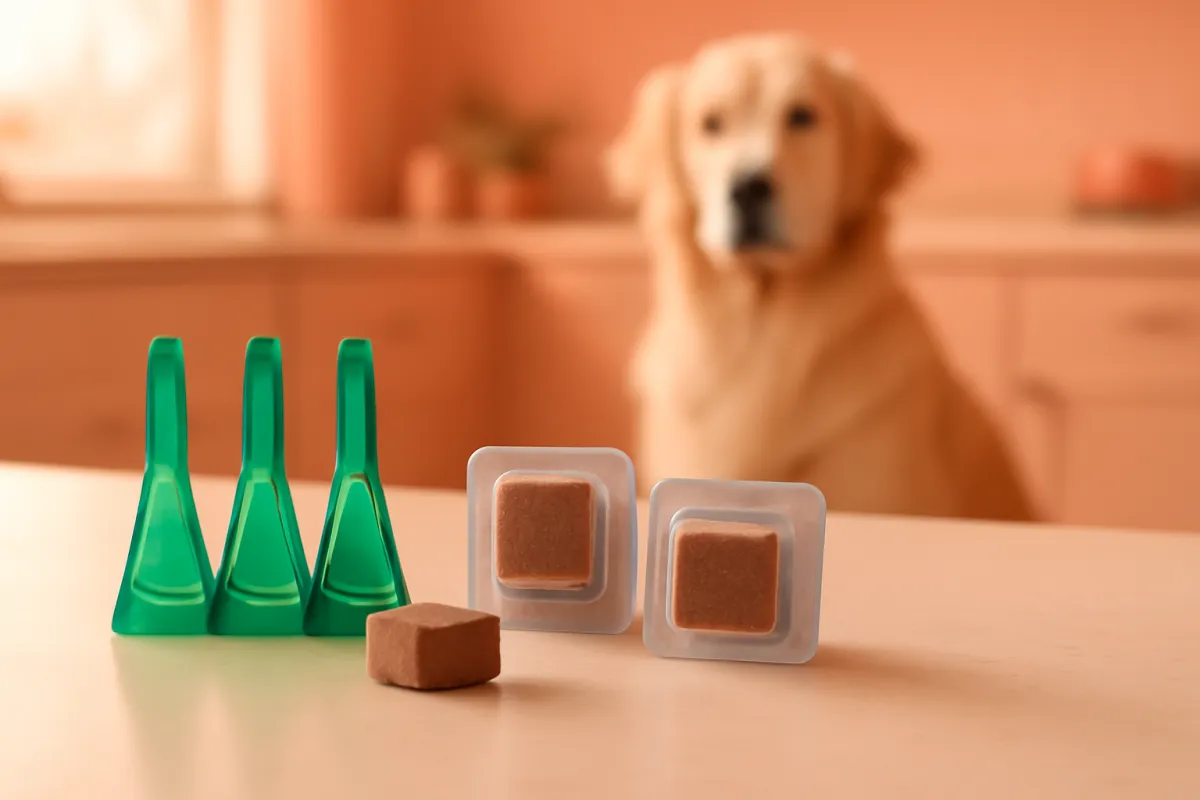
The reason this distinction matters for the schedule is that the core vaccines follow the fairly standard timing this reference lays out, while the non-core ones are added, and timed, according to the individual dog’s needs. So the age-by-age schedule below focuses on the core vaccines every puppy is advised to receive, with non-core vaccines noted separately as lifestyle-dependent additions your veterinarian decides on. Keeping the two categories clear makes the whole plan easier to follow and easier to discuss with your vet.
The core dog vaccines explained
It helps to know what the core vaccines actually protect against, because the names blur together and understanding them makes the schedule meaningful rather than a list to memorize. Distemper is a serious, often fatal viral disease affecting multiple body systems. Adenovirus type two protects against infectious canine hepatitis, a viral disease of the liver. Parvovirus is a severe, highly contagious, and frequently fatal virus that strikes puppies especially hard, which is a major reason the puppy series matters so much. These three are the classic combination shot’s core, often bundled with parainfluenza, which is why the shot is labeled with an acronym like DHPP.
Leptospirosis is a bacterial disease spread through water and the urine of infected wildlife, and it can affect the kidneys and liver and is transmissible to people, which is part of why the guidelines elevated it to core status in the 2024 update. Because it is bacterial rather than viral, its schedule differs from the combination shot, which the dedicated section below covers. Rabies is a fatal viral disease and a public-health matter, which is why it is legally required for dogs in most places and given as its own vaccine on a schedule shaped by law.
Understanding these diseases explains the urgency behind the timing. Parvovirus in particular is why the puppy series is not something to stretch or skip: the disease mainly threatens unvaccinated puppies and is both dangerous and expensive to treat, so building protection on schedule is genuinely protective. The same logic runs through our dog vaccination cost read, which notes that the diseases these shots prevent cost far more to treat than the vaccines cost to give. Which vaccines your dog receives, and when, remains your veterinarian’s decision, but knowing what each one guards against makes that conversation clearer.
The puppy vaccination schedule by age
Here is the core schedule laid out age by age, following the general pattern in the AAHA guidelines. Treat it as a planning framework: the timing your veterinarian sets for your puppy may differ based on your region, your puppy’s risk, and local law, and the table below is a guide to what to expect rather than a fixed prescription.
| Puppy age | Core vaccines typically due | Notes |
|---|---|---|
| 6 to 8 weeks | First DHPP or DAP dose | The core series begins |
| 9 to 12 weeks | Second DHPP or DAP dose | Series repeats every 3 to 4 weeks |
| 12 weeks and later | Leptospirosis first dose; rabies window opens | Leptospirosis not given before 12 weeks |
| 12 to 16 weeks | Rabies single dose per local law; leptospirosis second dose 3 to 4 weeks after the first | Timing shaped by law and risk |
| 16 weeks and after | Final DHPP or DAP dose | Given at or after 16 weeks |
| About 1 year later | Core booster of the vaccines above | Then typically every 3 years; rabies on a 1 or 3 year cycle per law |
The pattern to notice is that the combination shot runs as a repeating series through the first sixteen weeks, while leptospirosis and rabies enter later, generally not before twelve weeks. The final combination dose is deliberately timed at or after sixteen weeks, for reasons the next section explains. After the puppy year, the schedule shifts from a tight series to periodic boosters, and the count of shots due in any adult year becomes smaller and more variable.

Because this schedule spans several visits over several weeks, it is one of the few veterinary plans you can preview almost entirely in advance, which makes it easy to put on a calendar and budget for. Our puppy cost read and first-year dog read both fold the series into the wider first-year plan. Use the table to anticipate the rhythm, then confirm the exact dates with your veterinarian, who will tailor the plan to your puppy.
Illustrative share of first-year core vaccine doses
Representative split of core vaccine doses across a puppy's first year. Illustrative, per general guidelines.
The combination shot makes up most of the first-year doses because it repeats through the series, while leptospirosis needs two doses and rabies a single puppy dose.
Why puppies need multiple doses
The single most common question about the puppy schedule is why a puppy needs several rounds of the same shot rather than one, and the answer is maternal antibodies. A newborn puppy absorbs temporary immunity from its mother’s milk, and those maternal antibodies protect it in early life. The catch is that the same antibodies also interfere with vaccines, blocking them from prompting the puppy’s own immune response, so a vaccine given while maternal antibodies are still high may simply not take.
The complication is that maternal antibodies fade at an age that varies from puppy to puppy and cannot be predicted precisely for an individual. There is a window during which the maternal antibodies are low enough to stop blocking the vaccine but the puppy is not yet protected on its own, and the goal of the series is to make sure a dose lands in that window. Because that window opens at a different time for each puppy, giving the vaccine repeatedly every three to four weeks across the first months ensures that whenever the maternal interference resolves, a dose is there to build lasting protection.
This is precisely why the final combination dose is timed at or after sixteen weeks: by that age, maternal antibodies have usually declined enough in nearly all puppies that the last dose reliably takes. It is also why skipping or stretching doses in the series is risky, because a gap could leave a puppy unprotected during the vulnerable window, exposed to diseases like parvovirus that target unvaccinated puppies. Understanding the maternal-antibody reason makes the schedule’s timing feel purposeful rather than arbitrary, and it underlines why the series is a plan to follow closely under veterinary guidance.
The DHPP or DAP series in detail
The combination shot is the backbone of the puppy schedule, so it is worth understanding on its own. Labeled DHPP, DAP, or a similar acronym depending on exactly which components it includes, it bundles the core viral protections, distemper, adenovirus, and parvovirus, often with parainfluenza, into a single injection. This combination is efficient, sparing the puppy multiple separate shots for these diseases, and it forms the repeating series that defines the first sixteen weeks.
The timing, per the AAHA guidelines, is a first dose at six to eight weeks of age, repeated every three to four weeks, with the final dose given at or after sixteen weeks. In practice that usually means three or four doses across the series, depending on the starting age and the interval your veterinarian uses. The final dose at or after sixteen weeks is the crucial one, for the maternal-antibody reasons above, so the series is designed around ensuring that last dose lands at the right age rather than around a fixed number of shots.
Illustrative core puppy doses by vaccine
Typical number of doses in the first-year core series by vaccine. Illustrative, per general guidelines.
The combination shot repeats most because it must outlast fading maternal antibodies. Leptospirosis needs two doses; rabies a single puppy dose, each per the guidelines and local law.
After the puppy series, the combination vaccine is boosted about a year later and then typically every three years, which the booster section below covers. The exact number of puppy doses and the interval between them are set by your veterinarian based on your puppy’s starting age and circumstances, so the three-to-four-dose figure is a general expectation rather than a fixed count. Use the companion to estimate how many combination doses might remain for a puppy of a given age.
The leptospirosis schedule
Leptospirosis follows its own timing, separate from the combination shot, and this is one of the details that has recently changed. Having been treated as a lifestyle-based non-core vaccine, leptospirosis was elevated to core status, recommended for essentially all dogs, in the 2024 update to the guidelines. Because it is a bacterial vaccine rather than a viral one, its schedule differs from the DHPP or DAP series.
The schedule, per the guidelines, is two doses, with the first given no earlier than twelve weeks of age and the second three to four weeks later, followed by periodic boosters as your veterinarian advises. The twelve-week floor is why leptospirosis appears later in the age table than the combination shot, which starts at six to eight weeks. The two-dose primary series is needed to establish protection, so both doses matter, and the timing is coordinated with the other vaccines a puppy is receiving in that window.
Because the guidance on leptospirosis changed relatively recently, it is a good example of why following current professional advice and your veterinarian’s plan matters more than an older schedule you might remember or find online. If you are unsure whether your dog is up to date on leptospirosis, or whether it applies to your dog, that is a specific question to bring to your veterinarian, who will know the current recommendation and your local risk. The shift also illustrates the broader point of this reference: schedules evolve, and the professional guidance and your vet, not a static chart, are the authority.
The rabies vaccine and the law
Rabies stands apart from the other core vaccines in one important way: it is governed by law. Because rabies is a fatal disease and a public-health matter, rabies vaccination is legally required for dogs in most places, and the timing and interval are shaped by local law rather than by veterinary discretion alone. This is why the schedule for rabies can differ from one location to another in a way the other vaccines do not.
The general pattern, per the guidelines and typical law, is a single rabies dose given between twelve and sixteen weeks of age, then a booster about a year later, and after that a booster on a one or three year cycle depending on the specific vaccine and local law. The exact age within the twelve-to-sixteen-week window and the booster interval that applies to your dog are set by your local requirements, so this is an area where checking your local law, with your veterinarian’s help, is genuinely necessary rather than optional.
Because rabies is both inexpensive and legally required, it is not a shot to skip or delay beyond what the law and your veterinarian allow. Falling out of compliance can carry legal consequences and serious complications if a bite or exposure incident occurs, and many services, such as boarding and grooming, require proof of current rabies vaccination. Our dog vaccination cost read notes that rabies is typically one of the cheaper shots, which combined with its legal requirement makes keeping it current straightforward and worthwhile. As with every vaccine here, your veterinarian and local law set the precise plan.
The booster schedule after the puppy series
Once the puppy series is complete, the schedule shifts from a tight cluster of shots to a lighter, periodic rhythm, and understanding that shift helps set expectations for the years ahead. The first milestone after the series is a booster of the core vaccines given about one year later, which reinforces the protection built during the puppy year. This roughly one-year booster is a standard part of the schedule following the initial series.
After that booster, the interval lengthens. Core boosters of the combination vaccine are typically given every three years rather than annually, per the guidelines, which is why an adult dog’s vaccination load is much lighter than a puppy’s. Rabies follows a one or three year cycle depending on the vaccine and local law, and lifestyle-based non-core vaccines like bordetella are often boosted annually for the dogs that need them. The result is that the number of shots due varies from adult year to adult year: some years bring only a rabies booster or a single core booster, others bring more.
This lighter adult rhythm is why vaccinations become one of the more predictable and modest lines in a dog’s budget once the puppy year is behind you, a point our monthly cost of a dog read and vaccination cost read both make. The exact booster interval for a given dog depends on the specific vaccines, local law, and your veterinarian’s assessment, so the three-year figure is a general pattern rather than a rule you set yourself. Fold the boosters into the annual wellness visit and they become an easy, plannable part of adult care.
Non-core vaccines by lifestyle
Alongside the core schedule sit the non-core vaccines, which are added according to an individual dog’s lifestyle and local risk rather than given to every dog. These do not follow a single universal schedule, because whether and when a dog receives them depends on its exposure, which is exactly why they are decided case by case with a veterinarian. The common non-core vaccines are worth knowing so you can have an informed conversation about which, if any, your dog needs.
Bordetella protects against a major cause of kennel cough and is often required by boarding kennels, daycares, and groomers, so a dog that uses those services generally needs it even if a lower-exposure dog does not. Lyme disease vaccine matters most where ticks carrying Lyme are common and a dog spends time in tick habitat. Canine influenza is advised for dogs that mix closely with many others, at daycare, shows, or boarding. Each of these is added based on real exposure, and each has its own timing that your veterinarian sets.

The key point is that non-core vaccines are genuinely individual, so this reference notes them rather than scheduling them, because the right set for a given dog depends on where it lives and how it lives. Deciding which non-core vaccines your dog needs is a judgment for your veterinarian based on your dog’s real exposure and your local disease patterns. Bring your dog’s lifestyle, whether it boards, hikes, or visits parks, to that conversation, and let your vet build the non-core portion of the plan around it.
Why the schedule varies by region, risk, and law
A single national schedule cannot capture every dog, and it helps to understand why, so you treat this reference as a framework rather than a rulebook. The most obvious source of variation is law, especially for rabies, whose timing and booster interval are set by local requirements that differ from place to place. What is required, and when, genuinely depends on where you live, which is why checking local law with your veterinarian is part of the plan rather than an afterthought.
Regional disease risk is the second source of variation. The diseases circulating, and their prevalence, differ by geography, which shapes which non-core vaccines are advised and can influence the emphasis on certain core ones. A dog in a tick-heavy area, a region with high leptospirosis exposure, or a place with particular disease pressures may have a plan tuned to those risks. Your veterinarian knows the local picture in a way a national chart cannot, which is a core reason the individualized plan matters.
The third source is the individual dog. A puppy’s health, history, starting age, and lifestyle all shape the exact schedule, as does the specific vaccine product a clinic uses, since intervals can differ slightly between products. Guidelines themselves also evolve, as the 2024 leptospirosis change shows, so current professional advice can shift over time. All of this is why this reference repeatedly points back to your veterinarian: the schedule here is the widely followed general pattern, and the plan that is right for your dog is the one your vet builds from these same principles applied to your specific situation.
What to expect at each puppy visit
Knowing what happens at a typical puppy vaccination visit makes the schedule concrete and helps you prepare. Each visit in the series usually bundles a brief physical examination with the shots due that day, so the veterinarian looks the puppy over, checks its development and weight, discusses any concerns, and administers the vaccines on the schedule. The exam is a valuable part of the visit in its own right, catching early problems and answering the many questions new owners have, not just a formality around the shot.
Beyond the vaccines, early puppy visits are often when other foundational care is discussed and started: parasite prevention, spaying or neutering timing, nutrition, training, and the overall plan for the first year. This is why the puppy visits are worth treating as more than shot appointments; they are the start of the relationship with your veterinarian and the moment much of the first year gets planned. Choosing a vet you trust for these early visits matters, which our read on choosing a vet walks through.
Practically, each visit carries an exam fee alongside the shots, which is why the puppy series costs more in total than the shots alone would suggest, a point our exam fee breakdown and vaccination cost read both detail. Come to each visit with your questions ready, ask what is due next and when, and leave with the next appointment scheduled so the series stays on track. Because the timing between doses matters, keeping the visits on schedule is one of the more important things you do in the puppy year, and the visits are the natural checkpoints for the whole first-year plan.
A worked example: one puppy’s first year of shots
Numbers and dates land better carried through, so here is an illustrative first year for one puppy, following the general schedule. Treat the ages as a planning example, since a real puppy’s plan is set by its veterinarian.
A puppy comes home and has its first visit at eight weeks, receiving the first DHPP or DAP dose and a wellness check. At twelve weeks it returns for the second combination dose, and because it is now old enough, its veterinarian starts leptospirosis with a first dose and discusses rabies timing under local law. Around fifteen to sixteen weeks it comes in again for the leptospirosis second dose and its single rabies dose, timed to local requirements. At sixteen weeks or just after, it receives the final combination dose, the crucial one timed to outlast fading maternal antibodies, completing the core puppy series. Non-core vaccines like bordetella are added along the way if the family plans to use daycare or boarding.
About a year later, the now-grown dog returns for its core booster and rabies booster, reinforcing the protection built as a puppy. From there, the schedule settles: core boosters roughly every three years, rabies on a one or three year cycle per law, and any lifestyle-based non-core shots on their own intervals. The first year stacks most of the dog’s lifetime vaccination activity into those first months, then the pace drops off sharply, which is the shape every owner can expect.
Put together, the example shows the whole arc: a tight, purposeful series through sixteen weeks, a one-year booster, then a light periodic rhythm. It also shows why the first year is the vaccine-intensive one, which our puppy cost read folds into the wider startup budget. Use the companion to estimate where your own puppy sits in the series, and remember every age here is illustrative, with the real plan set by your veterinarian.
How vaccination schedule and cost fit together
The schedule and the cost of vaccinations are two sides of the same plan, and it helps to see how they connect. Because the puppy series stacks several visits into the first months, each bundling an exam with the shots due, the first year is the most vaccine-intensive and therefore the costliest for vaccinations, while adult years, with their lighter booster rhythm, are much cheaper. The schedule, in other words, explains the cost shape: front-loaded in the puppy year, then modest and uneven thereafter.
Our dog vaccination cost read prices this out in detail, covering the puppy series total, adult booster costs, and low-cost vaccine clinics, and it pairs naturally with this schedule: one tells you when the shots happen, the other what they cost. Reading them together gives you both the calendar and the budget for this line, which makes the whole thing plannable well in advance. The companion here estimates the schedule side, while the calculator on the cost read handles the money side.
The practical benefit of understanding both is that the puppy series becomes a known, previewable cost on a known calendar rather than a string of surprises. You can ask your veterinarian for the schedule and the price of each visit up front, put the dates on a calendar, and budget the total into the first-year plan our first-year dog read lays out. Run your own dog through the calculator to see where vaccinations sit inside the fuller budget, and treat the schedule here as the timing companion to that cost picture.
How to keep the schedule on track
Because the timing between doses matters, keeping the puppy series on schedule is one of the more important things an owner does in the first year, and a few simple habits make it easy. The most effective is to schedule the next visit before leaving the current one, so the every-three-to-four-week rhythm of the combination series stays intact without gaps. A missed or badly delayed dose can undermine the series, so treating the appointments as fixed commitments rather than flexible suggestions is worthwhile.
Keeping a simple record helps too. Note which vaccines your puppy has received and when, either on paper or in whatever record your clinic provides, so you and your veterinarian always know what is done and what is next. This record is also practically useful, since proof of vaccination is required for boarding, daycare, grooming, and travel, and having it organized saves scrambling later. If you move or change veterinarians mid-series, bringing that record ensures the new clinic can continue the schedule without guesswork.
Finally, use the schedule as a set of questions rather than a script. At each visit, ask what is due next, when, and why, and raise anything about your puppy’s health or lifestyle that might affect the plan, such as boarding plans that call for bordetella. The schedule in this reference tells you roughly what to expect, but your veterinarian tailors it, so staying in conversation is how you keep the plan both on track and right for your dog. The companion can help you anticipate the next combination dose, but the confirmed plan always comes from your vet.
A puppy vaccination schedule checklist
Before or during your puppy’s first year, run through these points so the series stays on track and nothing gets missed.
- Start the core series on time. The combination shot begins at 6 to 8 weeks and repeats every 3 to 4 weeks; keep the visits on that rhythm.
- Do not skip the 16-week dose. The final combination dose at or after 16 weeks is the crucial one, timed to outlast maternal antibodies.
- Ask about leptospirosis and rabies timing. Both enter later, generally not before 12 weeks, with rabies set by local law; confirm the plan with your vet.
- Discuss non-core vaccines by lifestyle. If your puppy will board, attend daycare, or spend time in tick country, ask which non-core shots it needs.
- Keep a vaccination record. Track what is given and when, and keep proof handy for boarding, grooming, and travel.
- Schedule the next visit before you leave. Booking ahead keeps the every-few-weeks series intact and prevents gaps.
Work these top to bottom, follow your veterinarian’s individualized plan, and the puppy series becomes one of the more predictable and manageable parts of the first year.
The bottom line
The core dog vaccination schedule follows a clear general pattern: the DHPP or DAP combination shot from six to eight weeks, repeating every three to four weeks with a final dose at or after sixteen weeks; leptospirosis as two doses starting no earlier than twelve weeks; rabies as a single dose at twelve to sixteen weeks per local law; then a booster about a year later and core boosters typically every three years, with rabies on a one or three year cycle. Puppies need the series because maternal antibodies can block earlier doses and fade at an unpredictable age, which is why the sixteen-week dose is the one that must not be skipped.
These patterns come from the 2022 AAHA Canine Vaccination Guidelines, updated in 2024, and they are widely followed professional guidance, but they are a framework, not a fixed prescription. The exact schedule for your puppy depends on your region, your puppy’s risk, and local law, and it is a decision only your veterinarian can make. Use this reference and the companion to understand the shape, anticipate the visits, and prepare good questions, then follow the individualized plan your vet sets, and pair it with our vaccination cost read to plan the budget alongside the calendar.
A closing note from the MuttMark team: this reference is an educational overview of the general canine vaccination schedule, drawn from published professional guidelines, and it is not veterinary or medical advice for any individual dog. Vaccination schedules genuinely vary by region, by a dog’s risk and health, and by local law, especially for rabies, and professional guidance itself changes over time, as the recent leptospirosis update shows. Which vaccines your dog needs, and exactly when, is a medical and legal decision only your own veterinarian can make with knowledge of your dog and your local requirements, so use this schedule to understand the pattern and prepare your questions, and follow the individualized plan your veterinarian sets rather than any general chart.
Frequently asked questions
What is the core puppy vaccination schedule?
In broad terms, the combined distemper, adenovirus, and parvovirus shot, often labeled DHPP or DAP, begins at six to eight weeks of age and repeats every three to four weeks until a final dose given at or after sixteen weeks. Leptospirosis, now considered a core vaccine, is given as two doses starting no earlier than twelve weeks, and rabies is a single dose given between twelve and sixteen weeks depending on local law. A booster of the core vaccines follows about a year later, and after that core boosters are typically given every three years, with rabies on a one or three year cycle set by law. These are general patterns drawn from professional guidelines, and your own puppy's exact schedule is a decision for your veterinarian based on your region, your puppy's risk, and local law.
At what age do puppies get their first shots?
The core combination vaccine, covering distemper, adenovirus, and parvovirus, typically begins at six to eight weeks of age, which is when many puppies receive their first shot. From there the series repeats every three to four weeks until the final dose at or after sixteen weeks of age. Leptospirosis and rabies come later, generally not before twelve weeks. The exact starting point and timing for a specific puppy is a medical judgment your veterinarian makes, so treat six to eight weeks as the general pattern and confirm the plan for your puppy with your vet.
Why do puppies need several rounds of shots?
Puppies need a series of doses rather than a single shot because of maternal antibodies, the temporary immunity a puppy absorbs from its mother's milk. Those antibodies protect the puppy early in life but also interfere with vaccines, and they fade at an age that varies from puppy to puppy and cannot be predicted precisely. Giving the vaccine several times across the first months ensures that once the maternal antibodies drop enough to stop blocking the vaccine, a dose is there to build the puppy's own lasting protection. This is why the final dose is timed at or after sixteen weeks, by which point maternal interference has usually resolved, and it is why skipping doses in the series is risky.
When do puppies get the rabies vaccine?
Rabies is typically given as a single dose between twelve and sixteen weeks of age, with the exact timing set by local law, since rabies vaccination is legally required for dogs in most places. It is then boosted about a year later, and after that given on a one or three year cycle depending on the vaccine and local law. Because the legal requirements vary by location, the precise timing and interval for your dog is set by your local law and your veterinarian rather than a single national rule. Rabies is inexpensive and required, so it is not a shot to skip or delay beyond what the law and your vet allow.
What are the core dog vaccines?
According to the professional guidelines this reference draws on, the core vaccines recommended for essentially all dogs are distemper, adenovirus type two, which protects against hepatitis, and parvovirus, usually combined into a single DHPP or DAP shot, along with leptospirosis, which was added as a core vaccine in a 2024 update, and rabies, which is given separately and required by law. Core vaccines protect against diseases that are severe, widespread, or a matter of public health, which is why they are advised for every dog. Non-core vaccines, by contrast, are added based on an individual dog's lifestyle and local risk. Which vaccines your dog receives, and exactly when, is ultimately your veterinarian's call.
How often does a dog need booster shots after the puppy series?
After the puppy series is complete, a booster of the core vaccines is typically given about one year later. Following that, core boosters are commonly given every three years rather than annually, while rabies follows a one or three year cycle depending on the vaccine and local law, and lifestyle-based non-core vaccines like kennel cough are often boosted annually for dogs that need them. This means the number of shots due varies from year to year. The precise interval for a given dog depends on the specific vaccines, local law, and your veterinarian's assessment, so the schedule is a conversation to have with your vet rather than a fixed calendar you set yourself.
Is leptospirosis a core vaccine now?
Yes, leptospirosis was elevated to a core vaccine, recommended for essentially all dogs, in a 2024 update to the professional canine vaccination guidelines, having previously been treated as a lifestyle-based non-core vaccine. It is given as two doses, with the first no earlier than twelve weeks of age and the second three to four weeks later, then boosted periodically as your veterinarian advises. This change reflects the disease's risk and distribution, but the specifics of whether and when any individual dog is vaccinated remain a veterinary decision. If you are unsure about your dog's leptospirosis status, ask your veterinarian, since guidance in this area has recently changed.
Can I follow a puppy vaccination schedule I found online without a vet?
A schedule like this reference is useful for understanding the general pattern and planning ahead, but it is not a substitute for your veterinarian's plan, because the right schedule depends on factors a chart cannot know. Your region's disease risk, your local rabies laws, your puppy's health and history, and the specific vaccines your vet uses all shape the exact timing. Vaccines are medical products that require professional judgment about which are needed and when, and some, like rabies, are governed by law. Use this schedule to know roughly what to expect and what questions to ask, then follow the individualized plan your veterinarian sets for your puppy.