
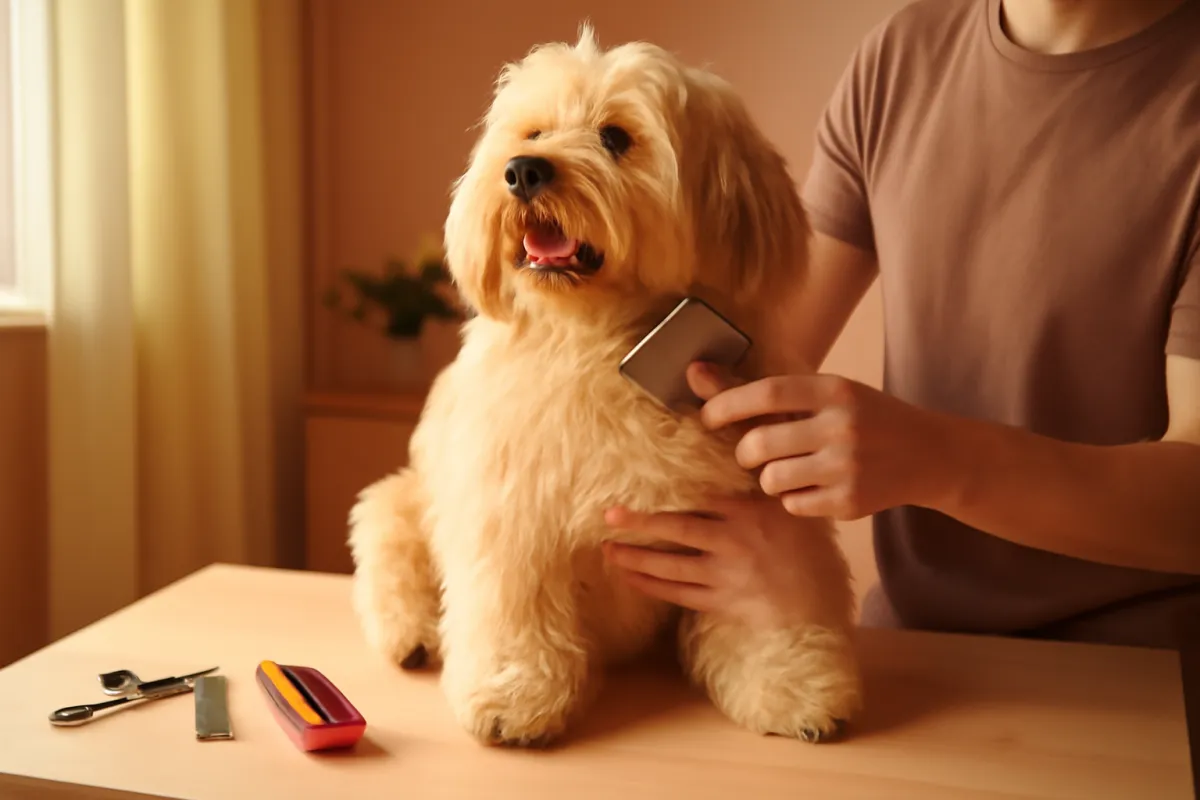
What's on this page
- The short answer: what dog grooming costs
- Dog grooming cost by service
- What a full groom includes
- Bath-and-brush versus a full groom
- Nail trims, ear cleaning, and add-on services
- De-shedding treatments and what they cost
- A grooming cost table by size and coat
- What drives dog grooming cost
- Size: the biggest price lever
- Coat type and matting
- Breed and the breed-specific cut
- Behavior and handling difficulty
- Location and local price differences
- Mobile grooming versus a salon
- DIY grooming at home
- Where the grooming budget goes
- Tipping your groomer
- How often your dog needs grooming
- Grooming frequency by breed and coat
- An illustrative year of grooming
- How to save on dog grooming
- Red flags at the grooming salon
- How grooming fits your bigger pet budget
- The bottom line
Short answer: A full-service groom commonly runs an illustrative $40 to $100 or more, a simpler bath-and-brush costs less, and a la carte extras like nail trims and de-shedding are priced on top. What you pay tracks your dog's size and coat far more than anything else, with your area, the salon, and any matting or handling difficulty moving the number from there.
Dog grooming cost is one of those pet expenses with no single sticker price, because the word “grooming” covers everything from a ten minute nail trim to a full breed-specific haircut on a large, heavily coated dog. A quick bath for a short-haired dog and a scissored show cut on a doodle both count as grooming, and they sit at opposite ends of the same price scale. Ask five owners what they pay per visit and you will hear five very different numbers, all of them correct for the dog and the service they are buying.
This cost read pulls those pieces apart into figures you can plan around, then hands you a grooming cost calculator so you can turn the ranges into a number for your own dog. It sits alongside our read on how much to tip a dog groomer for the etiquette, and our monthly cost of a dog read, where grooming is one of the biggest controllable lines.
Key takeaways
- A full-service dog groom commonly runs an illustrative $40 to $100 or more, driven mostly by your dog's size and coat type.
- A bath-and-brush costs less than a full haircut groom, while add-on services like nail trims and de-shedding are priced on top.
- Size and coat are the two biggest price levers: a large, heavily coated dog can cost two to three times what a small, short-coated one does.
- Mobile grooming and matting or difficult-dog handling add to the base price, while DIY at home trades your time for a much lower out-of-pocket cost.
- Every figure here is an illustrative planning range that varies by area, salon, and your individual dog, so confirm real prices locally.
The short answer: what dog grooming costs
For a typical pet dog, plan on an illustrative $40 to $100 or more for a full-service groom, meaning a bath, dry, brush-out, haircut or clip, nails, and ears in one appointment. A simpler bath-and-brush without a haircut lands lower, often an illustrative $25 to $60, and standalone services like a nail trim are cheaper still, commonly an illustrative $10 to $25. At the other end, a large or heavily coated dog getting a full groom plus de-shedding can run well past a hundred dollars.
The reason no single figure works is that grooming is not one product but a menu of services, priced by how much of a skilled groomer’s time your dog’s size and coat actually demand. A ten pound short-haired dog is quick to bathe, dry, and tidy. A seventy pound double-coated dog, or a curly coat that needs scissoring, is an hour or more of hands-on work. The price is essentially the length and difficulty of the appointment, converted into dollars.
The rest of this read builds those numbers up service by service and driver by driver, then hands you a worked example and a calculator so you can turn the ranges into a figure for your own dog. Treat every dollar amount here as an illustrative planning range rather than a quote, because real prices move with your city, your salon, and your dog’s specific coat and temperament.
Dog grooming cost by service
The clearest way to understand grooming cost is service by service, because most salons price a full groom as a base and then add extras. The chart below shows a representative price for the main services on one scale, from a standalone nail trim up to a full groom with de-shedding, as illustrative figures for a mid-sized dog. Your own numbers will shift with size, coat, and area.
Illustrative dog grooming cost by service
Representative price per service for a mid-sized dog, before size and coat adjustments. Illustrative, varies by region and salon.
A standalone nail trim sits at the bottom because it is minutes of work. A full groom bundles bathing, drying, clipping, and finishing into one longer appointment, and de-shedding or a mobile visit add to it.
The pattern behind the chart is simple: cost rises with the amount of skilled time each service takes. Nails are quick. A bath-and-brush adds washing and drying. A full groom layers a haircut and finishing on top. De-shedding and mobile service each add work or convenience of their own. Knowing where a service sits on that scale is most of understanding its price, and it is why bundling into one full groom usually costs less than buying every piece separately.
What a full groom includes
A full groom is the service most owners picture, and knowing what it bundles explains the price. A standard full groom typically includes a bath with dog-appropriate shampoo, a thorough dry, a full brush-out, a haircut or clip in a chosen style, nail trimming, ear cleaning, and often a light finish like a spritz or a bandana. Some salons also include anal gland expression and teeth brushing, or offer them as extras. It is several distinct jobs packaged into one appointment.
That bundle is why a full groom costs more than any single service but usually less than buying each piece a la carte. The groomer is already handling your dog, so adding the nails and ears to a bath and haircut is efficient. It is also why the full-groom price swings so widely: every step in the bundle takes longer on a bigger dog and a heavier coat, so the same list of tasks can be a forty-five minute job or a two hour one depending on the animal in the chair.
When you compare quotes, ask exactly what a salon’s full groom includes, because the list is not standardized. One salon’s base groom may cover glands and teeth while another charges for them, which makes a headline price hard to compare until you know what is inside it. The calculator lets you set a service level and see the full groom land inside your dog’s fuller cost picture.
Bath-and-brush versus a full groom
The most useful distinction in grooming pricing is between a bath-and-brush and a full groom, because it is often the biggest single choice you control. A bath-and-brush is exactly what it sounds like: a wash, a dry, a brush-out, and usually nails and a basic tidy, but no haircut. It commonly runs an illustrative $25 to $60 depending on size and coat, and it suits short-coated dogs that shed but do not need cutting, or long-coated dogs between full grooms.
A full groom adds the haircut, clip, or scissored style on top of everything a bath-and-brush includes, which is where much of the skilled time and cost lives. For a breed with a defined cut, a doodle, a poodle, a schnauzer, a spaniel, the styling is the hard part and the reason a full groom commonly runs an illustrative $40 to $100 or more. If your dog does not need cutting, you can often save meaningfully by booking bath-and-brush appointments and reserving full grooms for when the coat length genuinely calls for it.
Matching the service to the coat is one of the cleanest ways to keep grooming affordable without shortchanging your dog. A short-haired Labrador rarely needs a full haircut groom, so a bath-and-brush plus regular nails covers it. A curly or fast-growing coat genuinely needs the cut, so the full groom is not optional there. Deciding which category your dog falls into is the first step in setting a realistic grooming budget.
Nail trims, ear cleaning, and add-on services
Beyond the core groom sits a menu of add-on services, each priced for the few extra minutes it takes. A standalone nail trim is the cheapest, commonly an illustrative $10 to $25, and many salons and some vet clinics offer walk-in nail trims between grooms. Ear cleaning, anal gland expression, and teeth brushing are similar small extras, each often an illustrative $5 to $20 when bought on their own, though they are frequently folded into a full groom at no extra charge.
Other common add-ons carry a bit more. De-shedding treatments for heavy shedders, flea or tick baths, medicated or specialty shampoos, de-matting, and special-handling fees for anxious or aggressive dogs all sit on top of the base price. These extras are not upsells so much as pricing for genuinely extra work: a flea bath uses a specific product and process, and de-matting can add substantial time to an appointment. Ask which extras a salon charges for so the final bill does not surprise you.
The practical point is that the base groom price is a starting point, and the real total depends on which extras your dog needs. A well-maintained dog with a simple coat may pay close to the base figure, while a matted, heavily shedding, or hard-to-handle dog can add thirty percent or more in extras. Keeping up with brushing and regular visits at home is the most reliable way to keep those add-ons off your bill, a theme our monthly cost of a dog read returns to across the whole budget.
De-shedding treatments and what they cost
De-shedding deserves its own note because it is one of the most common extras and one owners often misunderstand. A de-shedding treatment is a specialized bath and blow-out using particular shampoos, conditioners, and tools to loosen and remove the dead undercoat of a double-coated breed. For heavy shedders like Huskies, German Shepherds, Golden Retrievers, and many northern breeds, it can dramatically cut the loose fur that ends up on your floors and furniture. It commonly adds an illustrative $15 to $40 or more on top of a bath or full groom, scaling with the dog’s size and coat volume.
Whether it is worth the extra is a genuine judgment call rather than a clear yes or no. For a household drowning in shed fur, a periodic de-shedding treatment during heavy shedding seasons can be well worth the cost, and it is gentler and more effective than trying to strip the undercoat yourself. For a light shedder or a single-coated breed, it is usually unnecessary. Ask your groomer whether your dog’s coat actually benefits, because paying for de-shedding on a coat that does not shed heavily is money spent for little return.
One important welfare note: de-shedding is not the same as shaving a double coat down, and reputable groomers will steer you away from shaving many double-coated breeds. That undercoat insulates against both heat and cold and does not always grow back the same, so removing the loose dead fur is the goal, not stripping the coat to the skin. A good groomer manages the shedding coat rather than eliminating it, which is one more reason the person matters as much as the price.
A grooming cost table by size and coat
Because size and coat drive the price more than anything, the clearest way to see grooming cost is a grid that crosses the two. The table below lays out illustrative full-groom and bath-and-brush ranges for a handful of common size-and-coat combinations. Every figure is a planning range rather than a quote, and all of them move with your area and the individual dog and salon.
| Dog size and coat | Bath and brush | Full groom | Full groom + de-shedding |
|---|---|---|---|
| Small, short-coated (e.g. Chihuahua, Beagle) | ~$20 to $30 | ~$30 to $45 | ~$40 to $55 |
| Small, long or curly (e.g. Shih Tzu, Poodle) | ~$30 to $40 | ~$45 to $65 | ~$55 to $80 |
| Medium, double-coated (e.g. Border Collie, Aussie) | ~$35 to $45 | ~$50 to $70 | ~$70 to $95 |
| Large, short-coated (e.g. Labrador, Boxer) | ~$35 to $50 | ~$45 to $65 | ~$65 to $90 |
| Large or giant, heavy coat (e.g. Golden, Newfoundland) | ~$50 to $70 | ~$70 to $110 | ~$100 to $160 |
Read across any row and the effect of coat is clear; read down any column and the effect of size is just as clear. A small short-coated dog is the cheapest case in every service, and a large heavy-coated one is the most expensive, with everything else in between. The combination of a big dog and a difficult coat is what pushes grooming into triple digits per visit. Use the table to place your own dog, then price it locally, because these ranges are a starting point, not a bill. Our dog cost by breed read shows how much this same coat factor drives lifetime grooming cost across breeds.
What drives dog grooming cost
Several factors move a grooming price up or down, and naming them turns a confusing quote into something you can roughly predict. Unlike some pet costs, where breed matters little, grooming is one place where the dog itself, specifically its size and coat, is the single biggest driver. The next sections take the main drivers one at a time, but it helps to see them together first.
Two things dominate. Size sets the baseline, because a bigger dog means more shampoo, more drying time, more coat to work through, and more physical effort to handle. Coat type is close behind, since a long, curly, or double coat takes far longer to bathe, dry, brush out, and style than a short one. After those come matting, which adds time and sometimes a separate fee, and breed-specific styling, where a defined cut demands skilled scissoring.
A second tier of factors fills in the rest. Your location sets local wage and rent levels that every salon prices against. Your dog’s behavior and handling difficulty can add a fee. The service venue, salon versus mobile versus a vet or big-box outlet, shifts the price. And add-on extras and frequency shape the total you pay across a year. The calculator lets you flex size, coat, service, and venue to watch the number move.
Size: the biggest price lever
Size is the first thing a groomer asks about, and for good reason: nearly every step of a groom takes longer on a bigger dog. A larger animal needs more shampoo and water, a longer dry, more time to brush and clip, and more physical effort to lift, hold, and position safely. Many salons build a size tier straight into their price list, with small, medium, large, and giant brackets, so two dogs with identical coats can pay very different prices purely on weight.

The effect is large enough that a giant breed can cost two to three times what a small dog pays for the same style of groom. A ten pound dog might be a thirty minute appointment, while a ninety pound one is a two hour job, and the price follows the clock. This is also why giant breeds with heavy coats sit at the very top of the range: they stack maximum size onto a demanding coat, and both drivers push in the same direction.
There is not much you can do about your dog’s size, but knowing it is the dominant lever helps you read a quote and plan realistically. If you are still choosing a dog, coat and size together are worth weighing for their lifetime grooming implications, a point our lifetime cost of a dog read folds into the bigger picture. If you already have a large dog, the savings come from coat maintenance and smart scheduling rather than from the size itself.
Coat type and matting
Coat type runs a very close second to size, and for some dogs it is the bigger factor of the two. A short, smooth coat is quick to wash, dry, and tidy, and often needs no cutting at all. A long, silky, curly, or wiry coat is a different job: it takes longer to bathe and dry thoroughly, needs careful brushing to prevent tangles, and usually requires skilled scissoring or clipping to shape. Double coats add heavy shedding and undercoat management on top. The more the coat demands, the longer the appointment and the higher the price.

Matting is where coat type turns into a real cost surprise. When a coat is left too long between grooms or is not brushed at home, it tangles into dense mats that are painful to brush out and slow to remove, and heavy matting can add a de-matting fee or force a shaved-down cut for the dog’s welfare. Groomers price de-matting by the time and difficulty involved, and severe cases can add substantially to the bill. The humane and cheaper answer is prevention: regular brushing and a consistent grooming schedule keep mats from forming in the first place.
The takeaway is that coat is partly fixed and partly in your hands. You cannot change your dog’s coat type, but you can control how well it is maintained between visits, which is the difference between a smooth, on-price groom and an expensive de-matting session. Brushing at home is genuinely the highest-return grooming habit there is, and it costs nothing but a few minutes.
Breed and the breed-specific cut
Breed enters the price mainly through the cut a coat calls for, not through the breed name itself. Some breeds carry a recognizable, defined style, a poodle’s trim, a schnauzer’s furnishings, a spaniel’s feathering, a doodle’s teddy-bear cut, and those styles take skilled hand-scissoring and shaping that a simple tidy does not. That craft is time-consuming and takes training to do well, which is why breeds with signature cuts tend to cost more to groom than their size alone would suggest.
Popular mixed breeds have made this factor more common. Doodles and other curly-coated crosses became widely popular partly on the promise of low shedding, but their coats are often high-maintenance and expensive to groom, prone to matting and needing frequent full grooms with careful scissoring. Many owners are surprised by the ongoing grooming cost of a coat they expected to be easy, which is worth knowing before choosing such a dog rather than after.
The practical angle is that you can often choose a simpler style to lower the cost. A shorter, more practical “puppy cut” or a low-maintenance clip is usually cheaper and faster than an elaborate breed-standard style, and it stretches the interval between grooms. Unless you need a show-ready look, telling your groomer you want an easy-care cut is a legitimate way to trim the price without compromising your dog’s comfort or hygiene.
Behavior and handling difficulty
A factor owners often overlook is how their dog behaves on the table, because grooming a calm dog and grooming an anxious or aggressive one are very different jobs. A dog that stands quietly is quick and safe to work on. A dog that squirms, panics, snaps, or has to be muzzled for safety takes longer, needs more care, and sometimes a second handler, and many salons charge a special-handling or difficult-dog fee to reflect that added time and risk. It is not a penalty so much as pricing for genuinely harder, slower work.
The stakes here are real for the groomer, who is using sharp tools near a moving animal, and for the dog, who has a worse experience when frightened. This is one place where the person and their patience matter as much as the price. A skilled, gentle groomer who takes time to keep an anxious dog calm is worth paying for, and building a consistent relationship with one groomer often makes each visit easier over time as the dog learns the routine.
You can lower this cost, and improve your dog’s life, by preparing for grooming early. Getting a puppy used to handling, brushing, nail trims, and being touched all over makes future grooming faster, safer, and cheaper, the same early-investment logic that runs through our dog training cost read. For an already anxious dog, a patient groomer, short low-stress sessions, and sometimes a vet’s advice on managing fear are the humane path, and mobile or one-on-one grooming can help too.
Location and local price differences
Where you live sets the floor under every grooming price, the same way it does for a vet visit or a training class. Grooming is a hands-on service delivered by a person, so its cost tracks local wages, rent, and general cost of living. The identical full groom on the identical dog can cost noticeably more in an expensive coastal metro than in a smaller town, purely because the salon’s own costs are higher. The service is the same; the price simply follows the local economy.
This is the single biggest reason to treat every figure in this read as a planning range rather than a quote. National averages blur together markets that behave nothing alike, and the number that actually matters is what two or three salons in your own area charge for your dog. A few quick calls or a look at local listings will tell you more than any published average, and it costs nothing but a few minutes.
Location also shapes what is available, not just what it costs. A dense metro may offer specialty groomers, mobile services, and breed experts, while a rural area might have one or two general salons and longer waits. Both the price and the menu of options are local, which is why the honest guidance is always to build your estimate from your own market. Our dog cost by breed read makes the same point about how location quietly scales nearly every line of dog ownership.
Mobile grooming versus a salon
Mobile grooming, where a fully equipped van comes to your home and grooms your dog in the driveway, has grown popular for good reasons, and it costs more accordingly. A mobile groom commonly runs an illustrative twenty to fifty percent more than a comparable salon visit, because you are paying for the van, the fuel and travel, and undivided one-on-one service at your door. Some mobile groomers also set a minimum fee that makes small dogs relatively pricier than they would be at a salon.
What that premium buys is genuine convenience and a calmer experience. There is no car ride, no waiting in a crate, no other barking dogs, and a single groomer works with your dog from start to finish. For anxious dogs, seniors who find a salon stressful, multi-dog households, and owners short on time, that low-stress, come-to-you service can be well worth the extra. It is one of the clearer cases where paying more buys something real rather than just a markup.
A standard salon remains the cheaper mainstream option and suits most dogs perfectly well, with the trade-off being the trip, the drop-off, and possibly a wait among other dogs. Big-box pet store grooming and vet-clinic grooming sit in the mix too, often at competitive prices, with vet-based grooming sometimes preferred for dogs that need sedation or medical care. The right venue is a balance of price, convenience, and your dog’s temperament, and the calculator lets you switch venues to see the effect on your total.
DIY grooming at home
At the opposite end from mobile service sits doing it yourself, which trades a professional’s time for your own and can lower the out-of-pocket cost substantially. After an upfront outlay on tools, a decent clipper set, a slicker brush and comb, dog shampoo, nail clippers or a grinder, and maybe a high-velocity dryer, an illustrative $50 to $200 or so all in, the per-session cost is mostly your effort. For a low-maintenance coat, home grooming can noticeably cut the annual grooming line.
The honest caveats matter, though. A full breed-specific haircut takes real skill and practice to do well, and a bad home cut is easy to manage but hard to make look right. Some coats, curly and heavily matted ones especially, are genuinely difficult to handle without training and the right tools. And clipping nails or handling a wriggling dog carries a real risk of nicking a nail’s quick or catching skin, so caution and patience are essential. Home grooming is not free of downside; it is a skill you build.
The sensible middle path most owners land on is a blend. Do the routine, low-skill maintenance at home, regular brushing, baths, and nail trims for a manageable coat, and pay a professional for the full haircut, the tricky styling, or the heavy de-shedding that is hard to do well yourself. That mix keeps the total down while leaving the skilled work to skilled hands, and it is the same smart-blend logic that keeps other pet costs in check, as our monthly cost of a dog read lays out.
Where the grooming budget goes
It helps to see where the money inside a single full groom actually goes, because it explains why the price is what it is. The chart below splits a representative full groom into the main blocks of work as shares of the total, rather than dollars, to show that most of the cost is time-intensive hands-on labor rather than product.
Where a full groom's cost goes
Representative split of the work inside one full groom, as shares of the total. Illustrative, not dollars.
Most of a groom's cost is skilled hands-on time: bathing and drying, then cutting and styling, make up the bulk, with nails, ears, and the handling of a live animal filling out the rest.
The shape of that split explains why grooming resists deep discounting: you cannot skip the bathing, drying, or handling and still get a clean, safe groom, and the cutting is the skilled part you are really paying for. It also shows why size and coat move the price so much, because they lengthen every one of those blocks at once. When a groom feels expensive, the honest frame is that you are buying one to three hours of skilled, physical, one-on-one work, not a product off a shelf.
Tipping your groomer
Tipping is part of the true cost of grooming, so it belongs in your budget even though it is not on the price list. The short version is that a commonly cited tip for dog grooming is roughly fifteen to twenty percent of the service total, calculated on the full amount including any extras. On an illustrative sixty dollar groom that is about nine to twelve dollars, and many owners tip toward the higher end or above it for a difficult dog, heavy matting, or exceptional work.
Because tipping has its own etiquette, who receives it, whether you tip a salon owner, and how holidays factor in, we cover it in full in our dedicated read on how much to tip a dog groomer rather than repeating it all here. For budgeting purposes, the practical move is to fold roughly fifteen to twenty percent on top of the groom price so the tip is planned rather than a surprise at the counter. Added across a year of regular grooming, it is a real line worth accounting for.
How often your dog needs grooming
Frequency matters as much as the per-visit price, because the annual cost is the visit price multiplied by how often you go. There is no universal schedule, since it depends heavily on the coat: a fast-growing or heavily coated dog may need a full groom every four to six weeks, while a short-coated dog may need professional grooming only a few times a year, mostly for baths and nails. The more often the coat needs attention, the higher the yearly total, even when each visit is modestly priced.
The trade-off is that frequent grooming spreads the cost into smaller, regular amounts but adds up over twelve months, while stretching intervals too far invites matting that costs more to fix than the visits you skipped. That is the false economy to avoid: a dog groomed on the right schedule for its coat almost always costs less over a year than one groomed too rarely and then needing dematting or a shaved-down reset. Regular is usually cheaper than occasional-but-neglected.
Home maintenance is the lever that changes the equation. An owner who brushes regularly and does baths and nails at home can safely stretch professional grooms further apart, lowering the annual count without letting the coat suffer. Ask your groomer what schedule genuinely suits your dog’s coat, and treat that as a recurring budget line rather than a series of one-off appointments. The calculator lets you set a visit frequency and see the annual grooming cost it produces.
Grooming frequency by breed and coat
Because frequency follows coat, it is worth grouping breeds by roughly how often they need professional grooming. Short, smooth coats (Beagles, Boxers, many hounds) need the least, often just occasional baths and regular nail trims, sometimes only a few professional visits a year. Double-coated breeds (Labradors, Shepherds, Huskies) shed heavily and benefit from periodic bath-and-brush or de-shedding sessions, especially during shedding seasons, but rarely need cutting.
Long or silky coats (Shih Tzus, Yorkies, Maltese) need frequent brushing and regular full grooms, commonly every four to eight weeks, to prevent matting and keep the coat manageable. Curly and wiry coats (Poodles, doodles, many terriers) are the most demanding of all, typically needing a full groom every four to six weeks with skilled scissoring, which makes them the most expensive to keep up over a year despite often being low shedders.
Knowing your dog’s category turns frequency from a guess into a plan. It also reframes the per-visit price: a curly-coated dog groomed monthly can cost more per year than a large short-coated dog groomed a few times, even if the single-visit price looks similar. If you are still choosing a dog, this ongoing frequency is exactly the kind of lifetime cost worth weighing early, as our lifetime cost of a dog read sets out across a dog’s whole life.
An illustrative year of grooming
Numbers land better carried all the way through, so here is one illustrative year of grooming for a medium-sized, moderately coated dog in an average-cost area. The figures are planning numbers, not quotes, and your own will move with your region, your dog’s coat, and the salon you choose.
Picture a forty pound dog with a coat that needs a full groom roughly every eight weeks, so about six full grooms a year at an illustrative $65 each, which comes to around $390. Between those, the owner books a couple of bath-and-brush visits during heavy shedding at an illustrative $40 each, adding $80. Nails are handled at home most of the time, with the occasional salon nail trim folded into the grooms. Adding a customary fifteen to twenty percent tip across the visits, roughly $75 for the year, brings the total to an illustrative $545 or so for a full year of grooming.
Set that beside a large, heavily coated dog and the number climbs, and beside a short-coated dog that needs only a few baths and nail trims it falls well below. That spread is the whole point: grooming is not one cost but a range set mostly by your dog’s size and coat and how often the coat needs work. Run your own dog through the calculator to see where your year lands, and see our first-year dog read for how grooming fits the wider cost of a new dog.
How to save on dog grooming
You can bring grooming costs down meaningfully without shortchanging your dog, as long as you pull the right levers. The single biggest one is brushing at home between appointments, because it prevents the matting that triggers de-matting fees and shaved-down resets, and it keeps every groom quicker and closer to the base price. A few minutes of brushing a week is the highest-return grooming habit there is, and it costs nothing.
The other reliable moves are about format, frequency, and shopping well:
- Match the service to the coat. Book bath-and-brush appointments for a dog that does not need cutting, and reserve pricier full grooms for coats that genuinely require the haircut.
- Choose a simpler style. A practical, low-maintenance cut is usually cheaper and faster than an elaborate breed-standard one, and it stretches the interval between grooms.
- Do the basics at home. Learning to bathe and trim nails on a manageable coat reduces how often you pay for a professional, especially for short-coated dogs.
- Ask about packages and off-peak rates. Loyalty plans, prepaid multi-groom deals, and weekday or off-season appointments can lower the per-visit price at many salons.
- Compare local salons. Prices and included services vary widely, so a few calls can save real money and tell you exactly what each base groom covers.
The corner never to cut is grooming a coat genuinely needs. Letting a heavily coated dog go too long to save money usually backfires into painful matting, a worse experience for the dog, and a bigger bill to fix. Save on frequency and style where the coat allows, do the maintenance yourself, and keep the professional grooms your dog truly needs on schedule, the same smart-savings logic our how to lower your vet bills read applies to medical care.
Red flags at the grooming salon
Because grooming is a hands-on service performed on an animal that cannot speak for itself, choosing a good salon matters as much as the price, and a few warning signs are worth heeding. Be cautious of a groomer who will not let you see the grooming area or explain how dogs are housed and handled while they wait. A reputable salon is comfortable showing you where dogs are kept, whether cage dryers are used and monitored, and how long a dog is typically there, and evasiveness on any of that is a reason to look elsewhere.
Watch, too, for pressure to shave a double coat without a genuine welfare reason, or a dismissive attitude toward your dog’s stress or your questions. A good groomer explains why they recommend a cut, respects a double coat’s function, and treats a frightened dog with patience rather than force. Rough handling, a refusal to use a muzzle safely when needed, or a groomer who seems rushed and irritable with animals all point the wrong way, and no price is low enough to make them acceptable.
Price itself carries a smaller flag in both directions. A quote far below every other salon in your area may mean corners cut on time, safety, or care, while a very high price is not automatically better grooming. The right salon is the one that handles your dog gently and competently, is transparent about its process, and charges a fair local rate for the work, which you find by asking questions and, ideally, a good recommendation. Choosing the groomer as carefully as the price protects both your money and your dog.
How grooming fits your bigger pet budget
Grooming is one line in a much larger budget, and seeing it in context keeps it in proportion. On its own, a triple-digit groom on a big doodle can feel steep; against the full cost of owning a dog, and with the coat maintained and the schedule sensible, grooming is a manageable recurring line rather than a shock. For most dogs it is a predictable, plannable expense once you know the coat and the frequency.
Across the year, grooming sits alongside food, preventatives, routine vet care, and the occasional extra, the full stack our monthly cost of a dog read and first-year dog read break down. For a short-coated dog it is a minor line; for a curly or heavily coated one it can rival the food bill, which is worth knowing before choosing such a dog. Over a whole life it adds up to a meaningful total, the kind our lifetime cost of a dog read tallies across the years.
The reason to fold grooming into the bigger budget rather than treat it as a standalone surprise is that it makes the whole thing calmer and clearer. A groom you have planned and saved for is just a line item, and a coat you maintain at home is cheaper to keep up at the salon. The calculator is built to show grooming in that fuller frame, so you can see it as the routine, controllable cost it usually is.
The bottom line
Dog grooming cost ranges from an illustrative $10 to $25 for a standalone nail trim to $100 or more for a full groom on a large, heavily coated dog, and the honest answer to what it costs is always another question: which service, for what size and coat, where, and how often. A bath-and-brush is the affordable core for dogs that do not need cutting, a full groom adds the skilled haircut, and extras like de-shedding and difficult-dog handling sit on top. Size and coat move the price more than anything else.
The smart approach is to match the service to your dog’s coat, maintain that coat at home to keep every groom quick and on-price, and keep the schedule the coat genuinely needs rather than stretching it into costly matting. Do the routine maintenance yourself where you safely can, pay a good professional for the skilled work, and budget the tip alongside the groom. Choose the salon as carefully as the price, watching for the red flags that no discount excuses. Build your estimate from local prices, run the calculator to see grooming inside your fuller pet budget, and treat every figure here as an illustrative starting point rather than a quote.
A closing note from the MuttMark team: this cost read is here to help you plan and compare, and it is not professional grooming, veterinary, or financial advice. Every figure, from the per-service prices to the size-and-coat table and the worked year, is an illustrative planning estimate rather than a quote, and your real cost will move with your area, your salon, your dog’s size and coat, and any matting or handling your dog needs. Grooming is also a welfare matter as much as a budget one: a coat left too long can mat painfully, some double coats should not be shaved, and a frightened dog deserves patience over force, so choose a gentle, transparent groomer and never trade your dog’s comfort for a lower price. Use these numbers to set a budget and ask good questions, and leave the hands-on grooming, and any decision about your dog’s coat or skin health, to qualified professionals who can see your dog in person.
Frequently asked questions
How much does dog grooming cost?
As an illustrative range, a full-service dog groom commonly runs somewhere around forty to a hundred dollars or more, driven mostly by your dog's size and coat type. Small, short-coated dogs sit at the lower end, while large or heavily coated dogs sit at the higher end. A basic bath-and-brush costs less than a full haircut and style, and add-on services like nail trims, de-shedding, or heavy dematting are priced on top of the base groom. Treat these as planning figures and confirm real prices with salons near you, because grooming cost moves with your area, the salon, and your specific dog.
How much is a full groom for a dog?
A full groom, meaning a bath, dry, brush-out, haircut or clip, nails, and ears together, commonly runs an illustrative thirty to forty-five dollars for a small, short-coated dog and climbs toward seventy to over a hundred dollars for a large or heavily coated one. The single biggest reason for the spread is size, followed closely by coat type, because a long or curly coat takes far longer to bathe, dry, and scissor than a short one. Breed-specific styling, matting, and a difficult-to-handle dog all add time and cost. The figure is a planning range rather than a quote, so price it against two or three local salons for your own dog.
Why is dog grooming so expensive?
Grooming feels expensive because you are paying for skilled, hands-on, physically demanding work that often takes one to three hours per dog, plus the equipment, products, water, and premises behind it. A groomer bathes, dries, brushes out, clips, and scissors a live animal that may be anxious or hard to hold still, which is slower and riskier than it looks. Larger dogs, heavier coats, and matting all lengthen the appointment and raise the price accordingly. Viewed as an hourly skilled service rather than a product, the cost tracks the time and care involved, and the honest way to judge it is per hour of work, not against a human haircut.
Is mobile dog grooming more expensive than a salon?
Yes, mobile grooming usually costs more than a comparable salon visit, commonly an illustrative twenty to fifty percent more, because you are paying for a self-contained van, the groomer's travel, and one-on-one service at your door. What that premium buys is real convenience and calm: no car ride, no cage waiting, no other dogs, and a single groomer working with your dog start to finish, which suits anxious dogs, seniors, and busy owners well. The exact upcharge varies by area and provider, and some mobile groomers set a minimum fee. If price is the priority a salon is usually cheaper, while mobile earns its premium on convenience and low-stress handling.
How much should I tip a dog groomer?
A commonly cited tipping range for dog grooming is roughly fifteen to twenty percent of the service cost, calculated on the total including any extras. On an illustrative sixty dollar groom that is about nine to twelve dollars, and many owners tip toward the higher end or above it for a difficult dog, heavy matting, or exceptional work. Tipping is customary and appreciated in most grooming settings, though it is ultimately your choice. We cover the full etiquette, including who receives the tip and holiday tipping, in our dedicated read on tipping a dog groomer, so treat fifteen to twenty percent here as the planning default for your budget.
How often does a dog need professional grooming?
Grooming frequency depends heavily on the coat, so there is no single schedule. A heavily coated or fast-growing breed may need a full groom every four to six weeks, while a short-coated dog may need professional grooming only a few times a year or mainly for the occasional bath and nails. Coat type, how much you brush and maintain at home, shedding, and your tolerance for upkeep all shift the number. More frequent grooming spreads the cost into smaller regular amounts but adds up across a year, so plan it as a recurring line. Ask your groomer what schedule suits your dog's coat, since stretching intervals too far often leads to matting that costs more to fix.
Is it cheaper to groom my dog at home?
Grooming at home is much cheaper per session in out-of-pocket terms, since after an upfront outlay on clippers, a good brush, shampoo, and nail tools you mostly pay in your own time and effort. For a low-maintenance coat, learning to bathe, brush, and trim nails at home can noticeably lower the annual grooming line. The honest caveats are that a full breed-specific haircut takes real skill and practice to do well, some coats are genuinely difficult to manage without training, and clipping nails or handling a squirming dog carries a risk of injury if you are not careful. Many owners land on a sensible blend: routine baths and nails at home, and a professional groom for the full haircut.
How can I lower my dog grooming costs without skimping?
The honest savings in grooming come from maintenance and planning rather than skipping care your dog genuinely needs. Brushing at home between appointments prevents matting, which is one of the most common reasons a groom costs extra, and keeping a regular schedule avoids the pricier dematting or shaved-down cuts that neglected coats require. Learning to do nails or baths at home for a manageable coat reduces visit frequency, and choosing a simple, practical style over an elaborate one lowers the base price. Package deals, loyalty plans, and off-peak appointments can help too. As with the rest of pet care, trimming the extras and the frequency thoughtfully is fine, while skipping grooming a coat truly needs tends to cost more later.