

What's on this page
- The short answer: what a dog walker costs
- Dog walker cost by walk length and format
- The 30-minute walk, the default unit
- The 60-minute walk and when it earns the extra
- The 20-minute potty break
- Group walks versus solo walks
- What the rate actually pays for
- App platforms versus an independent walker
- Dog walker cost per week
- Dog walker cost per month
- A dog walker cost table by frequency
- Frequency is the lever, not the rate
- Second dogs, puppies, and add-on charges
- Where you live and how much it moves the rate
- Weekend, evening, and holiday pricing
- Last-minute bookings and cancellation windows
- Packages, retainers, and prepaid blocks
- Tipping a dog walker
- Insurance, bonding, and vetting your walker
- Keys, access, and what usually goes wrong
- A walker, daycare, or a neighbour
- A worked example: one dog, five walks a week
- How to lower your dog walking costs without cutting care
- Where dog walking fits in your monthly pet budget
- The bottom line
Short answer: A 30-minute solo walk commonly runs an illustrative $20 to $30, a 60-minute solo walk about $30 to $45, and a 30-minute group walk about $15 to $22. The rate is the small story. Frequency is the big one, because five walks a week turns a modest per-visit price into an illustrative $550 a month in scheduled walks alone.
Dog walking is the pet expense that hides in plain sight. Nobody budgets for it before getting a dog, because the walk is the part everyone assumes they will do themselves. Then a job changes, a commute stretches, a knee gives out, or a puppy turns out to need three outings a day rather than one, and suddenly there is a recurring service line on the credit card that quietly outgrows food, grooming, and insurance combined. Ask five owners what a dog walker costs and you will hear anything from twenty dollars a week to nine hundred dollars a month, and every one of them will be telling the truth about what they bought.
This cost read prices the walk itself, then the schedule, then the extras nobody quotes upfront, and hands you a dog walking cost calculator so the ranges become your own number. It sits alongside our monthly cost of a dog read and our lifetime cost of a dog read, which reference walking as a line item without ever pricing it properly.
Key takeaways
- A 30-minute solo walk commonly runs an illustrative $20 to $30, a 60-minute solo walk $30 to $45, and a 30-minute group walk $15 to $22.
- Frequency, not the rate, decides the bill. Five weekday walks a month is about 22 walks, so a $25 walk becomes $550 before a single extra.
- Group walks cost meaningfully less because one walker's half hour is shared, but your dog's actual walking minutes can be shorter than the booked window.
- Platforms charge for convenience, cover, and a dispute process. The same walker booked directly is often cheaper and more consistent, with none of that backup.
- In an illustrative daily-walking month, the scheduled walks are only about 75 percent of the total. Tips, weekends, and premiums are the rest.
The short answer: what a dog walker costs
For one healthy, well-socialised, mid-sized dog in an average-cost area, plan on an illustrative $20 to $30 for a 30-minute solo walk, with $25 a fair midpoint. A 60-minute solo walk commonly runs $30 to $45, with something near $38 a reasonable middle. A short 20-minute potty break sits around $12 to $20, midpoint near $16, and a 30-minute group walk commonly runs $15 to $22, midpoint near $18.
Those are the numbers that behave predictably. What makes real dog walking bills feel unpredictable is everything layered on top of them: weekend and evening premiums, holiday rates, last-minute booking fees, second-dog charges, tips, and the fact that a walk repeats. A single walk is cheap. Twenty-two of them in a month is a car payment.
The rest of this cost read builds the number the way the bill actually assembles: the walk itself, then the format, then who you book through, then the schedule, then the extras, then the tip. Every dollar figure here is an illustrative planning range rather than a quote, and walking rates move sharply between a dense city centre and a small town, so confirm local numbers before you commit to a schedule.
Dog walker cost by walk length and format
The two variables that set the base rate are how long the walk is and how many dogs share it. Everything else adjusts a number those two have already decided. The chart below puts representative per-walk rates for one mid-sized dog on a single scale so the gaps are visible without arithmetic.
Illustrative dog walker cost per walk by length and format
Representative weekday rate for one mid-sized dog in an average-cost area, before tips, premiums, and add-ons. Illustrative planning figures, not quotes.
The ladder tracks how much of one person's committed time you are buying. A group walk splits that time between households, a solo walk buys all of it, and a second dog from the same home adds handling without adding travel.
Reading that chart as a quality ranking would be a mistake. A 20-minute potty break is not a worse walk; it is a different job, aimed at a dog who needs relief and a change of scene at midday rather than an hour of exercise. A group walk is not a cheap solo walk; it is a social outing with different risks and different benefits. Pick the product your dog needs, then price that product.
The 30-minute walk, the default unit
The half-hour walk is the industry’s standard unit, and it is the number most quotes are built around. At an illustrative $20 to $30, it covers a walker arriving, leashing your dog, getting out for a genuine walk of twenty to twenty-five minutes once the logistics are subtracted, coming back, refreshing water, wiping muddy paws, and sending you a note or photo.
It suits most adult dogs on a midday break during a working day. It is enough to empty a bladder, burn off restlessness, provide some sniffing and mental stimulation, and reset a dog who would otherwise be alone for nine or ten hours. For a moderate-energy adult of average size, one half-hour walk at midday on top of your own morning and evening walks is a reasonable baseline.
Where it falls short is with high-drive dogs, adolescents, and dogs with genuine exercise needs that outstrip a short outing. If your dog is destructive, vocal, or wired in the evening despite a daily half-hour visit, the honest read is usually that the dose is too small rather than that the dog is difficult. Our dog training cost read covers the other half of that equation, since under-exercised dogs often get labelled as training problems.
The 60-minute walk and when it earns the extra
An hour-long walk at an illustrative $30 to $45 costs roughly half again what a half hour does, not double, and that is the single most useful pricing fact in this whole cost read. The reason is structural: a large share of every visit is fixed regardless of duration. Driving between clients, parking, key handling, leashing up, water, paws, and the visit report all cost the walker the same whether the walk is thirty minutes or sixty.
So the marginal cost of the second half hour is mostly just the walker’s time, which is why it prices lower than the first. At $25 for thirty minutes you are effectively paying near $50 an hour of walking. At $38 for sixty minutes you are paying near $38 an hour. If your dog needs the exercise, the longer walk is better value per minute, full stop.
That does not make it the right buy for every dog. A senior with joint pain, a recovering post-surgical dog, or a small dog with a modest range may get nothing from the extra thirty minutes except sore legs. Our senior dog care costs read covers how exercise needs change as a dog ages, and the shorter, more frequent visit is often the better structure for an older dog.
The 20-minute potty break
The short visit, usually branded as a potty break, a drop-in, or a quick visit, prices at an illustrative $12 to $20. It buys a walker coming to the house, letting your dog out for relief and a short stretch, topping up water, sometimes giving a midday meal or medication, and leaving. It is not an exercise service and should not be sold to you as one.
It earns its place in three situations. Puppies who physically cannot hold a bladder through a working day need frequency, not distance, and two short visits often beat one long one. Seniors and dogs with medical conditions may need relief and medication on a schedule rather than a workout. And households where the human walks the dog properly morning and evening may only need the midday gap covered.
The trap is buying potty breaks for a dog whose real problem is under-exercise, because it is the cheapest line on the menu. That saves an illustrative nine dollars a visit and does nothing for the behaviour that made you hire a walker. Price the visit your dog needs and then look for savings in frequency or format, not by downgrading the service into something that does not solve the problem.
Group walks versus solo walks
A group walk is cheaper because one walker’s half hour is divided across several households. At an illustrative $15 to $22 for thirty minutes against $20 to $30 solo, the per-walk gap looks small, but across twenty-two walks a month it is an illustrative $154 difference, and across a year it is well over $1,800.
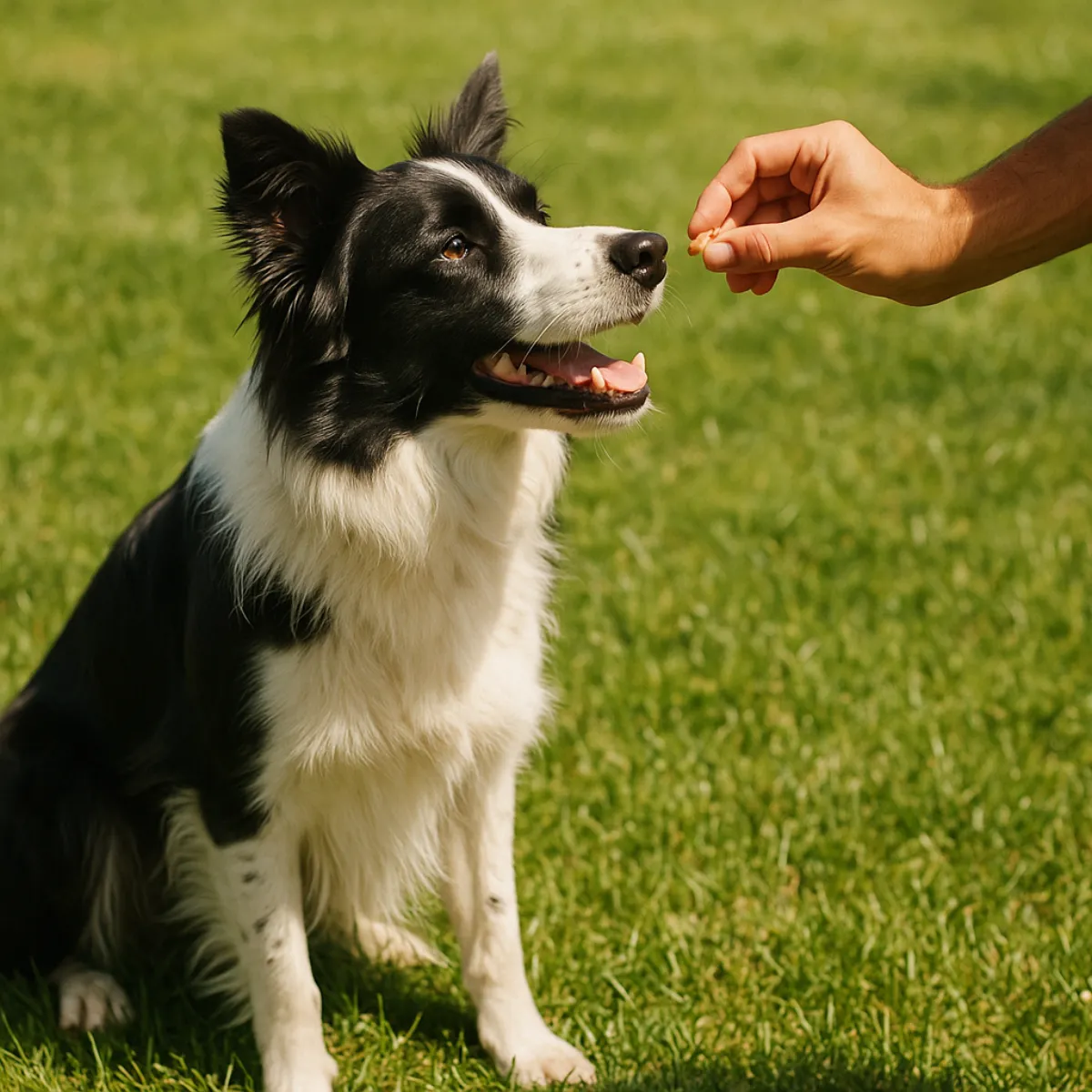
The honest trade-offs are worth stating plainly. Group walks usually involve collecting and dropping off other dogs, so a booked thirty-minute window may contain fifteen to twenty minutes of actual walking for your dog. Groups require a dog who is genuinely comfortable with unfamiliar dogs, and the walker’s control of a group of four is not the same as their control of one. On the other side, many dogs love the company, and a well-run group is enrichment your solo walk cannot provide.
Ask three specific questions before you buy the saving. How many dogs are in a group at maximum. How are dogs matched by size, energy, and temperament. And how much of the booked window is my dog actually walking. A walker who answers all three precisely is running a group properly. A vague answer is a price signal in disguise.
What the rate actually pays for
The reason dog walking looks expensive relative to the visible work is that the visible work is maybe half of it. A walker’s rate has to cover the walk, the travel between clients, the unpaid gaps in a fragmented midday schedule, fuel and vehicle wear, phone and scheduling software, liability insurance, taxes on self-employment income, and the days they cannot work because they are sick or a client cancelled.
A walker doing five walks a day at an illustrative $25 is not earning $125 an hour. They are earning $125 across a working window that often spans five or six hours once travel is included, before any of those costs come out. That is worth understanding not to make you feel guilty about the price but because it explains which savings are real and which ones just squeeze someone into cutting corners.
It also explains the pricing patterns you will run into. Walkers cluster their clients geographically because travel is dead time. They favour regular weekly schedules over ad-hoc bookings because a predictable route is worth more than a full one. And they price the second dog in a household cheaply because it is the one addition that adds revenue without adding travel. Understanding the model lets you ask for the discounts that actually exist.
App platforms versus an independent walker
Booking through a platform and booking an independent walker directly are genuinely different purchases at genuinely different prices, and the cheaper one is not automatically better.
A platform gives you speed of matching, vetted profiles with reviews, in-app payment and messaging, GPS-tracked walk reports, and, crucially, a substitute when your regular walker is ill or on holiday. It also gives you a support channel and a dispute process if something goes wrong. That infrastructure is paid for by fees layered onto the client price and taken out of the walker’s rate. Exact fee structures differ between platforms and change over time, so ask for the current schedule in writing rather than assuming a number from a friend or an old article.
An independent walker usually quotes less for the identical walk, because nothing sits between you and them, and they typically keep tips in full. You also tend to get more consistency, since it is the same person and the same route every day, which matters more to an anxious dog than any app feature. What you give up is the backup walker, the platform’s coverage, and the recourse if a walk goes badly. Neither model is wrong; know which one you bought.
Dog walker cost per week
Weekly is the unit most owners actually feel, because it matches how the schedule is set. At an illustrative $25 per 30-minute solo walk, one walk on each weekday is $125 a week in scheduled walks. Three walks a week is $75, two is $50, and a single weekly walk is $25.
Swap the format and the week reshapes fast. Five 30-minute group walks at $18 is $90 a week. Five 60-minute solo walks at $38 is $190 a week. Five 20-minute potty breaks at $16 is $80 a week. Twice-daily half-hour solo walks across five weekdays is $250 a week, which is where dog walking stops being a line item and starts being a budget category of its own.
Those weekly figures are before tips and before any weekend or holiday premium, which is exactly how most owners first estimate the cost and exactly why the first month’s statement comes as a surprise. Once tips and occasional extras are folded in, a five-walk week at the standard rate averages closer to an illustrative $169 across the year than the $125 the schedule suggests. Run your own version through the calculator rather than trusting the schedule maths.
Dog walker cost per month
Monthly is where dog walking has to be budgeted, and it involves one piece of arithmetic that trips people up. A month is not four weeks. There are about 4.33 weeks in an average month, so five walks a week is about 22 walks a month, not 20. Three a week is about 13. Seven a week is about 30. That extra fifth week appears roughly four times a year and it is real money.
At an illustrative $25 per walk, twenty-two walks is $550 a month in scheduled walks alone. At the group rate of $18 it is $396. At the 60-minute solo rate of $38 it is $836. Those are the base numbers before tips, weekend walks, holiday rates, or a second dog.
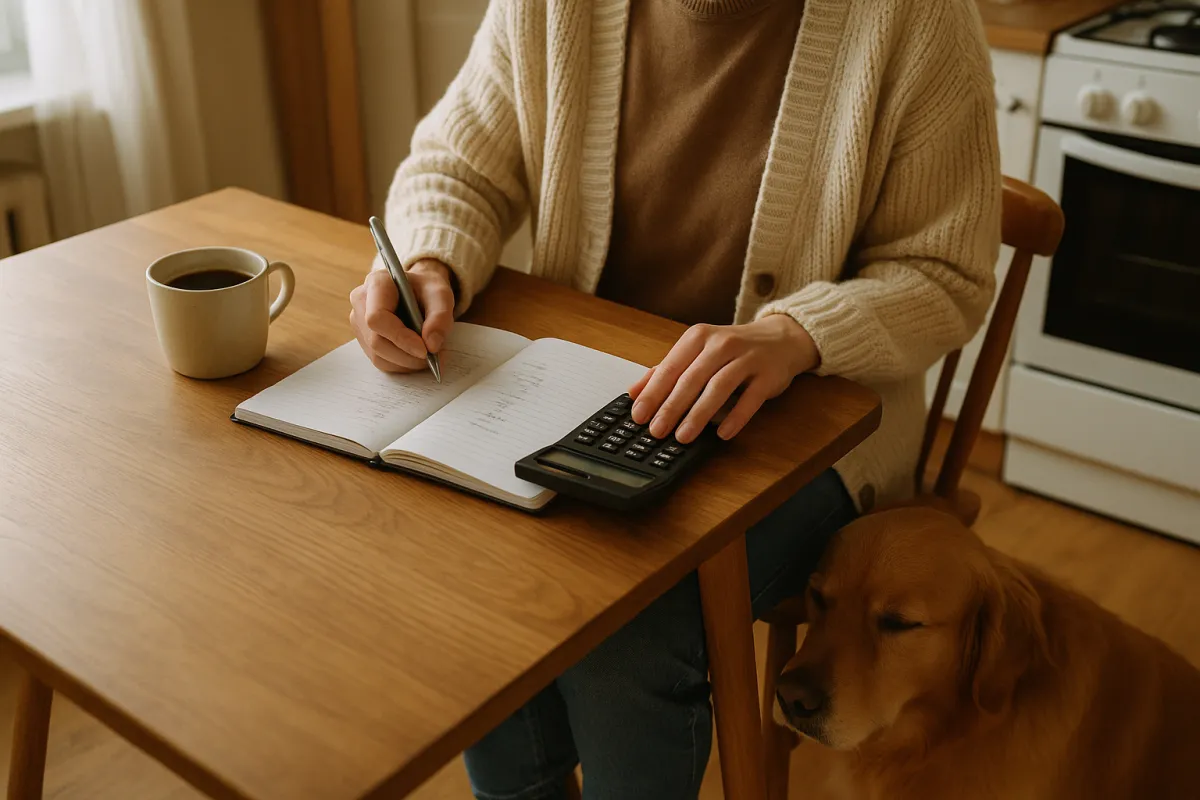
Set against the wider picture, a $550 monthly walking line is often larger than food, insurance, and routine veterinary care put together for a healthy adult dog. Our read on what a dog costs per month sizes those other lines, and walking is the one most likely to dwarf them once it goes daily.
A dog walker cost table by frequency
The table below crosses walk format against frequency, using the same illustrative rates as the chart and the same 4.33-weeks-per-month arithmetic. Figures are monthly and exclude tips, premiums, and add-ons.
| Schedule | Walks a month | 20-min break ~$16 | 30-min group ~$18 | 30-min solo ~$25 | 60-min solo ~$38 |
|---|---|---|---|---|---|
| 1 day a week | 4 | $64 | $72 | $100 | $152 |
| 2 days a week | 9 | $144 | $162 | $225 | $342 |
| 3 days a week | 13 | $208 | $234 | $325 | $494 |
| 5 weekdays | 22 | $352 | $396 | $550 | $836 |
| 7 days a week | 30 | $480 | $540 | $750 | $1,140 |
| Twice daily, weekdays | 43 | $688 | $774 | $1,075 | $1,634 |
Read down a single column and the story is frequency. Read across a single row and the story is format. The gap between the cheapest realistic schedule on this table and the most expensive is more than twenty-five times, and almost none of that spread comes from the headline rate. It comes from decisions about how often and what kind.
The other thing the table shows is where the cliff is. Moving from three days to five days a week is a jump of an illustrative $225 a month at the solo rate. That single decision costs more per year than most dogs’ entire routine veterinary bill, which is worth weighing honestly against whether the dog needs five visits or you simply booked the default.
Frequency is the lever, not the rate
Owners negotiate the rate and accept the frequency, which is backwards. Talking a walker down from $25 to $23 saves an illustrative $44 a month at five walks a week. Dropping from five walks to four saves an illustrative $108 a month at the original rate, without asking anyone to work for less.
That is not an argument for under-serving your dog. It is an argument for deciding the schedule deliberately rather than defaulting to every weekday because that is what the booking form suggests. Plenty of households genuinely need five. Plenty of others need three, with the other two days covered by a longer morning walk, a work-from-home day, or a neighbour who is already out.
The practical exercise is to write down each weekday, mark which ones you are genuinely out of the house for nine hours or more, and only buy walks for those. Then look at whether the days you do buy should be longer rather than more numerous, since the hour prices better per minute than the half hour. A four-day schedule of 60-minute walks at $38 is an illustrative $658 a month, against $550 for five half-hours, and it may serve a high-energy dog considerably better.
Second dogs, puppies, and add-on charges
A second dog from the same household is the cheapest additional dog you will ever buy walking for. An illustrative add-on is $8 to $12 on a solo walk, a flat charge rather than a second full rate, because the travel, the key handling, and most of the visit are shared. That makes a $25 half-hour walk about $35 for two dogs, and a $38 hour walk about $48.
Puppies often price differently, and for good reason. A young puppy needs shorter, more frequent visits, may not be fully vaccinated and therefore cannot go to public walking areas yet, and needs handling that is closer to supervision than to walking. Some walkers charge a small premium for that; others simply route puppies into the short-visit service. Our puppy budgeting read covers where that fits in a first-year plan, and the dog vaccination schedule read explains why the early weeks constrain where a puppy can go.
Other common add-ons include administering medication, giving a midday meal, brushing or paw cleaning beyond the basics, plant watering and mail collection while you travel, and transport to a groomer or clinic. Each is usually a modest per-visit charge. Individually they are small; on a daily schedule they compound, so ask for the full price list at the meet-and-greet rather than discovering them line by line.
Where you live and how much it moves the rate
Geography moves dog walking prices more than almost any other pet service, because the cost is fundamentally somebody’s time in your specific neighbourhood. In dense, expensive city centres, walking rates commonly sit an illustrative twenty to forty percent above the midpoints used here. In small towns and lower-cost regions they commonly sit fifteen to twenty-five percent below.
The mechanism is not just local wages. In a dense urban area, a walker can serve more clients with less driving, which should push prices down, but demand is far higher, apartment living means dogs genuinely cannot relieve themselves without a human, and the walker’s own cost of living is higher. Those forces net out well above suburban rates. In sprawling suburbs the opposite pressure dominates: fewer clients per mile driven means each walk absorbs more travel time, which supports a higher rate than the local wage level alone would suggest.
The practical move is to treat every number in this cost read as an average-cost-area midpoint and calibrate it with two or three local quotes before you budget. A quote that comes in far below your local cluster is worth asking questions about rather than celebrating, because the usual explanations are a larger group size, a shorter actual walk, or no insurance.
Weekend, evening, and holiday pricing
Weekday midday is the cheapest window because it is the walker’s core route. Everything outside it competes with the walker’s own time off, and it prices accordingly.
Weekend and evening walks commonly carry an illustrative premium of around $5 a walk, sometimes framed as a flat surcharge and sometimes as a separate weekend rate. Major holidays are the sharpest step, and holiday rates commonly run an illustrative 1.5 to 2 times the standard walk price, occasionally with a minimum booking. Some walkers close entirely on certain days, which is a scheduling problem rather than a pricing one and is worth knowing in advance.
None of that is opportunism. Someone is choosing to work on a day almost everyone else has off, and the alternative is your dog waiting ten hours. The budgeting response is to stop treating holiday premiums as surprises and start averaging them into the monthly figure. Two or three holiday walks a year plus a handful of weekend walks is an illustrative $28 a month spread across twelve months, and once it is in the plan it stops feeling like a shock. The same logic applies to travel weeks, where our dog boarding cost read picks up the story.
Last-minute bookings and cancellation windows
Two policies deserve reading before you sign anything, because they are where good relationships go wrong over small money.
Last-minute bookings, usually defined as anything inside twenty-four hours, commonly carry an illustrative $5 to $10 fee, and availability is not guaranteed at any price. The reason is that a walker’s day is a routed schedule; slotting you in at short notice means either driving out of sequence or displacing someone else. If your work pattern is genuinely unpredictable, say so at the meet-and-greet and ask how they handle it, because some walkers hold a flexible slot for regular clients and others simply cannot.
Cancellation windows work the other way. Most walkers require notice, often the evening before or a set number of hours ahead, and charge some or all of the walk fee if you cancel inside it. That is not a penalty; it is a slot they could have sold and can no longer fill. What varies enormously is the window length, whether the charge is partial or full, and whether credits roll over. Get the specifics in writing. A cancellation policy you understood from the start is a non-event, and one you discover on an invoice is how a good arrangement ends.
Packages, retainers, and prepaid blocks
Once you are booking regularly, ask about structures rather than discounts. Most walkers price ad-hoc bookings highest and regular commitments lowest, because a predictable route is the thing their business actually runs on.
Common structures include a weekly retainer for a fixed schedule, a prepaid block of ten or twenty walks at a modest per-walk reduction, and a monthly package that assumes a set number of visits. The typical saving is smaller than owners expect, often a few dollars per walk, but on twenty-two walks a month even two dollars is an illustrative $44, and the scheduling certainty is worth something on its own.
The questions to ask are about the edges. Do unused prepaid walks expire. Can a package walk be moved to a different day rather than lost. Does the package rate still apply on weekends or holidays. Does the retainer hold your slot when you travel for two weeks, and do you keep paying while you are away. Those answers matter more than the headline saving, because a package that quietly bills you through a fortnight of holiday has erased its own discount and then some.
Tipping a dog walker
Tipping a walker is customary and discretionary, and it is genuinely harder to reason about than tipping a one-off service, because the walk repeats. An illustrative common range is 10 to 20 percent, with 15 percent a frequent middle, but applying twenty percent to every walk on a daily schedule is an illustrative $110 a month on a $550 base, which is a real budget decision rather than a rounding gesture.

Three approaches work in practice. Tip a consistent modest percentage on every walk and treat it as part of the rate. Tip nothing routinely but give a substantial seasonal or year-end thank you, which many long-term clients do and many walkers prefer. Or tip situationally, for the walks that genuinely cost the walker something: a storm, a holiday, a sick dog handled well, a last-minute rescue.
What matters is picking one and being consistent, because inconsistency reads as dissatisfaction. Note also that independent walkers keep tips in full, while platform tipping flows through the app under whatever terms that platform currently applies. Our read on tipping a dog groomer works through the same etiquette question for the grooming side, where the visit is occasional rather than daily.
Insurance, bonding, and vetting your walker
This is the part where a cheap quote can cost the most, and it deserves care rather than confident claims. Requirements for dog walking businesses, including any licensing, bonding, or insurance obligations, are set locally and differ from one state, county, and city to another. There is no single national rule to quote you, so check with your own local licensing authority rather than relying on what an article or a neighbour says.
What you can do in every location is ask direct questions and ask for documents. Does the walker carry general liability insurance, and can you see the certificate. What does it actually cover: injury to your dog, injury caused by your dog to someone else, damage to your home, a lost or escaped dog. Are they bonded against theft, given they will hold your keys. If you are booking through a platform, what coverage does the platform provide, what does it exclude, and does it apply to walks arranged inside the app only.
Then vet the person. Insist on a meet-and-greet in your home. Watch how your dog responds to them and how they respond to your dog. Ask for two client references and actually call them. Ask what they do if your dog is injured, escapes, or shows signs of illness during a walk, and whether they will contact your veterinarian directly. A walker who has thought about the bad day answers those easily.
Keys, access, and what usually goes wrong
Almost every recurring dog walking problem is a logistics problem, not a walking problem. The walker cannot get in, the alarm was armed, the spare key was taken to work, the lockbox code changed, the building’s front door needs a fob nobody handed over, or a package blocked the gate.
Decide the access method deliberately. A physical key handover is simple and creates an obligation to return it. A lockbox is convenient and only as secure as the code discipline around it. A smart lock with a temporary code is the tidiest option and creates an audit trail, but it fails when the battery dies or the wifi drops, so there needs to be a backup. Whatever you choose, write down who has what, and change codes when a walker stops working for you.
Then handle the rest of the failure modes in advance. Leave the leash, harness, treats, poo bags, and towel in one obvious place, so a substitute walker is not searching your hallway. Give the walker your veterinarian’s name and number in writing, along with a second emergency contact who can make a decision if you are unreachable. Our read on preparing for a pet emergency covers building that information set properly, and a walker is exactly the person who needs a copy of it.
A walker, daycare, or a neighbour
A dog walker is one answer to the midday gap, and it is worth pricing the alternatives honestly rather than assuming.
Daycare buys a full day of supervision and dog-to-dog social time, and it prices per day rather than per visit, which makes it more expensive than a single walk but potentially better value than twice-daily visits. It suits social, high-energy dogs and it exhausts them in a way a half-hour walk cannot. It suits anxious dogs, reactive dogs, and dogs who find noise and crowding stressful much less well, and it carries the same illness exposure any group setting does.
A neighbour, a family member, or a local student is the cheapest option and the least reliable, in the specific sense that there is no contract, no insurance, no backup when they are busy, and no professional judgment if something goes wrong. That is fine for occasional cover and genuinely risky as a daily arrangement. Some households run a hybrid deliberately: a professional walker three days a week for consistency, a neighbour on the odd extra day, and daycare for the weeks when work is brutal. That mix is often cheaper than any single option run daily.
A worked example: one dog, five walks a week
Here is one illustrative household priced end to end. One mid-sized adult dog, one 30-minute solo walk each weekday at midday, booked with an independent walker in an average-cost area at $25 a walk.
Five weekdays a week works out to about 22 walks a month, so the scheduled walks come to $550. This household also books roughly two weekend walks a month, which carry the illustrative $5 weekend premium, so that is 2 walks at $30, or $60. Averaged across the year, a couple of holiday-rate walks and the occasional last-minute booking add about $28 a month. That brings the walk subtotal to $638. A 15 percent tip on that subtotal is $96, for a monthly total of $734, or about $8,808 a year.
Where an illustrative $734 monthly dog walking bill goes
One dog, five weekday 30-minute solo walks at $25, two weekend walks at $30, holiday and last-minute premiums averaged, plus a 15 percent tip. Illustrative example.
The scheduled weekday walks are only about three quarters of the bill. The remaining quarter is a mix of choices you control and premiums you can average into the plan instead of absorbing as surprises.
Now change two decisions and nothing else. Move the same dog to a 30-minute group walk at $18, three days a week rather than five. That is about 13 walks a month, or $234, plus a 15 percent tip of $35, for $269 a month and roughly $3,228 a year. Same dog, same neighbourhood, same walker quality, and a difference of $465 a month. That gap is the actual lesson of this cost read.
How to lower your dog walking costs without cutting care
The savings that hold up come in a clear order, and the first one is the largest by a wide margin.
Cut one day of frequency if the schedule was a default rather than a need. At the illustrative solo rate that is $108 a month, and for many dogs a longer morning walk on the freed day covers it. Move to group walks if your dog is genuinely suited to one, which is an illustrative $154 a month at five walks a week. Book directly with an independent walker rather than through a platform, since the same walk usually quotes lower without the platform layer.
Pair your second dog into the same walk rather than paying two visits, which is the difference between an illustrative $35 and $50 for a half hour. Commit to a regular weekly schedule and ask what package or retainer rate that unlocks. Shift walks to weekday midday where you can, avoiding the weekend and evening premium entirely. And build the holiday premiums into the monthly figure so they stop feeling like unplanned spending.
What does not belong on that list is the walker’s insurance, the meet-and-greet, or the walk itself when your dog genuinely needs it. Our read on lowering your vet bills makes the same distinction elsewhere in the budget: trim the structure, never the care. An under-exercised dog eventually costs money through destruction, behaviour work, or a stress-related health issue.
Where dog walking fits in your monthly pet budget
The reason dog walking distorts pet budgets is that it is the only major pet cost that is both large and daily. Food is daily but small. Veterinary care is large but occasional. Grooming is somewhere in between. Walking is the one line that can quietly become the biggest thing you spend on your dog while every individual charge looks trivial.

Treat it as a fixed monthly line and two useful things happen. It stops competing with variable costs for the same attention, and it becomes visible enough to review. A household spending an illustrative $734 a month is spending roughly $8,808 a year, which sits alongside the purchase price of many dogs and reshapes the yearly picture our first-year cost read and our lifetime cost read build out.
It also reframes the alternatives. If walking is running near nine thousand dollars a year, a change to your own schedule, a move closer to work, or a genuine look at whether the dog needs five visits are all worth more than any discount. Price your own version in the calculator before you decide.
The bottom line
Dog walker cost runs from an illustrative $12 for a short potty break to $45 or more for a 60-minute solo walk, with a 30-minute solo walk near $25 as the working default in an average-cost area. That per-walk figure is the least interesting number in this whole cost read. The one that decides your budget is how many times a week you book it, because five weekday walks at the default rate is an illustrative $550 a month in scheduled walks and closer to $734 once weekends, premiums, and a fifteen percent tip are counted.
The decisions that move real money are frequency first, format second, and booking channel third. Choose the number of days deliberately rather than defaulting to every weekday. Choose group or solo based on your dog rather than on price alone, and ask how many minutes your dog actually walks. Compare a direct booking against a platform booking with the full fee terms in hand. Ask for the insurance certificate before the first walk rather than after the first incident. Then set the number aside as a fixed monthly line, build it from local quotes rather than from these midpoints, and treat every figure here as an illustrative planning range rather than a price.
A closing note from the MuttMark team: this cost read is written to help you plan and compare a dog walking budget, and it is not veterinary, behavioural, legal, or financial advice. Every dollar amount in it, from the per-walk ranges and the frequency table to the worked monthly example and the tipping percentages, is an illustrative planning figure rather than a quote, and your real cost will move with your city, your dog, your schedule, and the individual walker. Licensing, bonding, and insurance rules for pet care businesses are set locally and change, so confirm what applies where you live with your own local authority and ask any walker for current documentation rather than taking a claim at face value. How much exercise your individual dog needs is a question for your veterinarian, particularly for puppies, seniors, and dogs recovering from injury. Meet the person, watch them with your dog, and choose the walker you trust over the one who quotes lowest.
Frequently asked questions
How much does a dog walker cost per walk?
For one dog in an average-cost area, an illustrative planning range for a 30-minute solo walk is roughly twenty to thirty dollars, with something near twenty-five dollars a fair midpoint. A 60-minute solo walk commonly runs about thirty to forty-five dollars, a shorter twenty-minute potty break about twelve to twenty dollars, and a 30-minute group walk about fifteen to twenty-two dollars because the walker's half hour is shared across several dogs. Those are illustrative figures for planning rather than quotes. What actually sets your number is duration, whether the walk is solo or shared, how dense and expensive your area is, and how many walks a week you commit to, so collect two or three local rates before you budget.
Is a dog walker cheaper per hour or per walk?
Almost every walker prices per visit rather than per hour, and the per-hour maths usually favours the longer visit. At an illustrative twenty-five dollars for thirty minutes and thirty-eight dollars for sixty minutes, the half-hour works out near fifty dollars an hour of walking time while the full hour works out near thirty-eight. The reason is that a large part of every visit is fixed cost that does not scale with duration: travel between clients, key handling, leashing up, wiping paws, refilling water, and writing the visit report. Doubling the walk does not double any of that, so the walker can charge less than double. If your dog genuinely needs the exercise, the longer walk is usually better value per minute.
How much does a dog walker cost per month?
Multiply the per-walk rate by the walks you actually book, then add tips and the occasional premium. At an illustrative twenty-five dollars for a 30-minute solo walk, five weekdays a week works out to about twenty-two walks a month and five hundred and fifty dollars in scheduled walks. Add a couple of weekend walks, a holiday premium or two averaged across the year, and a fifteen percent tip, and a realistic monthly total lands near seven hundred and thirty-four dollars. Drop to three group walks a week instead and the same month falls to roughly two hundred and sixty-nine dollars. Frequency and format move the monthly number far more than the headline rate does, which is why two owners in the same neighbourhood report totals that differ by a factor of three.
Are group dog walks cheaper than solo walks?
Yes, and usually by a meaningful margin, because a group walk divides one walker's half hour across several dogs while a solo walk buys all of it. An illustrative 30-minute group walk runs about fifteen to twenty-two dollars against twenty to thirty dollars for the same length of solo walk, so over a five-day week the gap compounds quickly. The trade-off is not only attention. Group walks involve pickup and drop-off time for other dogs, so your dog's actual walking minutes can be shorter than the booking suggests, and they require a dog who is genuinely comfortable with unfamiliar dogs and can be handled safely alongside them. Ask how many dogs are in a group, how they are matched, and how much of the booked window your dog spends walking.
Should I use a dog walking app or hire an independent walker?
Both work, and they fail in different ways. A platform gives you fast availability, background-checked profiles, in-app messaging, GPS-tracked walk reports, cover when your regular walker is sick, and a support channel when something goes wrong, and it charges for that convenience through fees added to the client price and taken from the walker's rate. An independent walker often quotes less for the same walk because there is no platform layer, and you usually get more consistency, since it is the same person every day rather than whoever is available. What you give up is the substitute walker, the dispute process, and any coverage the platform provides. Fee structures and coverage terms differ by platform and change, so ask for the current terms in writing rather than assuming.
How much should I tip a dog walker?
Tipping a walker is discretionary and customary rather than required, and an illustrative common range is ten to twenty percent, with fifteen percent a frequent middle. The complication is that a walk is not a one-off service like a haircut, so tipping every walk at twenty percent on a daily schedule adds a substantial recurring line to the budget. Many owners tip a smaller percentage per walk and add a larger seasonal or year-end thank you instead, or tip extra for the walks that genuinely cost the walker something, like a downpour, a holiday, or a last-minute rescue. Decide your approach once and build it into the monthly number rather than deciding at the door each time. Independent walkers keep tips directly, which is worth knowing.
Does a dog walker charge more for a second dog?
Usually yes, but at a discount rather than at full price, because the second dog shares the travel, the key handling, and most of the visit while adding real handling work. An illustrative add-on for a second dog from the same household is roughly eight to twelve dollars on a solo walk, which is about forty percent of a twenty-five dollar half-hour rather than another full rate. Two dogs from the same household walked together are usually the cheapest way to cover two dogs, since walking them separately means paying two full visits. Whether they can be walked together is a handling question before it is a price question, so a walker who says no to a pair that pulls, reacts, or guards is telling you something useful about their standards.
How can I lower my dog walking costs?
The savings that hold up are structural rather than a matter of buying less care. Cutting frequency by one day a week is the single largest lever, because the rate is small and the repetition is what makes it expensive. Moving from solo to group walks saves meaningfully if your dog is genuinely suited to a group. Booking directly with an independent walker often costs less than the same walk through a platform. Committing to a regular weekly schedule can earn a package rate that ad-hoc bookings never get, and pairing a second household dog into the same walk is far cheaper than two separate visits. What is not worth trimming is the walker's insurance, the meet-and-greet, or the walk your dog needs to stay physically and mentally settled.