
What's on this page
- The short answer: what a Russian Blue cat costs
- Russian Blue purchase price: breeder versus adoption
- What drives the price of a registered Russian Blue kitten
- Russian Blue purchase price by source
- What a responsible Russian Blue breeder should include
- Adoption, breed rescue, and the adult cat route
- The first-year cost of a Russian Blue
- Ongoing annual cost of a Russian Blue
- A low-maintenance double coat that still has a season
- Feeding a moderately sized cat
- Why this breed’s colour is not a pricing lever
- Litter, boxes, and routine indoor needs
- Routine vet care and preventatives
- A generally hardy breed, with the usual caveats
- Pet insurance for a Russian Blue
- Where a Russian Blue’s lifetime cost goes
- The lifetime cost of a Russian Blue
- How a Russian Blue compares to an average house cat
- An illustrative year with a Russian Blue
- How to keep Russian Blue costs down
- Is a Russian Blue worth the cost?
- How this fits your bigger pet budget
- The bottom line
Short answer: A pet-quality Russian Blue kitten from a registered breeder commonly runs an illustrative $800 to $2,000, and shelter or breed-rescue adoption roughly $100 to $400 when a cat is available. The ongoing cost tracks close to a general cat's, since the breed is commonly described as sturdy, moderately sized, and low maintenance to groom. An illustrative lifetime total commonly lands around $14,000 to $27,000 or more, helped by a lifespan that often runs longer than many pedigree breeds.
The cost of a Russian Blue cat is a comparatively gentle story among pedigree cats, which is exactly why it is worth telling carefully. A pet-quality kitten from a registered breeder commonly runs an illustrative $800 to $2,000, a mid-range figure that sits well below rarer or harder-to-breed cats and above the cheapest common pedigrees. What makes the breed genuinely good value over time is that almost nothing about its ongoing care carries a dramatic premium: it is moderately sized, short coated, generally healthy, and commonly described as living longer than many other pedigree cats.
This cost read prices the full picture honestly. It works through what moves the purchase price and what a responsible breeder should include, then the first-year and ongoing annual totals, then the areas worth knowing about even in a generally low-maintenance breed: the plush double coat’s seasonal shed, feeding a moderately sized cat, and the health conversation veterinarians have for any pedigree cat regardless of reputation. It closes on the lifetime total, with a Russian Blue cost calculator so you can turn these ranges into your own number. It sits alongside our British Shorthair cost read and our Siamese cost read, and above the general baseline in our yearly cat cost read.
Key takeaways
- A registered-breeder Russian Blue commonly runs an illustrative $800 to $2,000 for a pet-quality kitten; shelter or breed-rescue adoption is roughly $100 to $400 when a cat is available.
- The breed's short, dense double coat needs only a weekly brush most of the year, with a heavier seasonal shed a couple of times a year.
- Russian Blues are commonly described as one of the hardier pedigree breeds, without a single breed-defining health condition, and often live fifteen to twenty years.
- Food, litter and routine veterinary care track close to general cat averages rather than carrying a strong breed premium.
- An illustrative lifetime total lands around $14,000 to $27,000 or more. Every figure here is illustrative, varies widely, and is not a quote.
The short answer: what a Russian Blue cat costs
For the purchase there are two main routes. From a registered breeder, a pet-quality Russian Blue kitten commonly runs an illustrative $800 to $2,000, set by the cattery’s screening and rearing practice, local demand, and the kitten’s lines. From a shelter or breed rescue, adoption commonly runs an illustrative $100 to $400, usually bundling the neuter, vaccines and a microchip, though a genuine pedigree Russian Blue reaches rescue less often than mixed-breed cats of similar colouring.
The purchase answers only the first question. What a Russian Blue truly costs over fifteen to twenty years is decided by three ordinary things rather than anything exotic: size, which is moderate and does not inflate food or equipment; coat, which is low maintenance by pedigree-cat standards; and general health, which is commonly described as sturdy, meaning routine care rather than breed-specific screening dominates the veterinary line.
The rest of this cost read prices those layers. It gives illustrative purchase, first-year, ongoing and lifetime ranges, explains what drives each one, and stays honest about what nobody can promise in advance. Treat every dollar figure as a planning range rather than a quote, and route any specific medical question to a veterinarian who can examine your cat. Drop your own numbers into the cost calculator as you read.
Russian Blue purchase price: breeder versus adoption
The biggest fork in the purchase price is where the cat comes from. A registered breeder prices a kitten to reflect real costs: screening of the breeding cats, registration with a cat association, veterinary care through pregnancy and the first weeks, early vaccination, deworming, and the patient handling a naturally reserved breed needs to grow into a confident, people-comfortable adult. Spread across a cattery’s litters, an illustrative $800 to $2,000 is a normal pet-quality range.
Adoption sits well below that, an illustrative $100 to $400, with the usual pedigree catch: purebred Russian Blues reach shelters less often than mixed-breed grey cats of uncertain ancestry, and breed-specific rescues may keep waiting lists. What shelters do see with some regularity is a grey shorthaired cat loosely described as a Russian Blue mix, which is not a pedigree cat but is in every practical sense a wonderful pet.
The tier to avoid is the seller who will not show you anything. A kitten priced far below the local market, offered without screening records or registration paperwork, or separated from its mother unusually early, is a warning rather than a bargain. Kittens separated too young are more prone to behavioural problems, including the shyness this breed is already predisposed toward if not well socialised early.
What drives the price of a registered Russian Blue kitten
Two forces set the price of a well-bred Russian Blue kitten, and neither is dramatic the way a rarer breed’s pricing can be. The first is the ordinary cost of breeding responsibly: veterinary care through pregnancy and birth, registration, vaccination, deworming and general health screening, all paid for before a kitten exists.
The second is socialisation time, and it matters more for this breed than for an outgoing one. Russian Blues are commonly described as reserved or shy around strangers, though deeply affectionate with their own household once settled, and a kitten raised with daily handling, household noise and exposure to visitors grows into a far more confident adult than one that was not. That early investment of time is part of what the price buys, and it is also the first thing a shortcut seller skips, which shows up later as a cat that struggles to settle.
Russian Blue purchase price by source
Put the routes side by side and the shape of the purchase decision becomes clear. The figures below are illustrative midpoints rather than quotes, and every one of them moves with your region, the cattery, and whatever happens to be available when you are looking.
Illustrative Russian Blue purchase price by source
Representative up-front price to acquire a Russian Blue, by route. Illustrative, and varies widely by breeder, region, lines and demand.
Rescue sits far below because the fee covers care rather than breeding cost. Breeder prices climb with pedigree and lines, but even show-line pricing here stays more moderate than many rarer or harder-to-breed cat breeds.
Read those bars as the shape of a decision rather than a price list. The step from adoption to a pet-quality kitten buys a known pedigree and coat colour. The step to show lines buys appearance credentials a pet home has little use for. Either route lands you with a cat whose ongoing costs are genuinely ordinary.
What a responsible Russian Blue breeder should include
A well-run breeder typically sends a kitten home with its early vaccinations on schedule, deworming completed, a microchip registered to you, a written health record, and registration paperwork with a cat association. Many breeders also provide written socialisation notes, since this is a breed where how the kitten was raised genuinely shapes its adult temperament, and a good breeder will be able to describe exactly what exposure the litter had to noise, handling and visitors.
The most valuable inclusion is not a physical item. It is a breeder who will talk honestly about temperament, who can describe the parent cats’ personalities, and who remains a resource after you take the kitten home. A kitten from a breeder who does all of this is often the easier cat to settle, which matters for a breed whose first instinct around anything new is caution.
Adoption, breed rescue, and the adult cat route
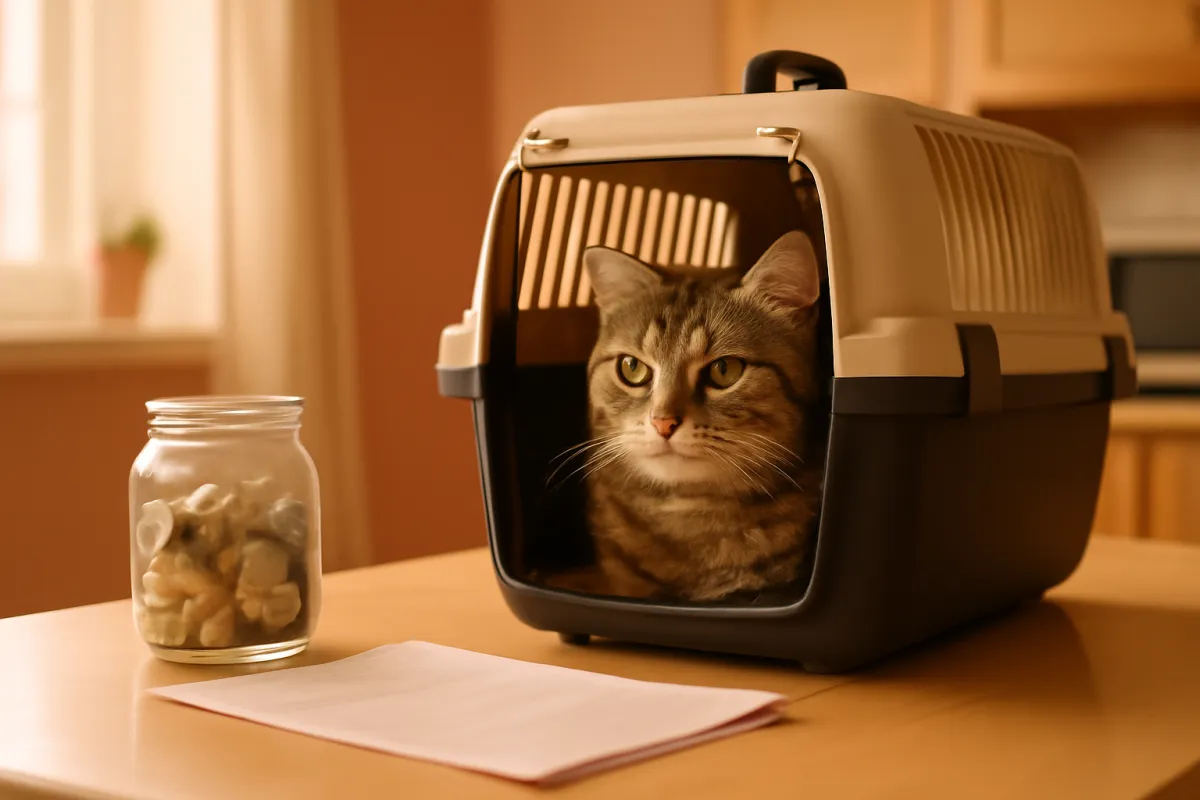
Adoption deserves a proper look, because for a lot of households it is the better route and not merely the cheaper one. An illustrative $100 to $400 fee at a shelter or breed rescue usually covers a neuter, an initial vaccination course, a microchip and a basic health check, lines you would otherwise pay for in the first months.
Breed rescues exist for this cat, taking in surrendered cats for ordinary reasons: a household move, an allergy, a change in circumstances. Those cats are frequently adult, already neutered, and come with a description of how they actually behave in a home, which matters more for a reserved breed than for an outgoing one. The strongest argument for an adult cat here is temperament information: a kitten’s eventual confidence level is a forecast, while an adult cat’s settled personality is a fact you can meet in person. Our cat budgeting read covers how to stage the costs either way.
The first-year cost of a Russian Blue
Year one stacks the purchase, the setup and the early veterinary care on top of a full year of food. Beyond the kitten price, plan for the setup: litter boxes and litter, food and water bowls, a carrier, scratching surfaces, a bed, a basic brush, and some hiding spots or covered beds, since a shy kitten benefits genuinely from having places to retreat while it settles in. An illustrative starter setup commonly lands somewhere around $300 to $650, an ordinary figure for a moderately sized indoor cat.
Then the early veterinary care. A kitten needs its vaccination series completed, deworming, a wellness examination, parasite prevention, a microchip if the breeder has not already fitted one, and a spay or neuter if it has not been done before placement. Our cat vaccination cost read prices the kitten and adult schedules in detail, and our spay and neuter cost read prices the procedure that is commonly the largest single veterinary line of year one.
Add a year of food and litter and the picture is complete. Combining a mid-range breeder purchase with setup and first-year veterinary care, an illustrative first-year total commonly lands somewhere around $2,200 to $4,000, most of it front-loaded into the first few months. An adopted adult skips much of that and often arrives already vaccinated and neutered, which commonly puts the first year nearer an illustrative $1,200 to $2,300.
Ongoing annual cost of a Russian Blue
Once the setup is bought and the kitten series is finished, costs settle into a rhythm. As an illustrative shape, ongoing yearly costs for a healthy adult Russian Blue commonly land somewhere around $900 to $2,100, covering food, litter, an annual wellness visit, parasite prevention, basic grooming supplies, replacement of worn equipment and enrichment, and insurance if you carry it.
The lower end assumes a settled adult, home feeding on a mid-range diet, home brushing, a simple litter setup and no insurance. The upper end reflects premium food, insurance premiums, and the extra veterinary visit any cat eventually generates. Neither end includes a bad year, which is exactly why both are stated. Our monthly cat cost read breaks the recurring side down month by month, and this breed sits close to the middle of the ranges it describes.
A low-maintenance double coat that still has a season
Here is the detail that quietly separates this breed from a longhaired pedigree without quite removing grooming from the budget altogether. Russian Blues carry a short, dense double coat commonly described as plush and standing away from the body rather than lying flat, which gives the breed its distinctive soft, silvery appearance. Because it is short, it does not mat the way a long coat does, and a weekly brush is usually enough to manage loose hair for most of the year.
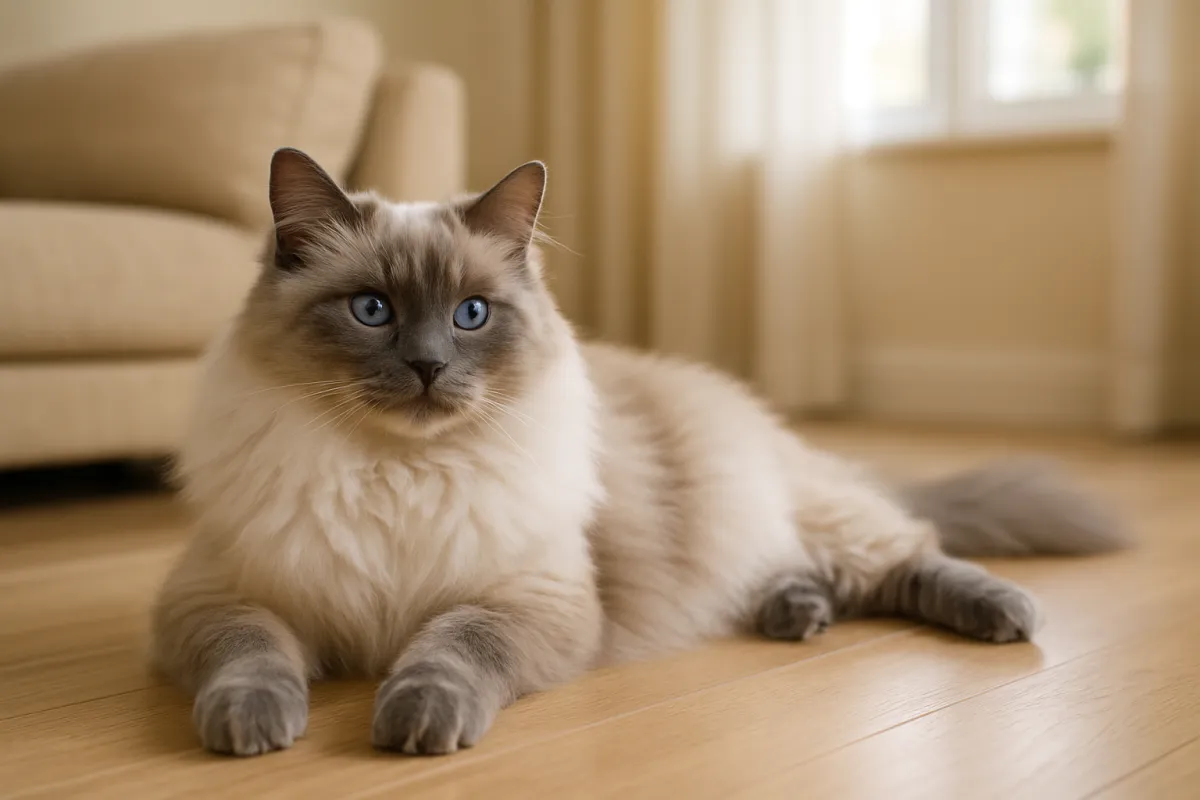
The exception is the seasonal shed, typically a couple of times a year, when the undercoat releases more heavily and brushing two or three times a week for a few weeks keeps loose fur off furniture and reduces hairballs. The tools are inexpensive, a slicker brush and a grooming glove commonly covering it, and most owners never book a professional groom for this breed at all.
Feeding a moderately sized cat
Food is the largest recurring line in almost any cat’s budget, and for a Russian Blue it is genuinely ordinary. Adult Russian Blues are commonly described as reaching somewhere around 7 to 12 pounds, close to the typical domestic cat range, so portions follow the same body-weight and activity logic that applies to any cat rather than any breed-specific scaling.
The one genuine watch point owners commonly raise is that the breed can be food motivated, sometimes described as a cat that will happily overeat if allowed, which makes portion discipline the practical issue rather than the price of the food itself. Budget an illustrative $25 to $55 a month for a mid-range diet, and talk to your veterinarian about the portion appropriate for your individual cat’s weight and activity.
Why this breed’s colour is not a pricing lever
Unlike some pedigree cats where unusual colours or patterns command a real premium, the Russian Blue is, by definition, a solid blue-grey cat with green eyes, and that uniformity is part of the breed standard rather than a variable buyers shop between. This matters for a budget in a small but real way: there is no “rare colour” upsell to watch for or be tempted by the way there is with breeds that come in a wide palette, which keeps the spread between a typical pet-quality kitten and an unusually priced one narrower than for many other pedigree cats.
What does move the price within that narrower band is coat depth and eye colour intensity as judged against the breed standard, along with the kitten’s build and the cattery’s show results, rather than anything a buyer should pay a meaningful premium for in a pet-only home. A breeder asking well above the typical range for a “rare shade” of a breed whose whole identity is one standard colour is a reasonable moment to ask more questions rather than assume rarity justifies the price.
Litter, boxes, and routine indoor needs
Litter is a steady, ordinary recurring line for an indoor cat of this size, and the general recommendation of one box per cat plus a spare applies here as for any cat. A reserved cat may be more particular about box placement and privacy than an outgoing one, so a quiet, accessible spot is worth prioritising over a purely decorative choice.
Clumping, crystal and plant-based litters differ in price and in how often they need full replacement, so this line is partly a choice. Scooping daily keeps litter usable longer and catches changes in output early, which is inexpensive, useful vigilance for any cat, and it is a particularly good habit for a reserved cat, since a shy animal is less likely to show obvious distress outwardly and a change in litter box habits is often the first visible clue that something needs a veterinarian’s attention.
Routine vet care and preventatives
Routine veterinary care for a Russian Blue is priced much like routine care for any cat, and this is genuinely one of the breed’s financial strengths. An annual wellness examination, vaccine boosters on the schedule your veterinarian recommends, parasite prevention appropriate to your region, and periodic dental attention make up the predictable core. Our vet visit cost read prices the examination itself, and our cat vaccination cost read covers the shot schedule.
Dental disease deserves its own mention because it is common in cats generally and expensive once finally addressed, and nothing about this breed makes it more or less likely than for any other cat. A dental procedure under anaesthetic, with radiographs and any extractions, is one of the larger routine-adjacent bills a cat owner meets. Our cat teeth cleaning cost read covers what drives that bill.
A generally hardy breed, with the usual caveats
Russian Blues are commonly regarded as one of the sturdier pedigree cat breeds, without a single well-known breed-defining hereditary condition the way some pedigree cats carry. Many veterinarians and long-time breeders describe the breed as generally healthy, and this is a genuine point in the breed’s favour for anyone planning a long-term budget.
That reputation is not a guarantee for any individual cat. Obesity is worth watching specifically for this breed given its food-motivated tendency, since excess weight is one of the most common and most preventable drivers of later veterinary cost in any cat. Dental disease and the ordinary age-related conditions that affect every breed apply here the same as anywhere else. Two honest caveats apply regardless of a breed’s general reputation: no article can predict what will happen to an individual animal, and any specific concern about appetite, energy, breathing or weight belongs with a veterinarian who can examine your cat rather than with a general reputation for health.
The budget upside of a generally hardy breed is real but should not be mistaken for a reason to skip preventive care. A cat that rarely needs anything beyond routine visits is still a cat that needs those routine visits, on schedule, every year, because the entire value of a good general-health reputation comes from problems being caught early rather than from problems not existing at all. Owners who stretch out wellness visits on the assumption that a hardy breed does not need them are the ones who eventually discover that assumption was doing a lot of unearned work.
Pet insurance for a Russian Blue
Insurance deserves a real decision even for a generally hardy breed, because the value of the policy comes from timing rather than from how risky the breed is thought to be. A policy taken out while the cat is young and healthy converts the risk of a large unpredictable bill into a predictable monthly premium, before anything has become a pre-existing condition and therefore excluded.
Premiums for this breed can sit a little below those for breeds with well-documented hereditary conditions, though they typically still run above a mixed-breed cat’s because insurers price breed alongside age and location. Our cat insurance cost read explains what moves a feline premium, and our read on whether cat insurance is worth it works through the decision honestly, including when self-funding is the better answer. Self-funding is a legitimate alternative, but only in its real form: a separate account receiving a fixed monthly amount you genuinely do not touch.
Where a Russian Blue’s lifetime cost goes
Assemble the pieces and the shape of the spend comes into focus. The proportions below are illustrative shares of a whole lifetime total rather than dollars.
Where a Russian Blue's lifetime cost goes
Representative split of an illustrative lifetime total into its main blocks, as shares of the whole. Illustrative shares, not dollars.
Shares move with the cat and the household: a serious illness enlarges the veterinary block, a self-funding owner removes the insurance block and enlarges the veterinary one, and adopting rather than buying shrinks the purchase block further still.
The grooming and gear block is the smallest in this chart, smaller than it would be for a longhaired breed, which is the quiet financial upside of choosing a short, low-maintenance coat. Food and routine veterinary care together make up the clear majority, which is exactly what you would expect from a moderately sized, generally healthy cat.
The lifetime cost of a Russian Blue
Adding purchase, first-year setup and ongoing annual costs across a long feline life, an illustrative lifetime total for a Russian Blue commonly lands somewhere around $14,000 to $27,000 or more. The breed is commonly described as living around fifteen to twenty years, longer than many pedigree cats, and the width of that range reflects two variables: how long the cat lives, and whether it needs care beyond the routine.
A longer average lifespan is a double-edged fact for a budget. It means more years of ordinary recurring costs, which is why the lifetime range is not dramatically lower than breeds with shorter lives despite the lower annual figure, but it also means more years of companionship for the same commitment. A cat that lives fifteen years, stays well and needs only routine care sits below the bottom of that band, while a cat that lives twenty years and develops an age-related condition climbs past the top.
How a Russian Blue compares to an average house cat
Set against an average domestic shorthair, a Russian Blue costs somewhat more, and the gap is concentrated almost entirely at the purchase. An adopted mixed-breed cat costs a fraction of a registered kitten, and that gap alone can be well over a thousand dollars.
The recurring gap is small. Food, litter and routine veterinary care are priced the same for any cat of similar size, grooming is a minor weekly habit rather than a real line, and the breed’s reputation for general health means no strong breed-specific veterinary premium. Insurance is the one line that typically costs more simply because it is a pedigree cat. The honest summary is that this is a moderately more expensive cat to buy and a barely more expensive cat to keep, which is a genuinely good combination for anyone weighing a pedigree cat on a budget. Our Bengal cat cost read prices a breed where the ongoing gap runs much wider, a useful contrast.
An illustrative year with a Russian Blue
Take one ordinary year with a settled adult and cost it in layers so the annual figure becomes concrete. Every number is illustrative and the method is the actual lesson. Assume a healthy indoor cat in its middle years, home fed on a mid-range diet, insured, brushed weekly with a heavier season twice a year, and one routine wellness visit.
Start with food and litter. A mid-range diet portioned for a moderately sized cat, plus clumping litter for a single indoor cat with two boxes, illustratively runs somewhere around $420 to $750 for the year.
Add the routine veterinary care. A wellness examination, boosters as recommended, and parasite prevention illustratively add around $270 to $480, bringing the running total to roughly $690 to $1,230.
Add insurance and basic grooming supplies. A pedigree cat’s premium plus a brush, grooming glove and the occasional replaced toy illustratively add around $290 to $600, taking the year to roughly $980 to $1,830. That sits inside the annual band this cost read uses, built from the bottom up rather than assumed from an average.
The lesson is the same as for any cat: this example contains no dental procedure and no unexpected illness, and either would add a line larger than several of the ones above combined.
How to keep Russian Blue costs down
There are honest ways to reduce the total. Consider adoption, especially of an adult, if your heart is set on the type but not on a kitten, because an adult cat costs a fraction at the door and arrives with its temperament already visible, which matters more for a reserved breed than for an outgoing one. Buy from a breeder who socialises kittens properly, because a poorly socialised, anxious cat can generate real costs later in behavioural consults and stress-related veterinary visits.
Among the recurring lines, choose a sustainable diet and measure portions, which matters more here than for most breeds given the food-motivated tendency. Brush weekly and step it up during the seasonal shed, which costs nothing beyond the habit. Decide the insurance question early, while the cat is young. The place not to save is preventive veterinary care; skipping wellness visits or letting parasite prevention lapse reliably converts a small predictable cost into a large unpredictable one. Our read on saving on pet medications covers where genuine savings exist without cutting the care itself.
Is a Russian Blue worth the cost?
Worth is not really a financial question, but the financial part can be answered honestly here more easily than for most pedigree cats. A Russian Blue is a moderately priced cat to buy and a barely more expensive cat to keep than an average house cat, and an illustrative lifetime total in the range described above is a genuinely manageable commitment relative to many other pedigree breeds.
The real question is fit, and for this breed it is mostly about temperament rather than budget. This is commonly described as a reserved, even shy cat around strangers and new situations, deeply bonded to its own household once settled, and quiet rather than demonstrative in how it shows affection. A household that wants an outgoing, lap-seeking cat from day one may find the adjustment period frustrating, while a household that gives a cat time to settle usually finds the patience well rewarded.
A household with frequent visitors, young children who want to handle a cat immediately, or a loud, chaotic environment is worth thinking through honestly before bringing home a breed whose default response to novelty is caution rather than curiosity. None of that is a flaw in the cat; it is simply a mismatch waiting to happen, and it costs nothing to notice it in advance. A quieter household, or one willing to let a cat set the pace of its own socialising, is where this breed’s particular temperament tends to shine rather than frustrate.
How this fits your bigger pet budget
A Russian Blue sits inside a household pet budget rather than beside it, and the useful exercise is to place it against the other recurring commitments you already carry. Our read on budgeting for a cat walks through building that budget from scratch, and our yearly cat cost read gives the general baseline this breed sits close to.
Two structural habits do most of the work. The first is a separate pet fund that receives a fixed amount every month, whether or not you also carry insurance, so an unexpected bill has somewhere to land that is not a credit card. The second is knowing your options before you need them, because the worst moment to research help with a large bill is while standing at a reception desk. Our read on getting help with vet bills covers what actually exists.
The bottom line
Russian Blue cost is a two-part number, and both parts land in genuinely moderate territory. An illustrative $800 to $2,000 buys a pet-quality kitten from a registered breeder, with show lines above that and adoption a fraction of it, and the fifteen to twenty years that follow carry an illustrative $900 to $2,100 a year, for a lifetime total somewhere around $14,000 to $27,000 or more. Of every pedigree cat breed covered in this cost series, this is among the gentlest on an ongoing budget, thanks to a short low-maintenance coat, a moderate size, and a reputation for general health that holds up reasonably well in practice.
Buy the cat with the breed’s real temperament in mind rather than its photographs. Ask a breeder how the kittens were socialised and what exposure they had to noise, handling and visitors. Budget the setup and first-year veterinary care alongside the purchase. Build the weekly brushing habit, step it up during the seasonal shed, and watch portions given the breed’s food-motivated reputation. Decide the insurance question while the cat is young. Do those things and the numbers in this cost read describe one of the more manageable pedigree-cat commitments available.
This cost read describes typical patterns in owning and budgeting for a Russian Blue cat, not veterinary or financial advice, and it cannot replace guidance from professionals who can examine your own cat and review your own finances. Every dollar amount, percentage and lifespan reference above is illustrative, moves with your region, your breeder or rescue, your individual cat and your own choices about diet, grooming and insurance, and none of it is a quote or an offer. A breed’s general reputation for health says nothing about whether any particular cat will develop a condition; nothing above is a diagnosis, a prognosis, or a claim about how likely anything is in any particular animal. If your cat shows any change in appetite, energy, weight, coat or litter box habits, contact a licensed veterinarian promptly rather than relying on an article, and get screening records and breeder commitments in writing before any money changes hands.
Cost by breed size
Illustrative first-year cost by typical adult weight class — food, vet care, and starter gear all scale with size, which is the biggest single driver of lifetime cost between breeds.
Figures are illustrative first-year planning ranges, not a quote for any specific pet — breed, region, and individual health all move the real number. Use the calculator above for your own estimate.
Frequently asked questions
How much does a Russian Blue cat cost?
As an illustrative figure, a pet-quality Russian Blue kitten from a registered breeder commonly runs somewhere around $800 to $2,000, with kittens from show lines or established catteries priced above that. Adoption through a breed rescue or a shelter, when a Russian Blue or a Russian Blue type cat is available, is far cheaper at an illustrative $100 to $400 and usually includes early medical care. The purchase price sits in the middle of the pedigree-cat range, neither among the cheapest nor the most expensive. The ongoing cost is shaped mostly by the breed's generally sturdy health and moderate size rather than by anything dramatic, which is good news for a long-term budget. Treat every number in this cost read as an illustrative planning range and confirm real prices with breeders and rescues in your own area.
Why are Russian Blue cats moderately priced rather than cheap?
The price reflects a genuine, if unglamorous, breeding and rearing process rather than scarcity in the way a rarer breed commands a premium. A registered breeder screens breeding cats, pays for veterinary care through pregnancy and the early weeks, registers the litter with a cat association, completes early vaccination and deworming, and spends weeks socialising kittens that are commonly described as naturally reserved around strangers, which takes real, patient handling to do well. Those costs are recovered across each litter. The breed is popular enough to support a healthy breeder community without being so rare that prices spike the way they do for breeds with a harder-to-produce physical trait.
Do Russian Blue cats cost more to feed than an average cat?
Not meaningfully. Russian Blues are commonly described as a moderate, medium-boned cat, typically landing somewhere around 7 to 12 pounds as adults, close to an average domestic cat's size, so portions are set by the same body-weight and activity-level logic that applies to any cat rather than by any breed-specific premium. The one genuine watch point owners commonly mention is that the breed can be a food-motivated, somewhat food-focused cat, which makes portion discipline, not the price of the food itself, the practical issue. Talk to your own veterinarian about the diet and portion appropriate for your individual cat rather than following a general rule.
How much does a Russian Blue cost per year?
As an illustrative shape, ongoing yearly costs for a healthy adult Russian Blue commonly land somewhere around $900 to $2,100, covering food, litter, routine veterinary care, parasite prevention, basic grooming supplies, replacement of worn equipment and enrichment, plus insurance if you carry it. The lower end assumes a settled adult, home feeding, home brushing and a simple indoor setup. The upper end reflects premium food, insurance premiums and a year with an extra veterinary appointment or a dental procedure. Any year with a real illness or injury sits above that band entirely, which is why the honest advice is to hold a cushion rather than budget to the average.
Does a Russian Blue need much grooming?
Less than the plush double coat might suggest at first glance. The breed carries a short, dense double coat that is commonly described as standing away from the body in a soft, even plush rather than lying flat, and it is low maintenance by cat standards: a weekly brush is usually enough to manage loose hair and keep the coat's characteristic texture looking its best. The coat does shed, including a heavier seasonal shed a couple of times a year, when more frequent brushing helps and is the practical way to keep loose fur off furniture rather than off the cat. Most owners manage the whole routine at home with an inexpensive brush, and professional grooming is rarely necessary for this breed.
Is a Russian Blue a healthy breed?
Generally yes. Russian Blues are commonly regarded as one of the hardier pedigree cat breeds, without a single breed-defining condition the way some pedigree cats carry, and many live long, largely uneventful lives on ordinary preventive care. That reputation is not a guarantee for any individual cat, and the usual feline concerns, including dental disease, obesity and age-related conditions, apply to this breed the same as any other. The practical budget consequence is that a Russian Blue's veterinary costs commonly track close to the general cat averages described in our other cost reads rather than carrying a breed-specific premium, which is a genuine point in the breed's favour for a lifetime budget.
Is pet insurance worth it for a Russian Blue?
Insurance is worth a real decision for any pedigree cat, even a generally hardy one, because the value comes from timing rather than from a breed's risk profile alone. A policy taken out while the cat is young and healthy converts the risk of a large unpredictable bill into a predictable monthly premium, before anything has become a pre-existing condition and therefore excluded. Because this breed is commonly described as fairly healthy, premiums can sit a little below those for breeds with well-known hereditary conditions, though they still typically run above a mixed-breed cat's because insurers price breed alongside age and location. Get quotes for the actual breed, and treat a disciplined self-funded savings account as the legitimate alternative.
How much does a Russian Blue cost over its lifetime?
Carrying the purchase, the first-year setup and a long run of food, grooming, and veterinary bills, an illustrative lifetime total for a Russian Blue commonly lands somewhere around $14,000 to $27,000 or more. The breed is commonly described as living around fifteen to twenty years, longer than many pedigree cats, and the width of that range comes from two places: how long the cat lives, and whether it needs care beyond the routine. A self-funded adopted cat fed a mid-range diet comes in below the bottom of that range, while an insured pedigree with real health events climbs past the top. Use the figure to test the commitment rather than to predict a particular cat.