

What's on this page
- The short answer: what a Pug costs
- Pug purchase price: breeder versus rescue
- Why Pugs cost what they do to buy
- A Pug cost table
- The first-year cost of a Pug
- Ongoing annual cost of a Pug
- The big one: breed-specific health costs
- BOAS and breathing problems
- Eye problems and proptosis risk
- Skin fold dermatitis and the weight problem
- Pug Dog Encephalitis and orthopedic issues
- Why pet insurance matters for this breed
- What Pug pet insurance costs
- The lifetime cost of a Pug
- How a Pug compares to other dogs
- How a Pug compares to other flat-faced breeds
- Buying responsibly: what to look for
- An illustrative year with a Pug
- How to keep Pug costs down
- Is a Pug worth the cost?
- How this fits your bigger pet budget
- The bottom line
Short answer: A Pug puppy from a reputable breeder commonly runs an illustrative $1,200 to $2,500, rescue roughly $200 to $500, and a show-quality or sought-after bloodline puppy can reach $3,000 or more. The bigger cost is health: breathing, eye, skin-fold, and weight-related problems drive higher-than-average vet bills for life, and Pug Dog Encephalitis is a less common but serious breed-specific risk. An illustrative lifetime total commonly lands around $22,000 to $38,000 or more.
The cost of a Pug is a two-part number, and the sticker price is the smaller part. Buying a Pug from a reputable breeder commonly runs an illustrative $1,200 to $2,500 for a standard pet-quality puppy, with rescue far cheaper and a show-quality or sought-after bloodline far dearer, but that one-time figure is dwarfed by what the breed costs to keep healthy across twelve to fifteen years. Pugs are one of the most recognizable small dog breeds and also a genuinely flat-faced one, which makes them expensive twice over: once at purchase, because a popular small breed with real breeding costs commands a real price, and again over their lives, because they are prone to breathing, eye, skin, and weight-related problems that drive higher vet bills than an average dog their size.
This cost read prices both halves honestly. It walks through the purchase price and why it is what it is, the first-year and ongoing annual costs, and then the part that matters most: the breed-specific health costs that make a Pug a bigger financial commitment than the puppy price suggests. It closes on the full lifetime total and how to plan for it, with a Pug cost calculator so you can turn these ranges into a number for your own situation. It sits alongside our broader dog cost by breed read, which prices many breeds side by side, and our puppy cost read, which prices any dog’s first year in general terms.
Key takeaways
- A reputable-breeder Pug commonly runs an illustrative $1,200 to $2,500 for a pet-quality puppy; rescue is roughly $200 to $500, and a show-quality or sought-after bloodline puppy can reach $3,000 or more.
- Pugs are a genuinely flat-faced breed: breathing (BOAS), eye, skin-fold, and weight-related problems are the dominant cost driver across the dog's life, well above food or grooming.
- Pug Dog Encephalitis is an uncommon but serious breed-specific neurological condition worth knowing about, alongside more routine orthopedic issues like patellar luxation.
- Pet insurance taken out young, or a disciplined savings fund, matters more for this breed than for an average small dog, because a single surgery or eye emergency can run into the thousands.
- An illustrative lifetime total commonly lands around $22,000 to $38,000 or more, above many average dogs of similar size. Every figure here is illustrative and varies widely.
The short answer: what a Pug costs
For the purchase, plan on two very different worlds. From a reputable breeder, a pet-quality Pug puppy commonly runs an illustrative $1,200 to $2,500, set by the breeder’s health testing and care, local demand, and the puppy’s lines. From a rescue or shelter, when a Pug is available, adoption commonly runs an illustrative $200 to $500, usually bundling early medical care. At the top end, a show-quality puppy or one from a sought-after bloodline can push past the standard breeder range, sometimes to $3,000 or more.
But the purchase price answers only the first question. What a Pug truly costs is decided over the following decade-plus by the breed’s health tendencies, because a Pug carries a higher-than-average risk of breathing, eye, skin, and weight-related problems, each of which can add real vet cost. A relatively healthy, lean, insured Pug and one that needs airway or eye surgery live in different financial territory, even though they cost the same at the door.

The rest of this read prices both layers. It gives illustrative purchase, first-year, ongoing, and lifetime ranges, explains what drives each, and is honest about the breed’s health realities rather than glossing them. Treat every dollar figure as an illustrative planning range rather than a quote, and route any specific medical question to a vet who can see your dog. Drop your own numbers into the cost calculator as you read to see where you land.
Pug purchase price: breeder versus rescue
The single biggest fork in the purchase price is where the dog comes from. A reputable breeder prices a puppy to reflect health testing, whelping supervision, and the steady demand this breed has carried for a long time, which is why an illustrative $1,200 to $2,500 is a common standard range and why prices toward the top of it are easy to find in higher-cost regions. That figure buys, at its best, a well-bred puppy from health-tested parents with early vet care already done, which is worth paying for in a breed this prone to inherited and conformational problems.
Rescue or adoption sits at the other end, an illustrative $200 to $500, though the catch is availability: purpose-bred Pugs reach shelters less often than mixed breeds, and Pug-specific rescues can have waiting lists, particularly for puppies. When a Pug is available to adopt, the fee usually bundles the spay or neuter, vaccines, and microchip that a breeder puppy pays for separately, so the gap in true first-year cost is smaller than the sticker suggests. Our dog adoption fees read covers what a rescue fee actually pays for in general terms. Adoption also often means an adult dog whose temperament and any existing health issues are already known, which has its own value for a breed with this health profile.
The tier to be wary of is the suspiciously cheap breeder. A Pug priced far below the local market can signal skipped health testing, cut corners on whelping care, or a puppy mill, and those savings tend to return later as vet bills the breed is already predisposed to. As our dog cost by breed read argues across many breeds, the cheapest way in is frequently the most expensive over a lifetime, and that holds especially true for a breed with this much conformational health risk.
Why Pugs cost what they do to buy
The honest answer to why Pugs carry a real purchase price, even though it is well below some other popular flat-faced breeds, is a mix of ordinary breeding economics and the breed’s own conformation. It is not purely a marketing markup on a recognizable breed, though steady demand plays its part.
Litters tend to run on the smaller side for a small breed, which spreads a breeder’s fixed costs over fewer puppies. Labor can sometimes be harder than average because of the puppies’ proportionally large heads relative to the dam’s size, which means more veterinary involvement and monitoring around whelping than a typical breed needs, even where natural birth is usual. Add health testing on the parents, early socialization, and the breed’s enduring popularity, and a real purchase price is the predictable result.
Illustrative Pug purchase price by source
Representative upfront price to acquire a Pug, by source and type. Illustrative, varies widely by breeder, region, and demand.
Rescue sits far below because the fee covers care, not breeding cost. Breeder prices climb with bloodline and show quality, but even a standard puppy reflects the real veterinary cost behind a responsibly bred litter.
Unlike some other flat-faced breeds, the Pug’s purchase price is not dominated by a widely documented need for artificial insemination and a planned cesarean section in nearly every litter. Some Pug litters do involve a harder birth than average and a vet’s closer involvement, but it is not the near-universal surgical pattern seen in the most extremely brachycephalic breeds, which is one reason a Pug typically costs meaningfully less to buy than those breeds, even though the health-cost story after purchase has real overlap.
A Pug cost table
Because the numbers span such different categories, from a one-time purchase to recurring yearly care to occasional large health bills, a table is the clearest way to see them together. The grid below lays out illustrative ranges for the main cost categories of owning a Pug. Every figure is a planning range rather than a quote, and the health line in particular varies enormously between an easy-keeper and a dog that needs treatment.
| Cost category | Illustrative amount | Notes |
|---|---|---|
| Purchase (reputable breeder, standard) | ~$1,200 to $2,500 | One-time; sought-after bloodlines and show quality run higher |
| Purchase (rescue / adoption) | ~$200 to $500 | One-time; often bundles spay/neuter, vaccines, chip |
| First-year setup and gear | ~$300 to $600 | Bed, bowls, harness, crate, initial supplies |
| Routine annual care | ~$400 to $700 | Food, wellness exam, vaccines, preventatives |
| Breed-specific health (typical year) | ~$200 to $1,000 | Highly variable; some years low, some years none |
| Major health event (when it happens) | ~$1,500 to $4,000+ | Airway, eye, or orthopedic treatment, illustrative |
| Pet insurance premium | ~$540 to $1,080 / year | Higher than an average small dog’s; priced for breed risk |
| Illustrative lifetime total | ~$22,000 to $38,000+ | Purchase plus roughly 12 to 15 years of care |
Read down the table and the pattern is clear: the purchase is a single, comparatively modest number for a popular small breed, routine care is a modest predictable line, and the health rows are where the real variability lives. A Pug that stays lean and relatively healthy sits toward the lower end of the lifetime total, while one that needs one or more of the breed’s characteristic treatments climbs toward the top and past it. Use the table to place your own plan, then run it through the calculator to see the total for your own assumptions.
The first-year cost of a Pug
The first year is the most expensive twelve months of a Pug’s life outside a major health event, because it front-loads the purchase and the one-time setup on top of a full year of care. Start with the purchase, an illustrative $1,200 to $2,500 from a breeder or a few hundred from a rescue. Add initial setup and gear, an illustrative $300 to $600 for a bed, bowls, a harness (a harness is kinder than a collar for a breed with airway sensitivity), a crate, and the odds and ends a new dog needs.
Then layer on the first year of care. Routine costs, food, a wellness exam or two, the initial vaccine series if not already done, parasite preventatives, and the spay or neuter if the dog is not already altered, commonly run an illustrative several hundred to around a thousand dollars in year one. For a breeder puppy that arrives with vaccines and neutering still to do, the first-year vet total is higher than a typical adult year; for a rescue that arrives already altered and vaccinated, it is lower.
Put together, the first year for a breeder Pug commonly lands in an illustrative $4,000 to $6,500 range once purchase, setup, and a year of care are combined, and higher if a sought-after bloodline or an early health issue is involved. For an adopted Pug, the first year is far cheaper on the purchase side, often an illustrative $2,000 to $3,000 all in. Our first-year dog read breaks down the general shape of a dog’s first year, and the calculator lets you build your own.
Ongoing annual cost of a Pug
After the first year, the recurring cost settles into a more predictable shape, though it still runs higher than an average small dog because of the health line. The routine pieces are modest: food for a small dog is an illustrative $20 to $40 a month, and routine vet care, an annual wellness exam, vaccines on schedule, and parasite preventatives, is an illustrative few hundred dollars a year. Grooming is cheap for this short-coated breed, though the breed’s facial wrinkles need regular cleaning to prevent problems, similar to any flat-faced breed.
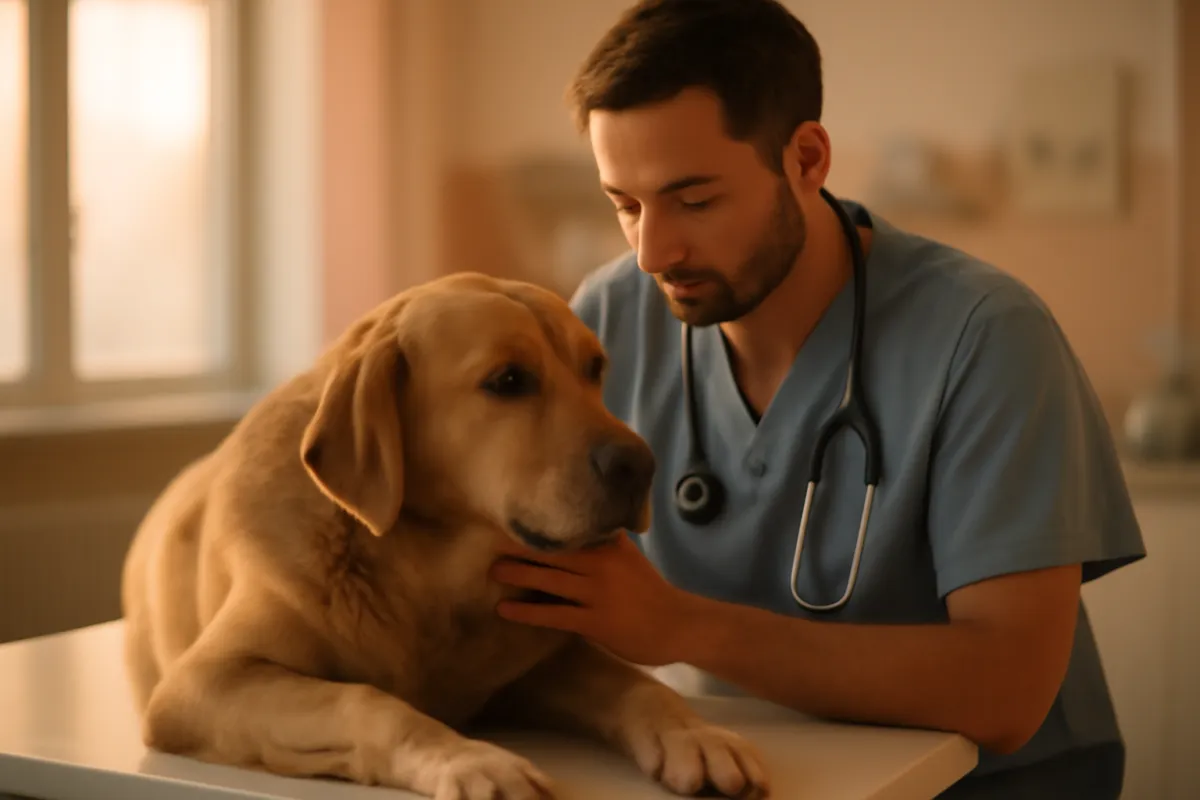
What lifts a Pug’s yearly cost above a comparable mixed-breed dog is the breed-specific health line. Even in a good year, this breed often needs a bit more veterinary attention than average: skin-fold care, an eye check, weight monitoring, or a breathing assessment in warm weather. Provisioning an illustrative few hundred dollars a year for breed-related health, averaged across good years and occasional bad ones, is a realistic way to budget, alongside an insurance premium or a savings contribution.
Add it together and a settled ongoing year for a Pug commonly runs an illustrative $1,700 to $2,800, more than the average dog of its size and driven mostly by health and insurance provisioning rather than food or grooming. Some years come in well under that with nothing but routine care; the occasional year runs well past it on a single treatment. That lumpiness is exactly why a steady insurance premium or savings habit smooths the breed’s cost better than paying bills as they land. Our monthly cost of a dog read sets out the recurring budget in general terms.
The big one: breed-specific health costs
Here is the part that makes a Pug different from a same-sized mixed breed, and the part any honest cost read has to foreground: the breed carries a well-recognized set of health predispositions that can drive meaningful vet bills. This is not a reason never to own one, and many Pugs live long, happy lives, but going in with open eyes is fairer to both you and the dog. The conditions cluster around the very features that define the breed: its flat face, its prominent eyes, its facial wrinkles, and its strong tendency toward weight gain.
The four clusters that come up most are breathing problems (BOAS) tied to the flat face, eye problems tied to the prominent, shallow-set eyes, skin-fold irritation and obesity tied to the wrinkles and the breed’s famous appetite, and a shorter list of less common but serious conditions, Pug Dog Encephalitis chief among them, along with orthopedic issues like patellar luxation that are common across small breeds generally. Not every Pug develops any of these, and some develop several; the point of budgeting is that you cannot know in advance which dog you will have. The next sections take each in turn, with illustrative costs, and every one of them ends the same way: route the specifics to your vet.
Because these costs are real and can be lumpy, they are a strong argument for either pet insurance taken out while the dog is young or a dedicated savings fund. A breed this predisposed to several categories of problem is precisely the case where spreading risk pays for its own peace of mind, a theme our is pet insurance worth it for dogs read examines closely.
BOAS and breathing problems
The most defining health cost of the breed is Brachycephalic Obstructive Airway Syndrome, or BOAS, the cluster of breathing problems that comes with a flat face and a shortened airway. Signs range from noisy breathing and snoring, which many owners think of as cute, to genuine difficulty breathing, exercise intolerance, overheating, and in more severe cases real distress. Pugs sit on the milder-to-moderate end of the brachycephalic spectrum compared with some other flat-faced breeds, but the risk is still real and should not be waved away.
When it is significant, the treatment is often corrective airway surgery, which may widen the nostrils or shorten an overlong soft palate to help the dog breathe more easily. As an illustrative figure, this kind of surgery commonly runs into four figures, and the assessment, anesthesia (which carries more risk and often more monitoring cost in flat-faced breeds), and aftercare add to it. Some dogs need it young; many manage with weight control and heat avoidance and never have it.
The everyday costs matter too. A brachycephalic dog is more vulnerable to heat and exertion, so owners spend on managing that, and the breed should never be over-exercised in warmth or left in a hot car or yard. Anesthesia for any procedure, even a routine dental, carries more risk and often more monitoring for a flat-faced dog. This is not a scare tactic but the honest reality of the breed’s signature feature, and it is a core reason Pugs cost more to keep healthy than a same-sized dog with a typical muzzle. Any breathing concern belongs with your vet promptly, because it is a welfare issue as much as a cost one.
Eye problems and proptosis risk
The second major cluster is ocular, and for Pugs it is especially prominent because of the breed’s large, shallow-set eyes. Those expressive eyes are also more exposed and vulnerable than a typical dog’s, which raises the odds of several conditions across the dog’s life. Corneal ulcers and scratches are more likely because the eyes protrude and sit with less protective depth in the socket, and they need prompt treatment to avoid lasting damage or vision loss.
A more dramatic risk, uncommon but genuinely associated with the breed’s eye shape, is proptosis, where the eye can partially or fully displace from its socket, typically following trauma such as being held too tightly around the neck or a fall or fight. It is a true emergency requiring immediate veterinary attention, and treatment can range from manual repositioning to surgery, with cost and outcome both depending heavily on how quickly the dog is seen. Other eye conditions, including entropion (where the eyelid rolls inward), dry eye, and pigmentary changes on the cornea over time, can also affect the breed and may need medication or surgery.
As with the skin and weight issues below, the honest framing is that eye problems are a frequent, moderate, recurring cost for many Pugs rather than a rare catastrophe, though the rare proptosis scenario is the kind of emergency an insurance policy or fund is specifically meant to cover. Any eye problem, redness, squinting, cloudiness, visible bulging, or a sudden change, is a same-day vet matter, because eyes deteriorate quickly and early treatment is both cheaper and kinder.
Skin fold dermatitis and the weight problem
Less dramatic but extremely common day to day are the breed’s skin and weight tendencies, which many Pug owners deal with in some form across the dog’s life. The facial wrinkles that define the look trap moisture and debris, making skin-fold dermatitis a frequent issue that needs regular cleaning and sometimes treatment. These conditions rarely cause a single huge bill, but they add up as a steady, recurring cost that runs for years, an illustrative modest sum annually and sometimes more for a badly affected dog.
The bigger long-run cost driver, and one Pugs are particularly known for, is a strong tendency toward weight gain. Pugs are commonly described by veterinarians as prone to obesity, partly because of a hearty appetite relative to a fairly low exercise requirement, and excess weight makes nearly every other item on this list worse: it strains breathing in a breed that already has less airway capacity to spare, it adds load to joints already at risk of patellar luxation, and it is linked to a shorter, less comfortable life overall. Weight management, done through portion control and regular low-impact exercise, is one of the highest-value, lowest-cost things an owner can do for this breed, and it directly lowers the odds of several of the breed’s most expensive problems.
The practical upside is that much of this is manageable with routine home care and discipline rather than veterinary intervention. Keeping the facial folds clean and dry and keeping the dog at a lean weight can keep these problems from escalating into bigger, costlier ones. Our how to lower your vet bills read covers the prevention-first mindset that keeps recurring costs like these down.
Pug Dog Encephalitis and orthopedic issues
The fourth cluster covers a shorter list of conditions that are either breed-specific and uncommon, or common across small breeds generally rather than unique to Pugs. Pug Dog Encephalitis (PDE) is the breed-specific entry: a recognized inflammatory brain condition seen in the breed, with signs that can include seizures, disorientation, or circling. It is uncommon rather than typical, but when it occurs it generally needs specialist diagnosis, such as advanced imaging, and ongoing management, which can be a real and sometimes significant cost as well as an emotionally difficult diagnosis for an owner.
More common, and shared with small breeds generally rather than specific to Pugs, is patellar luxation, where the kneecap slips out of its normal groove, which can range from a mild, intermittent issue managed conservatively to one that needs surgical correction. Hip dysplasia is also seen in the breed, though less dominantly discussed than in larger dogs. Both are the kind of orthopedic issue where an illustrative cost of a few hundred dollars for monitoring and medication can become a few thousand for surgery, depending on severity.
None of these conditions should be read as something every Pug will face, and most Pugs live full, healthy lives without ever needing specialist neurological or orthopedic care. The honest point is that they sit on the breed’s known list, and knowing the list is what lets an owner budget sensibly rather than be blindsided. Any neurological symptom is an urgent matter for your vet, and any persistent limping or reluctance to jump is worth a veterinary opinion rather than a wait-and-see approach.
Why pet insurance matters for this breed
Put the health clusters together and the case for pet insurance on a Pug is stronger than for an average small dog. The breed combines a meaningful chance of at least one moderate-to-expensive event, an eye emergency, an airway procedure, or an orthopedic surgery, with a steady drip of smaller skin and weight-related costs. That is precisely the risk profile insurance is designed for: an unpredictable but potentially large bill that would be hard to absorb all at once. The value is not a guaranteed payoff but protection against being forced into a decision by a bill you cannot cover.
Timing is everything with this breed. A policy taken out while the Pug is young and healthy covers conditions that have not yet appeared, whereas anything already diagnosed becomes a pre-existing condition most policies will not cover. Because several of the breed’s issues can emerge at any life stage, enrolling early is the difference between insurance that helps and insurance that excludes the very problems you were worried about. This is one decision where waiting genuinely costs you coverage.
The alternative, and it is a legitimate one, is disciplined self-insurance: setting aside the premium amount every month into a dedicated fund so a surgery or an eye emergency does not become a crisis. What does not work well for this breed is having neither, relying on hope, which is how owners end up facing an impossible choice. Our reads on how to choose pet insurance and is pet insurance worth it for dogs walk through the trade-offs, and the calculator lets you fold a premium into your Pug’s yearly total.
What Pug pet insurance costs
If you do insure, expect to pay more than for an average small dog, because insurers price the breed’s known risk into the premium. As an illustrative figure, a Pug policy commonly runs an illustrative $45 to $90 a month, or roughly $540 to $1,080 a year, depending on your region, the dog’s age, the deductible, the reimbursement percentage, and the annual limit you choose. Our pet insurance cost per month read prices a typical dog premium around $30 to $90 a month; Pugs sit toward the upper part of that band and sometimes above it, because the actuarial risk of the breed’s conditions is real and known.
Several levers move that premium. A higher deductible and a lower reimbursement percentage cut the monthly cost but leave you covering more of each claim; a lower deductible and higher reimbursement do the reverse. Younger enrollment locks in a lower starting premium and, more importantly, coverage before conditions become pre-existing, while premiums generally rise as the dog ages. Accident-only policies are cheaper but exclude illness, which for this breed leaves out much of what you are insuring against, so a comprehensive accident-and-illness policy usually makes more sense here.
The honest way to judge the premium is against the bills it protects against. Paying an illustrative $65 a month feels like a lot until you weigh it against a several-thousand-dollar airway, eye, or orthopedic procedure that the breed is genuinely predisposed to. Whether it pays off in any single case is never guaranteed, and a healthy Pug may cost more in premiums than it ever claims, which is what insurance is.
The lifetime cost of a Pug
Carrying every layer across the dog’s life gives the number that matters most. Pugs have an illustrative typical lifespan of roughly twelve to fifteen years, broadly in line with small dogs generally, though weight and breathing issues can shorten it when they are not managed. Adding the purchase, the first-year setup, and roughly thirteen years of routine care plus breed-specific health provisioning, an illustrative lifetime total commonly lands somewhere around $22,000 to $38,000 or more.
The width of that range is the whole story, and the chart below shows why. Most of a Pug’s lifetime cost is not the purchase but the years of care, and within that, the health and insurance lines are the biggest swing factors. A relatively healthy, lean Pug kept insured or well-funded sits toward the lower end; one that needs an airway procedure, then an eye emergency, then years of weight-related joint management climbs past the top of the range.
Where a Pug's lifetime cost goes
Representative split of an illustrative lifetime total into its main blocks, as shares of the whole. Illustrative, not dollars.
The purchase everyone focuses on is a small slice of the lifetime total. Health and routine care together are more than two-thirds of it, which is why weight management and the surgery-or-not question shape the final number more than the sticker.
That total also runs above many average dogs of similar size, which is the honest headline for anyone drawn to the breed on looks alone. Our lifetime cost of a dog read tallies the general case across a dog’s whole life; a Pug sits above that baseline mainly on the health line. Use the calculator to build your own lifetime figure from your purchase price, care assumptions, and insurance choice.
How a Pug compares to other dogs
It helps to place the Pug against dogs generally, because the breed costs more than its small size alone would suggest. On purchase price, a standard Pug sits comfortably within the broad purebred small-dog range rather than at an extreme, usually below the most sought-after designer or extreme-brachycephalic breeds. On food and grooming, a Pug is cheap: it is a small dog with a short coat, so those everyday lines are modest compared with a large or heavily coated breed.
Where the breed pulls above average is health and veterinary cost. A same-sized mixed-breed dog without the brachycephalic, exophthalmic, and weight-prone tendencies typically carries lower and less lumpy vet costs across its life. The Pug’s combination of a real chance of a breathing, eye, or orthopedic event with a steady drip of skin and weight management is what lifts its lifetime total above many dogs that cost the same or more to buy. Our dog cost by breed read places many breeds side by side on exactly this basis.
How a Pug compares to other flat-faced breeds
It also helps to place the Pug against other flat-faced breeds, because brachycephalic dogs are not all the same risk. The French Bulldog, covered in detail in our French Bulldog cost read, sits at the more extreme end of the brachycephalic spectrum: a higher purchase price driven by widely documented breeding difficulty, and a health profile that leans more heavily on spinal issues (IVDD) alongside breathing problems.

The Pug generally costs less to buy and, on balance, carries a somewhat milder breathing-risk profile than the most extreme brachycephalic breeds, while adding its own distinctive risks: a markedly higher exposure to eye problems given its shallow eye sockets, and a stronger, well-known tendency toward weight gain that compounds nearly every other cost on this page. Neither breed is simply cheaper or safer than the other; they are differently shaped risks, and a prospective owner comparing them should weigh purchase price against which health profile they are better placed to manage.
Buying responsibly: what to look for
Because so much of a Pug’s future cost is set by how it was bred, choosing the source well is one of the highest-leverage financial decisions you make, and a welfare decision too. A responsible breeder health-tests the parents, is transparent about the breed’s issues rather than dismissive of them, breeds for health and temperament rather than extreme features, lets you meet the mother, and asks you as many questions as you ask them. That care is part of what you are paying for, and it can lower the odds of the most expensive problems.
The warning signs run the other way. Be wary of a breeder who has multiple litters constantly available, who will not discuss health testing or the parents’ eye and airway health, who will not let you see where the dogs live, or whose price is far below the market. The same caution applies to buying sight-unseen online or through a broker. As with any purebred purchase, the cheapest or most convenient option often carries the highest hidden cost, in vet bills and in heartbreak.
Adoption and breed rescue are worth a serious look too, both for cost and for the chance to give an existing dog a home. Pug-specific rescues exist and can match you with a dog whose temperament and health are already known, which removes some of the uncertainty of a puppy. Whichever route you choose, treating the acquisition as carefully as the purchase price deserves is the single best way to keep the lifetime cost, and the welfare risk, as low as this breed allows.
An illustrative year with a Pug
Numbers land better carried through, so here is one illustrative settled year for a healthy, lean adult Pug in an average-cost area, a normal year with no major procedure. Food and treats run an illustrative $25 a month, about $300. Routine vet care, a wellness exam, vaccines on schedule, and preventatives, adds an illustrative $250. Skin-fold and weight maintenance, cleaning supplies and portion-controlled feeding, adds an illustrative $200, kept low because the dog is at a healthy weight.
On top of that sits the risk provision. An owner paying an illustrative $65 a month for insurance adds about $780 for the year, or an owner self-insuring might set aside a similar amount into a health fund instead. Add modest gear and extras, an illustrative $150, and the year totals roughly an illustrative $1,680, most of it predictable. That is a normal Pug year: manageable, somewhat above an average small dog, and dominated by the health and insurance provision rather than food.
Now picture the year a breathing issue, an eye emergency, or an orthopedic problem surfaces. A single procedure at an illustrative $1,500 to $4,000 or more turns that modest year into one running several thousand dollars higher, which insurance or a fund is there to absorb. That is the shape of Pug ownership: mostly ordinary years punctuated by the occasional expensive one the breed makes somewhat more likely than average. Run your own version through the calculator, and see our first-year dog read for how year one differs from the settled years.
How to keep Pug costs down
You cannot change the breed’s conformation, but several levers genuinely lower a Pug’s lifetime cost without shortchanging the dog. The first and biggest is buying responsibly, because a well-bred puppy from health-tested parents carries lower odds of the most expensive problems than a bargain from careless breeding. Paying more for a healthy start is one of the few cases where spending upfront can reduce the total.
The other reliable moves are about prevention and planning:
- Keep the dog lean. This is the single highest-leverage lever for this particular breed: a healthy weight reduces strain on the airway and the joints, lowering the odds and severity of several of the breed’s most expensive problem areas. It is free and it works.
- Insure early or fund aggressively. Take out a policy while the dog is young and healthy, before conditions become pre-existing, or set aside the equivalent every month. For this breed, having neither is the costliest choice of all.
- Do the daily maintenance. Cleaning facial folds and watching the eyes catches small problems before they become vet visits, keeping the steady skin-and-eye line down.
- Avoid heat and over-exertion. Managing a brachycephalic dog’s environment prevents dangerous, costly overheating emergencies and protects its welfare.
- Handle the dog carefully around the neck and face, and keep interactions with other animals supervised, since proptosis is specifically linked to trauma around the eyes and neck.
- Act early on symptoms. Breathing, eye, skin, and mobility issues are all cheaper and kinder to treat early, so prompt vet visits usually cost less than waiting.
The corner never to cut is the health care the breed genuinely needs. Skipping treatment to save money tends to cost more later and harms the dog, exactly the false economy our how to lower your vet bills read warns against. Trim where you safely can, buy well, prevent diligently, and keep the necessary care on schedule.
Is a Pug worth the cost?
Whether a Pug is worth its cost is a genuinely personal question, and this cost read can only frame it honestly rather than answer it for you. On one side, the breed’s appeal is real: affectionate, sociable, adaptable companions that suit apartment life and devoted owners who want a small, people-oriented dog. On the other, they are more expensive than an average small dog to keep healthy, with a real chance of breathing, eye, or weight-related costs and a shorter list of more serious but uncommon conditions. Both things are true at once.
The fair way to decide is to weigh the full picture, not the puppy price. If the breed genuinely fits your life and you can comfortably carry the higher health commitment, through insurance, a fund, diligent weight management, and prevention, then a Pug can be a wonderful and manageable choice. If a several-thousand-dollar procedure would be a crisis, the honest answer may be to choose a lower-risk breed or mix you can care for without financial strain, which is better for you and the animal alike.
What we would steer anyone away from is buying the breed on impulse or on looks, underestimating the weight and health management it needs, and then being unable to provide the care the dog needs. The whole purpose of pricing the breed this plainly is to prevent that outcome. Go in informed, budget for the realistic ranges here, and the decision, either way, is one you can stand behind. The calculator is there to make the numbers concrete for your own situation.
How this fits your bigger pet budget
A Pug is a health-weighted example of a truth that runs through all of pet ownership: the purchase price is the least important number, and the recurring cost of care is what really shapes the commitment. For most dogs that recurring cost is moderate and predictable; for a Pug it is somewhat higher and lumpier, driven by the breed’s known tendencies toward breathing, eye, and weight-related issues. Seeing it in that fuller frame keeps the sticker price in proportion and the health line in focus.
Across the years, a Pug’s costs sit alongside the same lines every dog carries, food, routine vet care, preventatives, and the occasional extra, the full stack our monthly cost of a dog read and first-year dog read break down. What is different is the size and lumpiness of the health line, which is why insurance, weight management, and prevention feature so heavily in this breed’s plan. Over a whole life it adds up to a meaningful total our lifetime cost of a dog read tallies in the general case, sitting above the baseline.
The reason to fold a Pug into that bigger budget rather than treat the purchase as the whole cost is that it turns a potential shock into a plan. A procedure you have insured or saved for is a manageable event; the same procedure unplanned is a crisis. Build the estimate from the realistic ranges here, keep the risk provision funded, and the breed’s cost becomes something you have prepared for rather than something that happens to you. The calculator is built to show a Pug’s cost in exactly that fuller frame.
The bottom line
A Pug costs an illustrative $1,200 to $2,500 to buy from a reputable breeder, far less to adopt, and more for a show-quality or sought-after bloodline puppy, but the purchase is the smaller half of the story. The breed costs what it does to buy because of ordinary breeding economics and real health screening, and it costs more to keep because it is predisposed to breathing, eye, skin-fold, and weight-related problems, with a shorter list of uncommon but serious conditions like Pug Dog Encephalitis layered on top. Add it all up and an illustrative lifetime total lands around $22,000 to $38,000 or more, above many average dogs of its size.
The smart approach is to buy responsibly from a health-focused source, keep the dog lean above almost anything else, insure early or fund aggressively while the dog is young, do the daily fold and eye maintenance, and act quickly on any symptom. Weigh the full commitment before you fall for the face, because a Pug is a specific choice rather than a typical small dog. Build your estimate from the illustrative ranges here, run the calculator to see the total for your own numbers, and route every specific health question to a vet who can examine your dog. Treat every figure in this read as a planning starting point rather than a quote.
A note from the MuttMark team: this cost read is here to help you plan and decide, and it is not veterinary, breeding, or financial advice. Every figure, from the purchase and first-year numbers to the health-cost and lifetime ranges, is an illustrative planning estimate rather than a quote, and your real cost will move with your region, your breeder or rescue, your insurance choice, and above all which of the breed’s health tendencies your individual dog does or does not develop. The breed’s health realities are real and are described here honestly, not to discourage responsible ownership but to support it: any breathing, eye, neurological, or orthopedic concern is a matter for a qualified veterinarian who can see your dog in person, and decisions about your Pug’s health, breeding, or care belong with that professional, not with a budget article. Use these numbers to prepare, and leave the medical judgment to your vet.
Cost by breed size
Illustrative first-year cost by typical adult weight class — food, vet care, and starter gear all scale with size, which is the biggest single driver of lifetime cost between breeds.
Figures are illustrative first-year planning ranges, not a quote for any specific pet — breed, region, and individual health all move the real number. Use the calculator above for your own estimate.
Frequently asked questions
How much does a Pug cost?
As an illustrative figure, a Pug from a reputable breeder commonly runs somewhere around $1,200 to $2,500 for a standard pet-quality puppy, with rescue or adoption far cheaper at roughly $200 to $500 when a Pug is available. Show-quality puppies or those from a sought-after bloodline push past that, sometimes to $3,000 or more. The purchase, though, is the smaller half of the story: this breed carries higher-than-average vet costs across its life, so the true cost is the purchase plus years of breathing, eye, and weight-related care. Treat every number here as an illustrative planning range and confirm real prices locally, because Pug pricing varies widely by breeder, region, and demand.
Why do Pugs cost what they do to buy?
A Pug's purchase price mostly reflects ordinary breeding economics rather than anything as dramatic as the surgical breeding some flat-faced breeds require. Litters tend to be on the smaller side, the breed's steady popularity keeps demand firm, and a responsible breeder spends real money on health screening, whelping supervision, and early veterinary care for a breed where labor can sometimes be harder than average because of the puppies' proportionally large heads. None of that upfront cost prevents the breed's health tendencies later, which is why the purchase price is only the first of several numbers in a Pug's financial life.
Are Pugs expensive to own after you buy one?
Yes, Pugs tend to be more expensive to own than an average dog of their size, and the reason is health rather than food or grooming. The breed is prone to breathing problems tied to its flat face, eye injuries and conditions tied to its prominent eyes, skin-fold irritation, a strong tendency toward weight gain, and a short list of less common but serious conditions such as Pug Dog Encephalitis. On top of routine food and preventative care, an owner should plan for a meaningful health-cost line most years, some years small and the occasional year large. As an illustrative shape, ongoing yearly costs commonly run higher than for a comparably sized mixed-breed dog, which is why pet insurance or a dedicated savings fund matters for this breed.
How much are vet bills for a Pug?
There is no single figure, because it depends on which of the breed's issues a given dog develops and how severe they are. Routine care, vaccines, a wellness exam, and preventatives, sits in the normal range for a small dog, an illustrative few hundred dollars a year. The breed-specific costs are what vary: corrective airway surgery for significant breathing problems, treatment for a corneal ulcer or an eye injury, or ongoing management of skin-fold dermatitis and weight can each run from under a hundred dollars into the low thousands as illustrative figures. Not every Pug needs any of it, and some need several, which is exactly why the honest advice is to budget for the possibility and route any specific concern to your own vet.
Is pet insurance worth it for a Pug?
For a breed this prone to breathing, eye, and weight-related issues, pet insurance is worth considering more seriously than for many other small dogs, though whether it pays off in any individual case is never guaranteed. A policy taken out while the dog is young and healthy, before any condition becomes pre-existing, spreads the risk of a large bill into a predictable monthly premium. Pug premiums tend to run higher than an average small dog's precisely because insurers price in the breed's risk, so expect to pay more than you would for a lower-risk breed of similar size. The alternative is a disciplined self-insurance fund. Either way, the goal is the same: not to be forced into a hard decision by a bill you cannot cover.
What is Pug Dog Encephalitis, and does it affect the cost?
Pug Dog Encephalitis, often shortened to PDE, is an inflammatory brain condition recognized in the breed and is one of the less common but more serious items on a Pug's potential health list. It is uncommon rather than typical, but when it occurs it generally requires specialist diagnosis and ongoing management, which can be a meaningful cost and an emotionally difficult one. It is not something every owner will encounter, and it should not be the deciding factor in whether to own the breed, but it is part of why a thorough veterinary conversation and, for many owners, insurance taken out young are sensible precautions rather than overcaution. Any neurological symptom, including seizures, disorientation, or sudden behavior change, is an urgent veterinary matter.
How much does a Pug cost over its lifetime?
Adding purchase, routine care, and the breed's higher health costs across a typical lifespan of roughly twelve to fifteen years, an illustrative lifetime total commonly lands somewhere around $22,000 to $38,000 or more. The wide range reflects how much the health line varies: a relatively healthy, lean, insured Pug sits toward the lower end, while one that needs airway, eye, or orthopedic treatment climbs toward the top and beyond. That total still outpaces many average dogs of similar size, which is the honest headline for anyone drawn to the breed. Use the figure to plan, not to predict, and run your own numbers through the calculator on this page.
Is a cheaper Pug a good deal?
Usually not, and often the opposite. A Pug priced far below the local market can signal a breeder who skipped health testing or the veterinary care a litter needs, and those savings tend to reappear later as vet bills. The breed's genetics already load it toward breathing, eye, skin, and weight-related problems, and careless breeding makes those outcomes more likely, not less. A responsibly bred puppy costs more upfront because real veterinary and screening work went into it, which can lower the odds of the most expensive problems down the line. As with most of pet ownership, the cheapest door in is frequently the most expensive over a lifetime, so weigh the breeder as carefully as the price.