
What's on this page
- The short answer: what a Poodle costs
- Poodle purchase price: breeder versus rescue
- Toy, miniature, and standard: how size moves the cost
- Why Poodles cost what they do
- A Poodle cost table
- The first-year cost of a Poodle
- Ongoing annual cost of a Poodle
- Feeding a Poodle by size
- The big cost people miss: grooming every four to six weeks
- Professional grooming versus clipping at home
- Training a famously clever breed
- Breed-specific health costs
- Health in toy and miniature Poodles
- Health in Standard Poodles
- Why pet insurance matters for this breed
- What Poodle pet insurance costs
- The lifetime cost of a Poodle
- How a Poodle compares to other dogs
- Buying responsibly: what to look for
- An illustrative year with a Miniature Poodle
- How to keep Poodle costs down
- Is a Poodle worth the cost?
- The bottom line
Short answer: A pet-quality Poodle puppy from a reputable breeder commonly runs an illustrative $1,000 to $3,000 in any size, rescue roughly $150 to $600, and show lines higher. The defining ongoing cost is the coat: professional grooming every four to six weeks commonly totals $600 to $1,600 a year for life. A settled year commonly runs $1,800 to $3,200, and an illustrative lifetime total lands around $25,000 to $45,000 or more.
How much does a Poodle cost? To buy, an illustrative $1,000 to $3,000 from a reputable breeder for a pet-quality puppy in any of the three sizes, far less through rescue, and more for top show or performance lines. To own is the more interesting number, because the Poodle carries a cost line most breeds do not: that famous curly coat does not shed and stop, it grows continuously, and it needs professional-grade grooming every four to six weeks for the dog’s entire long life. Between the groom table and a lifespan that can reach the mid-teens, a Poodle’s lifetime total is built less from big medical bills, the breed is generally sound, and more from steady, permanent maintenance.
This cost read prices the whole picture across toy, miniature, and standard: the purchase and what moves it, how the three sizes change the food, vet, and grooming math, the first-year and settled annual budgets, the grooming line in honest detail, the size-specific health risks worth planning for, insurance, and the lifetime total. It sits alongside our dog cost by breed read, which places many breeds side by side, and pairs naturally with our Corgi cost read and Golden Retriever cost read for comparison shopping. Run your own numbers through the cost calculator as you read.
Key takeaways
- A reputable-breeder Poodle commonly runs an illustrative $1,000 to $3,000 for a pet-quality puppy in any size; rescue is roughly $150 to $600, and show lines climb higher.
- The defining Poodle cost is the coat: professional grooming every four to six weeks commonly totals an illustrative $600 to $1,600 a year, for life, unless you learn to clip at home.
- Size is the biggest budget lever: a toy Poodle eats and medicates at a fraction of a standard's cost, while the standard adds bloat and orthopedic risks the small sizes mostly avoid.
- Poodles are generally healthy and long-lived, fourteen to sixteen illustrative years for the small sizes, so the lifetime total is driven by many years of ordinary costs plus the grooming line.
- An illustrative lifetime total commonly lands around $25,000 to $45,000 or more. Every figure here is illustrative and varies with region, breeder, groomer, and the individual dog.
The short answer: what a Poodle costs
For the purchase, the fork is familiar. From a reputable breeder, a pet-quality Poodle puppy commonly runs an illustrative $1,000 to $3,000, a range that covers all three sizes with plenty of overlap between them, set more by the breeder’s health testing, reputation, and region than by whether the puppy is toy, miniature, or standard. From a rescue or shelter, adoption commonly runs an illustrative $150 to $600, usually bundling early medical care, with Poodles and Poodle mixes appearing in rescue steadily thanks to the breed’s sheer popularity. Show, performance, and champion lines push past the standard range, sometimes well past $3,500.
The ownership math is where the Poodle gets distinctive. Three lines do most of the work: grooming, the every-four-to-six-weeks appointment that most breeds never need; food and routine care, which scale sharply with the size you choose; and years, because a healthy Poodle is a long commitment, especially in the small sizes. A settled year commonly runs an illustrative $1,800 to $3,200 with professional grooming included, less with home clipping, and the lifetime total lands in the mid five figures.
The rest of this read prices each layer, flags where the three sizes genuinely differ, and is honest about which costs are choices and which come with the dog. Treat every figure as an illustrative planning range rather than a quote, and put your own assumptions into the cost calculator as you go.
Poodle purchase price: breeder versus rescue
A responsible breeder’s price reflects work you mostly cannot see. Good Poodle breeders health-test their lines for the conditions relevant to their size, hips and sebaceous adenitis in standards, knees and eyes in the small sizes, among others, raise puppies underfoot with early socialization, and stand behind what they produce. That is much of what an illustrative $1,000 to $3,000 buys, and in a breed this popular it is worth buying, because the alternative sources produce exactly the badly-bred, under-socialized dogs that cost more later in vet bills and behavior work.
Rescue is the value route and a genuinely good one for this breed. Poodles, Poodle mixes, and retired breeding dogs move through shelters and breed-specific rescues regularly, at an illustrative $150 to $600 with vaccines, sterilization, and a microchip typically included. Adult rescues carry a bonus that matters for this breed in particular: their size, temperament, and coat are known quantities, and an adult Poodle that tolerates grooming calmly is worth its weight in saved groom-table stress. Some breeders also place retired adults at moderate prices, an underrated middle path.
The tier to treat carefully is the high-volume seller riding the Poodle wave. The doodle boom has made anything Poodle-adjacent commercially attractive, and with that comes puppy-mill product moved through brokers and websites at prices that look like bargains next to health-tested litters. As our dog cost by breed read argues across every breed, the cheap door in is routinely the expensive door out. Ask for the parents’ testing, meet the mother, and walk away from sellers who make either difficult.
Toy, miniature, and standard: how size moves the cost
One breed, three budgets. The toy Poodle, under roughly 10 pounds, is among the cheapest dogs to keep alive: an illustrative $20 to $40 a month of food, small-dose medications and preventatives, modest boarding fees, and grooming at the low end of the breed’s range. The miniature, in the teens of pounds, runs slightly above the toy on every line. The standard, commonly 40 to 70 pounds, is a genuinely different budget: an illustrative $60 to $90 a month of food, larger weight-based dosing across every medication and anesthesia event, bigger gear, and grooming sessions priced for a much larger coat.
Health risk splits by size too, in ways the health sections below detail: the small sizes bring kneecap and dental issues, the standard brings hip, bloat, and a few breed-specific conditions with surgical price tags. Insurance pricing follows the same gradient, small sizes cheaper, standard dearer. Lifespan runs the other way: the toy and miniature commonly reach an illustrative fourteen to sixteen years, the standard twelve to fifteen, so the small sizes buy more years and pay for more years.
The planning consequence: pick the size first, then budget, because the size decision moves the annual number more than almost any other choice you make with this breed. A toy Poodle groomed partly at home can be one of the most affordable purebred dogs to run; a fully-serviced standard costs real money every single month. Both are the same breed and neither budget transfers to the other.
Why Poodles cost what they do
Poodle pricing is mostly a demand story. The breed sits near the top of the popularity tables decade after decade, for good reasons: it is among the most trainable of all dogs, athletic without being unmanageable, low-odor, and coated in a way that many allergy-sensitive households tolerate better than shedding breeds. The doodle phenomenon poured fuel on this, pulling buyer attention and breeding stock toward Poodles and firming prices for well-bred purebreds across all three sizes. Supply of responsibly bred puppies, meanwhile, is limited by the pace of real health testing and real rearing, which is exactly the supply you want to buy from.
Illustrative Poodle purchase price by source
Representative upfront cost to acquire a Poodle, any size. Illustrative; varies widely by region, lines, and demand.
Rescue prices cover care rather than breeding cost, which is why the gap is so large. Within the breeder tiers, the price mostly tracks health testing, reputation, and lines rather than size: a well-bred toy and a well-bred standard commonly cost similar amounts.
Color and label premiums deserve a clear-eyed note. Fashionable coat colors, “teacup” marketing on undersized toys, and boutique labels sometimes carry steep markups, and none of them buys health or temperament; undersized “teacup” breeding in particular is associated with more fragile dogs and bigger vet bills. Put the premium money toward tested parents instead. What a fair price buys, in this breed more than most, is the boring excellence of a well-bred, well-socialized dog whose knees, hips, eyes, and skin were considered before it was ever conceived.
A Poodle cost table
The costs span one-time, monthly, and occasional categories, so a table lays them out most clearly. Figures are illustrative planning ranges spanning the three sizes; the grooming and food lines sit at the bottom of each range for toys and the top for standards.
| Cost category | Illustrative amount | Notes |
|---|---|---|
| Purchase (reputable breeder, pet) | ~$1,000 to $3,000 | One-time; show and performance lines higher |
| Purchase (rescue / adoption) | ~$150 to $600 | One-time; typically bundles vaccines, sterilization, chip |
| First-year setup and gear | ~$300 to $700 | Crate, bed, harness, bowls, brushes, starter supplies |
| Food (annual) | ~$250 to $1,100 | Toy at the bottom, standard at the top |
| Professional grooming (annual) | ~$600 to $1,600 | Every 4 to 6 weeks; size and region move it |
| Routine annual vet care | ~$400 to $900 | Wellness exam, vaccines, weight-dosed preventatives |
| Training and enrichment | ~$150 to $600 | Classes early; a clever breed needs mental work |
| Health provision (typical year) | ~$200 to $800 | Varies by size and the individual dog |
| Major health event (when it happens) | ~$1,500 to $7,000+ | Knee surgery, bloat surgery, other; illustrative |
| Pet insurance premium | ~$300 to $850 / year | Small sizes cheaper, standards dearer |
| Illustrative lifetime total | ~$25,000 to $45,000+ | Purchase plus 12 to 16 years of care |
Read the table with the grooming line highlighted, because that is the one that separates a Poodle budget from a generic dog budget of the same size. Everything else, food, routine care, insurance, follows ordinary size-based dog math, which our monthly cost of a dog read covers in general form. Then place your own plan on the table and turn it into a total with the calculator.
The first-year cost of a Poodle
Year one front-loads the purchase and the setup on top of a full year of care. Start with the purchase, an illustrative $1,000 to $3,000 from a breeder or a few hundred through rescue. Add setup and gear, an illustrative $300 to $700: crate, bed, harness and leash, bowls, and, for this breed specifically, real brushes and combs, because coat habits start immediately. Add the first-year veterinary stack, the puppy vaccine series across several visits, deworming, preventatives, and spay or neuter if not bundled, commonly several hundred dollars beyond an adult year’s routine care; our puppy cost read itemizes that stack for any breed.
Two Poodle-specific lines join the first year. Early grooming starts young: short, positive introduction grooms from a few months old teach the puppy to accept the table calmly, and skipping them saves a little now at the price of a lifetime of stressful, surcharged grooms later. Budget several introductory sessions. Training classes matter for the same reason: a Poodle puppy is a sponge, and an illustrative $150 to $400 of early group classes buys manners and socialization that this intelligent, sensitive breed repays better than almost any other. Our dog training cost read breaks the class market down.
Put together, a breeder Poodle’s first year commonly lands at an illustrative $2,800 to $5,000 with purchase, setup, vet work, grooming starts, and a year of food and care combined, standards at the top. A rescue Poodle’s first year commonly runs an illustrative $1,200 to $2,500. Our first-year dog read maps the general shape year one always takes.
Ongoing annual cost of a Poodle
After the first year the budget settles into a steady rhythm with one unusual beat. The ordinary lines: food, an illustrative $250 to $1,100 a year by size; routine vet care, an illustrative $400 to $900 for the annual exam, vaccines, and preventatives; training and enrichment, modest in dollars once the puppy classes are done but permanent in time, because a bored Poodle invents its own projects; and either an insurance premium or a savings contribution against the health sections below.
The unusual beat is the groom cycle. Every four to six weeks, all year, every year: an illustrative $600 to $1,600 annually at professional rates depending on size and area, or a fraction of that with home clipping after an upfront investment in tools and skill. No other line in the Poodle budget is this regular, this permanent, and this frequently underestimated by first-time owners, which is why it gets its own sections next.
Add it up and a settled Poodle year commonly runs an illustrative $1,600 to $2,600 for the small sizes and $2,200 to $3,600 for a standard, with full professional grooming, ordinary health luck, and an insurance premium inside those ranges. Quiet years land lower; a year with a surgical event blows through the top, which is what the insurance-or-fund decision exists to absorb. The shape matches the general recurring budget our monthly cost of a dog read lays out, plus the groom line that makes this breed’s version distinctive.
Feeding a Poodle by size
Food is where the three-budgets-one-breed reality shows most plainly. A toy Poodle eats a genuinely tiny amount, an illustrative $20 to $40 a month even on quality food, and a bag lasts long enough that freshness management matters more than price. A miniature runs an illustrative $30 to $50. A standard, an athletic dog commonly 40 to 70 pounds, eats an illustrative $60 to $90 a month, comparable to other large-ish active breeds, and treats, chews, and any supplements ride on top at every size.
Quality logic is the same as for every dog: the requirement is a complete, balanced diet appropriate for life stage and size from a maker you trust, and past that point much of the premium buys reassurance rather than nutrition. Small-size owners should mind dental-friendly feeding habits, since toy and miniature mouths crowd teeth and build tartar quickly, a genuine cost link covered in the small-size health section. Standard owners should talk to their vet about feeding patterns and bloat risk, since the breed’s deep chest puts it on the watch list for that emergency; meal habits are part of the standard conversation with your vet, not a place for internet certainty.
The budgeting note that surprises people: across a long life, the food gap between sizes is one of the biggest total-cost gaps in the breed. An illustrative $30-a-month toy against a $75-a-month standard is roughly a $540-a-year spread, which across a decade and a half of Poodle lifespan compounds into five figures of difference before any other line moves.
The big cost people miss: grooming every four to six weeks
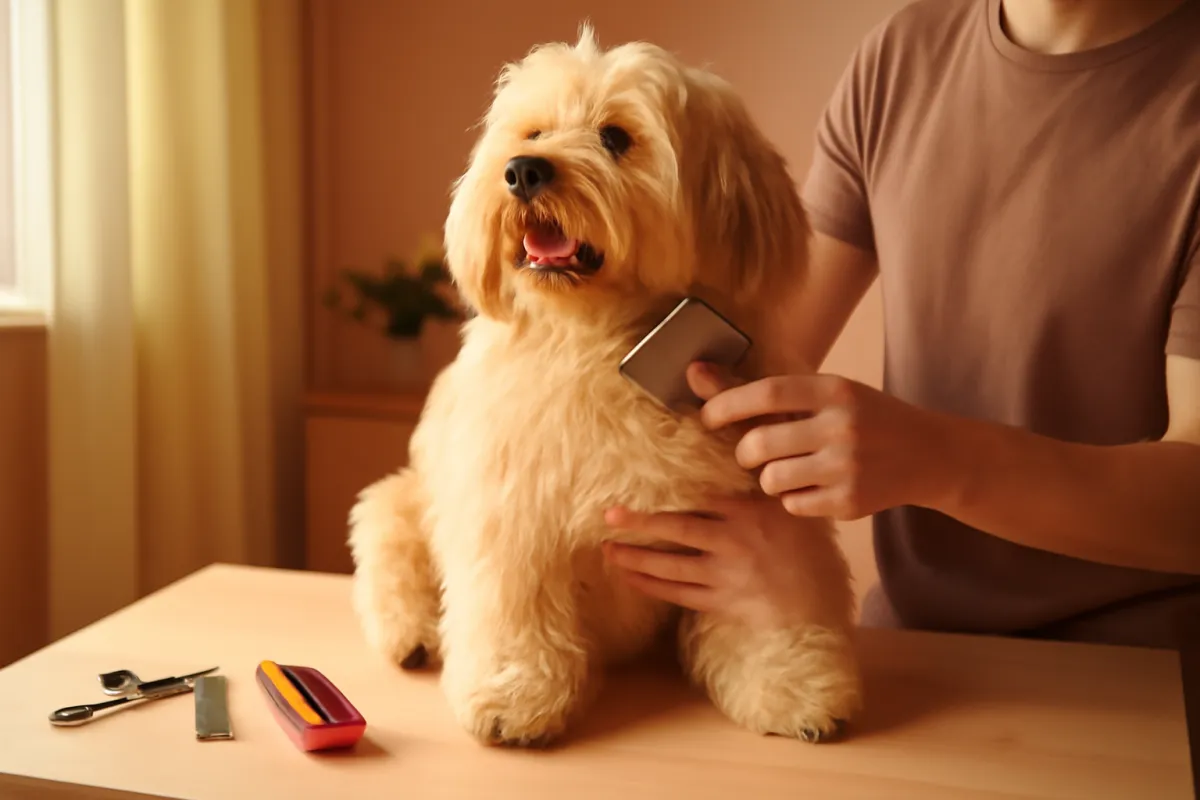
Here is the line that defines Poodle ownership economically. The Poodle coat is hair-like and continuously growing rather than shedding, which is why the breed drops so little fur into your home and why some allergy-sensitive households do better with it. The same property means the coat never stops needing management: unbrushed, it mats, and matting on a Poodle is not cosmetic, it pulls skin, hides sores, and eventually forces a painful shave-down. The maintenance cycle that prevents this is brushing at home between grooms and a full groom, bath, dry, clip, nails, ears, roughly every four to six weeks, for life.
At professional rates, that cycle commonly costs an illustrative $50 to $80 per visit for a toy, $60 to $90 for a miniature, and $90 to $150 or more for a standard, with big-city pricing and badly matted coats running higher. Eight to twelve visits a year lands the annual line at an illustrative $600 to $1,600, and a standard groomed every four weeks in an expensive metro can exceed even that. Our dog grooming cost read breaks down what drives session pricing, and our groomer tipping read covers the etiquette line on top.
Two habits keep the line sane. First, brush properly at home between grooms, down to the skin with a slicker and comb, because groomers charge real surcharges for de-matting and eventually cannot save a neglected coat at all. Second, keep the schedule, since stretching a six-week cycle to ten does not save half the money; it converts a routine groom into a longer, costlier session and a less comfortable dog. Pick a sustainable clip style, keep the cadence, and the biggest Poodle line becomes a predictable one.
Professional grooming versus clipping at home
The grooming line is also the Poodle budget’s biggest savings opportunity, because unlike food or vet care, you can genuinely produce it yourself. Home clipping requires an upfront kit, decent clippers, blades, shears, a slicker, combs, and ideally a grooming table for your back’s sake, an illustrative $200 to $500 to start, plus the skill, which arrives through tutorials, practice, and a forgiving attitude toward your first few haircuts. From there, each home groom costs electricity and an afternoon, and the annual line collapses from four figures toward a couple hundred dollars of consumables and blade sharpening.
The honest middle path suits most households: hybrid grooming. Owners handle brushing, baths, and simple maintenance trims, and a professional does a proper clip a few times a year, catching the feet, face, and finish work that takes real skill. That commonly cuts the professional line by half or more while keeping the coat genuinely managed, and it keeps a professional’s eyes on the dog’s skin, ears, and nails a few times a year, which has caught more than one small problem early.
What does not work is the no-plan plan: sporadic professional grooms when the coat looks bad, no brushing in between. That path costs more per visit in de-matting surcharges, stresses the dog, and periodically ends in shave-downs. Whichever route you choose, choose it as a system, because the coat is a permanent subscription; the only question is whether you pay it in money, in your own time, or, in the neglect case, in the dog’s comfort.
Training a famously clever breed
The Poodle routinely places at the top of working-intelligence rankings among all breeds, and that brain is a budget item in both directions. On the cost side, early group classes, an illustrative $150 to $400 across puppyhood, are close to non-negotiable for getting the most out of a dog this capable, and many owners happily continue into sports, obedience, agility, scent work, that add modest ongoing fees. On the savings side, a well-trained Poodle is cheap to live with: fewer destroyed possessions, easier vet and groom visits, reliable manners that make every service interaction smoother.

The flip side of the intelligence is a genuine need for mental work. An under-stimulated Poodle, especially a standard, manufactures its own entertainment, and owner-manufactured entertainment is always cheaper than dog-manufactured entertainment. Puzzle feeders, training games, retrieve work, and simply including the dog in daily life cost little and prevent the boredom behaviors that otherwise become expenses. The breed is also sensitive; harsh methods backfire and can create anxiety issues that cost real money in behavior consultations, so positive, engaged training is both the kind and the economical route.
Budget-wise, put training in the first-year plan at full weight and keep a small enrichment line forever, an illustrative $100 to $300 a year for classes, toys, and activities. Our dog training cost read prices the market from group classes to private work. For this breed, it is among the highest-return spending in the whole budget.
Breed-specific health costs
The good news comes first: the Poodle is generally regarded as a healthy, long-lived breed in all three sizes, which is part of why it anchors so many crossbreeding programs. The breed’s expected health line is closer to a Husky’s than a French Bulldog’s, and plenty of Poodles live long lives on little more than routine care. Still, each size carries watch areas that belong in an honest budget, because “generally healthy” is a statement about averages and you are budgeting for one specific dog.
Across all sizes, the breed is associated with some inherited eye conditions, including progressive retinal atrophy, which responsible breeders screen for; ear care is a small recurring theme, since the breed’s ear canals grow hair and trap moisture, making routine cleaning part of grooming and occasional ear infections part of life; and epilepsy appears in the breed, manageable when it occurs but a lifelong medication line. The next two sections split the rest by size, because the toy and miniature risk profile and the standard risk profile are different enough to deserve separate budgeting.
The financial framing mirrors every breed read on this site: genetics load the dice, parent testing unloads them somewhat, and the remainder is why insurance or a dedicated fund exists. A Poodle’s expected bills are modest; its possible bills are not, and the gap between expected and possible is precisely what risk products are for. Any symptom or specific concern belongs with your vet rather than a cost article.
Health in toy and miniature Poodles
The small sizes’ signature issue is patellar luxation, kneecaps that slip out of their groove, common across small breeds generally. Mild cases need monitoring and weight management; significant cases need surgical correction, commonly an illustrative $1,500 to $3,500 per knee once imaging, surgery, and rehab are included, and both knees can be affected. It is the single most budget-relevant condition in the small Poodles, and one of the clearest arguments for either early insurance enrollment or a real emergency fund. Small Poodles also see Legg-Calve-Perthes disease, a hip condition of small breeds, and some collapsing trachea risk shared with other tiny dogs.
The everyday line for small Poodles is dental care. Small mouths crowd teeth, and toy breeds build tartar and periodontal disease early and often, so professional dental cleanings under anesthesia, an illustrative $300 to $800 each, arrive more frequently than large-breed owners expect. Daily brushing genuinely stretches the interval and is the cheapest dentistry available. Budget the dental line as recurring, not exceptional, for a toy or miniature.
The bright side is structural: everything about small-dog medicine is dosed by weight, so preventatives, medications, and anesthesia all cost less than a large dog’s versions, and the small sizes dodge the standard’s bloat risk almost entirely. Combined with lifespans commonly reaching an illustrative fourteen to sixteen years, the small Poodle’s health story is long, mostly inexpensive, and punctuated by knees and teeth, which is exactly what its budget should reflect.
Health in Standard Poodles
The standard’s list is shorter but carries bigger price tags. The one every standard owner should know by name is bloat, gastric dilatation-volvulus, the deep-chested-breed emergency in which the stomach fills and twists. It is rapidly life-threatening, the fix is emergency surgery, and the bill commonly runs an illustrative several thousand dollars, $3,000 to $7,000 or more with hospitalization. Standards are among the breeds at meaningful risk, which is why some owners discuss a preventive gastropexy with their vet, often performed alongside spay or neuter at moderate added cost. Knowing the symptoms, a distended abdomen, unproductive retching, sudden distress, and driving straight to the emergency vet is the non-financial preparation.
The standard also carries elevated risk of Addison’s disease, an adrenal hormone deficiency the breed is known for; it is very manageable once diagnosed, but management means lifelong medication and periodic testing, an illustrative $50 to $200 a month depending on the dog and protocol. Hip dysplasia occurs at large-dog rates, with the conservative-to-surgical cost spectrum every big-breed owner learns, and sebaceous adenitis, an inflammatory skin condition the breed is associated with, means some standards carry an ongoing dermatology line. Responsible standard breeders test hips and screen skin, which is much of what their price buys.
None of this makes the standard a high-risk breed; it remains healthier than many large dogs, as a comparison with our Golden Retriever cost read makes clear. It does make the standard the size where insurance earns its premium most obviously, because its signature risks, bloat above all, are exactly the sudden four-figure events insurance exists to absorb.
Why pet insurance matters for this breed
The Poodle’s insurance logic follows its health profile: a generally sound breed with a short list of genuinely expensive possibilities. For the small sizes, the knee surgeries; for the standard, bloat, hips, and Addison’s; for all sizes, eye conditions, epilepsy, and the ordinary accident risk every dog carries. Those are precisely the lumpy, unpredictable costs that a monthly premium converts into a flat line, and precisely the ones a savings account needs real depth to absorb on its own.
Timing dominates the decision. Insurance enrolled while the puppy is young and healthy covers whatever comes; conditions diagnosed first become pre-existing exclusions almost everywhere (the Texas Department of Insurance’s pet insurance page makes the same point), and several of this breed’s issues, luxating patellas, Addison’s, eye disease, tend to announce themselves in ways that lock them out of later coverage. The economical move is deciding in the first months, not after the first scare. Our how to choose pet insurance read walks the policy anatomy, deductibles, reimbursement, caps, exclusions, and our is pet insurance worth it for dogs read frames the underlying bet honestly.
Self-insurance is a legitimate alternative for this breed, more than for high-risk breeds, provided it is done as a discipline rather than an intention: the same monthly amount, banked automatically, left untouched. A long-lived, generally healthy dog gives a savings plan many years to compound, and a toy Poodle’s realistic risk list is modest enough that a funded account covers most of it. What fails, for Poodles as for every dog, is the accidental no-plan, because a bloat estimate or a bilateral knee quote does not wait while you arrange financing.
What Poodle pet insurance costs
Premiums track size, age, and region, and the Poodle’s generally favorable health record keeps it off the expensive end of breed pricing. As illustrative figures: a toy or miniature Poodle commonly runs $25 to $45 a month for accident-and-illness coverage, and a standard commonly runs $40 to $70, with premiums rising as the dog ages and varying meaningfully by state and insurer, which is why the Washington State Office of the Insurance Commissioner’s pet insurance page tells buyers to ask how age and breed set the premium. Accident-only policies price lower at every size and cover the trauma slice of risk, though they leave out the illness list that makes up most of this breed’s watch areas.
The usual levers move the number: higher deductibles and lower reimbursement percentages trim the premium while shifting more of each claim to you; annual caps set the ceiling on what a catastrophic year returns. For a standard, weigh the cap against a realistic bloat-plus-complications scenario; for the small sizes, against a bilateral knee case. Reading the exclusions page matters more than optimizing the premium, because a policy that excludes the exact conditions your size is prone to is cheap for a reason. Our pet insurance cost per month read breaks down how the pricing machinery works.
Judged against the bills, the premium math is straightforward. An illustrative $35 a month is about $420 a year; one knee surgery outruns a decade of that, and one bloat surgery outruns it further. Whether any individual dog ever collects is unknowable, which is what insurance is, and a healthy Poodle may pay in more than it claims. The alternative discipline, banking the same amount, works too. The decision to make on purpose is which one you are doing.
The lifetime cost of a Poodle
Stretch every line across the breed’s long life and the total emerges. Take an illustrative middle case: a miniature Poodle, purchased at $1,800, first year at $3,200 all in, then fourteen more years averaging $2,000 with hybrid grooming, insurance, and ordinary luck. That is roughly $31,000 across fifteen years. Push the assumptions around, a toy groomed at home for less, a standard with full-service grooming and a surgical event for more, and the honest range lands at an illustrative $25,000 to $45,000 or more for a Poodle’s lifetime.
The composition is what makes the Poodle total distinctive, and the chart below shows it. Grooming, a rounding error in most breeds’ lifetime math, is a full block here, on the order of a fifth of everything the dog will ever cost at professional rates. Purchase, the number buyers fixate on, is among the smallest slices. And the years themselves do quiet work: a small Poodle does not cost much per year, but it bills for a decade and a half of them.
Where a Poodle's lifetime cost goes
Representative split of an illustrative lifetime total into its main blocks, professional grooming assumed. Illustrative shares, not dollars.
Grooming is the block that separates Poodle math from most breeds: at professional rates it rivals the entire health line across a lifetime, and it is also the block owners can shrink most by learning home clipping.
Our lifetime cost of a dog read tallies the general version of this exercise; the Poodle lands mid-table for its size class, cheap on health, expensive on maintenance, and paid out over more years than most. Build your own version in the calculator with your size, grooming plan, and insurance choice.
How a Poodle compares to other dogs
Placed against the field, the Poodle’s cost shape is easy to state: low drama, high maintenance. Against a health-heavy breed, a French Bulldog, a Golden Retriever with its cancer risk, the Poodle’s expected vet line is a relief, and its lifespan advantage means more dog-years per dollar than almost any purebred. Against a wash-and-go breed of similar size, a smooth-coated mix, say, the Poodle costs strikingly more, and the entire difference is the coat: the groom cycle adds an illustrative $600 to $1,600 a year that the short-haired dog simply never bills.
Within its own size classes: a toy Poodle against other toy breeds is inexpensive apart from grooming, with the standard toy-breed knee and dental lines; a standard against other large breeds is cheaper to feed than the heaviest eaters, healthier than the orthopedic and cancer heavyweights, and dearer than nearly all of them at the groomer. Against our Corgi cost read, the trade is almost a mirror image: the Corgi sheds copiously but needs no clipping, while carrying back-and-joint risks the Poodle mostly avoids; the Poodle banks the health savings and spends them at the groom table.
The comparison worth making before buying is honest self-knowledge, not breed rankings: will your household actually brush this dog twice a week and keep a six-week groom cadence for fifteen years, or pay someone who will? If yes, the Poodle is one of the best value long-run companions in dogdom. If no, the coat will make the decision for you, unpleasantly, and a lower-maintenance breed from our dog cost by breed read is the cheaper truth.
Buying responsibly: what to look for
Because the doodle era has industrialized Poodle-adjacent breeding, sorting real breeders from volume sellers matters more in this breed than most. A responsible Poodle breeder health-tests the parents for their size’s conditions, hips and skin for standards, knees and eyes for the small sizes, and shows you the results without being cornered into it; raises puppies in the house with early handling and grooming exposure; asks you as many questions as you ask them; takes the dog back at any point in its life; and does not have puppies constantly available in every color. That checklist is what the fair end of the price range is paying for.
The warning signs mirror it: no testing or vague “vet checked” claims in place of real clearances, always-available litters, price premiums pitched on color or “teacup” size, brokered shipping sight-unseen, and pressure to decide quickly. A bargain from that world commonly reappears as knee surgery, skin disease, or anxiety work, and, less measurably, as the ethical cost of having funded it. The same caution applies doubly to doodle sellers using Poodle health reputation as marketing while testing nothing.
Rescue deserves equal billing. Poodles and their mixes flow through breed rescues and shelters continuously, adults with known temperaments and known coats, at a fraction of breeder prices, and an adult that arrives groom-tolerant and house-trained skips two of the most effortful lines in this read. Whichever route, line up the aftercare early: a vet you trust, chosen with the criteria in our how to choose a vet read, and a groomer you trust, booked before the coat needs one.
An illustrative year with a Miniature Poodle
One worked example makes the ranges concrete: a healthy adult miniature Poodle in an average-cost area, hybrid grooming, insured, no surprises. Food and treats at an illustrative $40 a month: $480. Routine vet care, annual exam, vaccines, and preventatives: $450. Grooming on the hybrid plan, four professional grooms at $75 with home baths and brushing between: $300, plus $50 of blades, shampoo, and supplies. Insurance at $35 a month: $420. Training, enrichment, and toys: $150. Everything else, replacement gear, the odd extra: $100. The year totals an illustrative $1,950, almost all of it predictable.
Now move the levers. Full professional grooming every five weeks converts the $350 grooming line into roughly $750, lifting the year past $2,300. A standard Poodle version of the same year, with bigger food, grooming, and premium lines, runs closer to an illustrative $2,800 to $3,200. A toy Poodle with a home-clipping owner and the same insurance runs under $1,700. Same breed, same care philosophy, and the spread between the cheapest and dearest realistic versions is more than a thousand dollars a year, driven by size and grooming choices made once.
And the years that are not this year: the puppy year cost more, as the first-year section priced, and some future year will carry a dental, a knee, or an emergency, which the insurance line or a funded account exists to flatten. That is the full texture of Poodle ownership: an unusually predictable baseline, a couple of known lumps, and a very long runway. The calculator turns your own version of this paragraph into totals.
How to keep Poodle costs down
The Poodle budget has more owner-controllable slack than most breeds, because its biggest line is a service you can learn. The levers that work:
- Learn some or all of the grooming. The hybrid plan halves the professional line; full home clipping collapses it. The upfront kit pays for itself within a few skipped appointments, and the skill lasts the dog’s whole life.
- Brush on schedule regardless. De-matting surcharges and shave-downs are the tax on skipped brushing. Ten minutes twice a week is the cheapest line item in this entire read.
- Buy tested, or adopt assessed. Parent health testing is the discount on future vet bills; rescue adults are the discount on everything. The expensive dog is the bargain puppy.
- Enroll in insurance early or start the fund the same week. Every size’s watch-list conditions punish late deciders via pre-existing exclusions. Decide in month one, on purpose.
- Do the dental work at home, especially for small sizes. Daily brushing stretches the interval between anesthesia dentals, each one an illustrative $300 to $800 avoided for longer.
- Train early and thoroughly. A few hundred dollars of classes buys a dog whose vet visits, grooms, and daily life all run cheaper and easier for fifteen years.
- Shop the recurring lines annually. Food, preventatives, and premiums all reprice; our how to lower your vet bills read and medication savings read cover the honest ways to trim them.
The line never to cut is the coat care and the preventive medicine, because both send larger invoices later when skipped. Reprice everything; remove nothing.
Is a Poodle worth the cost?
The honest answer depends entirely on the fit between the breed’s demands and your household. What the money buys is a genuinely exceptional companion: one of the smartest, most trainable dogs in existence, athletic at the standard end and portable at the toy end, light on shedding, generally sound, and present for an unusually long time. Cost per year of good dog, the metric that actually matters, ranks the Poodle among the better deals in purebred ownership, especially the small sizes with their decade-and-a-half lifespans.
What the money demands in return is the maintenance covenant: the brushing, the groom cadence, the mental stimulation a clever dog requires, kept up not for a season but for the duration. Households that fold those into normal life barely feel them; households that resent recurring obligations will find this breed’s core cost is paid in irritation rather than dollars, and the coat does not accept excuses. The breed also wants company and engagement, and a bored, isolated Poodle spends your money in behavioral currency.
So the question this cost read can answer is narrower than “worth it”: can you carry an illustrative $1,600 to $3,600 a year, plus a funded emergency answer, plus a permanent grooming habit, for twelve to sixteen years? If yes, few breeds return more per dollar. If the grooming line is the sticking point, be honest about it now, because it is the one Poodle cost that never, ever goes away. Run the numbers in the calculator, and compare alternatives in the dog cost by breed read before you decide.
The bottom line
A Poodle costs an illustrative $1,000 to $3,000 to buy from a reputable breeder, a few hundred through rescue, and an illustrative $1,600 to $3,600 a year to run depending on size and grooming choices, with the coat’s every-four-to-six-weeks maintenance cycle standing as the breed’s signature expense and its long lifespan quietly multiplying everything. The health picture is friendlier than most purebreds, knees and teeth in the small sizes, bloat, hips, and Addison’s in the standard, which makes early insurance or a disciplined fund the sensible answer to a short list of expensive possibilities. The lifetime total commonly lands at an illustrative $25,000 to $45,000 or more.
The strategy writes itself from the structure: buy from tested parents or adopt an assessed adult, start grooming habits and training in the first weeks, decide the insurance question while the puppy is still claim-free, learn as much of the coat work as your household will sustain, and fund the small monthly set-asides that make dentals and emergencies boring. Do that and the Poodle becomes what its owners have always known it to be: one of the best long-term companions money can responsibly buy, at a price you saw clearly before you paid it. The calculator is there to make your version of the numbers concrete.
A word from the MuttMark team before you fall for a curly puppy: this cost read is a planning companion, not veterinary, breeding, grooming, or financial advice. Every figure in it, purchase ranges, groom pricing, health-event costs, premiums, and lifetime totals alike, is an illustrative estimate meant to shape expectations, and your real numbers will move with your region, your chosen size, your breeder or rescue, your groomer’s rates, your insurer’s terms, and the particular dog who ends up on your sofa. The breed’s health tendencies are described in general terms to support honest budgeting, never to predict or diagnose; whether any condition applies to your dog, and what to do about it, are questions only a veterinarian who has examined that dog can answer, just as grooming decisions for a specific coat belong with a professional groomer. Price the real thing locally, in writing, before you commit, and let the professionals who can see your actual dog make the calls that matter.
Frequently asked questions
How much does a Poodle cost?
As an illustrative figure, a Poodle puppy from a reputable breeder commonly runs somewhere around $1,000 to $3,000 across the three sizes, with rescue or adoption far cheaper at roughly $150 to $600, and top show or performance lines climbing past $3,500. The purchase, though, is the smaller part of the story. A Poodle's curly, continuously-growing coat needs professional-grade grooming every four to six weeks for life, which quietly becomes one of the largest lines in the budget, and the breed's long lifespan stacks up many years of ordinary costs. Treat every number here as an illustrative planning range and confirm real prices with local breeders, rescues, and groomers.
Are Poodles expensive to own?
Moderately, and in an unusual pattern: the Poodle's defining cost is maintenance rather than medicine. The coat does not shed like a normal dog's; it grows continuously and mats without regular care, so a groom every four to six weeks, or serious home-clipping effort, is a permanent line that most breeds simply do not carry. Against that, Poodles are generally healthy and long-lived for their respective sizes, and the toy and miniature versions eat very little, which keeps food and routine vet lines modest. Budget honestly for the coat and the years, and the rest of the breed's costs are manageable and fairly predictable.
How much does Poodle grooming cost?
As illustrative figures, a professional groom commonly runs $50 to $80 for a toy Poodle, $60 to $90 for a miniature, and $90 to $150 or more for a standard, and the breed needs it roughly every four to six weeks to stay comfortable and mat-free. Across a year that is commonly $600 to $1,600 depending on size, schedule, and your area, making grooming one of the largest recurring lines in a Poodle budget. Learning to clip at home cuts the cost dramatically after an upfront investment in clippers and skill, and many owners land on a hybrid: home maintenance with a professional groom a few times a year.
Which Poodle size is cheapest to own?
The toy and miniature sizes generally cost less across the board: they eat a fraction of what a standard eats, their weight-based medications and anesthesia cost less, their grooming sessions price lower, and they tend to live longer, fourteen to sixteen illustrative years against a standard's twelve to fifteen. The standard Poodle carries larger food, grooming, and vet lines plus a couple of size-related health risks, bloat among them, that the small sizes mostly avoid. The trade is that the longer-lived small sizes accumulate more years of cost, so lifetime totals land closer together than the yearly numbers suggest.
What are the main health costs for a Poodle?
Poodles are generally regarded as a healthy, long-lived breed, but each size has watch areas worth budgeting for, and there is no single figure because it depends on the dog. Toy and miniature Poodles are prone to kneecap luxation, dental crowding that raises dental-care needs, and some inherited eye conditions. Standards carry more risk of hip dysplasia, bloat, which is a true surgical emergency, Addison's disease, and a skin condition called sebaceous adenitis. Responsible breeders screen for the relevant issues in their lines, which is a large part of what a fair puppy price buys, and any specific concern belongs with your vet.
Is pet insurance worth it for a Poodle?
For a generally healthy breed with a handful of real risks, insurance is worth pricing seriously, though whether it pays off in any one case is never guaranteed. Illustrative premiums commonly run $25 to $45 a month for toy and miniature Poodles and $40 to $70 for standards, reflecting size-based costs. The strongest arguments for coverage are the standard's bloat and orthopedic exposure and the small sizes' knee surgeries, all of which produce four-figure bills insurance handles well. Enrolling while the dog is young and healthy matters most, because anything diagnosed first becomes a pre-existing exclusion. The alternative is a disciplined monthly savings habit; the wrong answer is neither.
How much does a Poodle cost over its lifetime?
Adding the purchase, first-year setup, and twelve to sixteen years of food, routine care, grooming every few weeks, and health provisioning, an illustrative lifetime total commonly lands somewhere around $25,000 to $45,000 or more, with the sizes finishing closer together than their yearly costs suggest because the smaller Poodles live longer. Grooming alone can account for a five-figure share across a long life, which is the line that separates Poodle math from most breeds. A healthy dog groomed partly at home sits toward the bottom of the range; a standard with a surgical event or two and full-service grooming sits toward the top. Use the figure to plan rather than predict.
Why are Poodles and doodle mixes so expensive to buy?
Demand does most of the work. The Poodle's reputation as a smart, athletic, low-odor breed with a coat that suits many allergy-sensitive households keeps all three sizes consistently popular, and the boom in Poodle-cross doodles has pulled breeding stock and buyer attention toward anything Poodle-shaped, firming prices further. A responsibly bred Poodle also carries real costs: health testing on the parents for the size-specific conditions, quality rearing, and early socialization. Be cautious in both directions, of bargain puppies whose breeders skipped the testing, and of steep premiums for fashionable colors or marketing labels, neither of which buys a healthier dog.