
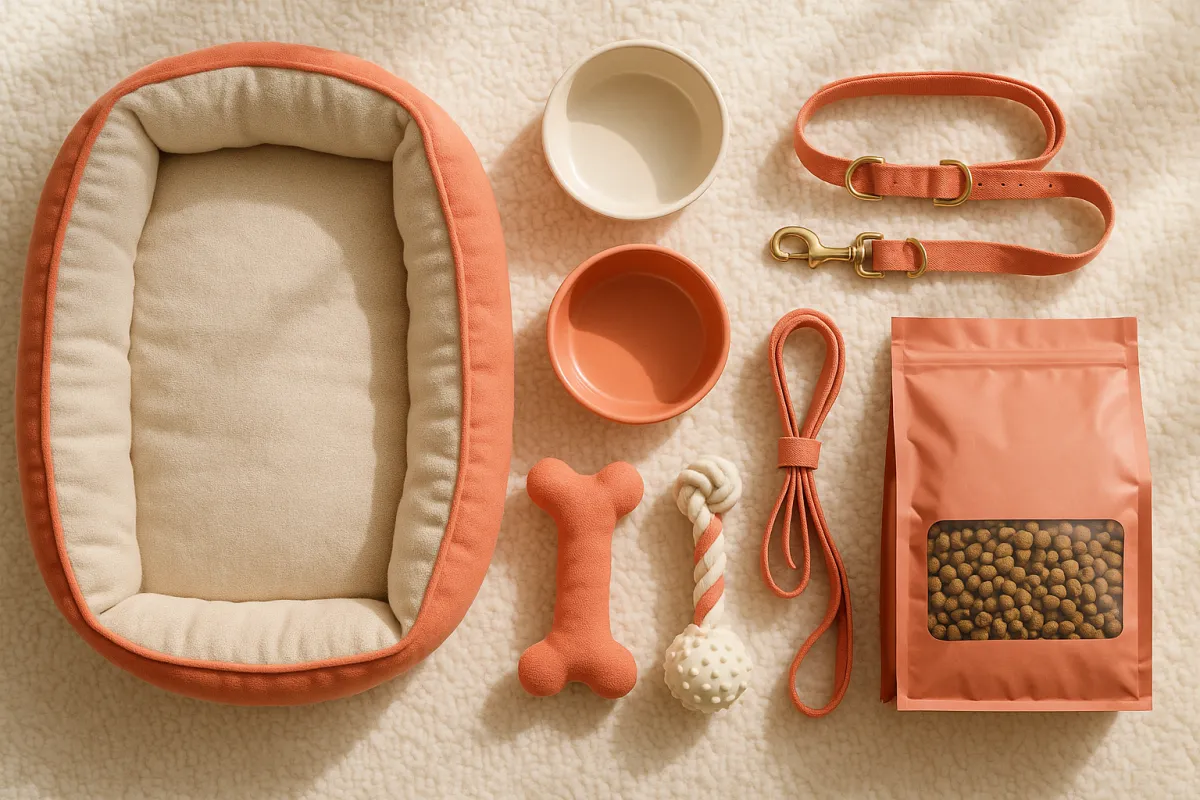
What's on this page
- The short answer what dog owners actually want
- Start with the dog you are shopping for
- Under about $25 the small gifts that land
- About $25 to $50 the practical upgrade band
- About $50 to $100 the things owners defer
- Above about $100 the big-ticket gifts
- Gift budget bands at a glance
- Gifts for a brand new puppy owner
- Gifts for a senior dog’s household
- Gifts for a big dog household
- Gifts for a small dog household
- Consumables the gift that gets used up
- Experience and service gifts
- How to split a gifting budget
- Gifts for a multi-dog household
- Gifts for the owner who has everything
- Gifts that miss and why
- Why food and treats are risky gifts
- Never give a pet as a gift
- Timing, wrapping, and safety notes
- How to spend nothing and still get it right
- The bottom line
Short answer: The gifts dog owners use replace something worn out or remove a chore: a fraying lead, a chipped bowl, a flattened bed, or a second of something they already own. Consumables are the most reliably welcome inexpensive gift, and contributions toward training, grooming or boarding relieve real recurring costs. Avoid anything sized to the dog unless you know the measurements or food unless you know the diet, and never give a pet as a surprise.
Buying for a dog owner looks easy and usually is not, because the obvious gifts are the ones they already own. Most dog households have a box of toys the dog ignores, at least one novelty item with a breed printed on it, and a drawer of gadgets that seemed useful in a shop. What they do not have is a second set of bowls, a lead that has not been chewed, or the boring consumable they keep running out of on a Sunday evening.
This field guide is organised around that gap. It works through gifts by budget band, then by the specific household you are buying for, from a brand new puppy owner to someone whose dog is well into its senior years. It is deliberately free of brand names and specific prices, because the right answer depends on the dog and because prices move, so the bands below are illustrative planning ranges rather than a shopping list. It closes on the gifts that reliably miss, including the two that are worth avoiding outright. If you want to understand the ongoing costs a dog owner is actually carrying, our monthly dog cost read sets them out, and the cost calculator prices them for a specific dog.
Key takeaways
- The gifts that get used replace something worn out or remove a chore. Owners under-buy the boring items and over-buy the fun ones, so aim at the boring category.
- Avoid anything sized to the dog unless you know the measurements, and avoid food and treats entirely unless you know the dog's diet is unrestricted.
- Consumables are the most reliably welcome inexpensive gift, because they get used up rather than stored on a shelf.
- Contributions toward training, grooming, or boarding relieve real recurring costs and need no guessing about size or diet.
- Never give a pet as a surprise gift. It is a decade-long commitment the recipient has not chosen, and it is a recognised route to rehoming.
The short answer what dog owners actually want
Ask a room of dog owners what gift they would genuinely use and the answers cluster in three places. The first is replacements: the lead that is fraying, the bowl with a chip in it, the brush that has lost half its pins, the bed that has been washed so many times it has gone flat. Owners defer these because they still technically work, and because buying a new one for yourself feels like an errand rather than a treat.
The second is the second of something. Households that own one bed discover they want one in another room. Households with one towel by the door want two in winter. Nobody buys a spare of anything for themselves until the first one fails, which makes a spare an unusually good gift.
The third is relief from a chore or a cost. A contribution toward a groom, a training course, or a boarding stay lands differently from an object, because it removes something the owner was already going to pay for or do. None of these three categories is exciting to write on a list, which is precisely why they are under-supplied and why they work.
Start with the dog you are shopping for
Before the budget question, answer three factual ones about the dog, because they eliminate most of the ways a gift goes wrong. How big is it? Anything worn, slept on, or clipped to the dog is sized, and a guess is a return trip for the recipient. What does it eat? A surprising share of dogs are on prescription diets, weight-management plans, or restricted ingredients, and a gift of food is unusable in all three cases.
What is its life stage? A four-month-old puppy, a five-year-old dog in its prime, and a twelve-year-old with stiff joints want completely different things, and so do their owners. A puppy household needs volume and durability; a senior household needs comfort and accessibility. Buying a chew toy rated for a determined adolescent for a dog with worn teeth is not a kindness.
If you cannot answer those three questions and cannot ask without spoiling the surprise, that is useful information: it points you toward the categories that do not depend on the answers, which are consumables the owner buys anyway, items for the owner rather than the dog, and contributions toward services. Those categories are covered below, and they are the safe ground.
Under about $25 the small gifts that land
The smallest band is the most reliable, because it is where consumables live. A bulk supply of waste bags is unglamorous and universally used. A refill of the shampoo or the ear cleaner the owner already buys removes a small recurring purchase. A pack of training treats is the one food exception worth considering, and only if you know the dog has no dietary restrictions, which most of the time you do not.
Beyond consumables, this band buys small replacements. A decent brush suited to the dog’s coat, a set of nail clippers or a grinder, a collapsible travel bowl, a car window shade, or a microfibre drying towel for the spot by the door all fit comfortably and all replace something that is either worn out or missing. Our grooming cost read explains why the home-care tools pay for themselves.
The item most often overlooked in this band is a decent towel kept by the door. It costs very little, it is used every wet day, and almost nobody buys a good one for themselves. If you want the gift to feel considered rather than merely functional, attaching a note about the specific dog does more for it than doubling the amount spent.
About $25 to $50 the practical upgrade band
This is where you replace something the owner is putting up with. A better lead in a material and length that suits how they actually walk, a properly fitted harness if and only if you know the measurements, a washable cover for the sofa spot the dog has claimed, or a large absorbent mat for the entrance in muddy months all sit in this range and all get used daily.
It is also the band for the second of something. A spare bed for another room, an extra set of bowls, a second lead to keep in the car. Owners rarely buy duplicates for themselves, and the duplicate is usually the item that removes the most friction, because it means never having to carry the first one from room to room.
Toys belong here too, with a caveat. The toys that survive are chosen for the dog’s chewing style rather than for appearance, and a toy that fails in ten minutes is a disappointment plus a hazard. Our chew toy read covers how to match durability and size to the dog, and the same principles apply to adults. If you are unsure of the dog’s chewing habits, this is a category to skip in favour of something in the paragraphs above.
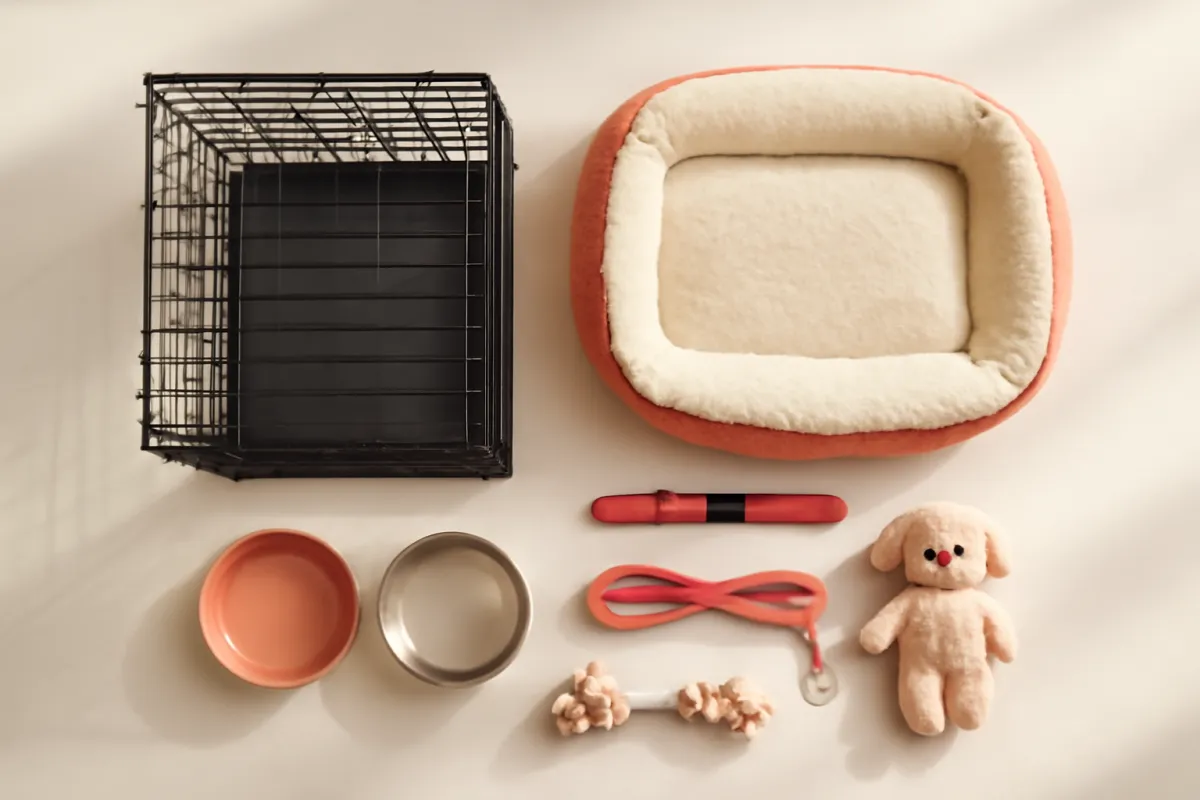
About $50 to $100 the things owners defer
This band buys the purchases owners keep postponing because they are not urgent. A good bed sized properly for the dog, especially for a large one where the cheap options flatten quickly. A car boot liner or seat cover for people who transport a dog regularly and have been meaning to sort it out for two years. A sturdy outdoor light for the dark half of the year, or a decent set of reflective walking gear.
It is also the natural range for contributions toward services. A credit at the grooming salon the owner already uses, part of the cost of a training course they have mentioned, or a contribution toward a boarding stay for a trip they have planned. Our training cost read and our tipping the groomer read cover the economics of both, and services have the advantage of needing no sizing information at all.
The thing to avoid in this band is complexity. Gadgets that require setup, an app, a subscription, or a behaviour change from the dog have a high failure rate, because the friction of getting started is exactly what stops the owner using them. If the gift needs a tutorial, it will sit in a cupboard, and the more it cost the worse that feels for everyone.
Above about $100 the big-ticket gifts
The largest band is mostly for people buying jointly or for a very close relationship, and it splits into two honest categories. The first is a genuinely good version of something they use daily: a properly made bed for a giant breed, a high-quality harness system for a dog that pulls, or a well-designed crate for a household that uses one. Our crate guide covers what actually matters in that choice.
The second is relieving a real cost. A contribution toward an upcoming dental procedure, toward a training programme, or toward the pet fund the household is trying to build all fall here. These are not exciting to unwrap, which is why they work best when paired with something small and physical so there is something to open. Our emergency preparation read explains what a pet fund is for and why most households are under-funded on it.
The category to be cautious about at this level is anything the dog has to accept. Expensive items that depend on the dog tolerating them, wearing them, or learning them carry real risk of ending up unused, and the higher the price the more awkward that outcome. Spend at this level on things whose success does not depend on the animal’s cooperation.
Gift budget bands at a glance
Put the bands side by side and the shape of the decision becomes clear. The figures below are illustrative midpoints for each band rather than prices, and the point of the chart is the relationship between them rather than any single number.
Illustrative gift budget bands for a dog owner
Representative midpoints for four bands. Illustrative only; prices vary by item, retailer, and year.
Spending more does not raise the odds that a gift gets used, because the usual failure is mismatch rather than cheapness. A well-chosen item in the first band beats a poorly matched one in the fourth.
The useful reading here is that the bands are not a quality ladder. The most reliably appreciated gifts in this category sit in the first two bands, because that is where consumables and replacements live. The upper bands are better suited to relieving a cost than to buying an object, for the simple reason that a service cannot be the wrong size.
Gifts for a brand new puppy owner
New puppy households have a specific shape: they are exhausted, they bought a lot of things at once, and they have not yet discovered which of them they need two of. That makes them unusually easy to buy for if you aim at week three rather than week one.
The reliable choices are the second of something, since a household that bought one bed will want another room covered, and the things that only become obvious after the first accident, such as an enzymatic cleaner. A hands-free lead suits the endless short walks of house-training. A supply of the training treats they are getting through faster than expected is welcome if the puppy has no dietary restrictions, which at that age it usually does not, though it is still worth asking.
The single most valuable gift available to this household is a contribution toward a puppy class. Early socialization and basic training pay back for the dog’s whole life, and they are exactly the thing a stretched new owner defers. Offer it as a contribution rather than booking a specific class, since schedules and locations matter. Our new puppy budget read shows how front-loaded that first year is, which is part of why a contribution lands so well.
Gifts for a senior dog’s household
Households with an older dog are managing comfort and access, and the gifts that land reflect that. Orthopaedic or supportive bedding is the obvious one, and it is genuinely appreciated where a dog has grown stiff. Non-slip runners or mats for hard floors help a dog that has become unsure on its feet. A ramp for the car or the sofa is a larger item that many owners have thought about and not bought.
Practical comfort items also work: a warmer coat for a dog that feels the cold more than it used to, if you know the measurements, or raised bowls where the owner has mentioned neck or back stiffness. Anything that reduces the physical effort of care, such as a good drying coat or a set of grooming tools that make short work of a dog who no longer enjoys long sessions, is welcome.
The one to handle with care is anything that reads as a comment on the dog’s decline. Senior-labelled products are a normal part of the market and most owners are entirely practical about them, but if the household is anxious about the dog’s health, an unlabelled version of the same item is kinder. Where a health concern is active, avoid anything that could look like advice, and leave the medical conversation to their veterinarian.
Gifts for a big dog household
Large-dog households pay a size premium on almost everything, which makes a well-chosen large item unusually valuable. Beds are the clearest example: budget beds flatten fast under a heavy dog, and a properly constructed large bed is a purchase owners defer precisely because it is expensive. Vehicle protection, boot liners, seat covers, and ramps, is the second, because transporting a large dog is a recurring logistical problem.
Strength-appropriate equipment matters here too. Leads, harnesses, and collars for a powerful dog need to be rated for it, and the cheap versions fail at the worst moment. If you know the sizing, this is a good gift; if you do not, it is a bad one, and there is no middle ground. Our Cane Corso cost read sets out how comprehensively the size premium runs through a giant-breed budget.
Consumables scale too, which is easy to forget. A large dog gets through waste bags, shampoo, and bedding covers faster, so a bulk supply goes further as a gift here than it would for a small dog. And boarding, grooming, and most services are priced in weight bands, which makes a contribution toward any of them worth more to this household than to a small-dog one.
Gifts for a small dog household
Small-dog households have the opposite problem: everything is available, most of it is inexpensive, and the owner has probably already bought it. That pushes the good gifts toward quality and toward the specific gaps a small dog creates.
Warmth is the genuine functional need for many small and thin-coated dogs, so a well-made coat is useful rather than decorative, provided you know the measurements. Carriers and travel bags are used far more by small-dog owners than by large-dog ones, and a good one is a deferred purchase. Steps or ramps for furniture are practical where a small dog jumps down from height regularly.
Beyond that, aim at the owner rather than the dog. Small-dog households tend to be well supplied with dog items and short on things for themselves, so a good walking accessory, a decent outdoor light, or a treat-pouch for training is more likely to fill a gap than another toy. Our French Bulldog cost read is a useful reminder that in smaller breeds the money tends to go to health rather than to gear.
Consumables the gift that gets used up
Consumables deserve their own section because they are the most underrated category in the whole list. The reason is structural: a gift that is stored competes for space with everything else the household owns, while a gift that is consumed simply disappears into normal life and quietly saves money.
The safe consumables are the non-food ones. Waste bags, shampoo, ear cleaner, wipes, bedding covers, and the disposable side of grooming. All are bought regularly, none depends on the dog’s diet, and most are not size-critical. If you know which products the household already uses, buying more of the same is close to a guaranteed hit.
The risky consumables are food and treats, covered in more detail below. The short version is that many dogs have dietary restrictions the giver does not know about, and the owner cannot easily decline. If you want to give something edible and are not certain the dog’s diet is unrestricted, give a contribution toward the food they already buy instead, which achieves the same thing without the risk.
Experience and service gifts
Services solve the two hardest problems in this category at once: they cannot be the wrong size, and they relieve a cost the household is already carrying. A groom at the salon the owner already uses, a training course or a private session with a trainer they have mentioned, a boarding or daycare credit for a trip they have planned, or a contribution toward an upcoming veterinary procedure are all substantial and all genuinely welcome.
Two things make service gifts land properly. The first is using the provider they already use rather than one you have chosen, because switching groomers or vets is a bigger ask than the gift is worth. The second is framing it as a contribution rather than a booking, so the recipient keeps control of scheduling, which for a dog-owning household is not a small consideration.
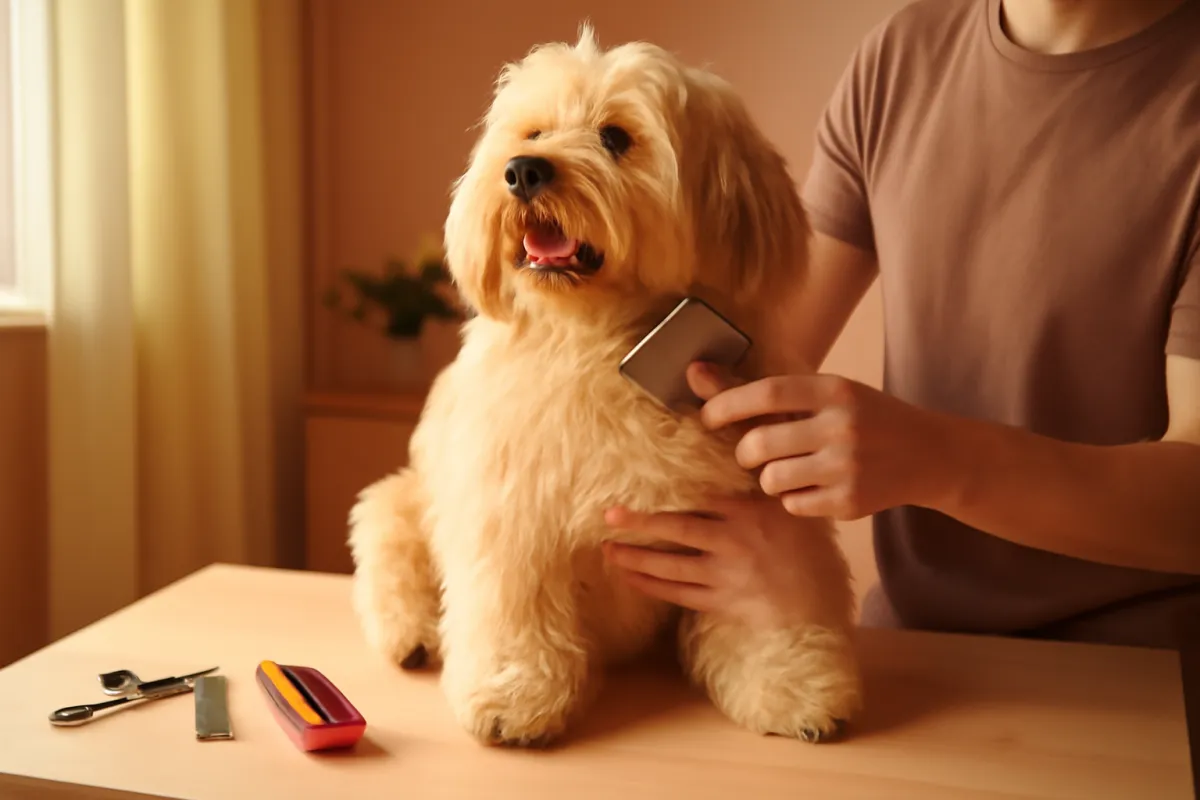
Pair a service gift with something small and physical so there is an object to open. A card with a credit in it is a fine gift and an awkward moment; a card plus a good brush or a bag of the treats the dog already eats is a gift. Our dental cost read covers one of the larger routine bills a contribution can meaningfully relieve.
How to split a gifting budget
If you are buying a single gift, pick one thing and pick it well. If you are assembling a hamper or buying for a household you know well, the split below is a useful default, and it is designed around the failure modes rather than around what looks generous.
How to split a dog owner gift budget
Representative shares for a multi-item gift, designed so most of the value gets used rather than stored.
Sixty percent of the value goes to things that are certain to be used, which is the opposite of how most gift hampers in this category are built. The keepsake share is what makes it feel like a present rather than a delivery.

The logic is that two thirds of the budget should be spent on outcomes you can be confident about, and the remaining third on the part that carries the sentiment. Most gift sets in this category invert that, which is why so many of them end up in a cupboard. A keepsake element is worth including, but it works best as the accent rather than the substance.
Gifts for a multi-dog household
Households with two or more dogs have a distinct set of gaps, and most gift lists ignore them entirely. The obvious one is quantity: every consumable is used at multiple times the rate, so a bulk supply of waste bags, shampoo, or bedding covers goes further as a gift here than anywhere else. So does anything that comes in a set, since a single item risks becoming a resource one dog guards from another.
The second gap is management equipment. Multi-dog homes use more baby gates, more separate feeding stations, more crates or beds in more rooms, and more storage for all of it. A well-chosen gate, a raised or spaced feeding setup, or simply a large sturdy container for keeping food and gear organised solves a problem the household actually has, which is that dog equipment expands to fill any space allowed.
The third is transport. Moving two or more dogs is a logistical exercise, and boot dividers, additional harnesses rated for vehicle use, or a larger boot liner are items owners often defer because they are boring and moderately expensive. Our dog price by breed read is a reminder that these costs multiply rather than add in a multi-dog home.
One caution specific to this household: avoid giving a single special item unless there is a version for each dog. In homes where resource guarding is a live issue, a single high-value toy or chew can create a conflict rather than a pleasure, and the owner will quietly remove it. Sets or duplicates avoid the problem entirely, and they cost no more thought to choose.
Gifts for the owner who has everything
Some households genuinely are well supplied, and the trick with them is to stop shopping for the dog. Owners buy generously for their animals and sparingly for themselves, which leaves a reliable gap in anything the human uses during dog ownership: a proper waterproof for the daily walk, a decent head torch or clip light for winter, gloves that work with a lead, or a treat pouch that does not spill.
The second route is the slightly better version of a boring thing. Nobody upgrades their nail clippers, their drying towel, their brush, or their poop bag dispenser voluntarily, because the existing one still works. A well-made version of an item they use weekly and have never thought about is more likely to be noticed and kept than a novelty item at three times the price.
The third route is removing an annoyance they have mentioned. If they have complained about mud in the hallway, the answer is a proper mat and a drying towel. If they have complained about the car, the answer is a boot liner. If they have complained about the dog waking them, the answer might be a second bed for a different room. Listening for a month before a birthday is worth more than any amount of browsing.
The fourth is simply to ask indirectly. A question about what has worn out lately, dropped into an ordinary conversation, usually produces an answer within a sentence or two, because dog owners always have a mental list of things that need replacing. It is less romantic than a surprise and it produces a gift that gets used every day, which is the trade most people would take.
Gifts that miss and why
Some categories fail often enough to be worth naming. Novelty items with a breed printed on them are the most common miss, because dog owners receive them constantly and most already own several. They are not offensive, they are simply the default gift, and the default gift is the one everyone else also bought.
Anything sized to the dog that you have guessed at is the second, since a coat, harness, collar, or bed that does not fit converts your gift into an errand. Gadgets requiring setup are the third, because the friction of starting is exactly what stops them being used. Scented products are a fourth: many dogs are sensitive to strong fragrance and many owners deliberately avoid it, so a heavily perfumed shampoo or spray is a gamble.
The last category is anything that implies a criticism. Training aids given unprompted, weight-management products, or a book about a behaviour problem the owner has not asked for help with all read as commentary rather than kindness, however well meant. If you genuinely think a household needs help with something, the gift is not the place to raise it. Our training cost read is a useful resource to share if they ask, and only if they ask.
Why food and treats are risky gifts
Food deserves a section of its own because it is simultaneously the most intuitive gift and one of the least safe. A meaningful share of dogs are on prescription diets for a medical condition, on weight-management plans their veterinarian has set, or on restricted-ingredient diets because of a suspected allergy or intolerance. In all three cases, a gift of food or treats cannot be used.
The social problem is worse than the practical one. An owner who receives treats their dog cannot have has to either explain a medical situation they may not want to discuss, or accept graciously and quietly discard the gift. Neither is a good outcome, and the giver rarely finds out, which is why this mistake repeats.
There are two safe versions. If you know for certain the dog’s diet is unrestricted and you know what it eats, more of the same is welcome. If you do not, give a contribution toward the food they already buy, which delivers the same benefit with none of the risk. Either way, avoid anything novel, rich, or intended for human consumption, and never give bones, chews, or edible items whose safety you cannot vouch for. Any question about a specific dog’s diet belongs with its veterinarian.
Never give a pet as a gift
This is the one firm rule in the whole field guide. A dog is a commitment of a decade or more, costing an illustrative sum well into five figures across its life as our lifetime dog cost read sets out, and requiring daily time, suitable housing, and a household in agreement. Giving one as a surprise removes every part of the deliberation that decision needs.
Surprise pets are a recognised route into rehoming and shelter surrender, and the reasons are practical rather than sentimental: the recipient’s lease may prohibit it, their work pattern may not accommodate it, someone in the household may be allergic, or they may simply not want one right now. None of that can be discovered in advance without asking, and asking removes the surprise, which tells you the surprise was never the right format.
If someone in your life genuinely wants a dog and is ready, there is a supportive version. Help with the research, offer to go with them to meet a rescue, or contribute toward the adoption fee and the setup costs when they choose an animal on their own timeline. Our puppy cost read and our choosing pet insurance read are both more useful to a prospective owner than a surprise animal, and neither creates an obligation they did not choose.
Timing, wrapping, and safety notes
A few practical points make the difference between a gift that works and one that creates a problem. Do not wrap anything edible in a way that leaves it accessible under a tree, because dogs find food through packaging and a household with a curious dog does not need a hazard sitting at nose height. If you are giving edible items, tell the recipient so they can store them properly.
Ribbon, string, and small parts are a genuine hazard for dogs and cats, since ingested string can cause serious internal injury. Keep the wrapping simple where a gift will be opened around animals, and avoid decorative elements that come loose. This is worth mentioning to the recipient rather than assuming, particularly in a household with a young dog.
On timing, gifts involving services are best given with plenty of lead time, since grooming and boarding slots around holidays fill early and a credit that cannot be used until spring is less useful. And on returns, if you have bought anything sized, include the receipt without being asked. It is not a failure of the gift, it is the thing that makes a sized gift usable at all.
How to spend nothing and still get it right
The best gift in this category is frequently not purchased. Offering to look after the dog for a weekend, so the owner can go somewhere without arranging boarding, is worth more than most objects and costs nothing but time. For a household that has not had a night away since the dog arrived, it is genuinely the most valuable thing on offer.
Walking the dog regularly for an owner who is unwell, working long hours, or recovering from something is the same logic applied over a longer period. So is driving them to a veterinary appointment, which for anyone without a car and with a large or anxious dog removes a real logistical problem. None of these appear on gift lists, and all of them are remembered.
The smallest version costs nothing at all: a good photograph of their dog, taken properly and printed. Owners take thousands of pictures and print almost none, and a printed image of an animal they love is the item most likely to still be in the house in ten years. Paired with anything practical from the bands above, it turns a useful gift into a considered one.
The bottom line
Gifts for dog owners work when they replace something worn out, remove a chore, or relieve a cost, and they fail when they duplicate what the household already has too much of. Aim at consumables, replacements, spares, and services, and treat the fun categories as the accent rather than the substance. Illustratively, small consumables sit under about $25, the practical upgrade band runs roughly $25 to $50, deferred purchases sit around $50 to $100, and services or large items go above that, but spending more does not improve the odds, because the usual failure is mismatch rather than cheapness.
Then avoid the specific traps. Do not guess at sizing on anything the dog wears or sleeps on. Do not give food or treats unless you know for certain the dog’s diet is unrestricted, because prescription diets, weight plans, and allergies are common and an owner cannot easily decline. Do not give anything that needs a tutorial, a subscription, or a behaviour change from the dog. Do not give a training aid or a weight product as unsolicited commentary. And never give an animal as a surprise, because a dog is a decade-long commitment and the recipient deserves to make it deliberately. Get those right and almost anything else you choose will be used, which is the only real test a gift has to pass.
This field guide offers general suggestions for choosing gifts for people who own dogs and is not veterinary advice, product endorsement, or a recommendation about any specific item. No brands, retailers, or products are named, and the budget bands above are illustrative planning ranges only: actual prices vary widely by item, region, retailer, and time of year. Nothing here should be used to decide what a dog eats, wears, chews, or is treated with, because diet, allergies, weight management, dental health, chewing safety, mobility aids, and coat care are individual matters that depend on the animal. Confirm any food, treat, chew, supplement, grooming product, or equipment choice with the dog’s own owner and, where health is involved, with a licensed veterinarian who knows the animal. Keep edible gifts and decorative ribbon or string away from pets, since both present real ingestion hazards.
Frequently asked questions
What is a good gift for a dog owner?
The gifts that get used share one quality: they replace something the owner already owns and is tired of, or they remove a chore. A sturdier lead, a better set of nail clippers, a washable cover for the spot on the sofa the dog has claimed, a large mat for muddy paws by the door, or a supply of the poop bags they buy anyway all land far better than another novelty toy. The reason is that dog owners accumulate toys and gadgets fast, so the shelf is already full, while the things that wear out are quietly replaced late because they are boring to buy. Aim at the boring category and the gift gets used every day rather than admired once.
What should I not buy a dog owner?
Skip anything that depends on the dog's size, dietary needs, or preferences unless you genuinely know them. Collars, harnesses, coats, and beds all have sizing that matters, and a gift that does not fit becomes an errand for the recipient rather than a present. Food and treats are the riskiest category of all, because many dogs are on prescription diets, have allergies, or are being kept at a particular weight, and an owner cannot politely refuse a bag of treats without explaining all of that. Novelty items with the recipient's breed printed on them are a coin flip, since most dog owners already own several. And nothing that requires assembly, training, or a behaviour change from the dog belongs in a gift box.
Is it a good idea to give a puppy as a gift?
No, and this is the one item on any dog gift list that should be a firm no rather than a preference. An animal is a decade-long financial and time commitment that the recipient has not chosen, has not budgeted for, and may not be able to accommodate in their housing, their schedule, or their household. Surprise pets are a recognised route into rehoming and shelter surrender, and the surprise itself removes exactly the deliberation the decision needs. If someone in your life genuinely wants a dog and is ready for one, the supportive gift is help with the choosing and the setup: a contribution toward the adoption fee they will pay when they are ready, or the gear they will need, given openly rather than sprung on them.
What are good cheap gifts for dog owners?
The best inexpensive gifts are consumables the owner buys anyway, because they get used up rather than stored. A bulk supply of waste bags, a refill of the shampoo they use, a pack of the training treats they already feed, a replacement of a rope toy that has been chewed to threads, or a decent grooming brush all sit comfortably in a small budget and are genuinely welcome. A washable towel kept by the door for muddy paws costs very little and gets used every wet day. If you want the gift to feel considered rather than merely useful, pairing a small practical item with something that acknowledges the specific dog, such as a note about a walk you took together, does more than doubling the spend.
What is a good gift for someone who just got a puppy?
New puppy households are drowning in advice and short on the specific items they have not thought of yet. The gifts that land are the second of something they only bought one of, such as an extra set of bowls or a spare bed for another room, and the things that only become obvious after the first week, such as an enzymatic cleaner for accidents, a supply of the training treats they are getting through fast, or a hands-free lead for the endless short walks. Contributing toward a puppy class is often the single most valuable gift available, since training pays back for the dog's whole life and is easy for a stretched new owner to defer. Offer it as a contribution rather than booking a specific class for them.
Are gift cards a lazy gift for a dog owner?
Not in this category, and often the opposite. Dog ownership involves a stream of unavoidable spending on food, veterinary care, grooming, and boarding, and a contribution toward any of those is genuinely useful in a way that a novelty item is not. A credit at the grooming salon they already use, help toward an upcoming dental, or a contribution to a training course all relieve real costs and require no guessing about size or diet. The way to make it feel like a gift rather than a transfer is to attach it to something specific and to pair it with a small physical item, so there is something to open and a clear intention behind it.
How much should I spend on a gift for a dog owner?
There is no correct figure, and the fit of the gift matters far more than the amount. As an illustrative way to think about it, small consumables and practical items sit comfortably under about $25, the useful upgrade band runs roughly $25 to $50, the things owners keep deferring sit around $50 to $100, and larger purchases such as a good bed for a big dog or a contribution to a training course go above that. Spending more does not improve the odds of the gift being used, because the failure mode is almost always mismatch rather than cheapness. A well-chosen $20 item that replaces something worn out beats an expensive gadget the dog will not tolerate.
What do you get a dog owner who already has everything?
Aim at the things people do not buy for themselves. Owners rarely replace a lead or a collar until it actually breaks, rarely buy a second set of anything, and almost never buy the slightly nicer version of a boring item they already own. A well-made grooming tool, a proper drying towel, a car seat cover or boot liner, or a good outdoor light for winter walks all fall into that gap. The other reliable route is a service rather than an object: a groom, a contribution to boarding for a trip they have planned, or a session with a trainer they have mentioned wanting. Both approaches work because they solve something the owner has quietly been putting up with.