
What's on this page
- The short answer: what a Shiba Inu costs
- Shiba Inu purchase price: breeder versus rescue
- Why Shiba Inu puppies cost what they do
- A Shiba Inu cost table
- The first-year cost of a Shiba Inu
- Ongoing annual cost of a Shiba Inu
- Feeding a Shiba Inu
- Grooming a double coat that blows out twice a year
- What the shedding actually costs
- Health screening areas Shiba breeders test for
- Skin and allergy costs
- Knees, hips, and eyes
- The escape artist problem: containment costs
- Training an independent breed
- Vet visits and routine care for a Shiba Inu
- Why pet insurance matters for this breed
- What Shiba Inu pet insurance costs
- The lifetime cost of a Shiba Inu
- How a Shiba Inu compares to other dogs
- Buying responsibly: what to look for
- An illustrative year with a Shiba Inu
- How to keep Shiba Inu costs down
- Is a Shiba Inu worth the cost?
- How this fits your bigger pet budget
- The bottom line
Short answer: A pet-quality Shiba Inu from a reputable breeder commonly runs an illustrative $1,400 to $2,500, rescue roughly $150 to $500, and show or import lines past $3,000. Routine costs are small-dog cheap, with food at an illustrative $30 to $55 a month, so a settled year commonly runs $1,400 to $2,400 and a breeder puppy's first year $3,200 to $4,800. An illustrative lifetime total lands around $18,000 to $34,000 or more.
Shiba Inu dog cost starts at an illustrative $1,400 to $2,500 for a pet-quality puppy from a reputable breeder, far less through rescue, and past $3,000 for show or import lines, but that opening number decides very little. What actually sets the budget is what the breed is: a compact, cat-clean, intensely self-possessed spitz dog wrapped in a double coat that sheds like a much larger animal, carrying a skin and allergy watch list that owners talk about constantly, and equipped with a prey drive and an independent streak that make secure containment a genuine expense rather than an afterthought.
This cost read prices the whole dog, from purchase through the first year, the settled annual budget, the grooming and shedding reality, the health screening areas commonly cited for the breed, insurance, and the lifetime total. It sits alongside our dog cost by breed read, which compares many breeds on one scale, our Corgi cost read, a similarly famous small breed whose costs concentrate in orthopedics instead, and our Husky cost read, the other double-coated escape artist in the series. Put your own assumptions into the cost calculator as you read.
Key takeaways
- A reputable-breeder Shiba Inu commonly runs an illustrative $1,400 to $2,500 for a pet-quality puppy; rescue is roughly $150 to $500, and show or import lines climb past $3,000.
- Routine lines are small-dog cheap: an illustrative $30 to $55 a month of food for a 17 to 23 pound dog, small-dose preventatives, and a coat that never needs a clipper.
- The three breed-shaped extras are the coat, the containment, and the skin: brushing tools and time, a fence that actually holds, and an allergy line that is commonly cited as a frequent reason for vet visits.
- A settled year commonly runs an illustrative $1,400 to $2,400, and the first year an illustrative $3,200 to $4,800 for a breeder puppy once setup and containment are included.
- An illustrative lifetime total commonly lands around $18,000 to $34,000 or more across thirteen to sixteen years. Every figure here is illustrative and varies widely.
The short answer: what a Shiba Inu costs
For the purchase, the familiar fork. From a reputable breeder, a pet-quality Shiba Inu commonly runs an illustrative $1,400 to $2,500, priced by health testing on the parents, the breeder’s reputation and region, and demand that has outrun supply for the better part of a decade. From rescue or a shelter, an illustrative $150 to $500, typically bundling vaccines, sterilization, and a microchip. Above the standard band sit show, import, and champion lines, commonly past $3,000, where the premium buys pedigree rather than a better pet.
For the ownership, the routine numbers are friendly. An illustrative $30 to $55 a month of food for a dog in the 17 to 23 pound range, routine veterinary care at ordinary small-dog rates, weight-dosed preventatives that cost less than a large breed’s, and a coat that requires tools rather than a salon. A settled year commonly runs an illustrative $1,400 to $2,400 including an insurance premium or the equivalent set aside.
What the friendly baseline hides is where this breed spends differently. The Shiba’s costs cluster around three things that have nothing to do with size: the coat, which sheds spectacularly and demands equipment and hours; the containment, because an escape-prone dog with a prey drive turns a mediocre fence into a recurring emergency; and the skin, because allergies are among the most commonly discussed veterinary reasons Shiba owners find themselves back at the clinic. Price those three honestly and the rest of the budget behaves. The calculator turns the ranges below into your own totals.
Shiba Inu purchase price: breeder versus rescue
A responsible Shiba breeder’s price pays for work you mostly cannot see. Hip evaluations and patella checks on the parents, current eye examinations, thoughtful pairings that consider temperament as well as structure, early socialization for a puppy that will grow into a naturally reserved adult, and a standing offer to take the dog back at any point in its life. Shiba litters are commonly modest in size, so those fixed costs spread across fewer puppies than in a large-litter breed, which is part of why an illustrative $1,400 to $2,500 is the fair market rather than a markup.
Rescue runs an illustrative $150 to $500, through general shelters and through the breed’s active rescue network. Shibas do reach rescue, often as adolescents whose owners underestimated the independence, the shedding, or the escaping, and an assessed adult arrives with a known temperament, a known coat, and a known skin history, which removes exactly the uncertainties this read spends the most time pricing. The fee usually bundles the early medical work, and for households that want the dog more than the puppyhood, it is comfortably the best value in the breed.
The tier to avoid is the one that fame always creates: volume sellers and brokers moving untested puppies at prices that undercut real breeders, plus boutique listings charging real-breeder money for coat colors and “rare” cream marketing without the screening underneath. Both roads lead to the same address, a charming puppy whose hips, knees, and eyes were nobody’s concern, and as our dog cost by breed read argues across every breed it covers, that discount reliably re-invoices itself through the veterinary clinic.
Why Shiba Inu puppies cost what they do
Shiba pricing is a demand story with a real production floor underneath it. The breed’s expressive face made it one of the most shared dogs on the internet, and that kind of fame keeps buyer interest permanently ahead of the number of well-bred litters available, particularly outside the largest metro areas. Waiting lists are ordinary rather than exceptional, and a breeder with a genuine reputation rarely needs to advertise.
Under the demand sits the cost of doing it properly. Health screening on the parents, hips, patellas, and eyes at minimum, is not free. Small litters concentrate the cost of a pregnancy, whelping, early veterinary care, and eight to ten weeks of raising a litter across fewer puppies. Socialization matters more in this breed than in an eager-to-please one, because a Shiba that missed its early window grows into an adult that finds the world genuinely alarming, and remediating that later is a behavior consult rather than a puppy class. Import and show lines carry a pedigree premium on top, which is a legitimate market for people competing or breeding and mostly irrelevant to a pet home.
Illustrative Shiba Inu purchase price by source
Representative upfront cost to acquire a Shiba Inu. Illustrative; varies by region, lines, breeder reputation, and demand.
Rescue fees cover care rather than breeding cost. Within the breeder tiers, the honest premium tracks health testing and proven lines; premiums pitched purely on coat color or a "rare" label buy marketing, not soundness.
A word on colors, because the breed has a fashion tier. Red, sesame, black and tan, and cream all occur, and cream in particular is sometimes marketed as rare at a premium even though it is not recognized in the show ring for the breed. Coat color says nothing about hips, knees, eyes, or skin, and a seller leading with color rather than clearances is telling you where their attention goes. The best money at purchase is always the boring money: tested parents, an honest conversation about the breed’s temperament, and a breeder who asks you as many questions as you ask them.
A Shiba Inu cost table
The main categories, one-time and recurring, in illustrative planning ranges:
| Cost category | Illustrative amount | Notes |
|---|---|---|
| Purchase (reputable breeder, pet) | ~$1,400 to $2,500 | One-time; show and import lines higher |
| Purchase (rescue / adoption) | ~$150 to $500 | One-time; typically bundles vaccines, sterilization, chip |
| First-year setup and gear | ~$350 to $700 | Crate, bed, harness, bowls, brush and undercoat rake |
| Secure containment | ~$300 to $2,000+ | One-time; reinforce or install; a real line for this breed |
| Food (annual) | ~$360 to $660 | An illustrative $30 to $55 a month for 17 to 23 pounds |
| Routine annual vet care | ~$350 to $750 | Wellness exam, vaccines, weight-dosed preventatives |
| Grooming supplies and de-shedding | ~$60 to $350 | Tools and time; optional professional de-shedding baths |
| Training and enrichment | ~$150 to $500 | Early classes; an independent breed rewards early work |
| Skin and allergy management (affected dog) | ~$300 to $1,200 / year | Highly variable; many dogs never need it |
| Pet insurance premium | ~$350 to $700 / year | Accident and illness, enrolled young |
| Illustrative lifetime total | ~$18,000 to $34,000+ | Purchase plus 13 to 16 years of care |
Two patterns organize the grid. The routine rows run cheap, because a Shiba is a small dog and every weight-scaled line follows. The breed rows, containment, grooming supplies, and the skin line, are where a Shiba budget diverges from a generic small-dog budget, and they are the rows most first-time buyers leave out entirely. Place your own assumptions on the table, then let the calculator do the multiplication.
The first-year cost of a Shiba Inu
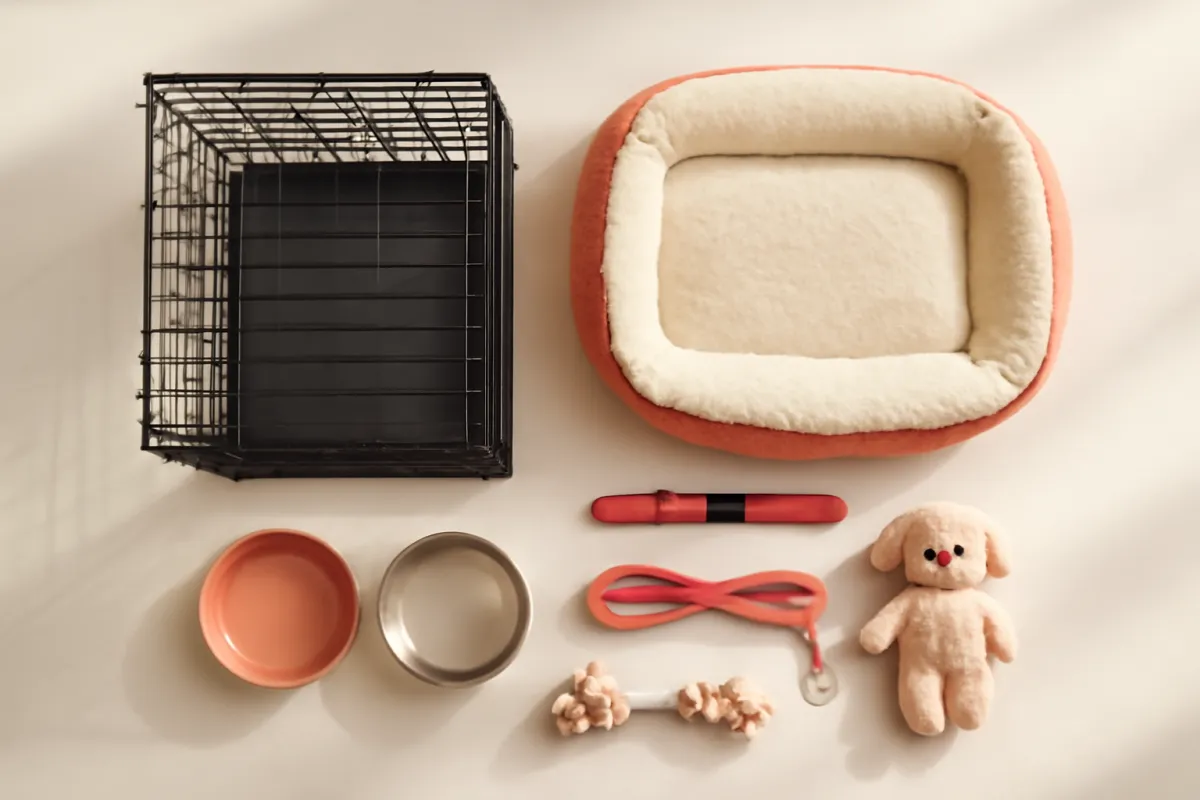
Year one stacks every one-time cost on top of a full year of ordinary care, which is why it never resembles the years that follow. The purchase, an illustrative $1,400 to $2,500 from a breeder or a few hundred through rescue. Setup and gear, an illustrative $350 to $700: crate, bed, bowls, a well-fitted harness, a leash you trust, and the brushing tools this coat will need for the next decade and a half. Containment, the line unique to this breed’s temperament, anywhere from an illustrative few hundred dollars of fence reinforcement to well into four figures for a proper new fence.
The puppy medical stack adds several hundred dollars: the vaccine series, deworming, early preventatives, and spay or neuter if it is not bundled into an adoption fee. Our puppy cost read itemizes that stack in general terms, our spay and neuter cost read prices that specific decision, and our dog vaccination cost read covers the series a puppy needs in its first months.
Training belongs in year one at full weight, and for this breed that is not a formality. A Shiba is intelligent, opinionated, naturally reserved with strangers, and entirely capable of deciding that your recall cue does not apply today. Early group classes at an illustrative $150 to $400, plus daily practice, buy the confident, socialized adult that keeps every later line small. All in, a breeder Shiba’s first year commonly lands at an illustrative $3,200 to $4,800 once containment is counted, and a rescue Shiba’s at an illustrative $1,400 to $2,400. Our first-year dog cost read maps that same spike-then-settle shape across breeds.
Ongoing annual cost of a Shiba Inu
The settled Shiba year is pleasantly ordinary on paper. Food, an illustrative $360 to $660 for the year. Routine veterinary care, the annual exam, vaccines on schedule, and parasite prevention at small-dog doses, an illustrative $350 to $750; our vet visit cost read breaks down what sits inside that number, and our flea and tick prevention read covers the preventative line specifically. Grooming, mostly your own labor plus consumables, with optional professional de-shedding visits, an illustrative $60 to $350.
Add enrichment and training upkeep at an illustrative $150 to $400, doing quiet double duty as behavior insurance for a breed that gets creative when bored, and the risk line, an insurance premium at an illustrative $350 to $700 a year or the same money into a dedicated account. Sum it and a normal year runs an illustrative $1,400 to $2,400, which places the Shiba comfortably in the small-to-medium band our monthly cost of a dog read charts across breeds.
The senior stretch deserves a forward glance while you are budgeting the easy middle years. Older Shibas commonly need twice-yearly exams, more dental attention, and sometimes ongoing management for arthritis or a chronic condition, which pushes late-life years toward the top of the range and occasionally past it. Banking the middle-year surplus is how those years arrive pre-paid rather than as a shock, and it is the single most transferable habit in this entire read.
Feeding a Shiba Inu
Food is one of the friendlier lines in the breed. A Shiba is a compact, athletically built dog in the illustrative 17 to 23 pound range, and quality food for an adult commonly runs an illustrative $30 to $55 a month, or roughly $360 to $660 a year, depending on the food and the individual dog. Puppies eat more relative to their size while they grow, and our puppy food read works through the amounts and costs of that stage in general terms.
The breed brings two feeding quirks worth knowing before you budget. First, Shibas are commonly described as fastidious eaters, perfectly capable of ignoring a bowl they have decided against, which tempts owners into an escalating cycle of toppers and upgrades that quietly doubles the food line. Consistency usually beats variety here, and a dog that is genuinely off its food is a conversation for your veterinarian rather than a shopping problem.
Second, weight matters more than the small food bill suggests. A lean Shiba moves better, ages better on its joints, and is cheaper to treat when anything goes wrong, since weight-dosed medication and anesthesia both scale with the number on the scale. Measure meals against a target weight your vet agrees with, count treats inside the daily budget rather than on top of it, and let body condition override the feeding chart on the bag. It costs nothing and discounts several of the more expensive lines below.
Grooming a double coat that blows out twice a year
The Shiba wears a proper double coat: a harsh, weatherproof outer layer over a dense, soft undercoat built for a cold climate. The good news for the budget is that this coat requires no clipping, no styling, and no salon cycle. The honest news is that it sheds constantly at a low level and then, once or twice a year, releases its undercoat in a startling volume of fluff that arrives in clumps and lands on everything you own.
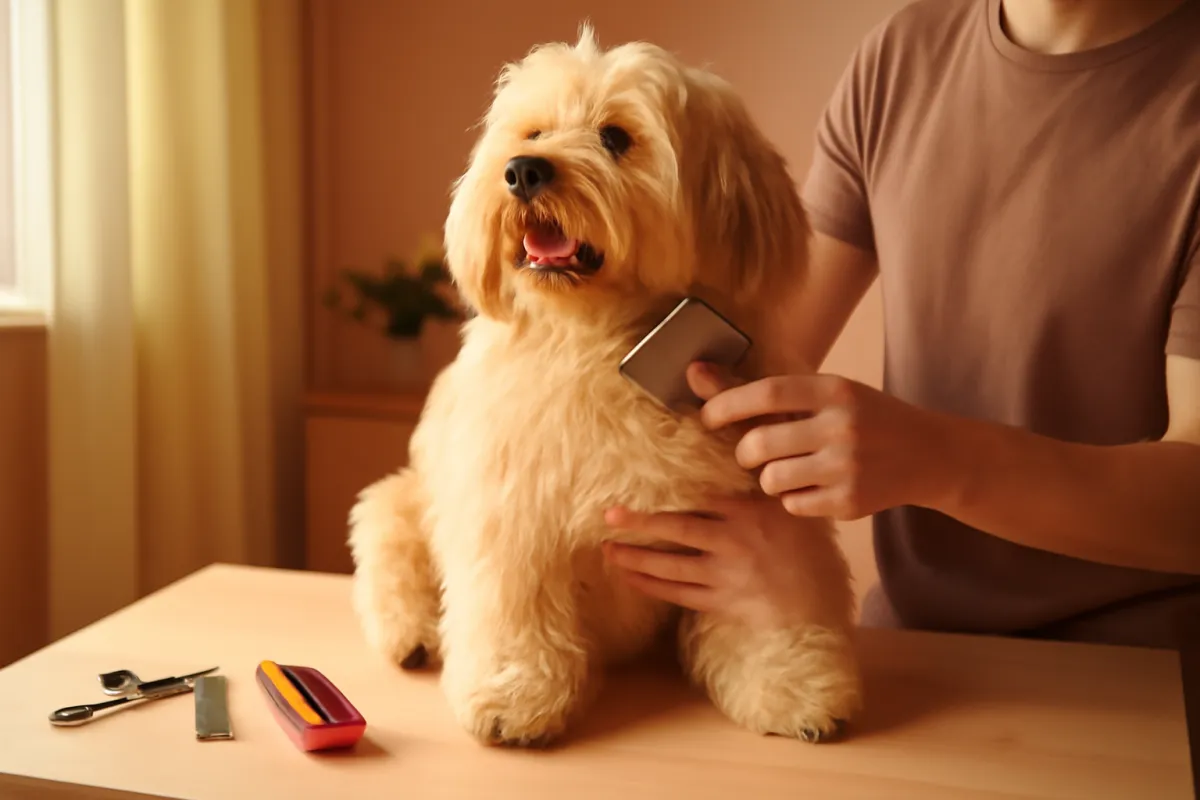
The equipment list is short and one-time: a slicker brush and an undercoat rake, an illustrative $30 to $60 together, plus a decent comb and nail clippers. The routine is weekly through most of the year and closer to daily during a coat blow, and a bath in the middle of a heavy shed loosens more undercoat than any tool alone. Owners who want help can buy professional de-shedding baths at an illustrative $50 to $90 a visit a few times a year, which moves the worst of the mess into a groomer’s tub rather than your ventilation. Our dog grooming cost read prices that market generally, and our groomer tipping read covers the etiquette of it.
One rule belongs here in plain words: the coat should not be shaved. A double coat insulates against heat as well as cold and shields the skin from sun, and shaving it can affect regrowth and the dog’s own temperature regulation. The correct answer to a shedding Shiba is a rake and a routine rather than clippers. Budget an illustrative $60 to $350 a year for the whole line depending on how much you outsource, which makes this one of the cheapest coats in dogdom to run and one of the most demanding to live with.
What the shedding actually costs
It is worth separating the two currencies the coat charges in, because only one of them shows up in a spreadsheet. In dollars, the Shiba is genuinely inexpensive: tools, the occasional de-shedding bath, and consumables. In household effort, it is one of the more demanding small breeds available, and the honest cost is measured in vacuum bags, lint rollers, sticky rollers in the car, and a tolerance for finding fur in places fur has no business reaching.
That has a few practical budget consequences. A robust vacuum is a legitimate Shiba expense, and this read is comfortable calling it one; owners commonly find that the cheap machine they owned before the dog does not survive the first coat blow. Furniture and car covers are a small recurring line for the same reason. And if you rent, a deeper end-of-tenancy clean is worth anticipating rather than discovering.
The upside deserves equal billing. Shibas are famously fastidious animals that groom themselves like cats, have relatively little dog odor compared with many breeds, and are typically easy to house train. Set against the shedding, that trade is one many owners take happily. The point of pricing it here is only that “low grooming cost” and “low grooming effort” are not the same claim, and the breed sells the first while charging the second.
Health screening areas Shiba breeders test for
Breed health is the section where a cost read has to be careful, and this one will be. What follows are the areas commonly cited for the breed and the ones responsible breeders screen the parents for. None of it predicts anything about an individual dog, plenty of Shibas live long lives on routine care alone, and every specific symptom or decision belongs with a veterinarian who can examine the dog in front of them.
The core screening slate is hips, patellas, and eyes. Hip evaluations and patella examinations on both parents are standard practice among serious breeders, and current eye examinations are the third leg. Asking to see those results is free, and a breeder who cannot produce them is telling you something useful. The genetic conditions most discussed in the breed cluster in exactly those systems, which is why the testing culture developed there.
Beyond the screened conditions, allergies and the skin problems that follow them are widely discussed among Shiba owners as one of the more frequent reasons for a clinic visit, and hypothyroidism appears on the breed’s general watch list as it does for many breeds. The budget implication is not alarm but structure: a modest health provision every year, a real answer to the question of how a four-figure event gets paid for, and a habit of acting on changes early, when the options are widest and the costs are lowest.
Skin and allergy costs
The line that surprises Shiba owners most often is the skin. Allergic skin disease, itchiness that leads to scratching, licking, ear inflammation, and secondary infections, is commonly cited as one of the more frequent reasons the breed ends up at the clinic, and it is a chronic pattern rather than a single event. That shape matters for budgeting, because chronic costs behave differently from emergencies: they are smaller per visit and relentless across years.
For an affected dog, the practical spend commonly includes diagnostic visits, medicated shampoos, ear cleaners, prescription medication, and sometimes a diet trial or referral work, which can add up to an illustrative $300 to $1,200 a year while a flare pattern is being managed, occasionally more in a difficult case. Many Shibas never need any of it. The ones that do tend to start showing signs in young adulthood, which is precisely the window when an insurance policy taken out in puppyhood still covers it and one taken out afterward does not.
Two honest caveats. First, none of the above is a treatment plan; itchy skin has many possible causes and only a veterinarian can work out which one applies. Second, the cheapest version of this line is nearly always the early one, because scratching that gets addressed promptly rarely becomes the infected, medicated, repeatedly rechecked version. Our how to lower your vet bills read covers the safe ways to trim recurring care costs without deferring the care itself.
Knees, hips, and eyes
The rest of the watch list, in budget order. Patellar luxation, a kneecap that slips out of its groove, is commonly cited in small breeds including this one. Mild cases are frequently managed conservatively with weight control and activity sense; significant cases can mean surgical correction at an illustrative low four figures, plus rehabilitation. It is one of the reasons parent patella examinations belong on your list of questions.
Hip dysplasia occurs in the breed despite its modest size, which is why hip evaluation is standard on the screening slate. The cost spectrum runs from long-term conservative management, weight control, joint support, and anti-inflammatory medication in flare years, up to surgical options in significant cases at an illustrative several thousand dollars. A small dog’s weight-dosed medication and anesthesia cost less than a large breed’s, which is a genuine if modest consolation.
Eye conditions including progressive retinal atrophy, cataracts, and glaucoma are the third screened system, and the reason current eye examinations on the parents matter. Costs range from monitoring, in the case of a gradual condition a dog often adapts to remarkably well, to specialist care and surgery in the four figures for others. Glaucoma in particular is treated as urgent in veterinary medicine, so the practical instruction for any owner is the same across all three systems: changes in gait, in the knees, or in the eyes go to a vet promptly rather than to an internet search.
The escape artist problem: containment costs
Ask experienced Shiba owners for the one thing they would tell a new buyer, and containment comes up more than anything else. The breed is alert, athletic, prey-driven, and genuinely independent, a combination that produces a dog perfectly willing to take an open gate as an invitation and to treat the resulting chase as an excellent game. Recall is a lifelong project rather than a solved problem, and many experienced owners simply never trust the dog off leash in an unsecured area.
That converts directly into a budget line. Reinforcing an existing fence, adding height, closing gaps, adding a dig barrier along the base, and fitting self-closing, self-latching gates, commonly runs an illustrative few hundred dollars. Installing a proper secure fence from scratch can run well into four figures depending on the yard. Underground or electronic containment is widely considered unreliable for a prey-driven breed, because a dog in pursuit will accept the correction and keep going, so physical containment is what most owners rely on.
Around the fence sit the cheap layers that make it work: a microchip with registration you actually keep current, tags, a well-fitted harness the dog cannot back out of, and household habits about doors and gates that everyone in the home follows. The arithmetic is not close. A few hundred dollars of prevention sits against emergency treatment after a road accident, which our pet emergency read prices as the four-figure event it usually is. Spend it once, up front, and treat it as part of the purchase.
Training an independent breed
A Shiba is intelligent and highly trainable in the technical sense, and also entirely unbothered by your opinion of what should happen next. The breed was developed to hunt independently in difficult terrain, and it retains the confidence that job required. Owners who arrive expecting a biddable, handler-focused dog and try to win through repetition or force generally end up with a stubborn, avoidant dog and a behavior consult; owners who work with the breed’s self-interest, short reward-based sessions, high-value payment, and a genuine relationship, tend to do very well.
The dollar side is modest and worth paying. Group puppy and obedience classes commonly run an illustrative $150 to $400 for a multi-week course and deliver socialization as well as skills, which matters unusually much for a naturally reserved breed. Private sessions with a qualified trainer, at an illustrative $75 to $200 an hour, are the sensible move for a specific problem such as resource guarding, handling sensitivity around nails and ears, or a dog that has learned that bolting pays. Our dog training cost read prices that market in general terms.
Two Shiba-specific training investments earn their keep early. Cooperative care, teaching the dog to accept nail trims, ear cleaning, brushing, and veterinary handling, saves both money and stress for a breed that objects loudly and memorably to being manhandled. And recall work, undertaken with realistic expectations, is worth doing forever even if the honest conclusion is that this dog stays on a leash outdoors. Both are cheap inputs against expensive outputs.
Vet visits and routine care for a Shiba Inu
Routine care for a Shiba looks like routine care for any small dog, with a couple of breed-flavored additions. The annual wellness exam anchors the year, with vaccines on schedule and weight-dosed parasite prevention; our vaccination schedule read covers the timing side of that. Expect an illustrative $350 to $750 a year for the whole routine package in an average-cost area, with wide variation by region.
Dental care deserves a line of its own in a small breed. Small dogs are commonly more prone to dental disease than large ones, and a professional cleaning under anesthesia is a real expense that arrives every few years for many dogs; our dog teeth cleaning cost read prices it. Home brushing and appropriate chews reduce how often that bill lands, which makes them one of the better returns available on a few minutes a day.
The breed-flavored addition is skin and ear checks, which are worth building into every exam given how commonly allergies come up in Shiba conversations. Getting a baseline while the dog is healthy makes a later change obvious. Choosing the clinic well matters too, and our how to choose a vet read covers what to look for; a practice that handles a defensive, dignity-conscious dog patiently is worth more to a Shiba owner than a slightly lower exam fee.
Why pet insurance matters for this breed
Assemble the risk picture and the Shiba makes a solid, if not extreme, insurance case. The breed is not associated with the sudden catastrophic orthopedic events that dominate some breed pages, but it carries a chronic-condition profile, allergies and skin above all, plus knee, hip, and eye exposure and the accident risk that comes with a dog inclined to bolt. That is a mix of the slow-burning and the sudden, and insurance handles both better than a young savings account can.
Enrollment timing is close to decisive. Allergic skin disease is exactly the kind of chronic condition that becomes a pre-existing exclusion the moment it enters the record, and it commonly emerges in young adulthood rather than puppyhood. A policy started before any itch, ear infection, or limp is documented covers the breed’s signature risks; one shopped after the first flare largely cannot. Read the hereditary and congenital condition language, the bilateral condition clause for knees, and any chronic condition renewal terms carefully, using the checklist in our how to choose pet insurance read.
The self-funding alternative stays legitimate, particularly for a small breed whose likely bills are smaller than a giant breed’s. Banking the same premium every month, untouched, works for the disciplined, with the honest caveat that a fund holding a few hundred dollars in year two meets a knee surgery poorly. Some owners split the difference: an accident-and-illness policy through the young years, transitioning to savings once the account has depth. Our is pet insurance worth it for dogs read frames the general bet, and our how to get help with vet bills read covers what exists when neither plan is in place.
What Shiba Inu pet insurance costs
As illustrative figures, accident-and-illness coverage for a young Shiba Inu commonly runs an illustrative $30 to $60 a month, or roughly $350 to $700 a year. That places the breed mid-table: the small body keeps treatment costs and therefore premiums below large-breed rates, while the breed’s chronic-condition reputation keeps it off the very cheapest tier. Premiums climb with the dog’s age and with local veterinary prices, and the usual dials, deductible, reimbursement percentage, and annual cap, trade monthly cost against claim-time cost in the standard way our dog insurance cost read and our pet insurance cost per month read both dissect.
Shiba-specific shopping notes. Check how the policy treats chronic conditions across renewal years, because a skin condition that recurs every spring is the exact scenario where policies differ most. Confirm that prescription diets and medications are covered if that matters to you, since allergy management often runs through both. And check the annual cap against a realistic bad year rather than a catastrophic one, because for this breed the likely claim pattern is several mid-sized bills rather than one enormous one.
Weigh the premium against the bills it exists for. An illustrative $45 a month is $540 a year, and a couple of years of managed allergic skin disease plus one knee can equal several years of it. A lucky Shiba never collects, which is what insurance means, and disciplined savings remain an honorable alternative. The arithmetic this breed does not forgive is the empty middle: no policy, no fund, and a dog whose first flare arrives at four years old.
The lifetime cost of a Shiba Inu
Run the layers across an illustrative thirteen-to-sixteen-year Shiba life. Purchase at $1,900, a first year totaling roughly $4,300 with setup and containment included, then a dozen or more settled years averaging an illustrative $1,900, with the senior stretch trending higher. The base case lands near an illustrative $29,000. Shift the assumptions toward a rescue adoption, home grooming, an uneventful skin history, and a fence you already owned, and the total eases toward an illustrative $18,000. Add years of allergy management, an eye condition, a knee, or an injury after an escape, and it climbs past $34,000.
Where a Shiba Inu's lifetime cost goes
Representative split of an illustrative lifetime total into its main blocks, as shares of the whole. Illustrative, not dollars.
The health block is the swing vote: in a Shiba with quiet skin it shrinks toward routine care alone, and in one with a chronic allergy pattern it grows year after year. The purchase everyone negotiates hardest over is the smallest slice on the bar.
That band, an illustrative $18,000 to $34,000 or more, sits squarely inside the window our lifetime cost of a dog read sets out for a small-to-medium dog with a long life. What lifts a Shiba toward the upper half is not size, since the breed is small, but duration and chronicity: a lot of years, and a health profile that tends to charge in annual instalments rather than in single events. Build your own version in the calculator, and hold the calm middle years against the senior stretch that eventually arrives.
How a Shiba Inu compares to other dogs
On the cross-breed grid, the Shiba occupies a clear cell: small-dog running costs, medium-dog management load. Food, preventatives, medication doses, boarding, and grooming all price at the low end, while the coat, the containment, and the skin line push effort and attention upward. Against our Corgi cost read, the comparison is instructive: both are famous, compact, double-coated, and modest to feed, but the Corgi’s expensive tail-risk is structural and orthopedic while the Shiba’s is chronic and dermatological. Similar totals, different shapes.
Against our Husky cost read, the Shiba is the same story at a smaller scale: another cold-climate double coat, another escape artist, another breed that treats recall as optional, but at a third of the body weight, which pulls every weight-scaled line down. Against a large working breed like the one in our German Shepherd cost read, the Shiba is dramatically cheaper on food, medication, and gear, and dramatically less demanding on exercise time.
The comparison that matters most, though, is with your own household. A Shiba suits people who admire a self-possessed, dignified, cat-like dog and do not need it to be effusively obedient; it frustrates people who wanted a golden-retriever temperament in a smaller package. Our dog cost by breed read is the wider menu if this read’s trade-offs give you pause, because the honest failure mode for this breed is temperament mismatch rather than budget shock.
Buying responsibly: what to look for
The Shiba buyer’s checklist is short and non-negotiable, because the breed’s biggest costs trace to decisions made before you arrived. A responsible breeder shows you, unprompted or on first request, hip evaluations, patella examinations, and current eye examinations on the parents; raises puppies underfoot with deliberate early socialization; talks honestly about the breed’s independence, the shedding, and the escaping rather than selling past them; takes the dog back at any age; and interviews you closely. Expect waiting lists and expect the illustrative fair range, and treat both as features rather than obstacles.
The red flags are the standard demand-era set: litters always available, “vet checked” offered as a substitute for actual clearances, premiums attached to coat color or a “rare” label, shipping sight unseen, and prices dramatically under the local market. Each of those discounts is a deferred invoice, and in this breed the deferral tends to land on the skin, the knees, or the temperament. The same skepticism applies to Shiba mixes marketed as designer dogs, which trade on the breed’s fame without its testing culture.
Rescue remains the value route, an illustrative $150 to $500 for a dog whose adult coat, adult temperament, and any skin history are already known. Whichever door you use, line up the infrastructure before the dog walks through it: the fence, the brushing tools, a class enrollment, a clinic chosen with the criteria in our how to choose a vet read, and the insurance decision made in week one rather than after the first ear infection. Our how to budget for a new puppy read sequences the whole setup.
An illustrative year with a Shiba Inu
One settled year, worked through: a healthy four-year-old Shiba, lean at 20 pounds, insured, in an average-cost area. Food and treats, measured rather than topped up, at $38 a month: $456. Routine veterinary care, the annual exam, vaccines on schedule, and year-round preventatives: $480. Grooming, home brushing through two dramatic coat blows plus one professional de-shedding bath in spring, with nails done at home: $150.
Insurance at $45 a month: $540. Training and enrichment, a refresher class, puzzle feeders, chews, and replacement toys: $200. Skin and extras, one visit for an itchy ear that resolved with a cleaner and a recheck, plus a new harness: $350. Year total: an illustrative $2,176, unremarkable and entirely on plan.
The context around that year is the point. Two years earlier the same dog had a spring of genuine scratching that took a diagnostic visit, a medicated shampoo, a prescription, and two rechecks before it settled, an illustrative $700 episode that insurance largely reimbursed because the policy predated the first record of it. That is the Shiba pattern in miniature: ordinary years at small-dog prices, occasionally interrupted by the skin, with the size of the interruption shaped by how early it was addressed and what plan was already in place. Run your own version through the calculator.
How to keep Shiba Inu costs down
Every honest lever in the breed, ranked roughly by return:
- Buy tested or adopt assessed. Parents with hip, patella, and eye clearances are the only purchase-time discount on future veterinary bills that reliably works, and an assessed adult from rescue removes the guesswork entirely.
- Fence it properly on day one. A few hundred dollars of height, dig barrier, and self-closing latches is the cheapest insurance policy this breed sells, measured against a single emergency after an escape.
- Do the coat yourself. A rake, a slicker, and a weekly habit cost almost nothing and replace a salon subscription entirely. Never shave the coat.
- Decide the insurance question in week one. Enrolled-young coverage, or a genuinely funded account, is what converts a chronic skin pattern from a budget problem into a logistics problem. Late deciders get exclusions.
- Act early on the skin. Scratching addressed in week one is a cleaner and a recheck; scratching addressed in month three is a course of medication, an infection, and a longer bill.
- Keep the dog lean and train the handling. Weight discounts the joint lines, and a dog that accepts nail trims and ear cleaning at home saves a sedation fee more than once.
- Reprice the recurring lines yearly. Food, preventatives, and premiums all move; our how to save on pet medications read covers the safe trims.
The false economies mirror the list exactly: bargain puppies from untested parents, a fence that “should be fine”, deferred insurance, and waiting out an itch. Cut prices, never prevention, because this breed audits the difference.
Is a Shiba Inu worth the cost?
What the money buys is a genuinely distinctive dog: compact, clean, agile, alert, and possessed of a self-contained dignity that people either love immediately or find baffling. A Shiba is not a dog that needs constant reassurance or supplies constant adoration, and for the households that suit it, that independence is the entire appeal rather than a defect. Priced per year of companionship, an illustrative $1,400 to $2,400 in a settled year makes it one of the more affordable famous breeds available.
What the money requires is taking three specifics seriously: the coat, which will redecorate your home twice a year regardless of your feelings about it; the containment, which is not negotiable for a prey-driven bolter; and the skin, which may never become a line item and may become a permanent one. Owners who plan for all three rarely meet the expensive version of this breed. Owners who assumed a small dog would be a small commitment tend to meet all three at once, usually in the same eighteen months.
So the decision resolves the way every good breed decision does. Not “is the dog worth it” but “is your household the one this dog is cheap in”. If you want an independent, beautiful, low-odor, high-shedding companion and you are willing to fence, brush, and insure accordingly, the Shiba is a strong value. If you wanted an off-leash hiking partner who lives to please, the honest move is the wider menu in our dog cost by breed read before the internet’s favorite face makes the choice for you.
How this fits your bigger pet budget
A Shiba Inu illustrates a truth that runs through every page on this site: the purchase price is the least important number, and the ongoing shape of care is what defines the commitment. For this breed the shape is unusual, low on food and medication because the dog is small, moderate on health with a chronic tilt, and high on the household effort that a heavy shedder and a bolter both demand, stretched across an unusually long life.
Across the years, the Shiba carries the same lines every dog carries, food, routine care, preventatives, grooming, dental work, and the occasional surprise, which our monthly cost of a dog read and first-year dog cost read break down in general terms. What differs is the weighting. Reading the breed page and the general pages together is what keeps a budget honest, because the general pages supply the structure and the breed page supplies the tilt.
The reason to fold a Shiba into that bigger frame rather than treating the purchase as the whole cost is that it converts shocks into plans. A fence you budgeted for is a setup line; the same fence built in a panic after the dog cleared the old one is a crisis with a vet bill attached. Build the estimate from the illustrative ranges here, fund the risk provision on purpose, and the breed’s cost becomes something you prepared for. The calculator is built to show it in exactly that fuller frame.
The bottom line
Shiba Inu dog cost runs an illustrative $1,400 to $2,500 from a reputable breeder, an illustrative $150 to $500 through rescue, an illustrative $3,200 to $4,800 across a breeder puppy’s first year once setup and containment are counted, an illustrative $1,400 to $2,400 in a settled year, and an illustrative $18,000 to $34,000 or more across a thirteen-to-sixteen-year life. The routine lines are small-dog cheap; the budget’s real character comes from the coat, the containment, and the skin.
The playbook: buy from hip, patella, and eye tested parents or adopt an assessed adult, fence properly before the dog arrives, buy a rake and build a brushing habit, take the early classes an independent breed is owed, make the insurance decision while the record is still clean, and act on skin changes in week one rather than month three. Do that and one of the most recognizable dogs in the world becomes a thoroughly manageable line in the family budget, with the calculator standing by to turn these illustrative ranges into your own numbers.
One straight word from MuttMark before the fox face wins the argument: this cost read is planning material, not veterinary, breeding, training, or financial advice, and it diagnoses nothing. Every dollar figure above, the purchase tiers, the containment and grooming lines, the allergy and surgical ranges, the premiums, and the annual and lifetime totals, is an illustrative estimate assembled for budgeting, and your real costs will follow your region, your breeder or rescue, your insurer’s contract, your own choices, and above all the individual dog, whose skin, knees, eyes, and luck no article can see in advance. The health areas named here are the ones commonly cited for the breed and screened by responsible breeders; they are described to support prepared ownership rather than to predict your dog’s future or to substitute for an examination. Whether any of it applies to a particular Shiba, and what to do on the day something looks wrong, are judgments for a veterinarian with the dog in front of them. Price everything locally and in writing, insure or save deliberately, and leave the medicine to the professional who can feel the skin under that remarkable coat.
Frequently asked questions
How much does a Shiba Inu cost?
As an illustrative figure, a Shiba Inu puppy from a reputable breeder commonly runs somewhere around $1,400 to $2,500, with rescue or adoption far cheaper at roughly $150 to $500, and show or import lines climbing past $3,000. The purchase is the smaller half of the story, because a Shiba is a compact dog with an outsized set of ownership requirements: a heavy double coat that sheds dramatically, a skin and allergy watch list that responsible breeders and vets both take seriously, and a bolting, prey-driven independence that turns secure containment into a real budget line. Across a settled year the breed commonly runs an illustrative $1,400 to $2,400, and across a long life an illustrative $18,000 to $34,000 or more. Treat every number here as an illustrative planning range and confirm real prices with local breeders and rescues.
Why are Shiba Inu puppies so expensive?
Demand and supply do most of it. The Shiba is one of the most recognizable dogs on the internet, and popularity of that scale keeps buyer interest permanently ahead of the number of responsibly bred litters available in most areas. Under that demand sits a genuine cost base: Shiba litters are commonly modest in size, and a careful breeder screens the parents for hips, knees, and eyes, socializes a famously self-possessed puppy properly, and stands behind the dog for life, all of which costs money that shows up in the price. Import and show lines carry a further premium for pedigree rather than for pet quality. A price far under the local market usually signals skipped testing rather than a bargain.
Are Shiba Inus expensive to own?
A Shiba sits in the moderate band. At an illustrative 17 to 23 pounds, the breed eats modestly, medicates and anesthetizes at small-dog doses, and needs no professional clipping, which keeps the routine lines cheaper than a large breed's. What lifts the budget is a set of breed-shaped extras: the tools and time a heavy double coat demands, the containment an escape-prone dog with a strong prey drive requires, and the skin and allergy line that is commonly cited as one of the breed's more frequent veterinary reasons for a visit. Owners who plan for those three things up front tend to find the Shiba an affordable dog; owners who do not tend to meet all three as surprises.
How much does it cost to groom a Shiba Inu?
In money the Shiba is cheap to groom, and in vacuuming it is expensive. The breed carries a thick, weatherproof double coat that sheds year round and blows out its undercoat dramatically once or twice a year, but it needs no clipping or styling, so the honest grooming budget is mostly tools and time: a slicker brush and an undercoat rake, an illustrative $30 to $60 once, plus regular sessions at home. Owners who prefer to outsource the worst of it can buy professional de-shedding baths at an illustrative $50 to $90 a visit a few times a year, which puts the annual line somewhere around an illustrative $60 to $350 depending on how much you hand over. The coat should not be shaved, because it insulates in both directions and protects the skin.
What health problems are Shiba Inus prone to?
The areas commonly cited for the breed, and the ones responsible breeders screen the parents for, are hips, knees, and eyes: hip dysplasia, patellar luxation, and inherited eye conditions including progressive retinal atrophy, cataracts, and glaucoma. Allergies and the itchy skin that comes with them are also widely discussed as one of the more frequent reasons Shiba owners see a vet, and an affected dog can carry an ongoing management cost of an illustrative few hundred to over a thousand dollars a year. None of this is a certainty for any individual dog, and plenty of Shibas live long lives on little more than routine care. Whether any of it applies to a specific dog, and what to do about it, is a conversation for your veterinarian rather than a budget article.
Do Shiba Inus need special fencing?
Many experienced owners treat secure containment as a core setup cost rather than an optional one. The Shiba is an alert, prey-driven, famously independent breed with a well-earned reputation for bolting through an open gate and for treating recall as a suggestion, which is why so many owners never trust the dog off leash in an unsecured area. Reinforcing an existing fence with height, a dig barrier, and self-closing gate latches commonly runs an illustrative few hundred dollars, while installing a proper secure fence from scratch can run well into four figures. Layer on a microchip, current tags, and a double-ended leash habit, and the whole line usually costs far less than a single emergency after an escape.
How much should I budget per year for a Shiba Inu?
A settled adult year commonly runs an illustrative $1,400 to $2,400 once food, routine veterinary care, preventatives, grooming supplies, enrichment, and either an insurance premium or an equivalent savings contribution are added together. Food is modest at an illustrative $30 to $55 a month for a dog of this size, and routine care runs at ordinary small-dog rates. The years that break the pattern are the first year, which stacks purchase, setup, containment, and puppy medicine on top of ordinary costs, and any year an allergy flare, an eye problem, or an injury lands. Every figure here is illustrative, and your region and your individual dog move each line.
How much does a Shiba Inu cost over its lifetime?
Adding an illustrative purchase, first-year setup and containment, and thirteen to sixteen years of food, routine care, grooming supplies, enrichment, and health provisioning, a Shiba Inu's lifetime total commonly lands somewhere around $18,000 to $34,000 or more. A healthy, well-bred dog with an uneventful skin history and an owner who does the coat at home sits toward the bottom of that band, while ongoing allergy management, an eye condition, or a serious injury pushes it toward the top. The purchase price ends up one of the smallest slices of the total, which is the recurring lesson of every breed page on this site: what you pay to get the dog matters far less than what the dog's coat, skin, temperament, and luck cost across a decade and a half.